Challenges for winter cereal crops in a risky climatic environment
Author(s): доц. д-р Галина Михова, Добруджански земеделски институт - Генерал Тошево, ССА
Date: 23.02.2026
3250
![MultipartFile resource [file_data]](/assets/img/articles/заглавна-пшеница-ген.тошево.jpg)
Winter cereal crops are grown throughout all seasons, which determines the large number of risk factors for production. Alongside market challenges, climate change is turning every decision into a creative process requiring responsibility. Consequently, every mistake is difficult to compensate for. In recent years, we have increasingly witnessed persistent droughts during the summer months, leading to poor soil preparation; higher average daily temperatures during the autumn and winter periods; rising values of minimum temperatures during the winter months; an increase in the number of snowless days or an almost complete lack of snow; lack of moisture accumulation; significant temperature amplitudes during the resumption of vegetation; late spring frosts; persistent soil and atmospheric drought during various phases of phenological development; uneven distribution of precipitation; deteriorated phytosanitary conditions; widespread occurrence of diseases and pests with high frequency, difficult to control.
According to data from the Ministry of Agriculture and Food, the sown areas with wheat by the end of 2025 are about 10.1 million decares. Compared to last year, growth is observed in barley, rye, and triticale. Besides having different directions of use, the crops are distinguished by high adaptive potential and resistance to unfavorable stress conditions.
To some extent, the last months of 2025 and the beginning of 2006 revived memories of winter. The main problem for Northern Bulgaria was the significant amounts of precipitation during the suitable agrotechnical sowing period. In many areas, the amount significantly exceeded the long-term norms. Under the conditions of Dobrudzha, the monthly sums for October and November are 100 and 77 mm respectively (fig. 1). Sowing continued into December, but with deteriorated quality, necessitating corrections to seeding rates and depth. However, the temperature regime allowed timely sown crops to germinate well, enter the tillering phase quickly, and hardening to proceed under optimal conditions.
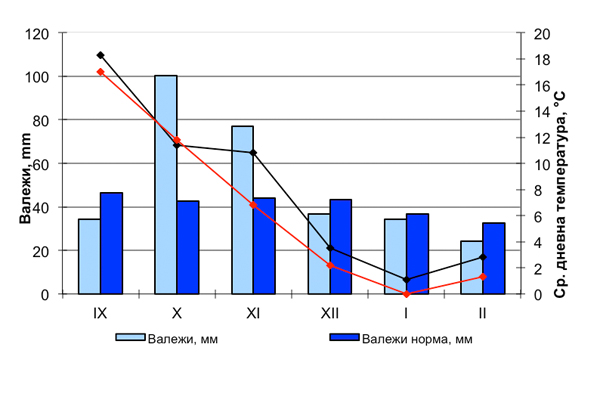
Figure 1. Precipitation (mm) and avg. daily temperature (oC) for the period 09.2025 – 17.2026, under the conditions of the Dobrudzha Agricultural Institute.
Currently, the condition of the crops is determined mainly by the sowing date and the development phase before entering the winter period (fig. 2 and 3). Crops sown at the optimal time, which for Northern Bulgaria is already shifting towards the end of October, are well-tillered and very well hardened. Late-sown crops are at the two- to three-leaf stage, and with significant temperature amplitudes or low temperatures without snow cover, there is a more serious risk of damage even at present. They need to be monitored for possible frost damage, pulling, breaking, and drowning if water is retained for a longer period above the tillering node. Undertaking measures such as rolling, correcting spring fertilization rates, or applying biostimulants is directly related to the percentage of damage and the soil-climatic conditions.
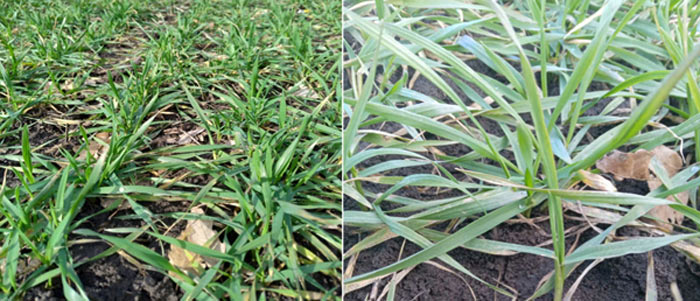
Figure 2. Wheat crop sown at the optimal sowing time, DAI – G. Toshevo as of 11.02.2026.
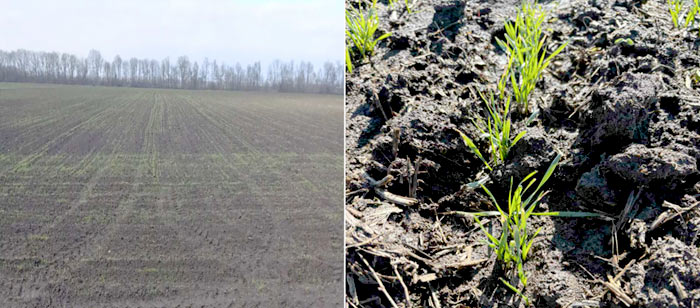
Figure 3. Wheat crop sown at the optimal sowing time, DAI – G. Toshevo as of 11.02.2026.
The autumn survey in various regions of Northern Bulgaria shows a negligible percentage of crops with damage from cereal flies. Mainly, these were sown at the end of September. Following the prolonged summer drought and unsuitable conditions for pre-sowing preparation, the areas are insignificant. Currently, symptoms of leaf spots are identified, which do not necessitate intervention.
Overall, the cereal crops in Northern Bulgaria are in very good condition. The autumn-winter moisture reserve is over 250 mm, which favors their normal development at present, as well as entering active vegetation. The current issue is the timing and method of providing nutrients, especially nitrogen. With the lengthening of the photoperiod, plants transition from the tillering phase to the stem elongation phase. Active biomass accumulation begins, which is directly linked to yield formation and its realization. Gaps in providing a suitable nutritional regime become a main limiting factor.
The challenges of nature are a fact. Are these "madnesses" of the weather? How do we react in a risky environment? The folk wisdom says: "Money loves counting, and bread loves measure." Good agricultural practices offer numerous solutions. The principles are known but require adequate rethinking. Of primary importance is building an adequate varietal structure and using certified seed material. Growing varieties with different phenological development and yield structure is of key importance. The main principles are related to the agro-climatic and soil characteristics of the region; the volume of production areas; the probability of stress and the choice of production technology. Monoculture cultivation and following the plowing of perennial grasses are risky. The suitable sowing depth is 3-5 cm. Shallow sowing harbors the risk of damage during the winter period and poor development of the root system, while deep sowing hinders normal crop establishment. The recommended seeding rate for wheat and triticale varieties of regional selection is 500-600 viable seeds/sq.m., and for barley 420-450 viable seeds/sq.m. Suitable sowing dates are October 1-15 for N. Bulgaria and October 15-30 for S. Bulgaria. The trend is towards shifting to later dates by about 10-15 days. The reasons are summer droughts and poor pre-sowing soil preparation; autumn months with high temperatures, leading to widespread pest occurrence and ineffective control measures; risk of crop overgrowth, poor hardening, damage from unfavorable factors during the winter months and upon resumption of vegetation. On the agenda is the correct fertilization of crops. Scientific research shows that for 100 kg of grain, approximately 2.5-3.5 units of nitrogen are required. The requirements of regional selection are an N:P ratio of 1:0.6-0.8. Regarding timing, priority is given to "poor" soils, a bad preceding crop, poorly established crop, late varieties, and weak tillering. A risk factor is high fertilizer rates under stress conditions, as well as the danger of soil and water pollution. A solution for corrections is foliar feeding, which partially compensates for the lack of basic fertilization and plays a positive role in stressful situations. Suitable timings are together with weed control treatment or during the stem elongation phase.
Plant protection is a major cost in the production cost of cereal crops. The identified problems are related to the established high frequency and widespread occurrence of diseases and pests; a significant increase in dependence on pesticides, as well as the ban on the use of a wide range of active substances. The solutions lie in several aspects: selection of resistant varieties, adherence to crop rotation, suitable soil tillage, sowing date and depth, seeding rate, fertilization, use of certified seed material. The measures are integrated control, including observations for diagnosis, forecast, and signaling, adequate choice of when and how to apply chemical control methods, selection of a suitable pesticide, and accounting for efficacy.
The team of the Dobrudzha Agricultural Institute provides expertise for effective production in cereals, legumes, and sunflower. We would readily share experience and accept new challenges: https://dai-gt.org/.
More on the topic: