Pests in Fruit Crops – Overwintering Forms and Their Significance for Plant Protection
Author(s): гл.ас. д-р Пламен Иванов, Институт по овощарство – Пловдив, Селскостопанска академия
Date: 02.02.2026
2997
![MultipartFile resource [file_data]](/assets/img/articles/неприятели-зима-заглавна.jpg)
Summary
The overwintering forms of the main pests in fruit crops are of crucial importance for their harmful impact in the following growing season. During the winter period, when plants are dormant, a significant portion of the pests remain in the orchards – in the soil, among the fallen leaves and fruits, as well as on the bark and in cracks of the wood. This creates an opportunity to carry out effective plant protection measures aimed at limiting their numbers before the start of active vegetation.
The material examines the main groups of pests – mites, leaf-eating caterpillars, leafrollers, aphids, scale insects, and psyllids – with an emphasis on their overwintering stages. The main agrotechnical control measures are also described: pruning, sanitary-hygienic activities, whitewashing, and winter treatments. The importance of visual observations and timely interventions is highlighted as a key factor for healthy and resilient fruit production and for reducing the risk of mass attacks during the growing season.
To guarantee the production of healthy fruit, care for fruit orchards must continue during the winter months when plants are dormant. With the onset of relative dormancy in fruit species, the harmful activity of pests also weakens, but a significant portion of them remain in the orchards – in the soil, on fallen leaves and fruits. This creates the preconditions for the fight against them to continue during the autumn-winter period. Visual observations for the overwintering forms of pests during the non-vegetative period are of exceptional importance, as their early detection allows for timely interventions and a reduction in their density before the start of vegetation (Edland, 1995; Golan et al., 2023; UMass Amherst, 2023).
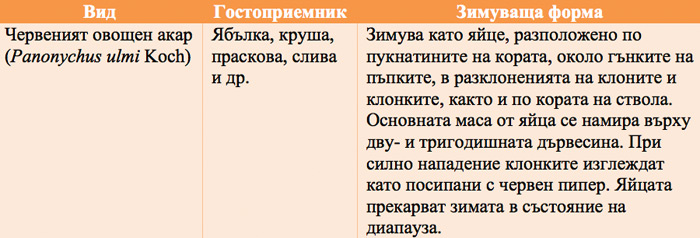
Fruit Mites. The most economically dangerous is the European red mite (Panonychus ulmi Koch.), but in recent years in many regions it has been displaced by the hawthorn spider mite (Tetranychus viennensis Zacher). The remaining tetranychid mite species, such as the two-spotted spider mite (Tetranychus urticae Koch.), the yellow apple mite (Schisotetranychus pruni Oudms), the brown apple mite (Bryobia rubrioculus Scheuten) and others, are usually found in low density and do not pose a serious plant protection problem (Jeppson et al., 1975; Van de Vrie et al., 1985). In spring, with the warming of the weather and the reaching of average daily temperatures of 9–10 °C, rapid embryonic development of the eggs begins, which determines the optimal moment for conducting treatments against the overwintering stages (Boller et al., 2006; Kreiter et al., 2010).

Overwintering eggs of the European red mite (Panonychus ulmi Koch). Source: University of Georgia Plant Pathology Archive (CC BY-NC)
Leaf-eating Caterpillars
This group of pests is characterized by broad feeding plasticity and feeds on numerous woody and shrubby cultivated and forest plant species. Periodically they multiply massively and can cause significant damage to fruit crops, with orchards located near forested areas being particularly vulnerable.
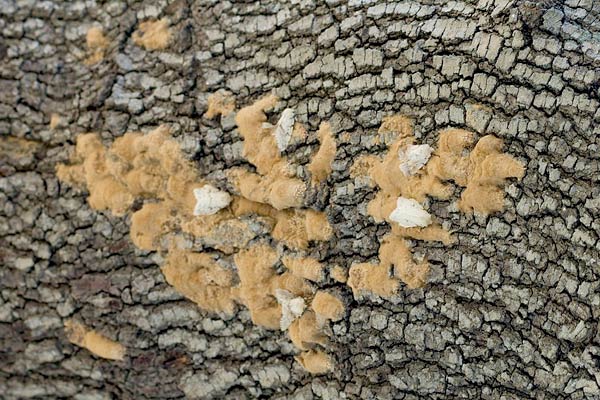
Egg masses of the gypsy moth (Lymantria dispar L.). Source: Kyrnos Publication, Wikimedia Commons (CC BY 4.0)
During mass attacks, the caterpillars completely defoliate the trees, leading to severe weakening of the plants and a reduction in yield (Montoya et al., 2016; Liebhold et al., 1995).
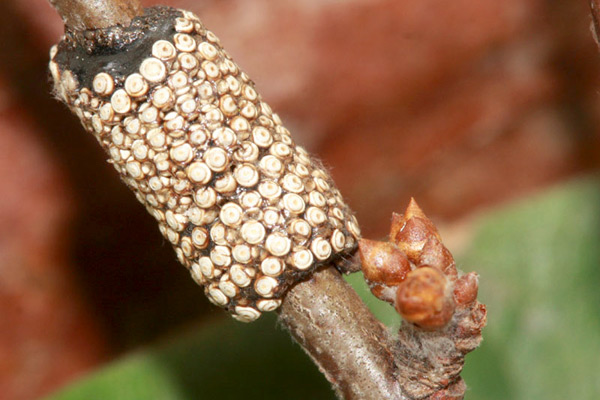
Egg rings of the lackey moth (Malacosoma neustria L.). Source: Alciphron-Enka,
Wikimedia Commons (CC BY-SA 4.0)
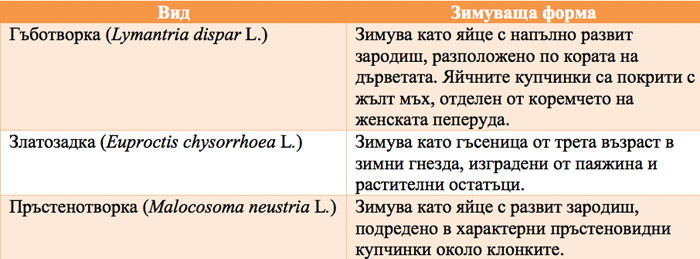
The species with the greatest economic importance are the gypsy moth (Lymantria dispar L.), the brown-tail moth (Euproctis chrysorrhoea L.), and the lackey moth (Malacosoma neustria L.), which are widely distributed in Europe and are considered key defoliators of fruit species (Grijpma, 1989; Schwenke, 1978).
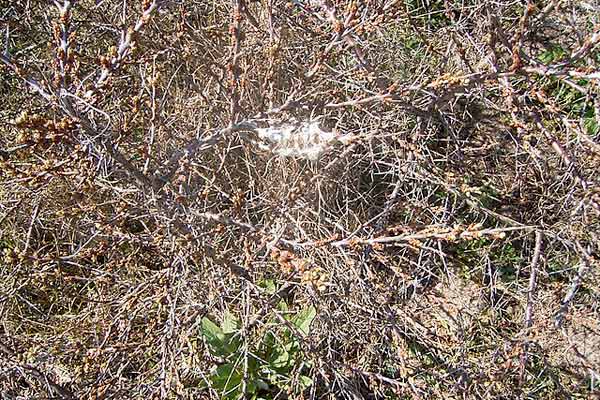
Winter nest of the brown-tail moth (Euproctis chrysorrhoea L.). Source: TeunsSpaans, Wikimedia Commons (CC BY 4.0)
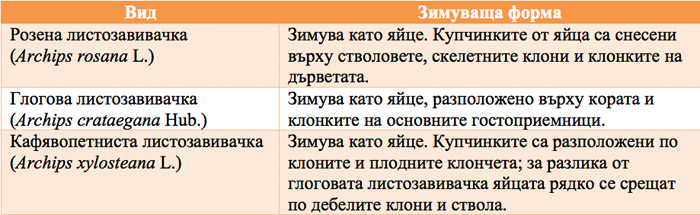
Leafrollers. Representatives of this group are widely distributed in the country and cause significant damage to fruit species during periods of mass multiplication. They are characterized by high adaptability to different hosts and, at high density, can lead to serious yield losses (Alford, 2007). Control of leafrollers during the winter period is particularly effective when directed at species that overwinter as eggs, as this stage is immobile and vulnerable to mechanical and chemical interventions (Hill, 1987; CABI, 2022).
Leafrollers
Representatives of this group are widely distributed in the country and cause significant damage to fruit species during periods of mass multiplication. They are characterized by high adaptability to different hosts and, at high density, can lead to serious yield losses (Alford, 2007). Control of leafrollers during the winter period is particularly effective when directed at species that overwinter as eggs, as this stage is immobile and vulnerable to mechanical and chemical interventions (Hill, 1987; CABI, 2022).
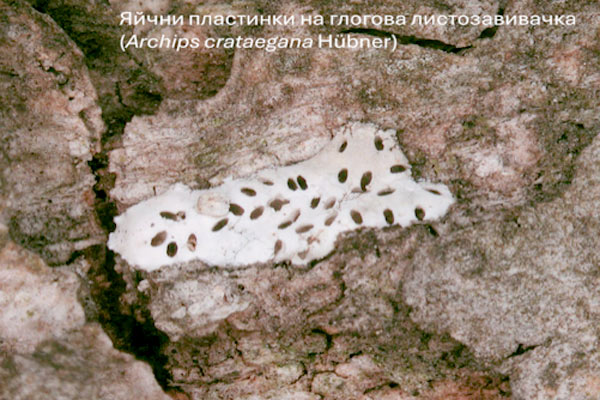
Egg plates of the hawthorn leafroller (Archips crataegana Hübner). Source: Gyotgy Csoka, Bugwood.org, Wikimedia Commons (CC BY 3.0 US)
Aphids (Aphididae)
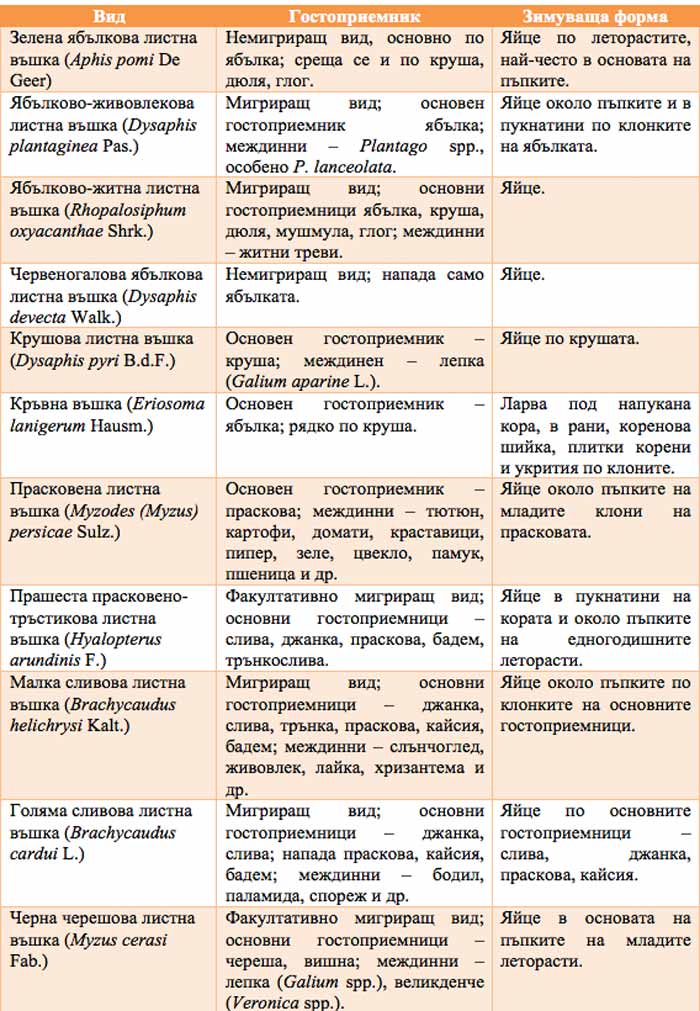
They appear on fruit trees every year and have significant economic importance. They overwinter as eggs, laid in the autumn around buds, in cracks of the bark and under it, which hatch in spring (Colorado State University, n.d.). While feeding, aphids secrete enzymes that cause local growths and tumors, deformations of leaves or their curling (Hill, 1987). Additionally, plants are stressed by the secreted "honeydew," on which sooty mold fungi develop, blocking photosynthesis and disrupting transpiration and respiration processes (UMass Amherst, n.d.; UC IPM, n.d.). Besides direct damage, some species of aphids are proven vectors of viral diseases in fruit crops, which contributes to significant yield losses (Blackman & Eastop, 2000; Fingu-Mabola & Francis, 2021; Huang & Xuan, 2024).
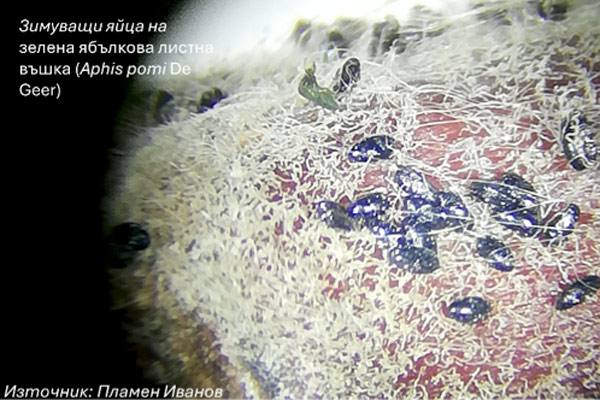
Overwintering eggs of the green apple aphid (Aphis pomi De Geer).
Source: Assoc. Prof. Dr. Plamen Ivanov
Armored Scale Insects
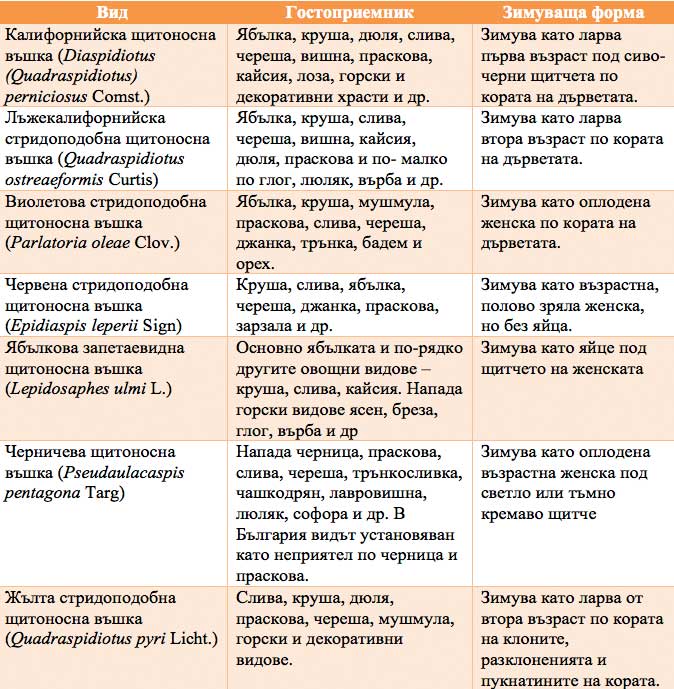
They feed by sucking sap from stems and branches, as well as from the underside of leaves and on fruits. Their body is covered with a secretion that hardens and forms a spherical or elongated scale, not fused with the body of the scale insect. The scales of adult females reach 2-4 mm. Only the newly hatched (or born) larvae, called "crawlers," are mobile. After settling on a permanent spot, they form a scale and become immobile. Females usually complete their development with two larval instars. The scales of males are elongated. After the first molt, the larva develops into a nymph, which has two stages - pronymph and nymph. Adult male individuals are winged, with one pair of membranous wings and a size of about 1 mm. They have no mouthparts and do not feed, fly short distances, live briefly, and die after copulation (Kosztarab & Kozár, 1988; Gill, 1997).
Soft Scale Insects
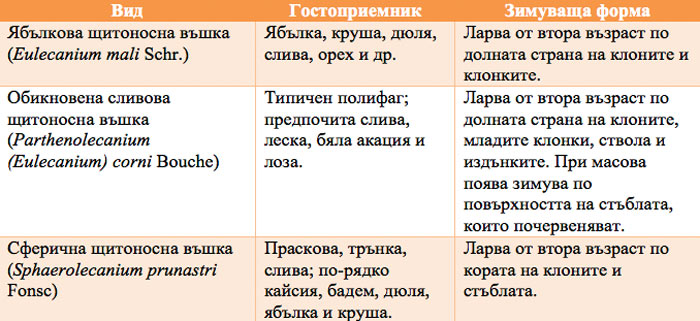
They are significantly larger than armored scales. The scale is fused with the female's body and cannot be separated from it. After laying eggs under the scale, the females die. The crawlers appear in June and are larger. They damage plants similarly to common aphids, moving to the underside of leaves and sucking sap. They do not form a scale and remain mobile. In autumn, they return to the branches and stems, where they overwinter (Miller & Davidson, 2005).
Psyllids (Psyllidae)
Recorded in Bulgaria in the 1960s and 1970s, and since then it has been known that they are widely distributed here (Kovalev, 1976). For a long time, they were considered only as pests of fruit species that cause direct damage through feeding, but not as vectors of phytoplasmas. Modern research shows that some representatives of the genus Cacopsylla are important vectors of phytoplasmas causing serious diseases in fruit crops (Jarausch et al., 2004; Seemüller & Schneider, 2004).
The most economically important and most widely distributed in Bulgaria is the common pear psyllid (Cacopsylla pyri L.), which causes significant damage to orchards annually (Alford, 2007). Other species – the large pear psyllid (Cacopsylla pyrisuga Foerster), the apple psyllid (Cacopsylla mali Schm.), and the southern apple psyllid (Cacopsylla picta Förster) – occur in lower density but are also significant as potential vectors of phytoplasmas (Jarausch et al., 2004).

Agrotechnical Measures for Controlling Pests in Fruit Species During the Winter Period
1. Plowing and Destruction of Overwintering Stages
If autumn plowing was missed, it can be carried out during warm February days. By burying the fallen leaves, a significant portion of the overwintering stages of pests such as the pupae of the cherry fruit fly (Rhagoletis cerasi), the pear slug (Caliroa cerasi), the larvae of the apple sawfly (Hoplocampa minuta), leaf-mining moths (Lithocolletis spp.), the black plum fruit fly (Rhagoletis alternata), the overwintering forms of the cherry weevil (Anthonomus rectirostris), and others are destroyed.
2. Pruning
Timely and quality pruning operations are essential for proper crown formation and optimal tree ventilation, which reduces the risk of diseases and pests (Alford, 2007).
• Winter pruning – performed during winter dormancy for crown formation and fruiting; has a rejuvenating effect on older trees.
• Phytosanitary pruning – removal of branches damaged by wood-borers (Scolytidae), leopard moth (Zeuzera pyrina), apple clearwing moth (Synanthedon myopaeformis), eye-spotted bud moth (Spilonota ocellana), and others.
• Practical rules – for pome fruit species, pruning is conducted in winter, while for stone fruit species – in spring, to avoid the formation of wounds, gummosis