Century of Innovation: Green Week in Berlin Celebrates 100 Years Between Tradition and the Future
Author(s): Растителна защита
Date: 18.01.2026
2366
![MultipartFile resource [file_data]](/assets/img/articles/grune-woche-2026.jpg)
The International Exhibition “Green Week“ (Internationale Grüne Woche) in Berlin is the most significant global event in the field of the food industry, agriculture and horticulture. In 2026 it will celebrate its 100th anniversary, which makes it one of the fairs with the longest history in Germany.
The first exhibition was organized in Berlin on the idea of an employee of the tourist office. The name “Green Week“ comes from the green woolen coats (Lodenmäntel) traditionally worn by farmers and foresters at that time. From a local market for agricultural goods, the forum quickly became international. The Netherlands was the first foreign participant (in 1951).
Green Week is a huge trade fair, which this year is held from 16 to 25 January at the Messe Berlin fairgrounds and combines in one a culinary festival with food and beverages from all over the world, a professional platform where current topics in agriculture are discussed by ministers, farmers and experts, and the holding of numerous exhibitions (animals, horticulture) and demonstrations. The main highlights of this year’s exhibition are:
Food security: Discussion of ways to feed the growing world population.
Sustainable agriculture: Presentation of organic farming, resource-efficient production and climate protection.
Digitalization: Demonstration of new technologies (drones for crop monitoring, electric tractors, artificial intelligence in agronomy).
Regional development: Support for local producers and the traditions of different regions.
Green Week – a place for innovation in the field of precision agriculture
AI Weeding Robots
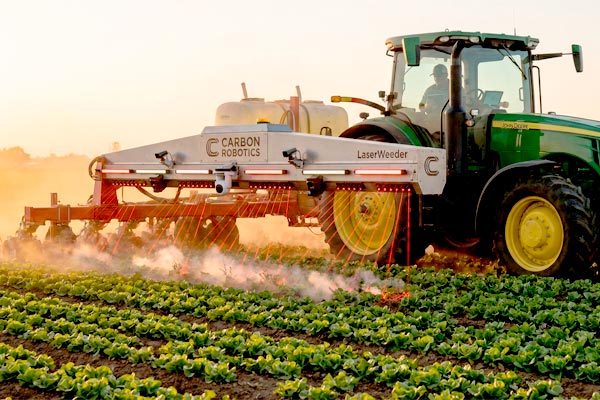
AI weeding robots are one of the biggest attractions of the anniversary “Green Week“ 2026 in Berlin. They are part of the so-called “smart farming“ and address two major problems: the shortage of labor and the need for a drastic reduction of herbicides.
Instead of spraying the entire field, the new robots (such as those of companies like Carbon Robotics) use artificial intelligence and lasers. The robot is equipped with dozens of high-resolution cameras that recognize weeds when they have just emerged a few millimeters above the ground.
A powerful thermal laser “fires“ a beam of light directly into the growth point of the weed and destroys it instantly, without touching the cultivated plant.
Drones with multispectral cameras
The exhibition will feature systems for early detection of diseases that are imperceptible to the human eye. Drones with multispectral cameras are the “eyes“ of modern precision agriculture. While standard (RGB) cameras see what the human eye sees, multispectral sensors capture reflected light in spectra that are invisible to us, but reveal everything about plant health.
Plants interact with light in a specific way depending on their condition. A healthy plant absorbs a large part of the visible red light (for photosynthesis) and strongly reflects near infrared light (NIR). When the plant is under stress (lack of water, disease or pests), this reflective capacity changes long before leaf yellowing appears.
Drones scan the fields and detect the first signs of stress or fungal infections through thermal maps. With the help of this type of drones, early diagnostics, precise use of plant protection products and optimization of fertilization are ensured.
Biological “micro-vaccines“ for plants
One of the most discussed topics in Berlin this year are peptide and RNA-based solutions. Instead of toxic chemicals, plants are treated with biological molecules that “train“ their immune system to recognize specific pests or viruses.
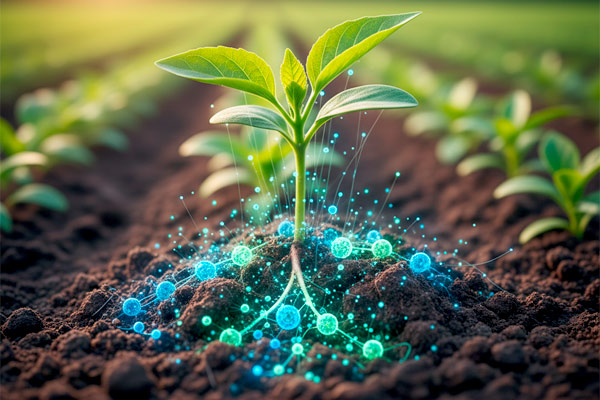
Unlike traditional pesticides, which attack the nervous system of insects or the metabolism of fungal pathogens, these “vaccines“ (often called elicitors) activate the plant’s own natural immune system. The mode of action of these micro-vaccines is based on the method of Induced Systemic Resistance (ISR), whereby when the “micro-vaccine“ reaches the plant, receptors on the leaf surface recognize the molecules as an “attack signal“ and the plant enters a state of “increased readiness“. It begins to synthesize natural toxins (phytoalexins), which are specific to the attacker, without harming beneficial insects such as bees.
The main types presented in Berlin are:
RNA-based (RNAi) vaccines: They use molecules of the so-called interfering RNA. When sprayed on the leaves, they “silence“ specific genes in pathogens (viruses or fungi), making them unable to develop.
Peptide vaccines: Short chains of amino acids that send a “Danger!“ signal to the plant, causing it to thicken its cell walls and produce its own protective antioxidants.
Smart pheromone traps with remote monitoring
These devices are gaining increasing popularity among fruit and vegetable producers. The traps are equipped with sensors and cameras. When a pest enters, the system automatically identifies it and sends a notification to the agronomist’s phone. This saves time for physical inspections and allows reaction at the exact moment of the invasion.
Vertical farms – independent of climatic conditions
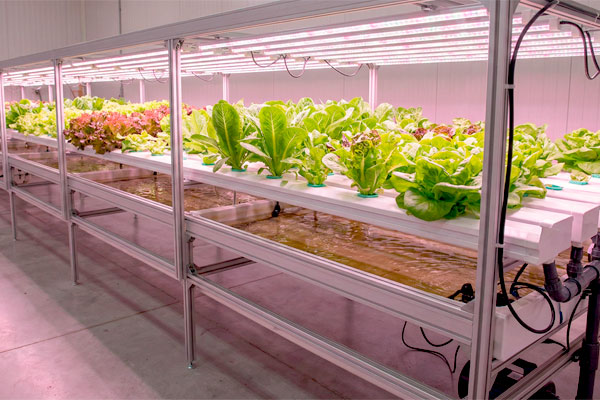
Vertical farms are one of the most impressive sectors at the anniversary exhibition in Berlin. They are presented in the thematic world “Inhouse Farming & New Food Systems“, where the focus is on food production in a controlled environment, regardless of climatic conditions and soil quality. Vertical farms solve the problem of feeding megacities and the decreasing arable land. At “Green Week“ they are already seen not just as an experiment, but as an alternative for global food security, especially for regions with water scarcity. In this type of farms, up to 95% less water is used compared to traditional agriculture, since the water is filtered and reused. The new LED technologies, which are part of the food production process in the farms, consume a minimal amount of electricity and emit only the specific spectrum (usually purple or pink) required for plant photosynthesis. The substrate environment used to nourish the plants is practically sterile and the need for the use of plant protection products is reduced to a minimum. Land-use efficiency in vertical farms is another of their advantages. By arranging plants on dozens of levels, a farm on an area of 1 decare can produce as much food as a traditional field of 50 to 100 decares.
Vertical farms have different applications depending on their purpose and the crops grown in them:
1. Modular “Plug & Play“ systems for cities
The exhibition showcases compact systems that resemble large refrigerators or shipping containers. These farms are fully automated and can be placed in the basements of restaurants, supermarkets or even residential buildings. Thus, salad can be “harvested“ directly in the shop, restaurant or home minutes before its purchase or consumption. Through these mobile mini systems for growing mainly leafy vegetables and herbs, transport costs are completely eliminated.
2. AI-based growth management
Start-ups such as Greenhub are showcasing artificial intelligence-based software solutions that analyze data from thousands of sensors and accurately predict when the crop will be ready. The system can also adjust the intensity of the LED lighting and the composition of the nutrient solution (hydroponics) for each individual plant to maximize taste and vitamin content.
3. Vertical farms for “superfoods“ and alternative proteins
In addition to traditional leafy vegetables (lettuce, basil, kale), this year in Berlin the focus is on:
Cultivation of mushrooms and mycelium: Vertical walls for mushroom production, which serve as a basis for vegan meat alternatives.
Microalgae (Spirulina): Compact bioreactors for growing spirulina at home or on an industrial scale.
Insect farms: Modular systems for rearing insects for protein flour, integrated into vertical structures.
Political discourse on the future of agriculture
High-ranking visitors from the world of politics emphasize the importance of Grüne Woche as an indispensable meeting place for the industry. In addition to Federal President Frank-Walter Steinmeier and Federal Chancellor Friedrich Merz, various federal ministers and prime ministers of federal states have announced their visit.
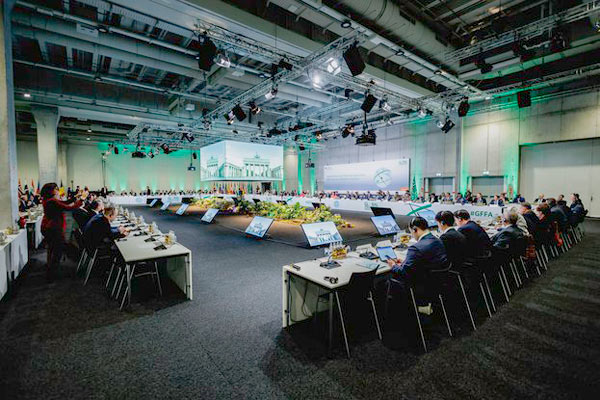
As part of the anniversary, the Global Forum for Food and Agriculture (GFFA-Global Forum for Food and Agriculture) is also being held, where politicians and scientists outline the future of global agricultural policy. Its main goal is to propose solutions for global food security and the sustainable development of agriculture. The most important event of the forum is the Berlin Agriculture Ministers’ Conference, which is the largest informal meeting of agriculture ministers in the world (about 70 ministers and representatives of over 10 international organizations such as FAO, the World Bank, the OECD and the WTO).
Since agriculture consumes about 72% of the world’s freshwater resources, this year’s forum, held under the motto “Water. Harvests. Our Future“, focuses on four main areas:
- Sustainable use of water: Implementation of technologies for precision irrigation and reduction of losses.
- Blue bioeconomy: Strengthening the role of aquaculture and “blue foods“ as a sustainable source of livelihood and nutrition.
- Resolving resource conflicts: Seeking a balance between the needs of agriculture, industry and households.
- International water governance: Improving global coordination for the protection of water resources in the context of climate change.
The forum includes various formats for dialogue such as expert panels, an international young farmers’ forum and a networking space where exhibitors and institutions present their projects and seek partners. This year, the expert panels host discussions on specialized topics such as “smart“ water strategies in Eastern Europe and Central Asia, innovations in agrotechnology and financing sustainable land management.
The international forum is a key panel because about 20 young leaders from around the world (including delegates from WFO) share their experience and participate in drafting the final communiqué.
On 17 January 2026, the ministers will sign the final communiqué, which will serve as a basis for discussions at the upcoming UN Water Conference. Bulgaria’s participation in the GFFA enables our country to take part in shaping the latest global policies for adaptation to drought and to participate in the adoption of a joint communiqué that provides guidance for future subsidies and regulations in agriculture at the global level. Our country can also state the need for support in addressing specific regional issues related to irrigation systems and soil health protection.
The taste of Bulgaria conquers Berlin
Every year, more than 1,400 exhibitors from about 60 – 70 countries take part. Bulgaria is participating for the 35th time, presenting traditions, quality and innovation in the agri-food sector.
On 16 January 2026, the Minister of Agriculture and Food, Dr. Georgi Tahov, will open the Bulgarian national stand at the “Green Week“ international exhibition in Berlin.

The national participation is organized under the auspices of the Ministry of Agriculture and Food. The Bulgarian stand covers an area of 140 sq.m, and 15 Bulgarian producers in Hall 18 will present dairy and meat products, wines and organic wines, bee honey and bee products, organic foods, rose oil, essential and cold-pressed oils, aromatic waters, natural cosmetics and others.
As a world leader in the production of lavender and rose oil, Bulgaria devotes a large part of its stand to plant-based cosmetics: Products based on Damask rose and bee products such as organic honey from the Rhodope Mountains and Strandzha, which enjoys great interest from Western consumers.
Germany is one of Bulgaria’s leading trading partners and the exhibition is an ideal place for concluding contracts with major retail chains. In addition to food, the Bulgarian stand often promotes agritourism in our country – a combination of recreation with tasting of authentic products.