Biotic and abiotic stress in peas
Author(s): доц. д-р Славка Калъпчиева, ИЗК "Марица" Пловдив; гл.ас. д-р Ганчо Пасев, ИЗК "Марица" – Пловдив; доц. д-р Иванка Тринговска, ИЗК "Марица" – Пловдив, ССА; гл. ас. д-р Янина Арнаудова, ИЗК "Марица" – Пловдив, ССА; гл. ас. д-р Елена Топалова, ИЗК "Марица " – Пловдив, ССА; гл. ас. д-р Весела Радева, ИЗК" Марица" – Пловдив, ССА
Date: 03.04.2025
3122
![MultipartFile resource [file_data]](/assets/img/articles/заглавна-градиснки-грах.jpg)
Summary
Garden pea is a crop rich in proteins, minerals and vitamins, and plays an important role in improving the protein balance in human nutrition. Biotic and abiotic stress factors are the main barriers to realising the yield potential, as our country is at the border of the range with optimal conditions. In order to ensure sustainable pea production under the impact of climate change, integrated approaches are needed to limit stress effects.
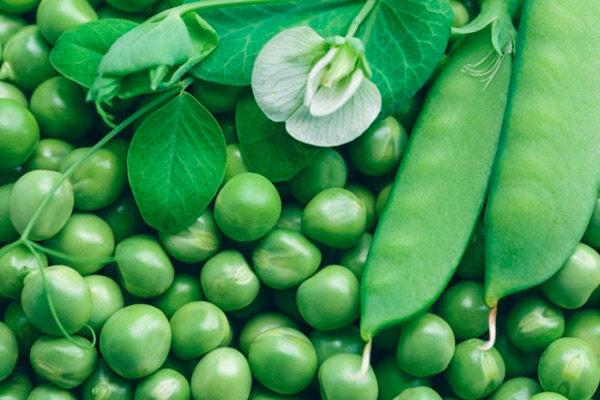
Garden pea is one of the most plastic protein crops with a great diversity of forms and varieties registered in the national and European variety lists. Globally, breeding priorities are focused on developing resistance to biotic and abiotic stress, including herbicide resistance, and selection of genotypes with higher adaptability and wide ecological plasticity.
At the Maritsa Vegetable Crops Research Institute – Plovdiv, one of the priority scientific areas of work is: Development of new varieties and hybrids of vegetable crops and potatoes by conventional and biotechnological methods with good chemical-technological and organoleptic qualities – balanced content of acids and sugars, optimal dry matter content, rich in natural antioxidants, suitable for fresh consumption and preparation of functional foods, resistant to biotic and abiotic factors.
Cultivated plants, including peas, are exposed to a wide spectrum of environmental loads, which reduces and limits their productivity. Two types of environmental stress occur in plants, which can be categorised as abiotic stress and biotic stress. Abiotic stress, such as low temperature, freezing, frosts, or high temperature, insufficient or excessive moisture, high salinity, heavy metals, herbicides and ultraviolet radiation, are unfavourable for plant growth and development, which inevitably leads to yield reduction. In addition to deteriorating the physiological status of plants and being able to cause their death, they affect the overall immune response and make plants more susceptible to pathogenic microorganisms. On the other hand, attacks by various pathogens such as fungi, bacteria, oomycetes, nematodes and herbivores are included in biotic stress.
Three groups of factors can cause abiotic stress in pea plants:
- The first group are mineral disorders caused by deficiency of micronutrients, but in some cases also by excess. Sometimes the presence of one element in excessive concentration can cause deficiency of another element. The requirement of pea plants for nutrients is much lower than that of other crops mainly due to biological nitrogen fixation.
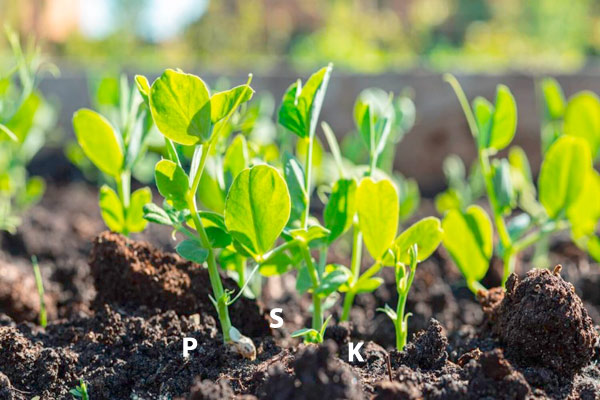
Nevertheless, they respond favourably to fertilisation with phosphorus (P), sulphur (S) and potassium (K). Application of balanced fertilisers (NPK) with micronutrients improves water uptake and helps to increase tolerance to drought and heat stress. Application of arbuscular mycorrhizal (AM) fungi also affects tolerance to water stress. The application of microbial inoculants has little effect on the agrochemical properties of the soil, but increases the concentration of micronutrients in the aboveground and root biomass; it increases the colonisation of roots with arbuscular mycorrhizal fungi. When growing peas under conditions of poorly available forms of essential micronutrients, inoculation with Pseudomonas chlororaphis (B108), Bacillus megaterium (B174) and a microbial consortium (B mix) increases the content of one or more of the elements Mn, Fe, Cu, Zn, Mg and K in the grains.
- The second group is related to environmental factors such as drought, waterlogging, low and high temperatures, soils with unfavourable properties – saline, alkaline, acidic, etc. The impact of high temperature and drought stress depends on its intensity and duration and prevents crops from reaching maximum yield, as a result of flower and pod abortion. Pea plants respond with reduced nitrogen fixation, uptake and assimilation due to decreased leghemoglobin in the nodules, as well as their number. Drought stress negatively affects productivity, pollen viability and chlorophyll fluorescence. Waterlogging affects a number of biological and chemical processes in plants and soils that can influence crop growth both in the short and the long term. Pea seeds are very sensitive to waterlogging during germination, as their level of metabolism is high. In addition, the incidence of soil-borne fungal diseases increases. Moisture conservation, e.g. by mulching in areas where there are no irrigation systems, and the use of water-saving irrigation methods – drip irrigation – are among the ways to manage water deficit and maintain yield stability. The negative effect of salt stress depends mainly on salt concentration, followed by genotype. At low levels of salinity, different pea genotypes show better seed germination, emergence and plant growth. Further increase in salt level leads to a significant reduction in plant growth parameters. Pea, as a cool-season crop, is highly sensitive to low-temperature stress during flowering and early pod formation stages.
- The third group of factors is related to human activity – application of pesticides, mainly herbicides, and the impact of various environmental pollutants. High concentration of herbicides slows down the rate of cell division in the root meristem cells of pea and has a strong genotoxic effect on the meiotic process.
The problem of biotic stress – the attack of pea crops by diseases and pests – is specific for each country, both in terms of species composition and economic importance. Biotic stress arises as a result of plant damage by other living organisms, e.g. weeds, insect pests, disease agents, nematodes, etc. Among them, fungi and viruses are the largest and most important groups, affecting virtually all plant parts and stages of its growth. Seedling, root and stem base rot is a complex disease caused by various soil-borne pathogens, most often the fungi Pythium sp., Fusarium sp., Rhizoctonia sp. Among them, Fusarium oxysporum f. sp. pisi is of particular importance. More than fifty pea genotypes studied at the VCRI showed high resistance to the pathogen under laboratory and field conditions. They can successfully be used in combinative breeding as donors for the development of resistant varieties – the most effective and cheapest method in the control of Fusarium wilt.

Pea enation mosaic (Pea enation mosaic virus)
Pea plants are susceptible to numerous plant viruses that cause severe diseases – Pea enation mosaic (Pea enation mosaic virus), Bean yellow mosaic (Bean yellow mosaic virus), Pea seed-borne mosaic virus (Pea seed-borne mosaic virus, PSbMV). The viruses are transmitted by aphids and infected seeds. They may persist latently in many field weed species that serve as a reservoir of infection. The development, introduction and cultivation of resistant varieties in combination with proper agronomic practices are a guarantee for overcoming the problem. The species composition of diseases in peas under the conditions of Bulgaria is represented by pathogens causing leaf spots: ascochyta blight (Ascochyta pisi L. and A. pinodes Jones), rust (Uromyces fabae Perd By), powdery mildew (Erysiphe communis Frf. pisi Diet), downy mildew (Peronospora pisi Syd.).
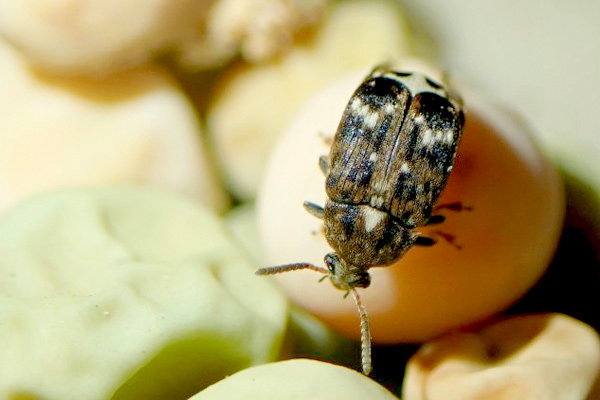
In field-grown peas, a common pest is the pea weevil (Bruchus pisi L.). Damage is caused by the larva, which for its complete development destroys a large part of the grain content, affecting also the embryo. Damaged seeds reach up to 56%, have lower weight and reduced germination. In some years, serious damage is caused by the pea aphid (Acyrthosiphon pisum Harris); leafrollers can multiply massively and are considered a serious pest.
Weeds are a serious problem in uncontrolled crops and cause yield reductions from 20 to 90%. In addition, they are hosts to many pests – insects, pathogens, nematodes. The initial vegetative stages of pea development are more susceptible to weed infestation due to the slow growth rate of the crop. In well-developed, dense pea stands, the crop shades late-emerging weeds, which reduces the risk of secondary weed infestation. Therefore, when growing green peas, conditions must be created for uniform emergence and rapid growth and development. For this purpose, sowing must be carried out with healthy, high-quality seeds that have good germination, optimal mineral nutrition must be applied and regular soil moisture maintained. Integrated weed control should properly combine agronomic practices with the application of effective herbicide systems for the control of annual and perennial weeds.
In conclusion, biotic and abiotic stress factors are the main barrier to realising the yield potential and improving the productivity of peas. To ensure sustainable pea production under the impacts of climate change, integrated approaches are needed, including appropriate varieties, agronomic practices, bioagents and plant protection products. It is necessary to focus on the development of varieties with resistance/tolerance to different types of stress with the help of biotechnological tools for improving the crop.
References
- Chavdarov P., Sl. Kalapchieva, 2014. Study of the resistance of local and introduced pea accessions to the causal agent of Fusarium wilt Fusarium oxysporum f.sp., pisi, Agricultural Sciences, AU-Plovdiv, VI, 15, 27-32, http://agrarninauki.au-plovdiv.bg/wp-content/uploads/2019/04/04_15_2014.pdf
- Yankova V., O. Georgieva, D. Markova, Iv. Tringovska, S. Kalapchieva, 2021. Systems for sustainable management of pests and soil fertility in field bean production, Proceedings of the National Scientific and Technical Conference with international participation “ECOLOGY AND HEALTH” 28-29 October 2021, 27-32, ISSN 2367-9530, http://hst.bg/bulgarian/conference.htm
- Arnaoudova, Y., E. Topalova, S. Kalapchieva, A. Elshanska, 2024. Screening of Garden Pea (Pisum sativum L.) Genotypes for Drought Stress using Cytological and Physiological Parameters. In Journal of Mountain Agriculture on the Balkans (Vol. 27, Issue 5, pp. 174–188). https://jmabonline.com/en/article/p71Zbnu1T3rgZ6Coec30
- Arnaudova Y., 2024. Cytotoxic Effects of Herbicides Pendinova and Nasa on Root Meristems of Garden Pea (Pisum sativum L.) Variety Marci. In Journal of Mountain Agriculture on the Balkans (Vol. 27, Issue 6, pp. 176–188). https://jmabonline.com/en/article/DOmfNBq84cMLqgdRsqqX
- Grozeva S., S. Kalapchieva, I. Tringovska, 2023. "In Vitro Screening for Salinity Tolerance in Garden Pea (Pisum sativum L.)" Horticulturae 9, (3): 338; https://doi.org/10.3390/horticulturae9030338
- Kalapchieva S., R. Bozhinova, T. Hristeva, 2024. Micronutrient concentration in garden pea genotypes as affected by inoculation of arbuscular mycorrhizal fungi and plant growth promoting rhizobacteria. Bulgarian Journal of Soil Science Agrochemisty and Ecology, 58(4), 21–34 (Bg).0861-9425(print); 2534-9864(online). DOI: https://doi.org/10.61308/QLKP3659; https://www.researchgate.net/publication/387310474_Micronutrient_concentration_in_garden_pea_genotypes_as_affected_by_inoculation_of_arbuscular_mycorrhizal_fungi_and_plant_growth_promoting_rhizobacteria
- Kumar, K., S. Solanki, S. N. Singh, M. A. Khan, 2016. Abiotic constraints of pulse production in India. (In) Disease of Pulse Crops and their Sustainable Management, pp. 23–39, Biswas, S.K., Kumar, S. and Chand, G. (Eds). Biotech Books, New Delhi, India.
- Rana D. S., A. Dass, G. A. Rajanna, R. Kaur, 2016. Biotic and abiotic stress management in pulses, Indian Journal of Agronomy 61 (4th IAC Special issue):S238–S248, (2016). https://www.researchgate.net/publication/311225970