FRUIT LOGISTICA 2025: Platform for Knowledge Exchange and Partnerships
Author(s): Растителна защита
Date: 08.02.2025
2420
![MultipartFile resource [file_data]](/assets/img/articles/заглавна-fruitlogistick-2025.jpg)
At the beginning of February, Berlin once again hosted the international trade fair for professionals in the fruit and vegetable production and sales sector. From 5 to 7 February, the capital of Germany was the venue of FRUIT LOGISTICA 2025. With over 2,600 exhibitors from more than 90 countries, the event has established itself over the years as a three-day forum covering all aspects of the food chain – from the creation of new varieties for the market, through global consumer trends, to trade and innovation in both sectors.
The motto “Useful Connections” of FRUIT LOGISTICA 2025 highlighted FRUIT LOGISTICA’s focus on promoting valuable partnerships and cooperation within the industry.
Strong trade fair presence
This year’s event covered 26 exhibition halls and traditionally attracted a large number of exhibitors from Europe, such as Italy, the Netherlands, Spain, Germany and France. In 2025, Italy clearly dominated as the main exhibitor with more than 400 companies participating in the forum.
p>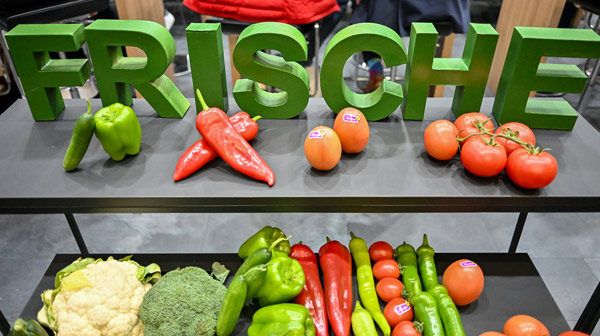
The exhibition also recorded record participation of exhibitors of fresh fruit and vegetables from China, Türkiye, Egypt and Peru. China’s presence increased by one third, Türkiye’s by 12 percent, and Israel’s – which has a strong presence in machinery and technologies – by a remarkable 20 percent.
Bulgarian greenhouse producers presented their products at a joint collective stand
The Bulgarian Association of Greenhouse Growers (BAGG) participated in the exhibition at stand D-20 in hall 6.2, presenting eight full and associate members of the Association. Bulgaria’s participation was supported by the Ministry of Agriculture and Food and the State Fund “Agriculture”. In line with the motto of the exhibition “Useful Connections”, the forum offered Bulgarian exhibitors the opportunity to expand their markets and establish new and reliable partnerships.
Within the discussion panel Future Lab, part of the main programme of FRUIT LOGISTICA, Bulgarian experts presented innovative solutions for minimising food waste and preserving yields under adverse climatic conditions.
An indispensable platform for knowledge exchange
The fruit and vegetable sector operates in a complex environment characterised by climate change, geopolitical tensions, rising production costs and changing consumer preferences. In this context, the trade fair offered a rich programme of events with more than one hundred speakers who presented new ideas on the five stages of the exhibition. In fact, nowhere else in the world could visitors find such a comprehensive programme focused on trends and innovations in the fresh produce industry.
The Fresh Produce panel examined key challenges facing the industry, such as supply chain sustainability and regulatory changes, while Future Lab showcased innovative solutions for securing yields despite extreme weather conditions. The Tech Stage, Logistics Hub and Farming Forward panels focused on industry-related topics such as packaging, efficient logistics and advances in sustainable agriculture.
Exciting technologies
This year, the hall with Startup World was extremely popular, where, throughout the entire exhibition in Berlin, new technologies in agriculture were presented for the first time. Various technologies in the fields of agrotechnology, digital farming, crop cultivation and protection, and post-harvest solutions were brought together in one place.
Start-ups from around the world showcased innovative solutions using digitalisation, artificial intelligence and modern sensor technologies to help make production more efficient and sustainable.
In Startup World in hall 3.1, FRUIT LOGISTICA provided young companies with the opportunity to connect with industry leaders, potential partners and international trade visitors and to build valuable business relationships.
The FRUIT LOGISTICA 2025 Innovation Awards
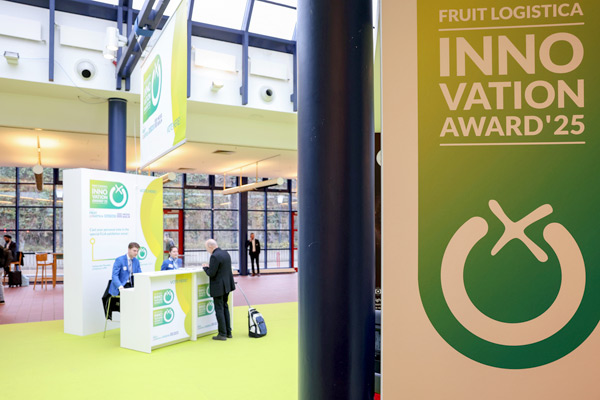
The culmination of the fair in Berlin is the presentation of the annual Innovation Awards, which always takes place on the last day of the exhibition.
The award ceremony this year took place on 7 February 2025 at the special FLIA Technology exhibition between halls 1.1 and 2.1.
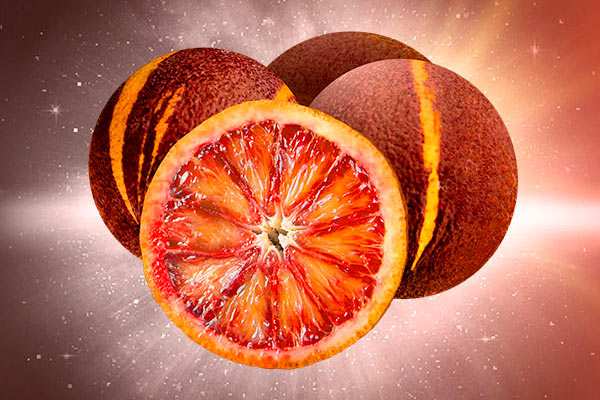
The attractive citrus fruit ONIX™ was unanimously announced by the jury as the winner of the FLIA 2025 innovation competition. Developed in Spain, ONIX™ oranges are smaller in size – 85–105 mm – and are offered loose or in packs of 3 or 5. Their appearance resembles a glow with colours ranging from bright orange to deep burgundy. The fruit is seedless and rich in antioxidants. The ONIX™ citrus fruit combines excellent taste with an attractive commercial appearance, making it suitable not only for direct consumption, but also for dishes, desserts and beverages.
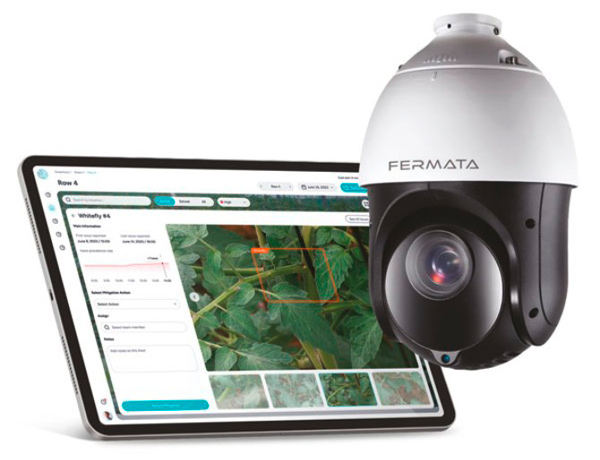
In the FLIA Technology category, the first prize was awarded to the Israeli company Fermata Technology for its Croptimus™ solution for greenhouse vegetable production. Small cameras placed at different locations in the greenhouse continuously record, in a real environment, the changes that occur during the cultivation of vegetable crops. The data are collected, processed and analysed using an artificial intelligence-based system that can identify diseases and pests even before they become a serious problem for the producer. Thus, Croptimus™ helps farmers reduce costs and minimise yield losses.
Among the nominees for the FLIA 2025 Innovation Award we also found interesting proposals that highlight trends in the production and trade of fresh vegetables and fruit:
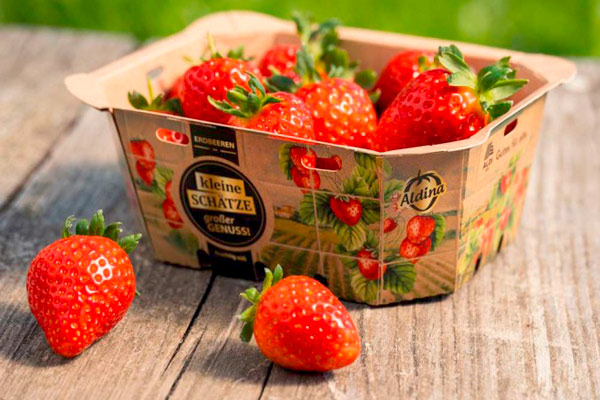
“ALDIna” is a strawberry variety created specifically for the German retail food chain Aldi Süd. In cooperation with their long-standing partner Frutania, ALDIna strawberries are grown only in Germany by farmers from across the country. This cooperation ensures the supply of fresh fruit from regional companies to retailers in major food chains in the shortest possible time.
The cultivation methods used by German farms make it possible to deliver flavoursome strawberries from the beginning of April to the end of December. They are produced under the principle of controlled integrated cultivation, which means that beneficial organisms are used.
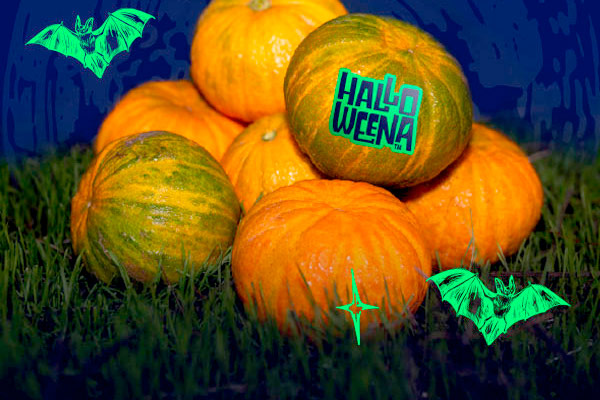
The Spanish are completely changing the traditions associated with the Halloween holiday and are introducing a mandarin in the shape of a pumpkin. Sweet, seedless and easy to peel, Halloweena™ is oriented towards healthy eating, even on holidays. The distinctive peel of the fruit turns it into an irresistible treat for both children and adults. The fruit is expected to be launched in the country’s retail chains in the autumn.
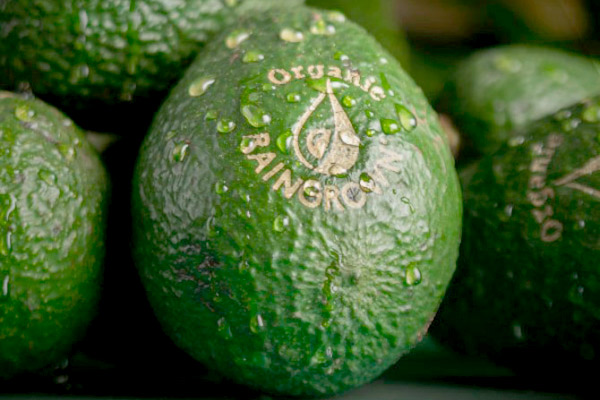
Europe’s appetite for superfoods has been steadily increasing in recent years. Avocado is one of the crops that is increasingly present in Europeans’ diets and is becoming an established sustainable choice in healthy eating trends. According to forecasts, the expected market size for this crop will exceed 3 billion euros by 2029.
Avocado cultivation requires a lot of water, which is becoming increasingly scarce in many regions of the world due to climate change. Eosta, the Netherlands, offers a sustainable solution: Organic Raingrown Avocado. Organic Raingrown avocado is grown without additional irrigation, using only rainwater. Pesticides and fertilisers are also not used in the production of Organic Raingrown Avocado. This environmentally friendly method saves valuable water resources and reduces the ecological footprint.
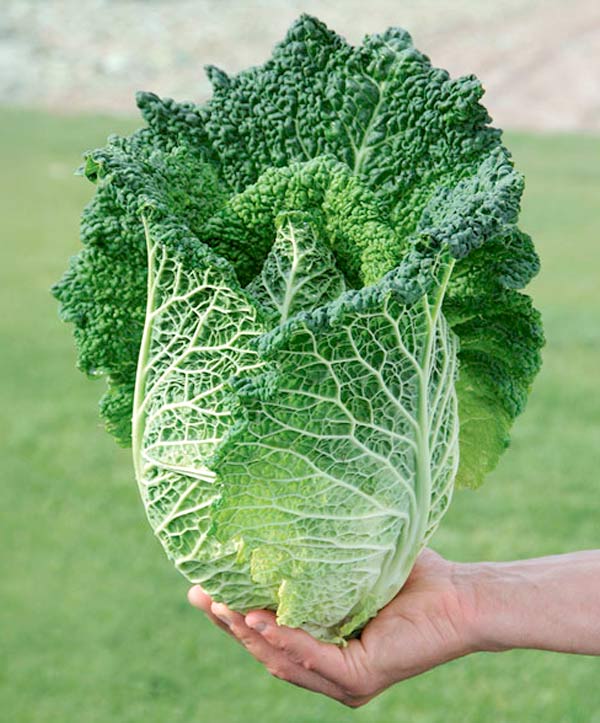
The latest addition to the portfolio of the Dutch company Bejo, a leading vegetable seed breeding company, is the savoy cabbage “Samanta F1”. The variety has a slightly sweet taste and is rich in fibre and vitamins.
Samanta F1 has a fresh green colour, a compact shape and a long shelf life.
This makes it ideal for salads, stir-fry dishes and grilling.
In addition, “Samanta F1” is convenient for consumers: it is easy to cut, handle and pack.
*Savoy cabbage belongs to the order of cruciferous plants. Its leaves are tender, curly and even appear wrinkled with small bubbles, coloured in various shades of green.
Savoy cabbage originates from the Mediterranean region. It was first grown in large quantities in Italy in the 16th century. Gradually, it spread to Northern Italy and France. Savoy cabbage prefers a warm and dry climate and today is grown mainly in China, as well as in India, Russia and also in South Korea. Under favourable conditions it can also be grown in home greenhouses.
Savoy cabbage is considered both a spring and an autumn-winter vegetable. It is sold from March to August and from August to November. Outside the season it is imported, so it is available all year round. It is a good source of vitamin C. Savoy cabbage also contains large amounts of B vitamins and various minerals that are very beneficial for metabolism.
Unlike white cabbage, savoy cabbage is consumed only fresh. You can use it to prepare delicious salads. This cabbage can also be used in the preparation of various dishes. It is suitable as a garnish for hors d’oeuvres or main courses, but it cannot be preserved.
Photos © Messe Berlin GmbH