Anaerobic digestion of biological waste - a source of energy and environmental protection
Author(s): Нора Иванова, Редактор Растителна Защита /РЗ/
Date: 24.06.2015
5733
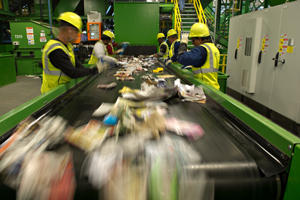
Recently, there has been increasing discussion about intelligent solutions for processing biological waste. Alongside the EU's high environmental requirements and policies aimed at reducing the percentage of general waste, technologies and facilities are being developed that not only solve the problem but also simultaneously extract benefits in the form of an energy source. Modern and sustainable—the key new words for efficiency in our contemporary society. Anaerobic digestion is defined as a safe, reasonable method with high energy potential, where biological waste is left to decompose under the influence of anaerobic bacteria in an oxygen-free environment. It is applied equally well for processing food biological waste from households, restaurants, food and beverage processing plants, fats, including primary and secondary agricultural waste. In the decomposition process within controlled biogas production reactors, a mixture is obtained primarily of methane - 50-75%, carbon dioxide - 25-50%, and small amounts of nitrogen, hydrogen, hydrogen sulfide, and oxygen.
Process
Anaerobic digestion begins with bacterial hydrolysis of insoluble organic polymers such as carbohydrates, lipids, and proteins, after which they are converted into soluble monomers—amino acids, fatty acids, glucose, and glycerol—suitable for processing by other bacteria. In the next step, acid-forming (fermentative) bacteria convert sugars, amino acids, and fatty acids into simple organic acids like acetic, formic, succinic, butyric, and lactic acids, alcohols and ketones (ethanol, methanol, acetone), acetate, carbon dioxide, and hydrogen. The resulting product varies depending on the type of bacteria and conditions (temperature, pH, redox potential). Then, acetogenic bacteria come into action, converting fatty acids and alcohol into acetate, hydrogen, and carbon dioxide, which are used by methanogenic bacteria. At this stage, good control of hydrogen concentration is necessary because at high hydrogen partial pressure, acetogenesis is reduced and the substrate is converted into butyric acid and ethanol instead of methane. In the final stages, it is the turn of methanogenic bacteria, which occur naturally in decomposing matter. This is a broad group of gram-positive and gram-negative bacteria with a great diversity of forms. Two-thirds of the methane is produced by methanogenic bacteria from acetate, and the remaining one-third—from the reduction of carbon dioxide by hydrogen. The methane can be utilized by directly feeding it into burners for electricity production or it can be purified and added to the gas grid for domestic use.
In this way, the residues will be processed at the recently opened vegetable processing plant in the village of Dolna Dikanya, Radomir region.
Bulgaria has potential for biogas production from agricultural waste, according to various studies by the European Commission, but their implementation is still at the project level. Only the facility built in the village of Kubratovo for anaerobic digestion of sludge from the Sofia Water treatment plant can fall under the common denominator for renewable resources. Compared to countries like Germany and Austria, where biogas is not a point for discussion but an actual measure for eliminating unnecessary waste, in Bulgaria it is an exotic topic until it becomes a profitable niche for specific political circles.
In Germany, around 7,900 biogas plants are operating, with the goal being to reach 20,000 by 2020. In Austria, the facilities are approximately 500 and produce with an installed capacity of about 100 MW of electrical energy, according to expert data. Biogas plants process waste and energy crops from agriculture, waste from the food and beverage industry, food supply chains and gastronomy, as well as slaughterhouse waste. Worldwide, and here at home?