A step forward in the negotiations on the protection of essential oils in the EU
Author(s): Растителна защита
Date: 08.10.2023
2828
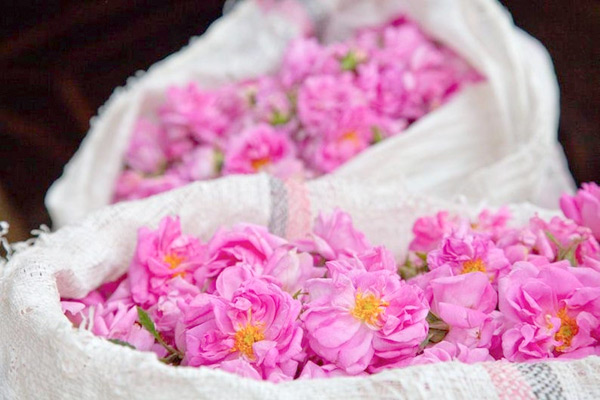
![MultipartFile resource [file_data]](/assets/img/articles/етерични-масла-1.jpg)
The European Parliament approved a compromise text that excludes essential oils from the new classification proposed by the European Commission under the so-called Regulation on the classification, labelling and packaging of substances and mixtures (CLP).
The initial text, which affects producers of essential crops, envisaged the chemical components of rose oil to be listed separately and some of them to be designated as potentially hazardous on the basis of elements they contain which, under certain conditions, may cause adverse effects on human health.
The final texts will be adopted following negotiations between the Council, the European Commission and the European Parliament.
Regarding the other regulation also concerning essential oils, the Regulation concerning the Registration, Evaluation, Authorisation and Restriction of Chemicals (REACH), changes in favour of producers are likewise expected by the end of the year.
Background to the Regulation on the classification, labelling and packaging of substances and mixtures (CLP) in the EU
At the end of 2022, the European Commission published the proposal for amendments to the CLP Regulation, under which it was envisaged that essential oils would be classified as harmful to health. In addition, in its initial proposals for amending the Regulation, in line with the Green Deal, the Commission based its amendments on the fact that essential oils entering the soil (after the use of cosmetic products, for example) may cause contamination of the environmental compartment.
The intention of the European Commission to change the way essential oils are labelled caused serious concern among European and Bulgarian producers, processors and traders of rose and lavender oil due to the potential requirement that their products be designated as hazardous to health, which could negatively affect both the production and the market for essential oils.
At the beginning of March, the Bulgarian public was alerted to the problem by the Mayor of Kazanlak, Galina Stoyanova, who, at the invitation of Andrey Novakov in the European Parliament, arrived in Brussels to defend the importance and impact of the envisaged amendments on the livelihood of Bulgarian rose growers.
Bulgarian rose oil – a high-value product
In May, the representatives of Bulgaria from all political groups in the European Parliament united around a common position to protect Bulgarian rose oil and submitted a request that all texts in the CLP Regulation treating essential oils as a chemical mixture be deleted. The request for amendment was supported by Members of the European Parliament from five European countries: France, Spain, Italy, Romania and Croatia.
The Bulgarian MEPs pointed out that, as a result of the Commission’s amendments to the regulations on essential oils, small regional producers are placed at a disadvantage and the EU opens the door to competitive imports from third countries.
The Council of the EU adopted a legislative proposal to protect essential oil producers
In July, in connection with the Regulation proposed by the European Commission amending the legislation on the classification, labelling and packaging of substances and mixtures, the Council accepted the arguments of Bulgaria and seven other Member States regarding the difficulties in adopting the proposed approach and included a review clause requiring new analyses by the Commission to be presented after four years.
In September, at the initiative of Andrey Novakov, a replica of a traditional Bulgarian installation for distilling rose oil was installed in the European Parliament in Brussels. The initiative aimed to highlight the harmless production process of oil from the Bulgarian oil-bearing rose, its pure origin and its beneficial effects.
“Distilled in Bulgaria” standard
Another important step in establishing Bulgarian essential oils as a natural product is the creation of the “Distilled in Bulgaria” standard. The introduction of this standard will harmonise the criteria for quality distillation practices in Bulgaria and will create a common distillation manual.
The establishment of the “Distilled in Bulgaria” standard was the subject of a meeting at the end of July between the Mayor of Kazanlak Municipality, Galina Stoyanova, the Director of the Institute of Rose and Essential Oil-Bearing Crops (IREMC) at the Agricultural Academy, Assoc. Prof. Dr. Ganka Baeva, and representatives of the association of essential oil producers “Distilled in Bulgaria”.
With its registration under the Geneva Act in the International Register of the World Intellectual Property Organization at the end of April, Bulgarian rose oil now enjoys better visibility and protection.
The establishment of Bulgarian essential oils as a natural product plays a significant role in the development of the sector both at regional and at global level.