

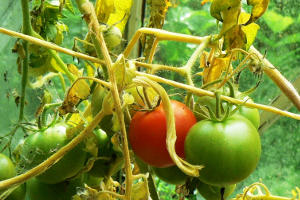
Cultivated plants are attacked by many pathogens – viruses, fungi and bacteria, which cause significant damage to them. The result is a severe reduction in yields and sometimes even the failure of the entire production. Some abiotic factors, which cause so-called non-infectious diseases, can also lead to adverse consequences.
Abiotic factors are determined by unfavourable soil conditions related to high or low soil moisture and temperature, deficiency or excess of nutrients, presence of toxic substances in the soil, overdosing of plant protection products, etc. These factors impair the physiological condition of plants and may cause their death or make them more susceptible to pathogenic microorganisms.
Soil conditions
Physical properties and pH.
Structure
It is of great importance for plant development. It determines the ability of the soil to retain water and nutrients in a form available to plants. It is particularly important that it is well aerated. In clay and compacted soils, roots are poorly developed, plants suffer from oxygen deficiency and lag in their growth. In such soils, water often remains on the surface and plants die from asphyxia.
Soil pH
The most favourable environment for plant growth and development is slightly acidic to neutral, in the range of 6–7. Values outside this range pose a serious threat, because they affect the solubility of nutrients in the soil. At pH below 5.5, the amount of available calcium, magnesium and phosphorus decreases sharply. The solubility of aluminium, iron and boron increases. Elevated levels of available forms of these elements are the cause of toxicity in plants. At high pH levels above 7–8, the amount of available calcium and magnesium increases at the expense of phosphorus, boron, iron, manganese, zinc and copper. Plants grown in such soils exhibit symptoms of deficiency of these elements.
Calcium in the soil – a new tool in the fight against climate change
Correction of soil pH is carried out by applying limestone (calcium carbonate) in acidic soils or sulphur in alkaline soils. The nitrogen sources used for fertilizing plants during the growing season can also affect the soil environment – the ammonium form lowers, and the nitrate form increases the pH. The use of ammonium sulphate leads to acidification of the soil environment. By changing soil pH, some soil-borne pathogens and weed species can also be controlled. For example, the development of clubroot in cabbage requires an acidic environment. Liming the soil to increase pH greatly restricts the development of this disease. Conversely, acidifying the environment through fertilization with ammonium sulphate limits corky root attack in tomatoes.
Nutrients – excess and deficiency
Excess of nutrients
This occurs in the case of excessive, unbalanced fertilization with macroelements, mainly during the growing season. Nitrogen toxicity is observed under dry and hot conditions. Plant leaves darken, and sometimes lesions may appear on the stems. In case of excess nitrogen, tomato plants twist and bend, and the deformations resemble symptoms caused by viruses. Toxicity caused by an excess of microelements is observed when soil pH is low or when the water used for irrigation of crops contains an increased amount of these microelements. The presence of lead, arsenic and heavy metals also causes toxic manifestations in plants.
Nutrient deficiency
Most often it is due to the absence or insufficient amount of the main nutrients in the soil. Sometimes the deficiency may be due to unfavourable soil conditions that block certain elements such as Ca, P and Fe and make them unavailable to plants. In these cases, soil analysis reports the presence of sufficient quantities of these elements, but does not provide information on their availability. Nutrient deficiencies are often not associated with typical symptoms and can sometimes be confused with damage caused by pathogens, most often viruses. Therefore, the nutrient deficiency must be diagnosed – most accurately through analysis of plant tissues. Visually, this can also be done based on external symptoms. Mobile nutrients usually concentrate in the growing tip and symptoms appear first on the oldest leaves. Conversely, immobile ones should be sought in the meristematic tissues of plants.
Nitrogen (N)
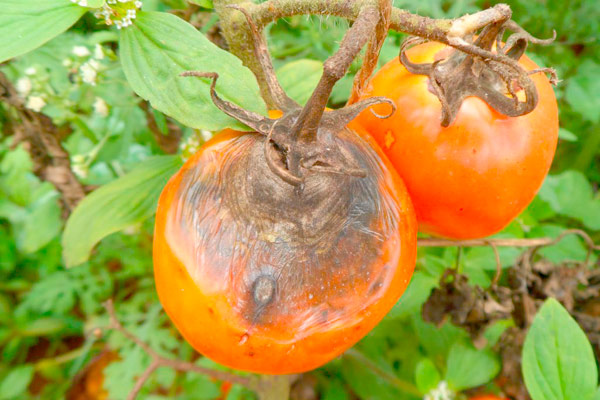
Alternaria solani
Nitrogen (N) is an important element for plant growth and development. It is a constituent of proteins and chlorophyll. Therefore, in case of nitrogen deficiency, plants have a pale green to pale yellow colour. Nitrogen is very mobile in plants, so in case of deficiency, the symptoms appear first on the older leaves. The deficiency increases susceptibility to some foliar pathogens – Alternaria solani. It may be due to root infection by root-knot nematodes (Meloidogyne spp.). Conversely, an excess of this element increases plant susceptibility to Botrytis cinerea or Rhizoctonia solani.
Phosphorus (P)
Phosphorus (P) is among the weakly mobile elements. In plants it participates in photosynthesis and in energy transfer in the form of ATP (adenosine triphosphate). It is a constituent of DNA and is important for flowering and seed formation. Its deficiency impairs plant growth and development, and they acquire a violet colour. Plants grown in acidic and clay soils are particularly susceptible to phosphorus deficiency. Low temperatures and limited oxygen access to the roots can also lead to such deficiency.
Iron (Fe)
Iron (Fe) is a key component in the production of chlorophyll in leaves. Its deficiency is a serious problem for plants. It leads to chlorosis, especially in calcareous soils. It affects the tissue between the veins and appears on the youngest leaves. Usually, the soil contains sufficient amounts of iron, but its availability depends on soil reaction. Maintaining pH < 7 is crucial for optimizing its content in plants. It is influenced by low temperatures, low light intensity and soil moisture.
Potassium (K)
Potassium (K) plays a key role in the processes occurring in plant cells, as well as in photosynthesis. It is of great importance for product quality. Symptoms of deficiency include chlorosis and necrosis on the leaves. Plants developing under potassium deficiency conditions are susceptible to frost damage and some diseases. Its uptake is influenced by environmental conditions.
Physiological changes induced by calcium deficiency or excess
Calcium (Ca)
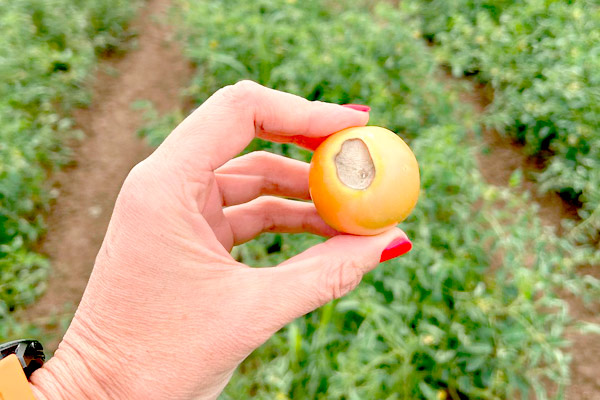
Blossom-end rot in tomatoes – photo Fitto Terra
Calcium (Ca) deficiency can be a serious problem in vegetable and fruit production. It most often occurs in acidic soils. Soil moisture strongly affects its uptake by plants. Calcium is an important component in the construction of cell walls. Calcium deficiency is the cause of blossom-end rot in vegetables and bitter pit in fruits. It also causes increased plant susceptibility to pathogens.
Magnesium (Mg)
Magnesium (Mg) is an important component of the chlorophyll molecule. Its deficiency causes chlorosis and slowing of photosynthesis. As a result, leaves age prematurely. Excessive fertilization with K or Ca can lead to Mg deficiency. It is particularly important to maintain a certain ratio between Ca and Mg in the soil.
Water
It is an important prerequisite for plant growth and development. The water requirements of different plant species vary. Its deficiency or excess disrupts plant physiology and biochemistry. Plant recovery depends on the duration of the adverse impact. Sometimes the damage may be irreversible. Symptoms can often be confused with damage from root rot or wilting caused by fungal pathogens. Under chronic water deficit, plant growth and development are delayed. In case of excess, oxygen access to the roots decreases and asphyxia is observed. Plant susceptibility to pathogens such as Phytophthora spp. and others increases.
Temperature anomalies
Air and soil temperature have a significant impact on plant development. Usually, the root system and the aerial parts have different requirements and tolerance to temperatures. At excessively high values, plants may stop their development. Roots die, scorching appears along the leaf margins and subsequently the leaves fall. Flowers are not fertilized and drop. At low temperatures, violet colouring of leaves and stems is observed, and when they are below 0 °C, frost damage may occur. Low temperatures combined with freezing moisture lead to ice accumulation on tree tops and cause frost damage and mechanical injuries. At low temperatures, cracking of stems, shoots, etc. is possible. The cracks predispose to attacks by pathogens or insects. Such plants are susceptible to infections caused by bacterial canker and others. Low-temperature damage may be mistaken for infectious root diseases or chemical toxicity.
Chemical damage
It is most often caused by plant protection products (PPPs) or growth regulators. It is observed when inappropriate PPPs are used, when two or more products are mixed incompatibly, or when they are overdosed.
The most common damage from PPPs is observed with herbicides – in cases of overdosing or inappropriate use. They can cause stunting of roots or phytotoxic damage to the above-ground mass, which often resembles virus attack. This damage affects photosynthesis, root growth, fruit set and others.
Fungicides and insecticides more rarely cause phytotoxicity – when the dose is greatly increased or in case of improper mixing (most often with copper-containing products). Their use must comply with compatibility tables.
Growth regulators. They change plant physiology and affect growth, flowering and fruit set. Their composition includes both stimulants and some inhibitors. In case of incorrect dosage or use under unsuitable climatic conditions (intense light and high temperatures), they can cause significant damage to plants, expressed in colour change, delayed growth or phytotoxicity.
Air pollutants
Some gaseous pollutants in populated areas, such as ozone and sulphur dioxide, can also cause damage to plants resembling damage from pathogens and insects. For example, ozone causes spotting similar to mite damage or bronzing, chlorosis and necrosis resembling pathogen damage. Another dangerous air pollutant is ethylene, which causes damage manifested as deformation of leaves and stems, abortion of flowers, growth cessation, etc. These symptoms may be mistaken for viral infection or herbicide damage.
Damage from unfavourable weather conditions
Strong winds, torrential rains, snowfall and hail can cause damage to the stems, leaves and fruits of plants. After such extreme conditions, crops require increased care, the damage must be assessed and a decision taken whether they will be destroyed or measures will be taken for their recovery.
Other damage that may be confused with diseases caused by pathogens includes variegated or white plants lacking chlorophyll. This condition is the result of a genetic mutation and is most common in vegetatively propagated plants.
The listed plant damage caused by abiotic factors shows that in every deviation the correct diagnosis must be made. Attention should be paid to both the biotic and abiotic environmental factors. When leaf spots appear on a plant, they may be due to fungal or bacterial infection, but may also be a consequence of abiotic stress. The use of fungicides in such cases is unnecessary.
Abiotic stress induces symptoms in plants that are very similar to those caused by biotic stress from infectious agents. It can increase their susceptibility to these pathogens. Good knowledge of the damage caused by abiotic stress is crucial for overall plant health management.
* The article was updated on 17.07.2024