Western Polish click beetle - Agriotes ustulatus Schall
Author(s): Растителна защита
Date: 05.04.2015
3885
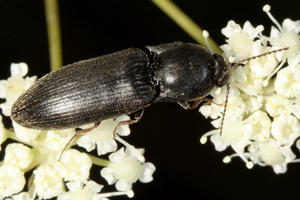
The Western Polish wireworm is found throughout the country. It attacks corn, tomatoes, potatoes, cabbage, and others.
The adult insect has an elongated-oval, light brown to dark brown body with a length of 8.5-12 mm. It has a three-year development, which occurs within four calendar years.
The most common species of wireworms on vegetable crops develop one generation over 4-5 years and overwinter as larvae of various ages and as adult insects in the soil. The overwintered beetles leave their hibernation sites in late April and early May. They feed on flower parts and leaves of various plant species to reach sexual maturity, after which they copulate and the females lay their eggs in the soil around plants, singly or in groups up to 5-6 cm deep. They prefer moist and humus-rich soils. Such places are typically fallow lands, alfalfa fields, meadows, clearings, etc. One beetle can lay up to 500-600 eggs. The eggs are very sensitive to high temperatures and low humidity. The embryo develops slowly (20-30 days).