

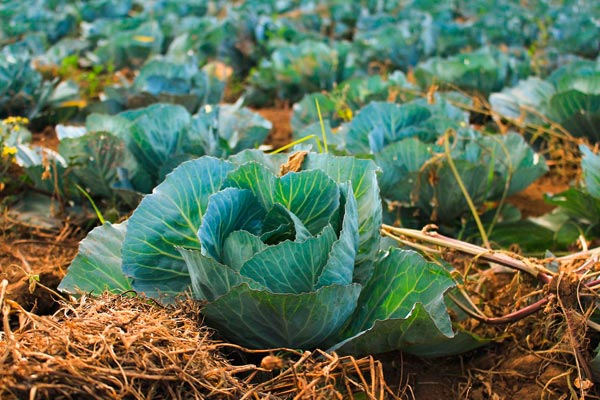
Cruciferous crops are attacked by many diseases caused by viruses, bacteria and fungi. Of economic importance are the causal agents of mosaic, bacteriosis, damping-off in seedlings, clubroot, downy mildew, powdery mildew, black leaf spot and Sclerotinia (white) rot in cabbage.
Agrotechnical and organizational practices in seedling production
- Growing seedlings far from seed production and other cruciferous crops;
- Growing in a pathogen-free substrate;
- Disinfected pots, trays, etc.;
- Optimal soil moisture;
- Optimal seedling density;
- Removal of the first diseased plants and their destruction far from the seedbeds;
- Treatment with plant protection products when necessary.
Agrotechnical and organizational practices after transplanting
- Transplanting healthy seedlings;
- Optimal crop density;
- Weed and volunteer control;
- Strict phytosanitary regime;
- Optimal soil moisture regime and optimal agrotechnics;
- Balanced fertilization;
- Monitoring for the occurrence and spread of pests;
- Introduction of crop rotations;
- Mechanical collection of severely affected plant parts with disease spots and their destruction;
- Treatment with plant protection products. Alternation of plant protection products with different functional groups to prevent resistance;
- Application of plant protection products with a short pre-harvest interval during the harvesting period.
The pest control system for cruciferous crops is published in issue 6/2018 of the journal “Plant Protection”.