

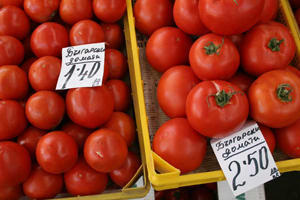
125 million euros in aid for fruit and vegetable producers affected by the Russian embargo. The measures come into force on 18.08.2014
Polish tomatoes on the Bulgarian market, tons of Austrian apples that will not reach consumers in Russia, overproduction of peppers, and visible tension among European farmers are just some of the potential consequences of the Russian ban on imports of vegetables and fruit. Dutch farmers are painfully feeling the export embargo to Russia, because until now their fruits and vegetables were sold en masse on the Russian market. Austrian agricultural producers are also affected - they export products worth 238 million euros annually to Russia - mainly dairy products, vegetables, fruits, and meat products. Among the losers from the embargo are many other European countries: Belgium, Bulgaria, Poland, France, and the Baltic states. In truth, however, poorer Russian consumers will also lose from the embargo, because until now some products from the EU were sold quite advantageously in Russia, while the vegetables from the Caucasus or Central Asia that will replace them are much more expensive.
The Russian embargo forced the European Union to undertake a series of measures to support fruit and vegetable producers in the member states of the Community. In the context of the Russian restrictions on imports of agricultural products from the EU and following a meeting-discussion last week on the market situation, the European Commission is introducing measures to support certain perishable fruits and vegetables. The products that will be able to benefit from the measures are as follows: tomatoes, carrots, cabbage, peppers, cauliflower, cucumbers, gherkins, mushrooms, apples, pears, red fruits, dessert grapes, and kiwis. The markets for these products are in an active season, farmers do not have the possibility for prolonged storage, nor for quick realization on alternative markets, further point out the EC.
"The emergency measures come into force immediately, as of today," commented Dacian Cioloș, European Commissioner for Agriculture and Rural Development. The budget, which will amount to 125 million euros, aims to fully support the affected agricultural regions and the respective producers. The use of the measures is guaranteed until the end of November, when the mandate of the current European Commission expires.
How the measures will work
European farmers are given the opportunity to destroy five percent of their harvest after submitting a corresponding application. In return, they will receive compensation for losses from the European agricultural budget amounting to 50 percent of their potential income. If, however, they do not destroy their harvest but provide it to those in need - schools or charitable organizations - they will receive 100 percent compensation for the losses.
It is still not clear to what extent each country in the European Union will be able to benefit from the agricultural aid. A final answer will be given after the emergency meeting of agriculture ministers on September 5, when the amounts in this sector will be specified. Currently, the requests of farmers from different countries are being reviewed so that the damages can be assessed as thoroughly as possible and, accordingly, the most optimal financial decisions can be made. Some EU member states have already started a campaign for increased consumption of local agricultural products to reduce their dependence on exports.
The price of exports
For the past year 2013, the total value of goods exports to Russia was 12 billion euros. The European agricultural budget will not withstand it if this amount has to be fully compensated from European funds, because from this budget premiums must be paid to farmers who will not plant certain varieties of fruits and vegetables at all, or will produce less pork and milk.