

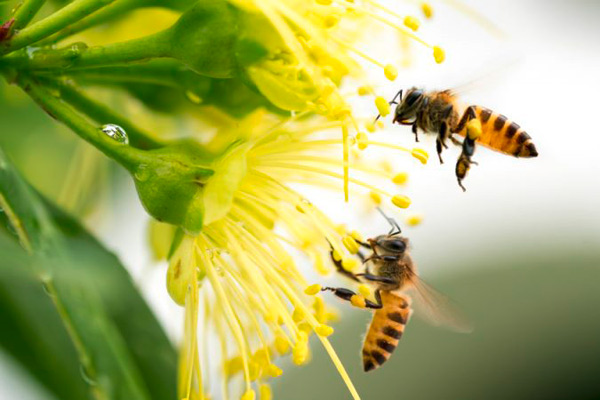
On 27 April (Friday) in Brussels, the ban on the outdoor use of the three contentious plant protection substances – imidacloprid (developed by “Bayer CropScience”), clothianidin (developed by “Takeda Chemical Industries” and “Bayer CropScience”) and thiamethoxam by “Syngenta” – was adopted by qualified majority. The ban is expected to enter into force by the end of 2018. The three substances will continue to be used in closed greenhouses, where the European Commission considers that they will not harm the reproduction of bee populations.
Despite the lengthy and repeated postponement of the decision to finally ban the three insecticides, on Friday the EU Member States supported the Commission’s proposal by a qualified majority for a complete ban on the use of the three substances on open areas. Decisive for the final vote was also the latest report of the European Food Safety Authority, according to which the three specified neonicotinoids pose a threat to honeybees and wild bees, regardless of when and how they are used outdoors.
The adoption of the ban was significantly influenced by the United Kingdom, Ireland, Germany and Austria, which in November 2017 changed their position and firmly supported the decision to finally adopt the ban on the use of the three chemical substances.
As early as 2013, the EU partially prohibited the use of the three neonicotinoids on flowering crops that attract bees, such as oilseed rape, maize, wheat, barley and oats.
From this year, Bulgaria will no longer apply a derogation (temporary exemption from the rule) for the use of the specific neonicotinoids, which existed until last year, announced the Minister of Agriculture Rumen Porozhanov in connection with the decision of the administration from 2018 to ban the use of neonicotinoids against pests in cereal and oilseed crops.
The company Bayer also issued an official statement on the EU decision, declaring that the announced ban will not improve the condition of bees and other pollinating insects and will reduce the ability of farmers in Europe to control economically important pests for which no alternative is yet available.
HERE you can see Bayer’s official position regarding the ban on neonicotinoids