

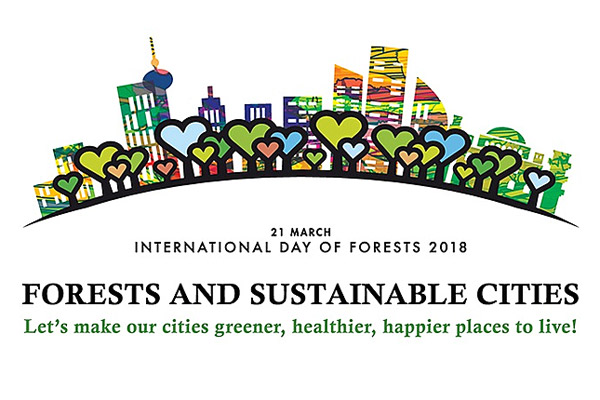
The International Day of Forests is held every year on 21 March at the initiative of the United Nations General Assembly. On this day, numerous events are organized worldwide, presenting the natural wealth of forests, thanks to which they constitute a natural environment for life and the development of the biological diversity of plants and animals. In addition, forests have important economic significance for the economy of every country.
The International Day of Forests has been officially observed since 2013 by virtue of a resolution of the UN General Assembly of 21 December 2012 and is based on the decision of the 16th session of the Conference of the Food and Agriculture Organization of the United Nations (FAO) (6–25 November 1971). The aim of the World Day of Forests is to raise public awareness of the importance of forests, their conservation and their sustainable development.
Forests and Sustainable Cities
This year, the celebrations of the International Day of Forests will be held under the motto “Forests and Sustainable Cities”.
Green cities are part of the concept of modern and sustainable cities, where people and nature join hands.
What are the advantages of increasing the number of trees in large industrial urban environments?
Trees store emitted carbon, which helps to mitigate the effects of climate change in and around urban areas.
Trees improve the local climate by helping to reduce the energy (by 20 to 50%) used for heating buildings and premises.
The strategic placement of trees in urban areas can cool the air by 2 to 8 degrees Celsius, thereby reducing the need for air conditioning by 30%.
Urban trees are excellent air filters, removing harmful pollutants and fine particulate matter from the air.
Trees located close to motorways and major roads in the city reduce noise and act as a natural sound barrier.
Timber originating from planted forests on the outskirts of cities provides renewable energy for cooking and heating, which reduces the felling of natural forests and dependence on fossil fuels.
Well-managed forests in and around urban areas provide habitat, food and protection for many plant and animal species, helping to maintain and increase biological diversity.
Urban green spaces encourage an active and healthy lifestyle, prevent diseases and provide places for social interaction for the population.