

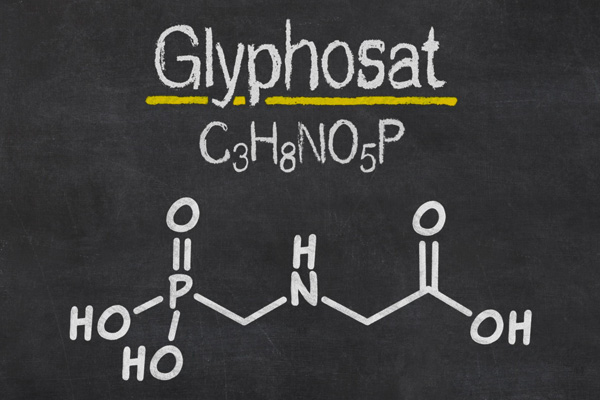
EU countries have approved the extension of the authorisation of the controversial herbicide glyphosate for another five years, the European Commission announced on Monday. Eighteen Member States voted in favour of the Commission’s proposal for a five-year renewal of the approval. By a large majority – 18 EU countries cast a positive vote, including Germany, Poland, Bulgaria and Romania, which had previously abstained, while nine Member States voted against and only Portugal abstained.
The active substance has been used in European fields for more than 40 years, and the current authorisation for glyphosate expires on 15 December 2017. The procedure for the new registration has been ongoing for months, because the European participants in the debate for or against glyphosate failed to reach consensus in their decisions. The European Commission initially requested the extension to be for a period of 10 years, which was subsequently reduced to 7 and finally to 5 years.
One of the interesting twists in the vote held was the position of Germany, which abstained in the previous vote, but in the latest one voted in favour of approving the controversial herbicide. And although the German Minister for the Environment Barbara Hendricks stated that the change in position had not been discussed with her and that the decision taken was the work of the opposition, this step by the Germans had a strong impact on the final outcome.
Austria, France, Italy, Belgium, Greece, Croatia, Cyprus, Luxembourg and Malta stood against the use of glyphosate in Europe. At the same time, the European Parliament, through a legally non-binding resolution, called for the active substance to be authorised only to a very limited extent and, after 15 December 2022, to be completely banned throughout Europe.
Producers of glyphosate
The Commission’s decision affects not only agriculture and consumers, but also the German chemical giant Bayer, which, after its merger with its American competitor, took over the sale and authorisations of all the products of the overseas company. The Americans first developed the herbicide glyphosate in their laboratories in 1974. In 2000 Monsanto’s patent on the glyphosate molecule expired, which led to the emergence on the market of many competitors producing analogues of the Roundup trademark. Approximately 850,000 tonnes of glyphosate are placed on the market annually. Therefore, companies engaged in the production of glyphosate are threatening claims for billions in compensation if the use of the active substance is banned. This was announced by the Commission at the beginning of November.
Potential or actual risk to humans and the environment
Glyphosate is a highly effective herbicide and is widely used in agriculture worldwide. However, one of the main reasons for the insistence on its removal as an active ingredient from most plant protection products is the risk of causing cancer in living organisms and harm to the environment. In 2015 the International Agency for Research on Cancer of the World Health Organization identified glyphosate as a “probable carcinogen to humans” (hazard category “2A”). In parallel with the publication of these studies, the European Food Safety Authority concluded in its report that the available scientific evidence from the World Health Organization was insufficient to classify glyphosate as dangerous to human health and the environment. The report notes that carcinogenic preparations containing glyphosate may exist; however, studies of glyphosate itself do not show a carcinogenic effect. In March 2017 the Risk Assessment Committee of the European Chemicals Agency, after analysing the available scientific information, concluded that glyphosate is a chemical capable of causing serious eye damage and that glyphosate is also toxic to aquatic organisms, but that the existing scientific evidence does not allow glyphosate to be classified as a carcinogenic, mutagenic or reprotoxic substance.
Regardless of this prolonged and contentious uncertainty on the issue, there are serious concerns on the part of the German Federal Environment Agency, which reports the mass destruction of valuable herbs and plants on arable agricultural land following the use of glyphosate. This in turn creates preconditions for the disappearance of insects and birds deprived of their natural sources of food.
Naturally, the Commission’s decision has been met with great discontent not only in the countries that voted against the extension of the herbicide’s authorisation, but also among the numerous environmental organisations in Europe. New heated discussions are expected at the end of the current period for the legal use of glyphosate on the territory of Europe.
More on the topic:
Who wants to extend the authorisation of glyphosate? (Part 1)
Who wants to extend the authorisation of glyphosate? (Part 2)
The European Commission has extended the authorisation of glyphosate
The European Commission postpones the decision on the future of glyphosate
Weed resistance to glyphosate is increasing
Cancer risk when treating with glyphosate