

Greenhouse production
Soil disinfection
September and October are suitable for chemical disinfection (fumigation) of the soil in greenhouses. The broadest spectrum fumigants offered on the market are Basamid granules and Nemasol 510.
Basamid granules is a granular fumigant with active substance dazomet 98%. In contact with moist soil it decomposes into methyl isothiocyanate, formaldehyde, methylamine, hydrogen sulfide. The released gases spread in all directions in the soil and destroy the living organisms found in it. The product is effective against: nematodes – root-knot and cyst-forming; soil pathogenic fungi - Pythium, Phytophthora, Verticillium, Fusarium, Rhizoctonia, Pyrenochaeta, Phoma, Didymella etc.; soil pests - larvae of wireworms, cutworms, May beetles, etc.; weeds - nettle, Poa, shepherd’s purse, lamb’s quarters, chickweed, barnyard grass, goosefoot, black nightshade, etc. It is applied by spreading devices or manually, evenly over the entire soil surface, preferably in the morning when temperatures are still low. It is then incorporated with a rotary tiller and rolled, or covered with polyethylene film. Application rate 50-70 kg/ha depending on soil type.
Nemasol 510 is a liquid fumigant. The active substance is an aqueous solution of the sodium salt of methylthiocarbamic acid. In contact with moist soil methyl isothiocyanate is released. The product is effective against: nematodes – stem, root-knot and cyst-forming; soil fungi - causal agents of tracheomycoses Verticillium, Fusarium, causal agents of root rot: Pythium, Phytophthora, Rhizoctonia, Pyrenochaeta, and others: Phoma, Didymella; weeds - field bindweed, nightshade, chickweed, pigweed, etc. It is applied by applicator or through drip irrigation systems followed by rolling or covering with polyethylene film. Application rate 80-120 l/ha.
When disinfecting with both fumigants the temperature should not be lower than 12-150C. The soil should be preliminarily cleaned of plant residues. One week before treatment it is moistened to 70-75% of field capacity. Two to three days later it is ploughed and tilled well. It must be moist at the time of application of the products. Exposure – 15-20 days. After uncovering, wait several days for the released gases to be removed. Then the soil is tilled 2-3 times until complete removal of fumigating gases. Their presence is determined by the so-called cress test. Soil fumigation is carried out no more often than once every three years.
In greenhouses that will not be disinfected, cucumbers as a second crop are grown.
The plants are in mass fruiting, therefore plant protection products must be carefully selected according to their pre-harvest intervals.
Main pests for the period
Diseases
Downy mildew of cucurbits (Pseudoperonospora cubensis)
Powdery mildew (Podosphaera xanthii)
Pests
Greenhouse whitefly (Trialeurodes vaporariorum)
Cotton aphid (Aphis gossypii)
Thrips (Thrips tabaci, Frankliniella occidentalis)
Two-spotted spider mite (Tetranychus urticae)
Cotton aphid (Aphis gossypii)
Among cucurbit crops it severely attacks cucumber, watermelon, melon and pumpkin. Damage is caused by adults and larvae, which suck sap from the underside of leaves, the vegetative apex and stems of the plants. Under heavy infestation the leaves of watermelon and melon curl strongly, while on pumpkin and cucumber only the apical leaves curl. The plants lag in growth and become deformed. Under heavy attack during flowering or fruit set the flowers drop and the fruits remain underdeveloped. On the “honeydew” excreted by the aphids saprophytic sooty fungi develop, contaminating the produce. Cotton aphid is a vector (carrier) of viral diseases.
Pest control strategy
Destruction of weed vegetation. Use of healthy and clean seedlings. Monitoring by using yellow sticky traps for aphids.
Authorised plant protection products
Mospilan 20 SP 0. 0125%; Actara 25 WG 0. 007%; Picador 20 SL 0. 05%; Confidor Energy OD 0. 06%; Biscaya 240 OD 0. 06%; Calypso 480 SC 0.02%; Nexide 015 CS 0.02%.
Thrips
On attacked plant organs (leaves, petioles, flowers and fruits) small whitish spots with dark dots are formed – the pest’s excrements. At higher population density the spots merge. In greenhouses the following are harmful:
Tobacco thrips, Thrips tabaci – found mainly on leaves, less frequently attacking flowers. Favourable conditions for its development are high temperatures and low air humidity.
Western flower thrips (California thrips), Frankliniella occidentalis – it has been established that on cucumber the pest prefers the flowers. Generative organs of plants (buds and young fruits) attacked in early developmental stages dry up and fall off.
Pest control strategy
For monitoring, blue sticky traps should be used, which, in greater number, reduce pest population density.
Authorised plant protection products
against thrips: Decis EC/Desha EC/Dena EC – 30 ml/ha, Karate Zeon WG/Ninja/Forza – 42-80 g/ha, Meteor – 60-70 ml/100 l water, Naturalis – 75-100 ml/ha.
against western flower thrips: Fury 10 EC – 0.015%; Sineis 480 SC – 10-25 ml/ha.
Two-spotted spider mite (Tetranychus urticae)
Spider mites live and feed on the underside of leaves. Under heavy infestation the leaves are covered with webbing. The pest sucks sap and at the feeding site a small pale green pinpoint spot is formed. Later the spots merge and the leaf becomes mottled like marble. Spider mites prefer older leaves with reduced water content, as well as senescent, drought-stressed plants. Under heavy infestation the plants dry out.
Pest control strategy.
Destruction of weeds; maintaining optimal soil moisture (avoiding drought) and regular field inspections.
Authorised plant protection products.
Ortus 5 SC 0.1%, Nissorun 5 EC 0.06%, Floramite 240 SC 40 ml/ha, Sanmite 20 WP 0.075%, Vertimec 018 EC 60 ml/ha, Nimazal T/S 0.3%.
Field production
During the period intensive harvesting is carried out, therefore plant protection products with short pre-harvest intervals must be selected.
Main pests
Diseases
Tomato, pepper
Late blight of tomato (Phytophthora infestans)
Blight of pepper (Phytophthora capsici)
Cucumber
Downy mildew of cucurbits (Pseudoperonospora cubensis)
Powdery mildew (Podosphaera xanthii, Erysiphe cichoracearum)
Downy mildew of cabbage (Peronospora parasitica)
Pests
Tomato, pepper, eggplant
Aphids (Aphididae)
Thrips (Thrips tabaci, Frankliniella occidentalis)
Cotton bollworm (Helicoverpa armigera)
Tomato leaf miner (Tuta absoluta)
Two-spotted spider mite (Tetranychus urticae)
Cabbage
Cabbage moth (Mamestra (Baratra) brassicae)
Diamondback moth (Plutella maculipennis)
Tomato, pepper
Late blight of tomato (Phytophthora infestans)
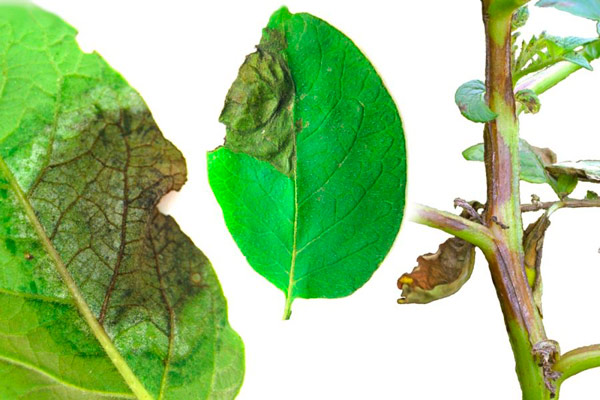
On the oldest leaves watery spots of irregular shape appear, covered on the underside with a loose whitish coating – the sporulation of the fungus. Later they turn brown and dry out. Under severe attack the entire leaf mass may die. The spots on petioles and fruit stalks are dry, dark brown, and on the stem – large and watery, encircling it completely. On fruits the spots are brown, rough, with a characteristic radiating structure. They quickly increase in diameter. Under high air humidity a loose whitish sporulation appears on them. Green fruits are usually attacked.
Pest control strategy
In the presence of “critical periods” treatments with plant protection products should be started.
Authorised plant protection products:
Acrobat R – 0.25%; Acrobat Plus WG – 200 g/ha; Alfil Duplo – 90-400 g/ha; Antracol 70 WG – 0.15%; Armetil M – 250; Acrobat Plus WG – 200 g/ha; Banco 500 – 200 ml/ha; Valbon – 180-200 g/ha; Verita WG – 150 g/ha; Vinker WG – 200 g/ha; Vitene Triplo R – 400-450 g/ha; Vitra 50 WP – 150 g/ha; Dimix 50 SC – 30-36 ml/ha (applied in tank mix with products containing mancozeb); Dithane DG – 200 g/ha; Dithane M-45 200 g/ha; Equation Pro – 0.04%; Infinito SC 120-160 ml/ha; Caryl Star – 60 ml/ha; Katanga Man – 300-500 g/ha; Consento SC – 200 ml/ha; Corsate MDF – 0.25%; Corsate R DF – 250 g/ha; Corsate R DF Bianco – 250 g/ha; Corsate R WP – 250 g/ha; Corsate Max WP – 150 g/ha; Quadris 25 SC – 0.075%; Cupertine M – 400 g/ha; Cuproxat FL – 300 ml/ha; Lieto – 40-45 g/ha; Mancozeb 80 WP – Agria – 0.25% (potato); Mancozeb 80 WP – 250 g/ha; Manfil 80 WP – 200 g/ha (potato); Manfil 75 WG – 210 g/ha; Copper oxychloride 50 WP – 250 g/ha; Melody Compact 49 WG – 185 g/ha; Moximat 505 WG – 240-300 g/ha; Moximat 505 WP – 240-300 g/ha; Pencozeb 80 WP – 200 g/ha; Pencozeb 75 WG – 210 g/ha; Pergado Med 27 WG – 500 g/ha; Polyram DF – 0.2%; Proxanil – 200-250 ml/ha; Ranman Twin Pack – 20 ml/ha + 15 ml activator; Revus 250 SC – 0.05%; Ridomil Gold MZ 68 WG – 250 g/ha; Ridomil Gold R WG – 500 g/ha; Sancozeb 80 WP – 200 g/ha; Simbal 45 WG – 25 g/ha; Sinstar 70-80 ml/ha; Sphinx Extra / Vinostar – 180 g/ha; Triomax 45 WP – 250 g/ha; Folpan 80 WDG – 150 g/ha; Funguran OH 50 WP – 150 g/ha; Champion WP / Macc 50 WP / Champ WP – 150 g/ha.
Cucumber
Powdery mildew of cucumber (Podosphaera xanthii, Erysiphe cichoracearum)
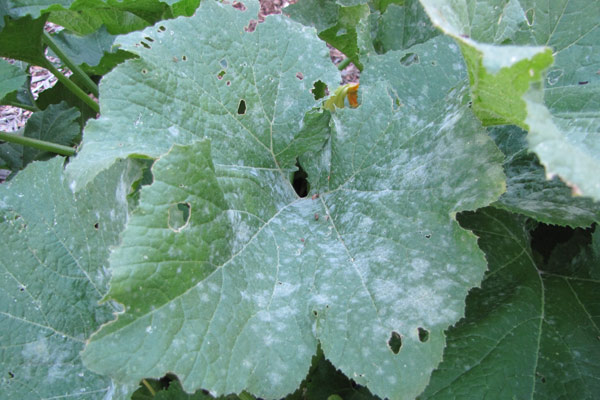
Climatic conditions during the period are favourable for the development of this pathogen. On the leaves small spots of irregular shape appear, covered with a white powdery coating of the fungus sporulation. Later the spots merge. Leaves scorch. Spots may be observed on both the upper and lower leaf surface and on the petioles. Under severe infestation plants are defoliated, fruits become smaller and deformed. Yields are severely reduced.
Pest control strategy.
Cultivation of resistant varieties. Maintaining constant moisture in the stands. Balanced nitrogen fertilisation. Treatment with plant protection products at the appearance of the first spots.
Authorised plant protection products:
Bayfidan 250 EC – 0.02%; Vivando – 20 ml/ha (0.02%), Domark 10 EC – 50 ml/ha, Quadris 25 SC – 0.075%, Custodia – 50-100 ml/ha, Systhane 20 EW – 37.5 ml/100 l water (18.8-37.5 ml/ha), Systhane Ecozon EW – 65-165 ml/ha, Thiovit Jet 80 WG – 300 g/ha, Topas 100 EC – 0.025%, Flint Max 75 WG – 20 g/ha, Cidely Top – 100 ml/ha and Shavit 25 EC/Tridemol 25 EC – 0.02%.
Tomato, pepper, eggplant
Cotton bollworm (Helicoverpa armigera)
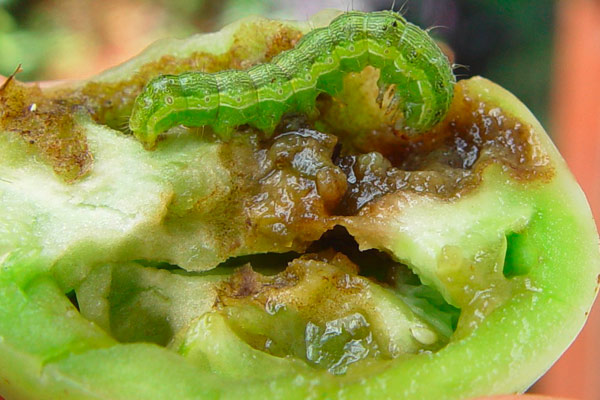
The larvae are harmful; they gnaw the leaves, buds and flowers, and at a later stage affect green fruits, bore into them and feed on their contents. Treatment against the bollworm is effective when directed against young larvae from second to third instar. To cover a generation, two treatments at 8-10 day intervals are necessary, depending on weather conditions and the residual effect of the insecticide.
Pest control strategy.
Regular field inspections.
Authorised plant protection products.
Coragen 20 ml/ha; Avant 150 EC 25 ml/ha; Altacor WG 8-12 g/ha; Ampligo 150 ZC 40 ml/ha; Affirm 095 SG 150 g/ha; Nurelle D 80 ml/ha; Proteus O-TEQ 0.05-0.06% and others.
In organic production of vegetable crops it is possible to use Rapax (Bacillus thuringiensis subsp. kurstaki, strain EG 2348) at a rate of 100-200 ml/ha registered for tomato, pepper and eggplant, Sineis 480 SC (spinosad) 12.5-30 ml/ha.