

In June, the meteorological conditions will be favorable for the development of a number of fungal diseases: downy mildew on vines and vegetable crops, late brown rot on the fruits of late cherry varieties, fruit cracking in orchards, etc. More suitable conditions for conducting plant protection spraying will occur at the beginning of the first, during the second half of the second, and on most days of the third ten-day period of the month. During the month, the forecast maximum temperatures, around 34-35°C, will have a negative impact on flowering and fertilization of vegetable crops.
At the beginning of June, the development of agricultural crops will proceed at an accelerated pace, under above-normal temperatures and, in most of the country, with good and very good soil moisture reserves as a result of the significant rainfall during the third ten-day period of May (Vratsa – 57 l/m², Lovech – 41 l/m², Pleven - 106 l/m², Veliko Tarnovo - 74 l/m², Svishtov – 68 l/m², Ruse – 51 l/m², Silistra – 48 l/m²). Exceptions will be observed only in isolated locations in the southern and southeastern regions, where the rainfall was of no particular economic significance, below 10 l/m².
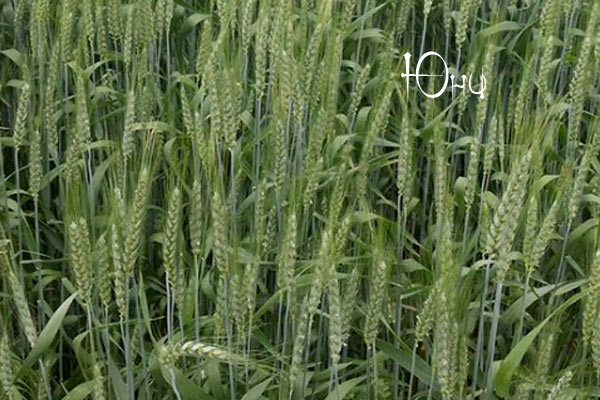
In the middle of the first ten-day period, a decrease and normalization of temperatures and a change in agrometeorological conditions are forecast. The expected rainfall by the end of the first ten-day period will maintain soil moisture reserves within optimal ranges for the vegetation of spring crops. It will also have a beneficial effect on winter cereal crops in the higher fields, where grain filling will be underway. In wheat in the lowland regions of the country, the milk ripeness stage will be observed. In barley, the transition from milk to wax and wax ripeness will take place. During the first ten-day period, oilseed rape will enter the ripening stage. During this period, an increased probability of hail is forecast, with a risk of lodging of crops and additional damage to agricultural crops. In the event of hail damage, it is recommended that the affected vegetable and fruit crops be treated at the first opportunity with appropriate (copper-containing) fungicides.
During most days of the second and third ten-day periods, the development of agricultural crops will proceed at temperatures close to the norm. At the beginning of the second ten-day period, in the field areas, barley will be predominantly in the mass ripening stage. At the end of the ten-day period, wheat will be predominantly in the wax ripeness stage.
By the end of June, some of the spring crops will enter reproductive stages of their development: in sunflower, the beginning of flowering will be observed, and in early maize hybrids – tasseling and flowering of the tassel. During the month, the forecast maximum temperatures, around 34-35°C, will have a negative impact on flowering and fertilization of vegetable crops.
Source: NIMH - BAS