

With strawberries, an almost continuous increase in the price per ton is observed and their production grows with each passing year. The strawberry is a widely cultivated soft fruit grown in more than 70 countries and, in connection with the increasing demand on the world market, there is also a significant increase in the volume of international trade in fresh and frozen soft fruit.
In the future, the volume of the world market will be influenced not only by the traditional berry-consuming countries, but also by the rate of market development in the Asian countries, in particular China. Trends of high prices for the aromatic fruit are also observed in Bulgaria.
In Bulgaria, the strawberry has a wide growing range. It thrives successfully not only in lowland, but also in mountainous and foothill areas. The strawberry is not very demanding with respect to soil and, with appropriate agronomic practices, it can be successfully grown both on light and on heavier soils. However, the strawberry is a fruit crop whose protection requires agronomic and chemical measures – planting quality nursery plants free from diseases and pests.
Which are the most dangerous pests of strawberry?
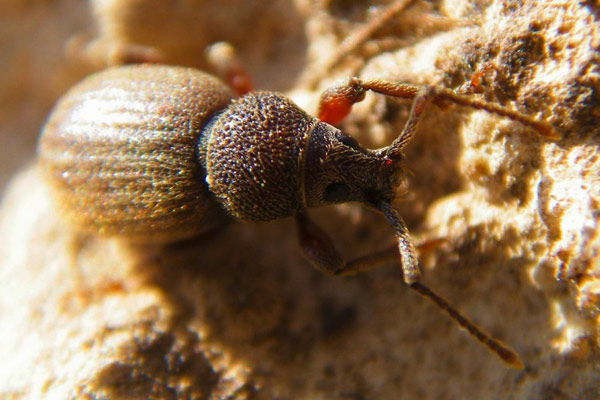
Strawberry blossom weevil causes the most severe damage to early cultivars and to cultivars with longer flower stalks.
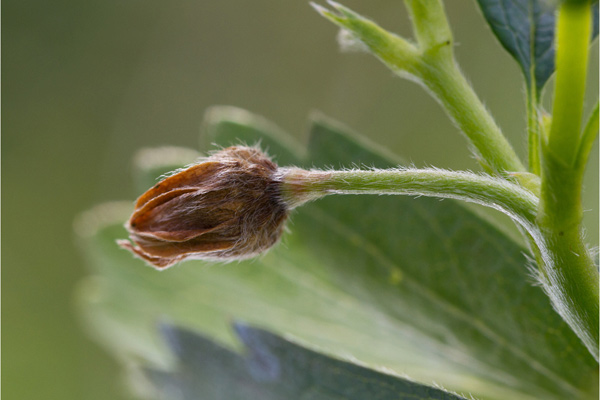
The adult – a small snout beetle – damages the leaves, petioles and buds by perforating them with its snout. After additional feeding, egg laying begins. The females deposit the eggs in the flower buds, having first injured the flower stalk, which bends and after a few days the flower buds drop. The hatched larvae develop in the damaged and fallen flower buds, feeding on the decomposing tissues. The new adults appear during fruit ripening.
Control should be carried out early in spring, against the adults, before they have laid their eggs. There are no officially registered plant protection products. Broad-spectrum insecticides may be used (Bi 58 – 0.1% or Nurelle D – 0.06%).
The strawberry stem weevil – a dark blue beetle with a metallic sheen – gnaws the leaf and flower stalks when laying its eggs, as a result of which they wilt and die. In cases of heavy infestation the plants do not die, but they do not bear fruit.
Control is carried out early in spring, before flowering. One spraying is applied with broad-spectrum insecticides (Bi 58 – 0.1% or Nurelle D – 0.06%).
The strawberry root weevil is harmful in its larval stage. The larvae gnaw the young roots and later penetrate into the rhizome of the strawberry plant, forming tunnels in it. In cases of light infestation, the plants flower and bear fruit, but the fruits are small, tasteless and often dry out during ripening; in cases of severe infestation, first the old leaves dry up and later the whole plant.
Control of this pest is carried out mainly by agronomic means and to some extent with biological products. Among the agronomic measures, of particular importance are the application of suitable crop rotations, the use of healthy planting material, systematic weed control, growing the plants under high agronomic standards, and spraying against the adults during their additional feeding period with one of the following insecticides: Aktara 25 WG – 0.02%, Bi 58 – 0.1%, Pyrethrum – 0.05%, Pyros – 0.08%, etc.
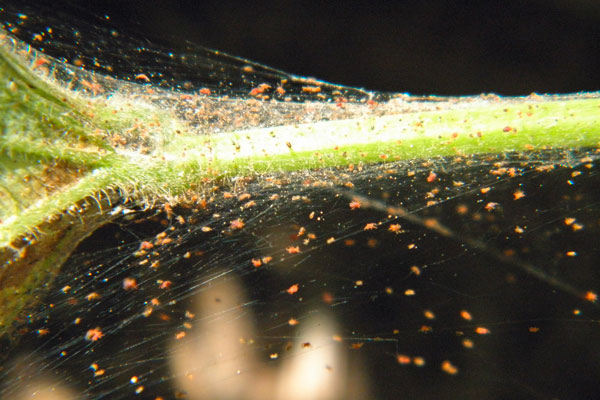
The strawberry mite in spring settles at the base between the still unopened leaves. It sucks sap from the young leaves, which become deformed, turn yellow and dry up. Infested plants are smaller, stunted, and their leaves look scalded.
The main control method is preventive. Before establishing new strawberry plantations, only healthy planting material should be used. Before planting, the nursery plants should be dipped in hot water (37ºC). It is necessary to apply crop rotation – strawberries should not be planted after strawberries.