

During the winter-spring period, the main focus of control against diseases and pests in fruit crops and vines is on agrotechnical practices.
Pruning – through it the overwintering population of numerous pests is significantly reduced, the tree crowns are thinned and unfavourable conditions are created for the development of diseases during the vegetation period. In pome fruit species, pruning is carried out during the autumn-winter period, and in stone fruit species – during the winter-spring period. Stone fruit crops are more sensitive to winter frosts and there is a risk of gum exudation, cankers and lesions, through which numerous pathogens may later penetrate.
To limit secondary infections and support the callus formation process immediately after pruning, it is necessary to coat wounds with a diameter greater than 2.5 cm with oil-based paint, arboricultural putty or ready-made wound sealant.
The collection and burning of caterpillar nests, egg rings, mummified and worm-infested fruits significantly reduces the population levels of many pests in the following year.
Scraping, removal and burning of old cracked bark is also a mandatory element in the control of certain pests. To avoid damaging the bast of the bark, scraping of the old cracked bark is carried out with a blunt knife.
By whitewashing the trunks and thick branches of fruit trees with a 20% lime slurry, mosses and lichens on the bark are destroyed, uniform heating of the trunks during the day is ensured and the risk of frost damage is avoided.
Soil cultivation under the trees. If ploughing was missed in autumn, the warm days in February are suitable for this. By ploughing in the fallen leaves, the substrate on which many causal agents of diseases overwinter is reduced. Soil cultivation is carried out after completion of all other agrotechnical practices.
Winter-spring treatments with chemical preparations are carried out with a high application rate of the working solution (100–120 l/da) and with large droplets, which requires the selection of appropriate nozzles on the sprayers in order to thoroughly wet the trees. Spraying is effective if it is carried out on calm and sunny days, at an air temperature above 5°C and wind speed up to 2–3 m/sec.
Onion fly
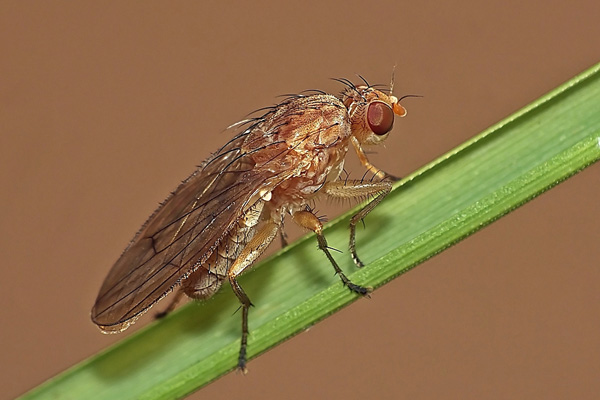
In February, only garlic is grown in the field. The most dangerous pest is the onion fly. During the warm days of February, the beginning of the fly’s flight is expected. It lays its eggs at the base of plants with two to three leaves or on the soil surface around the plants at relatively low temperatures, but in clear and calm weather. The hatched larvae bore into the garlic stem. The damaged plants lag in their development, the leaves turn yellow and wilt. At least two treatments are necessary: the first at the beginning of the fly’s flight, and the remaining ones at intervals of 7–10 days with Meteor – 80–90 ml/100 l water.
When tomatoes and cucumbers are grown in greenhouses, the main harmful organisms for the period are late blight, leaf mould, grey mould, powdery mildew on cucumbers, tomato leaf miner, greenhouse whitefly, thrips.
The plant protection products authorised for placing on the market and use are published on the website of the BFSA at the electronic address: http://www.babh.government.bg/, as well as in the list of authorised plant protection products for 2017, issued by the journal “Plant Protection”.