

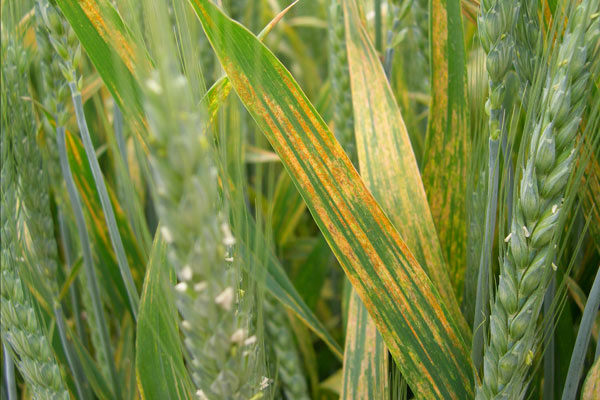
From 17 to 20 September 2015, a workshop was held in Sydney (Australia) within the framework of the targeted BGRI (Borlaug Rust Initiative) program. The program was established in 2005 in connection with the emergence of the aggressive wheat stem rust race Ug99 – a major threat to the food security of the planet’s population.
The main objectives of the BGRI (Borlaug Rust Initiative) program are comprehensive studies of wheat rusts, including breeding of wheat resistant to rust species using traditional and new methods. Great attention is paid to the implementation in practice of research results and the provision of practical assistance to farmers. About 200 scientists from North and South America, Africa, Eastern Europe, Eastern, Central and South Asia, and Australia attended the workshop. At the international level, the rust problem is addressed by USDA-ARS and the Global Rust Reference Center (GRRC) in Denmark, and at the regional level – by the Cereal Rust Research Center in Turkey, universities in South Africa, India and other countries.
The first session was dedicated to the world leaders who studied rusts and their contribution to solving this specific problem. Prof. Robert Park from the University of Sydney presented a report on the durable resistance of wheat to stem rust.
As a result of the analysis of more than 40 wheat varieties grown in Australia, he established that resistance to stem rust is controlled by the genes Sr24, Sr30, Sr36, Sr38 and Sr57. From a strategic point of view, it is important to reduce the share of wheat varieties susceptible to rust, since the lower the level of disease development, the smaller the diversity of the pathogen and the lower the probability of new races arising.
New sources of wheat resistance to rusts were also discussed. Participants’ attention was drawn to the Watkin collection, which includes 7,200 accessions of ancient wheat varieties (including durum and hexaploid) from 32 countries in Western Europe, Russia, South Asia and Australia. Assessment of resistance to the prevailing pathotypes of stem and leaf rust has made it possible to identify genes with high resistance. The effectiveness of the Mla locus in cereals as a source of resistance to stem rust was examined. Through translocation, the new gene Sr50 from rye has been cloned into wheat. The relationship between environmental factors, the host plant and the race of the stem rust pathogen was analyzed.
Scientists from the USA, Ethiopia, Denmark and Egypt have determined the distribution range of stem rust and other rust species in 34 countries of Central and South America, Eastern and Northern Africa, Eastern and Southern Asia, and the resulting data have been plotted on maps. For analysis of the population structure of the stem rust pathogen, more than 7,000 isolates were collected and multiplied. While in 2005 two races of the Ug99 group were known, by 2015 they were already 11. In 2014 three new races of the group, differing in degree of virulence, were identified in Kenya.
In the future, special attention must be paid to molecular diagnostics of races and to the development of keys for their rapid diagnosis. For the postulation of resistance genes, it is necessary to study the host plant and the pathogen at population level. New technologies must play a key role in the breeding of wheat resistant to the complex of stem rust races.
It was reported that under greenhouse conditions 155 isolates of the stem rust pathogen were tested on differential varieties with Sr genes and it was established that the aggressive stem rust race does not occur in Western Europe. Interest was also aroused by the report on the spread of stem rust spores by air currents. For long-distance dispersal, wind direction and turbulence of air masses are of primary importance.
Attention was drawn to fundamental assessments of the virulence of the rust-causing fungi: each region where wheat is grown is characterized by a specific structure of pathogen populations. Therefore, it is necessary to identify regional resistance genes in wheat varieties and lines. In pathogenesis, three types of resistance determine the avirulence of the pathogen: resistance of the variety, virulence of the pathogen – susceptibility of the variety, partial virulence – partial resistance of the variety. For practice, the third type of resistance is of greater importance. It is necessary to take into account the relevant environmental factors (temperature, air humidity, light) and the developmental stage of the host plant, i.e. mandatory verification of the results under field conditions.
At the session devoted to yellow rust of wheat, reports were presented by scientists from Denmark, the United Kingdom, South Africa and Australia. They clarified the relationships between the yellow rust pathogen and the host plant at the genome level, the physiological features of the interaction of the pathogen as a biotrophic parasite with the host plant, and the analysis of genetic differences in the pathogen population, on the basis of which a map of the dominant races of Puccinia striiformis in Western Europe was drawn up.
Achievements in the breeding of spring wheat resistant to rusts under the BGRI program were reported. Its priority directions are high and stable yields, resistance to rust species, tolerance to drought and high temperatures, good grain quality, and high zinc and iron content in the grain.
Certain success has also been achieved in breeding wheat for resistance to yellow and leaf rust. Scientists from the Department of Plant Breeding and Genetics at Cornell University, USA, have developed an accelerated method for wheat breeding for resistance to
rusts. A new seed generation in greenhouse conditions can be obtained in 6–7 weeks, and 6 generations – within one year. Wheat ripening and harvesting under continuous light and optimal temperature are completed in 40–45 days. The harvested seeds are moistened and subjected to low temperatures, i.e. vernalization is carried out, and seed germination is 90–95%. The germinated seeds are planted in pots to obtain a new generation. The same university reported a new method for breeding wheat resistant to rusts. It was developed jointly with scientists from CIMMYT. Genomic selection and quantitative phenotyping make it possible to select valuable lines without sowing the crop in the field. Genetic markers with previously known loci or cloning of the required genes can be used. A model with the main traits has been proposed, which makes it possible to select valuable lines at an early stage, to shorten the time required for the breeding process and to increase the accuracy of phenotyping. In field trials in Kenya and Ethiopia, thousands of wheat lines were evaluated by quantitative phenotyping and a high accuracy of the proposed model was established, allowing losses to be reduced more than 20-fold.
At the Plant Breeding Research Institute at the University of Sydney, the participants in the meeting became acquainted with experiments of practical and theoretical significance conducted under greenhouse and field conditions.
Full information on the plenary reports and abstracts from the Workshop can be obtained from the following websites: Borlaug Global Rust Initiative and www.globalrust.org.
Translated with abbreviations from the journal “Protection and Quarantine of Plants” for the journal “Plant Protection” by Assoc. Prof. Dr. Hristina Krasteva from ISSAPP “N. Pushkarov”
in Sofia