

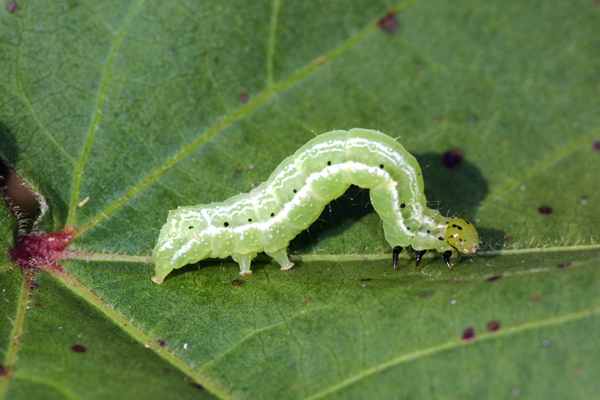
Among the pests with a high risk for the EPPO region countries are the following species from the family Noctuidae:
Chrysodeixis (Pseudoplusia) includens (Lepidoptera: Noctuidae)
Host plants: C. includens is polyphagous, attacking plants from 28 families, but it is considered mainly a pest of soybean and tomato. Among the other plants, alfalfa, tobacco, beans, soybean, maize, cotton, cabbage, lettuce, as well as ornamental species such as geranium, hibiscus, pelargonium, chrysanthemum and others should be noted.
Damage: The moths lay their eggs on the leaves, the larvae feed on them or on the fruits (in tomatoes the larva feeds inside the fruit) and pupate on the leaves. Although it attacks many plants, the following damage is observed on the main hosts – soybean and tomato:
- In tomatoes the larvae feed mainly on the fruits, even when foliage is available.
- In soybean, after completely destroying the foliage, the larvae move to the pods and feed on them.
Spread: In the USA the adults (moths) overwinter in the southern states, where it is warmer (Florida and Southern Texas). After warming in spring they migrate northwards to the other states. The climate in the southern states is similar to that in the Mediterranean. Upon introduction into Europe, the moths can successfully overwinter and in spring migrate to other, more northern countries such as Bulgaria.
Pathways for introduction: Fruit and vegetables, plants for planting, cut flowers, pods of host plants, from the countries where they are present.
Possible risk: The Pest Risk Analysis evaluates the risk as high, due to the fact that C. includens attacks a wide range of hosts that are cultivated in the countries of the region. If the pest is introduced, it will be able to overwinter in the Mediterranean countries and migrate northwards.