

![MultipartFile resource [file_data]](/assets/img/articles/заглавна-агро-април-2024.jpg)
![MultipartFile resource [file_data]](/assets/img/articles/лозе-април.jpg)
The weather in April will be typical for the month - changeable and unstable, with alternating warm and cold periods, as well as frequent precipitation. The month is expected to offer a rich palette of spring phenomena – from chilly mornings and rains to warm afternoons and the first more serious thunderstorms.
The beginning will be cooler and more unstable, the middle – typically spring-like with frequent precipitation, and the end of the month will bring more sunshine and higher temperatures. During the first ten-day period, the weather will be cooler than usual for the period, with frequent increases in cloud cover and precipitation. Rain is expected, and in the mountains - snow as well, especially with the passage of colder fronts. There is a high risk of frost. Temperatures will hover around and slightly below the climatic norm. During the day temperatures will be between 10°C and 15°C. Minimum temperatures will vary between 2°C and 7°C, and in basins and high fields they will be below zero.
During the second ten-day period, more frequent sunny days and a gradual rise in temperatures will be observed. However, the atmosphere will remain unstable. There will be sunshine in the morning, precipitation in the afternoon, and rapid changes. The risk of frost decreases and will be mainly in the high fields of Western Bulgaria. Daytime temperatures will vary between 15°C and 20°C, and nighttime ones - between 5°C and 10°C.
During the third ten-day period, more stable and warmer weather will be observed, with more sunny days and drying. Nevertheless, local afternoon storms remain possible, especially in mountainous areas. Also forecast is an increased probability of hail in the middle and at the end of the third ten-day period. Fruit crops affected by hail should be treated with copper-containing fungicides at the first opportunity to limit the risk of secondary infections by pathogens.Temperatures will be typically spring-like, with daytime ones varying between 20°C and 25°C, and nighttime ones - between 8°C and 13°C. On some days, temperatures may reach over 25°C, especially in Southern Bulgaria.
In fruit nurseries
Soil tillage is carried out in seedbeds, mother plantations, and nurseries. When the young shoots reach 20-25 cm, the first hilling of apple mother plants is performed.
Unearthing of walnut rootstocks grafted in autumn and hilled, cutting of the wild part about 0.5 cm above the grafted bud.
All suckers emerging from the rootstock of grafted plants planted in nurseries are carefully removed. Delaying this practice hinders the development of shoots from the grafted bud. Often, the competition from suckers of the wild part is so great that the bud does not sprout at all.
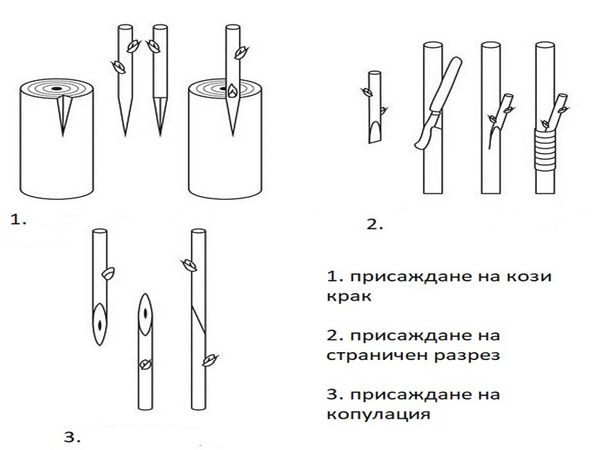
Work continues on grafting rootstocks with failed buddings.
In fruit orchards
Work on planting new fruit orchards and filling in spots of dead trees in young fruit orchards is completed.
In the absence of rainfall, all newly planted trees must be watered with 20-30 dm3 of water in the basin around the trunk.
Work on shaping the crowns of trees in newly planted and young fruit orchards is completed.
Suckering the trunk of trees in newly planted orchards. At a height of 50-60 cm above the soil surface, all suckers are removed. Thinning of some of the unwanted shoots in the crowns of young trees is carried out. Shoots in young fruit orchards are bent.
Pruning to weaken the growth of vigorously growing apple and pear trees is conducted. Recommended for trees on seedling or vigorous vegetative rootstocks, formed as palmettes.
Regrafting in the crowns of mature trees continues.
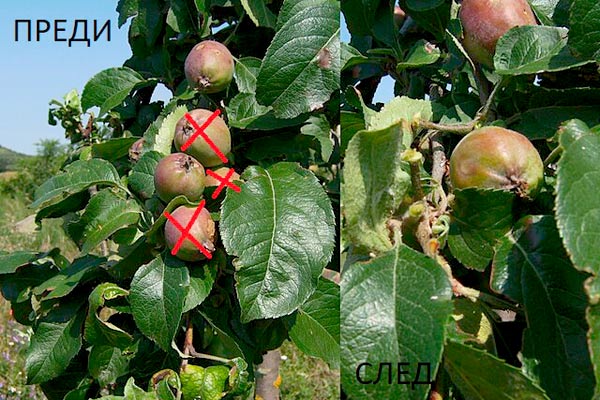
Fruitlet thinning is performed - for apples, some pear and peach varieties, and measures are taken to protect plants from late frosts. Control involves heating, smoking, air movement, sprinkling or irrigation, and chemical products.
Heating the air is achieved by burning high-energy combustible materials – fuel oil, naphtha, natural gas, old car tires. They are lit one hour before the temperature drops to the critical point for the plants, and the fire is maintained for one hour after sunrise.
For smoking, special smoke candles or inert materials such as straw, wood shavings, branches, peat are used. They are arranged in piles in the rows, 30-60 m apart from each other and 5-6 m within the row. About 100 kg of combustible material is needed per decare, distributed in 10 piles.
Overhead sprinkling utilizes the property of water to release heat upon freezing, and by irrigating the plantations, the thermal conductivity and radiation of the soil are increased, resulting in the air temperature rising by 2-3 oC.
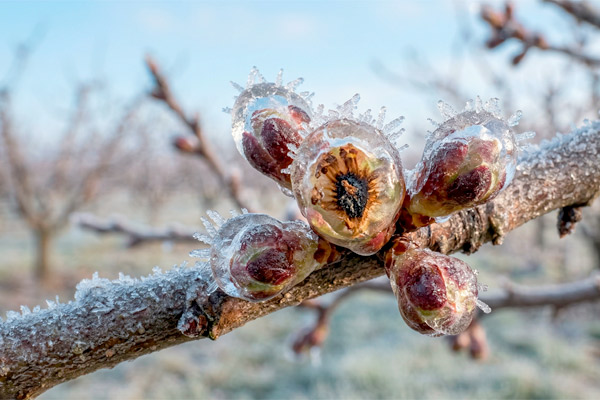
To prevent the crystallization of cellular water in the buds and protect from sub-zero temperatures, you can use products based on polymers and copolymers, such as Scudo Therm (1-2 l/100 l water) or biostimulants like Grow Plant Stop Freeze, Stop Freeze.
ARCHER® OsmoCare – increases productivity and reduces stress
Preventively or in case of frost damage to fruit buds and flowers, to stimulate flowering, if fruit species are still in this developmental phase, you can foliar feed them with a liquid fertilizer specialized for application during flowering - Cynoyl Z Special, ERT 23 plus, Archer OsmoCare or gibberellic acid.
In plain and warmer regions, if the inter-rows are not grassed, a second, shallower soil tillage is performed, and if this was not done in March, nitrogen fertilizer is applied.
Soil moisture in orchards during the flowering and fruit set period should not fall below 70% of field capacity.
Bee colonies are transported from finished flowering areas to orchards with intensive flowering.
In strawberry plantations
Filling in empty spots in areas planted in autumn (mainly in higher regions) is completed.
Planting of virus-free strawberry planting material stored in refrigerators on beds covered with perforated black polyethylene begins. Plants are planted so that the buds are slightly above the surface, without the risk of ending up under the polyethylene when vegetation starts. Before planting, the roots of the seedlings are dipped in a slurry of cattle manure, soil, and water. If the roots have dried out, the ends are trimmed.
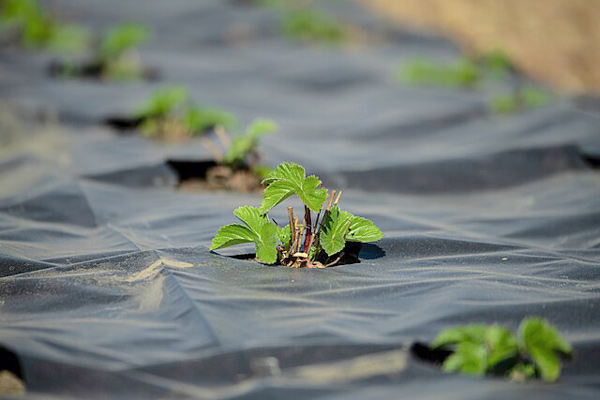
Newly planted areas on black polyethylene must be irrigated by sprinkling to ensure establishment.
Old plantations are cultivated, and if they were not fertilized in March, fertilization is carried out beforehand. If necessary, the plantations are irrigated.
400-500 kg of straw per decare is spread for mulching the soil under the flower stalks and to protect the fruits from contamination in plantations established without black polyethylene. Prior to this, the plantations are irrigated. The soil around the plants is covered with about 10 cm of straw. Mulching is carried out towards the end of mass flowering.
The soil in cultivation facilities is cultivated and irrigated if necessary. By mid-April, the last strawberry fruits are harvested from heated greenhouses.
Harvesting of strawberry fruits from solar greenhouses and tunnels begins. Later, field harvesting also starts. Greenhouses and tunnels are regularly ventilated. The required temperature for timely fruit ripening is maintained inside them.
In warmer locations and in earlier planted plantations, weeds that have sprouted in the holes are weeded. Weeding is done very carefully so as not to pull out poorly rooted plants.
In raspberry plantations
Filling in empty spots and planting new areas is completed. Soil tillage is carried out to keep the soil loose and free of weeds and to incorporate fertilizers.
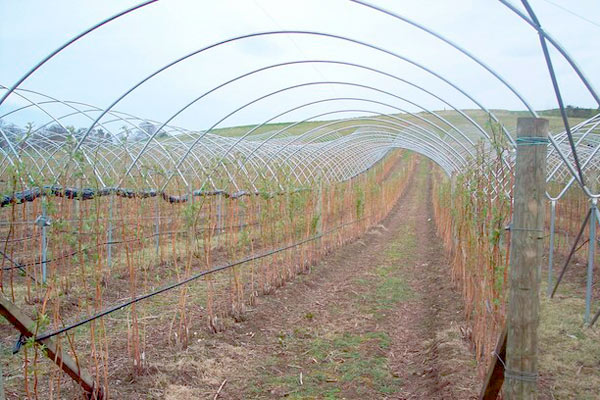
Towards the end of the month, a side dressing of 10-12 kg of ammonium nitrate or the same amount of another nitrogen fertilizer is applied. Watering is done in case of drought.
In blackcurrant plantations
Care is taken for the rooting beds – cultivation, fertilization, and irrigation. New and old plantations are cultivated and watered in case of drought.
In plantations with other crops
Planting of non-standard laurel plants in the nursery for further development.
Spring budding of Caucasian persimmon with paradise apple is performed after sap flow begins.
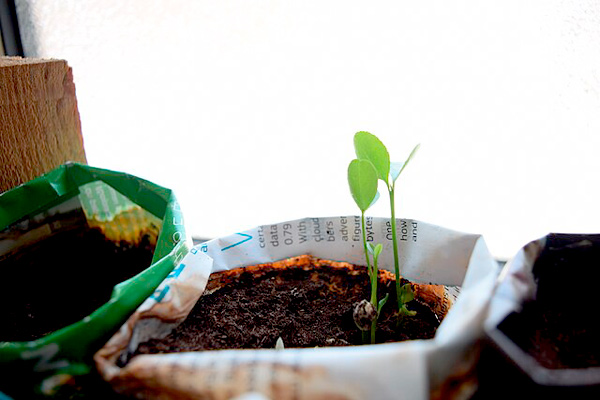
At the end of the month, lemon seedlings are pricked out in the open field at 15-20 cm in the row and 1 m between rows.
<