

![MultipartFile resource [file_data]](/assets/img/articles/заглавна-клон-ябълка.jpg)
Summary
The apple tree is attacked by a number of diseases and pests, some of which can cause serious damage to the twigs, branches, and trunks of the trees. Research on apple tree pests was conducted at the Institute of Agriculture, Kyustendil, under three cultivation technologies - conventional, integrated, and organic. Surveys were also carried out in other orchards in the Kyustendil region. During the study period, damage from black rot Botryosphaeria obtusa, Cytospora canker Leucostoma cincta, wood rot Schizophylum alneum, apple clearwing moth Synanthedon myopaeformis Borkh, bark beetles Scolytidae and leopard moth Zeuzera pyrina L. was found on the trunks, scaffold branches, and limbs.
The causal agent of black rot, the fungus Botryosphaeria obtusa, attacks leaves, blossoms, young fruit, twigs, branches, and trunks [4; 9; 19]. Conducted trials show that in our country, this fungus causes significant damage to trunks and branches, forming characteristic cankers on infected areas [2]. Infections usually start from wounds caused by frost, hail, pests, pruning, or mechanical injuries during cultivation and spraying [1; 3; 17]. Often the fungus also develops on damage caused by fire blight. The cankers (fig. 1) that form after infection can reach sizes of about 50–60 cm. Initially, the bark around the damage acquires a yellowish-brown hue, later darkening to black. The infected tissue sinks, and cracks appear at the border between healthy and infected parts. As the infection progresses, the bark cracks and easily peels off, with the underlying wood also affected and stained dark brown. On the infected parts (under the epidermis), the fruiting bodies of the fungus form, which are very small black warts [14].
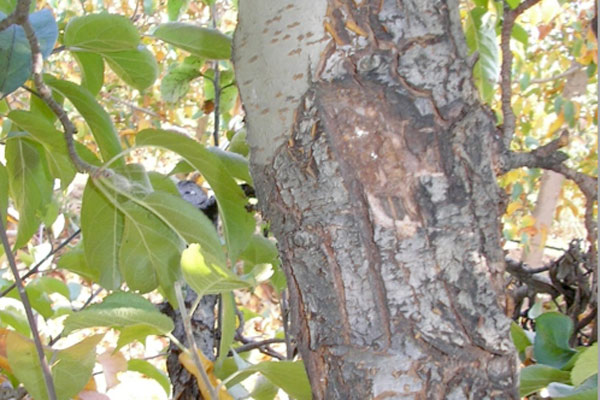
Figure 1. Canker caused by B. obtusа
The fungus Botryospheria obtusa in our country mainly overwinters in the form of pycnidia on cankers formed on branches and trunks. Primary infections in spring are caused by conidiospores, which are released from the fruiting bodies during rain and are dispersed by wind and insects. For infection to occur, a water droplet is needed, and at temperatures from 16 ºC to 32ºC they can germinate in just 4 hours.
Infected branches die gradually (fig. 2), and the disease can encompass the entire tree, which, under severe attack, can die within a few years.
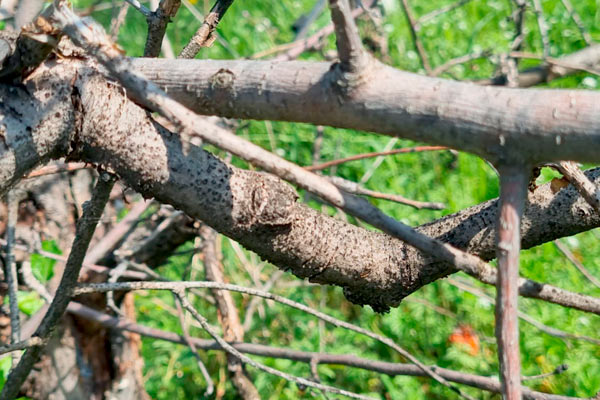
Figure 2. Branch killed by B. obtusa
In the Kyustendil region, this disease spread after a severe hailstorm. Black rot is one of the diseases observed in apple orchards where regular tree care is not provided. The results of studies on black rot damage under two cultivation technologies – conventional and organic show that the percentage of infested trees under organic technology reaches up to 52%, while under conventional technology this percentage is 5%. These results were obtained after 15 years of technology application.
The causal agent of Cytospora canker is the fungus Leucostoma cincta, which also causes cankers on trunks and scaffold branches [18]. The bark on infected parts cracks, and the wood becomes necrotic. Small white fruiting bodies form on the damaged areas, from which spores are released in a sticky substance resembling wicks when moistened (fig. 3). This pathogen also enters plant tissues through wounds.
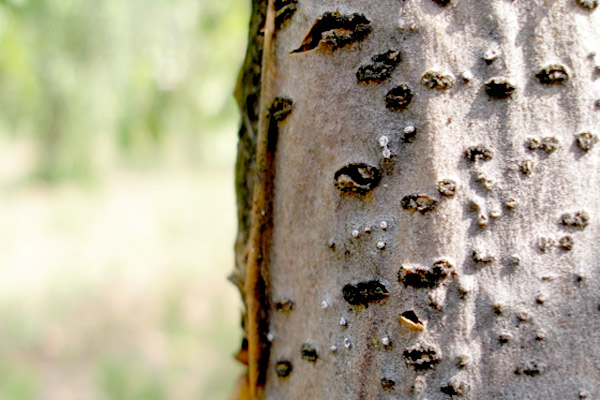
Figure 3. Canker caused by Leucostoma cincta
Bark dieback or mycosis of apple is caused by the fungus Schizophylum alneum (synonym Schizophyllum commune), which attacks only tissues damaged by low temperatures, sunscald, fire blight, black rot, etc.
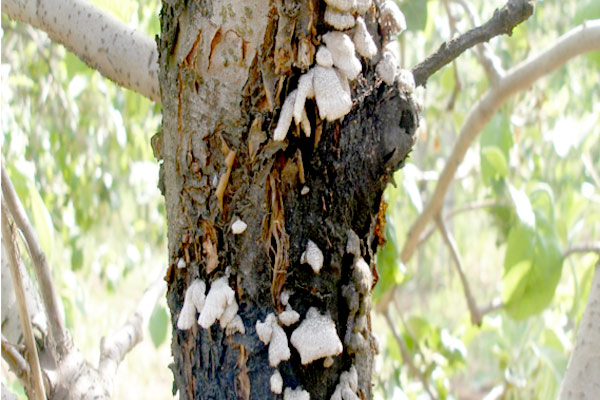
Figure 4. Damage from Schizophylum alneum
On the bark of infected trees, single, but most often numerous small leathery fruiting bodies of the fungus appear (fig.4) [13].
It is important to inform growers that apple trees are also attacked by European canker or Nectria canker caused by the fungus Nectria galigenna. This fungus also causes damage to the trunks and branches of fruit trees. In our country, the disease is very rare. It causes serious damage in countries with humid and cool climates. Elliptical, sunken reddish-brown spots are observed on the branches, which grow and encircle the branch in a ring-like manner, the bark cracks, resulting in the shoots and branches above the damage drying out. Callus may form around the canker, halting its growth, but the following year the fungus attacks the callus and continues to develop. Often perennial cankers have concentric rings. With continuous canker growth, concentric rings are not formed. Red-orange perithecia form on old cankers. The fungus Nectria galigenna infects through leaf scars after leaf fall, pruning wounds, pest damage, etc. Cold and wet weather creates favorable conditions for disease development. On cut and dried apple twigs after pruning, orange-red fruiting bodies of the fungus Nectria cinnabarina, which develops on them as a saprophyte, are often observed.
Among the pests on the trunks and scaffold branches of apple trees, the apple clearwing moth Synanthedon myopaeformis is particularly dangerous, having expanded its harmful activity in recent years [7; 6].
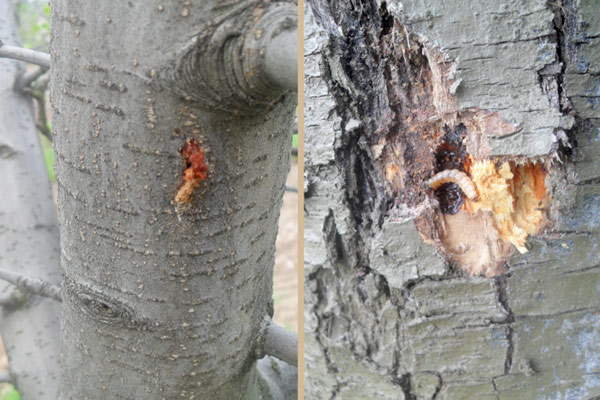
Figure 5. Damage and larva of apple clearwing moth - Synanthedon myopaeformis
It primarily attacks apple trees, and the damage is often detected late. The adult insect is a small moth with transparent wings, active in sunny weather from late May to July. Females lay their eggs in cracks and wounds in the bark. The larvae bore under the bark and into the surface layer of the wood, where they create galleries filled with frass and a rusty-red fluid (fig. 5). Under severe attack, trees weaken, become stunted, and may partially or completely dry out. It has been established that in conventional production, damage is 2.7–5.7 times weaker compared to integrated and organic production.
In the Kyustendil region, in organic orchards, from 10.69 to 36.48 entry holes per tree on average were recorded [2].
Serious damage to apple trees is also caused by bark beetles - small beetles whose larvae lead a hidden lifestyle, under the bark of trees [10; 11; 5; 8; 16; 12]. The most common are the large fruit bark beetle Ecoptogaster (Scolytus) mali and the small fruit bark beetle Ecoptogaster (Scolytus) rugulosus, which often develop together (fig. 6 and 7).
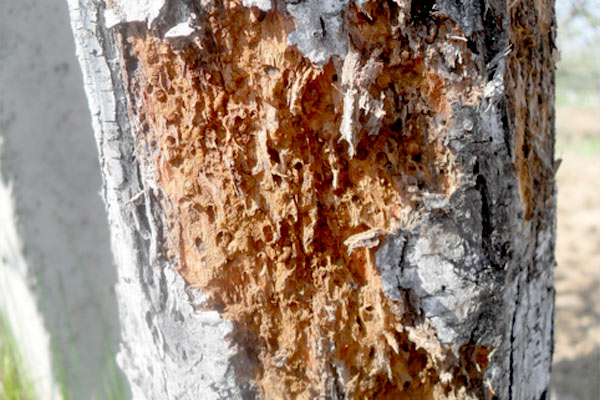
Figure 6. Damage from bark beetles - Scolytidae
The large fruit bark beetle attacks mainly old and abandoned orchards. It develops two generations per year and overwinters as a larva under the bark. In April-May, the larvae pupate at the end of the galleries, after which the adult beetles chew round exit holes in the bark and emerge. They feed on buds and the base of leaf petioles, but this damage has no significant economic importance. After mating, females chew entry holes and enter under the bark, where at the boundary between bark and wood they excavate longitudinal maternal galleries, where they lay eggs. The hatched larvae chew their own galleries between the phloem and wood, disrupting the conductive tissues, as a result of which the trees weaken and become more susceptible to diseases and other pests [15].
The small fruit bark beetle also develops two generations and overwinters as a larva. Adult beetles appear in May-June and chew small exit holes. The larval galleries are long, winding, and often intersect, leading to severe weakening of the trees. Typical signs are small round holes with a diameter of about 2 mm, and the attacked branches or entire trees are stunted in growth and have few, small, and yellowed leaves.
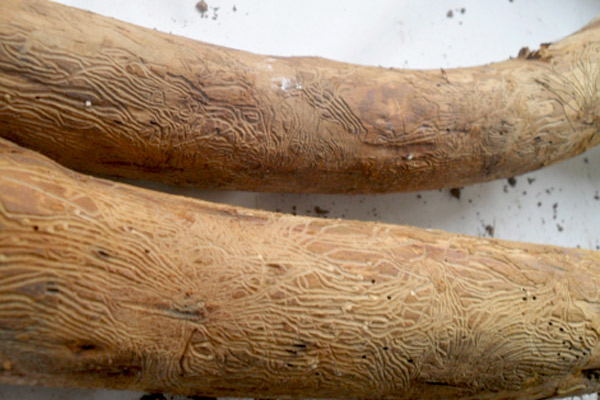
Figure 7. Damage from bark beetles - Scolytidae
In the Kyustendil region, the two bark beetle species caused serious damage in organic apple orchards - up to 58.74%, mainly by Ecoptogaster (Scolytus) rugulosus, while in conventional and integrated production it was from 0.23% to 6.81% [2].
Damage to apple trees can also be caused by the leopard moth Zeuzera pyrina (fig. 8), found mainly in organic orchards. It develops one generation every two years and overwinters as a caterpillar in the wood. The attack is recognized by piles of excrement at the base of the trunk. Damaged trees stop growing, become stunted, and in strong wind often break at the site of damage.
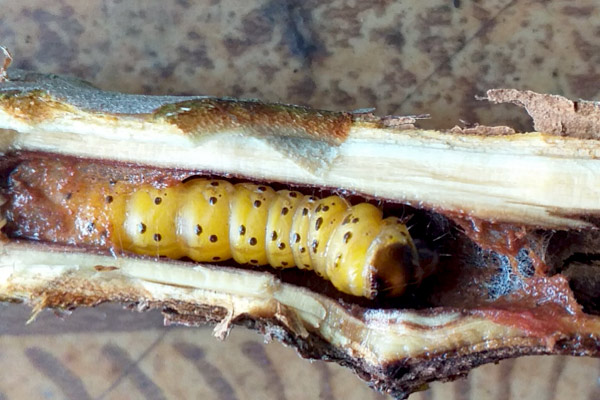
Figure 8. Leopard moth caterpillar (Zeuzera pyrina)
Measures to Prevent Losses from Trunk and Branch Pests
A. Sanitary Measures
- Regular pruning and destruction of all severely infected and dying branches, with pruning performed back to healthy tissue. The removed plant material should be taken out and destroyed outside the orchard.
- Sealing wounds from pruning, hail, or mechanical injuries with tree wound dressing or whitewash paint, to which copper-based fungicides can be added for prevention of fungal infections.