

![MultipartFile resource [file_data]](/assets/img/articles/заглавна-лофант.jpg)
A very important family of medicinal plants is the family Labiatae or Lamiaceae. Plants of this family are herbs or shrubs, often with an aromatic smell. The family contains about 236 genera and 6900 to 7200 species. The largest genera are Salvia (900), Scutellaria (360), Stachys (300), Plectranthus (300), Hyptis (280), Teucrium (250), Vitex (250), Thymus (220) and Nepeta (200). Lamiaceae have a cosmopolitan distribution and are common in the Maltese Islands and other Mediterranean countries, due to the fact that some of them produce a large amount of essential oil, which allows them to survive through the hot summer season. Plants of this family are widely cultivated for medicinal, perfumery, culinary and ornamental purposes.
Bulgaria is a relatively small country by area, yet it has a complex climatic profile with five zones: temperate continental, mid-continental Mediterranean, maritime, and mountainous.
The country has various soil types, with fertile chernozems occupying 21% of its territory. Most soil types do not have high natural resistance to deteriorating physical conditions, such as high temperatures or intense rainfall. Regions in Southeast Bulgaria, which have lower amounts of precipitation during the warm half of the year, are particularly vulnerable.
Agastache Clayton ex Gronov is a promising genus from the Lamiaceae family, fitting perfectly as an agricultural crop in Bulgaria under current climate changes. It is believed that the closest relatives of the genus Agastache are two very different lineages: one represents a group of predominantly Asian, highly aromatic, large plants, which includes the genera Dracocephalum, Hyssopus, Lallemantia, and Schizonepeta. The other lineage unites genera including low-growing plants, mostly without scent – Glechoma and Meehania, which are widely distributed in the Northern Hemisphere, excluding its tropical regions.
The name of the genus comes from the Greek word "agatos", meaning delightful. Plants of this genus are known by the common name giant hyssops.
Agastache Clayton ex Gronov is a small genus consisting of 22 species and 38 accepted taxa according to the current list in the taxonomic internet database maintained by the World Flora Online consortium (https://www.worldfloraonline.org/taxon/wfo-4000000903):
Species of Agastache can be divided into two sections: Brittonastrum and Agastache. Agastache foeniculum is included in section Agastache.
The species is native to North America, with its primary origin in the states of Wisconsin, Minnesota, Iowa, North Dakota to Wyoming, and Colorado. In Canada, it occurs from Ontario to Alberta. Naturalized in other regions of North America as well. It prefers full sun and is frost-hardy. It grows in hardiness zones 8–10. Agastache foeniculum is a diploid organism, with a haploid chromosome set equal to 9 (n = 9).
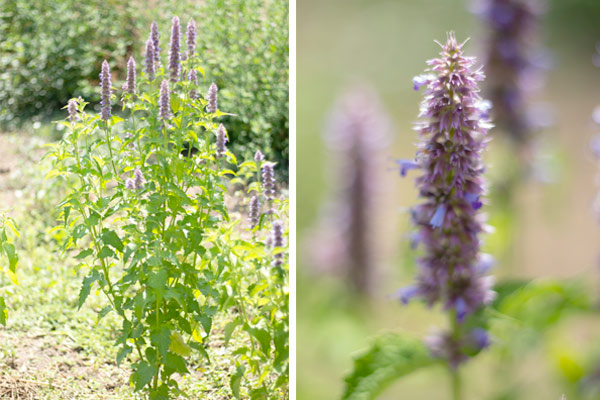
Lophant is a self-pollinating plant, but as it attracts an extremely large number of insect pollinator species, it is also entomophilously pollinated.
The species is a female, monoecious plant – with the presence of female and hermaphrodite flowers. In total, 77.5% of the plants are hermaphrodites, 13.2% are intermediate – hermaphrodite and female flowers, and 9.3% are female.
Hermaphrodite flowers possess a large proportion of fertile pollen grains, while the intermediate phenotype has either the same amount of sterile and fertile grains, or there are more sterile than fertile grains.
Agastache foeniculum is a perennial, herbaceous plant with an upright growth habit. The root system is creeping, similar to mint species, but without its invasiveness.
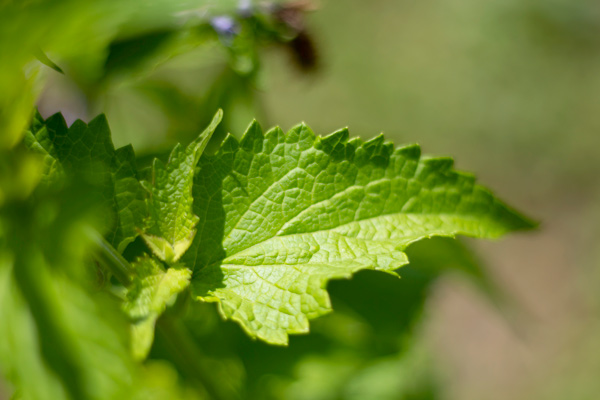
Typically, the leaves of plants from section Agastache are longer (up to 15 cm) than those of Brittonastrum (2–6 cm). Plants from section Agastache have ovate blades with a serrated leaf margin. In the latter section, the basic leaf shape is cordate-triangular, but juvenile blades are ovate to cordate, and mature ones are cordate, ovate, narrowly ovate, or oblong-linear. The leaf margins are usually serrated, sometimes entire.
The stems of Agastache foeniculum plants are simple or branched, quadrangular, with dense inflorescences formed at the terminal apices.
Inflorescences of section Agastache are typically of the spike type, composed of many compact verticillastrate inflorescences arranged spirally. Less commonly, the inflorescences are moniliform. Often the lower whorls are distant, but this does not occur with great systematic regularity.
A typically dissected corolla of section Agastache is asymmetrical and narrowly funnel-shaped and slightly bilabiate. Two adaxial lobes are fused for about two-thirds of their length into a shallowly concave upper lip. Two lateral lobes are much exceeded by the upper lip. Four stamens emerge from the tube and are enclosed beneath the strongly exceeding upper lip of the corolla. The dorsal pair of stamens is longer.
Numerous studies regarding the importance of Agastache foeniculum plants justify their cultivation: for ornamental purposes, as a melliferous plant and a source of pollen and nectar for pollinators and beneficial insects, in the food and alcohol industries, for valuable essential oils, and as a source of specific bioactive compounds, such as polyphenols, flavonoids, sterols, pentacyclic triterpenoids, which confirms its use as a dried drug in teas.
Landscape designers are attracted by the variety of colors of the inflorescences of different lophant varieties, the abundant and prolonged flowering of the plants – about two months, their aroma, as well as the wide range of compositions in which it can be used: flower beds, borders, edges, mixed borders, mono gardens, etc.
All varieties of Agastache foeniculum are found in decorative solitaires and group plantings on leveled, low-mown lawns. Combined forms in mixed plantings with other ornamental grasses are particularly effective. The species can be successfully used to create an autumn flower garden, which stands out with a magnificent palette of bright colors – bronze, golden, yellow, purple. At this time, sneezeweeds, helenium, goldenrod, Korean chrysanthemums, rudbeckia, and others bloom. Agastache foeniculum also exhibits ornamental value in mixed plantings with hosta, irises, rogersia, garden phlox.
The leaves of Agastache foeniculum can be added to fresh bouquets, and the inflorescences to dried bouquets.
Agastache foeniculum is a source of nectar and pollen for wild bees – Halictidae, Colletidae (genus Hylaeus) and Apidae, Megachilidae, butterflies – Hyloicus morio Rothschild et Jordan, Danaus plexippus, Diptera - Eristalis cerealis Fabricius, Eristalis tenax [Linne], Eristalinus tarsalis [Macquart], hummingbirds, goldfinches, and beneficial insects – Syrphidae, Anthocoridae, Chalcidoidea, Cantharidae, Arachnida, Miridae, with lophant having the highest attractiveness coefficient among pollinators compared to other studied pollinator plants.
One acre planted with anise hyssop can provide nectar for 100 honeybee hives. According to scientists, a yield of 454 kg/1 acre (4046.86 m2) of anise hyssop honey is entirely possible, potentially reaching over a ton/1 acre (4046.86 m2), while others suggest it could reach 2500 kg/ha.
The studied honey from Agastache rugosa (a species very close to A. foeniculum) has the following characteristics: pH - 4.10 ± 0.1; Moisture - 17.0 ± 0.5%; Protein - 428 ± 83.4 µg/g; Color - 461 ± 8.8 A450, mAU.
Significant antioxidant and antimicrobial qualities of the honey have been observed.
Agastache foeniculum is an indispensable aromatic plant in many cuisines around the world, due to its cooling and energizing properties and spicy and peppery aroma – in baked goods and as spices for meats, fish, soups, sauces, processed into cakes, ice creams, and confectionery – jams, puddings, jellies, in fresh or dry form as an addition to vegetable and fruit salads and desserts. Lophant is also used in soft drinks and alcoholic beverages. And its seeds – for garnishing cakes and muffins.
The plant has great potential in the cosmetic and pharmaceutical industries.
It is also used as an additive in feed for farm animals.
All species of the genus Agastache – typically for Lamiaceae – abound in phenylpropanoid and terpenoid specialized metabolites.
Pharmacological effects of extracts from the genus Agastache include antiadipogenic, antiatherosclerotic, cardioprotective, antidiabetic, antiosteoporotic, and hepatoprotective, anti-inflammatory, spasmogenic and spasmolytic, bronchodilatory, analgesic, immunomodulatory, antioxidant, antimicrobial, antiparasitic, antiviral, insecticidal, acaricidal, anticancer, central nervous system-affecting, metabolism-boosting, and anti-aging and anti-photoaging properties.
The antiatherosclerotic and cardioprotective effects of Agastache genus extracts are explained by the presence of tilianin, a glycosidic flavonoid with therapeutic potential in the cardiovascular field. Tilianin exhibits antilipogenic, antiatherosclerotic, antihypertensive, and anticoagulant activity.
Estragole has several medical applications, including antioxidant, anti-inflammatory, antibacterial, and antiviral properties. The biological effects of estragole are attributed to its high antioxidant capacity and anti-inflammatory activity by stimulating cytokine release.
Caryophyllene plays a role as a non-steroidal anti-inflammatory drug. It also has anticancer and antibacterial effects. Pulegone is a psychoactive substance, with an analgesic profile.
Anise hyssop essential oil is a clear yellow liquid with low viscosity. The yield of essential oil from Agastache foeniculum ranges from 1.48% to 2.30% of the absolute dry weight. The highest yield of essential oil from A. foeniculum is obtained when harvesting the raw material during the mass flowering of the plants. The highest content of secondary metabolites – polyphenols and flavonoids of Agastache foeniculum essential oil is obtained when harvesting the aerial parts of the plant at the beginning of flowering and in the afternoon.
It is hypothesized that there are five chemotypes of anise hyssop: 1 – the typical one, containing estragole (anise scent type), and four others (mint scent type), with other substances such as: 2—menthone (11%–60%), 3—menthone and pulegone (6%–8%), 4—methyleugenol, and 5—methyleugenol and limonene (3%–12%)
Most studies focusing on the composition of the volatile oil of A. foeniculum indicate that estragole is the compound found in the highest concentration. Besides estragole, other phenylpropanoid compounds (methyl isoeugenol, chavibetol, chavicol, eugenol), as well as monoterpenes (1,8-cineole, limonene, menthone, isomenthone, pulegone, pulegone, β-ocimene, bornyl acetate, geraniol, and trans-carvone oxide), sesquiterpenes (β-caryophyllene, spatulenol, caryophyllene oxide), and non-terpenoid compounds (benzaldehyde, pentanone, 1-octen-3-ol) have been identified.
The composition of the plant's oil also includes phenolic acids (caffeic acid and p-coumaric acid), as well as flavonoids (quercetin, genistein, hyperoside, and rutoside).
Anise hyssop essential oil shows a strong ability to scavenge free radicals, with IC50 values of 6.45 μl/ml. It also has antimicrobial action against Staphylococcus aureus, Escherichia coli and Pseudomonas aeruginosa, Microsporum canis, Trichophyton rubrum, Candida albicans, Aspergillus fumigatus, Aspergillus flavus and Fusarium solani, Bacillus cereus, Bacillus subtilis, S. enteritidis, S. typhimurium, L. monocytogenes, A. flavus and A. niger, S. cerevisiae, C. albicans C. flaccumfaciens PM_YT, Salmonella sp., P. vulgaris, P. aeruginosa ATCC 9027, K. pneumonia.
Studies show that Agastache foeniculum essential oil can also be used in plant protection against various types of insects – Trialeurodes vaporariorum, Rhyzopertha dominica, Tribolium castaneum, Plodia interpunctella, Ephestia kuehniella, P. interpunctella, C. maculatus, O. surinamensis and L. serricorne.
Air drying at 25°C of fresh lophant mass leads to the highest essential oil yield and an increase in carbohydrate content, while at 80°C an increase in amino acids and flavonoids is observed. Cold air drying is applied, where an increased content of tilianin and acacetin is observed, freeze-drying, where the level of carotenoids and phenols increases, as well as infrared light drying.
According to the BBCH scale, nine developmental stages of Agastache foeniculum have been observed: germination, leaf development, side shoot formation, stem elongation, inflorescence emergence, flowering, fruit development, fruit ripening, senescence, and dormancy.
With planting distances of 70/50 cm (between rows/within the row), the leaf mass yield of Agastache foeniculum is 3.83 t/ha of absolute dry weight.
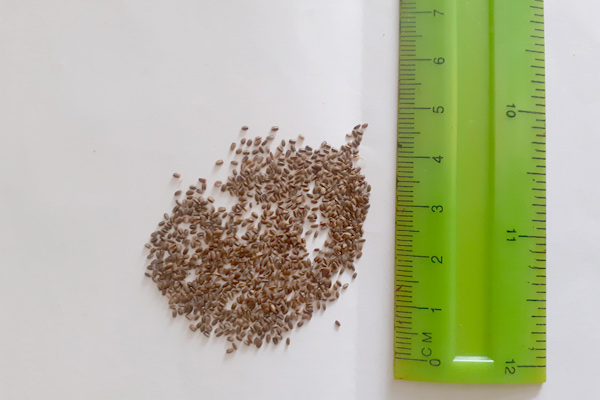
1000 lophant seeds, grown at the Institute of Ornamental and Medicinal Plants, IOMP
The seeds are small, oval-triangular, dark brown or black, the weight of 1000 seeds varies from 0.353 to 0.450 grams depending on the variety, with the seeds of the Agastache foeniculum variety cultivated at IOMP-Sofia having a 1000-seed weight of 0.356 grams. For best seed germination, stratification at +2°C for 3 months is recommended.
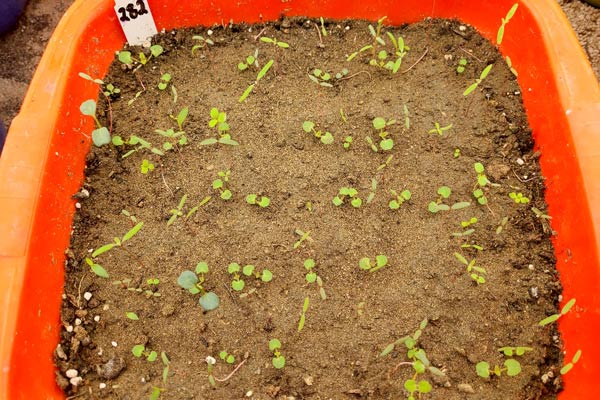
Germinated lophant seeds on day 14
Lophant seeds are sown at 0.7 – 1 cm depth in the seedling mixture or soil, at an optimal germination temperature of 20-22°C, germinating within two weeks. In cooler climates, transplanting seedlings yields higher and more economically viable harvests than direct sowing.
Anise hyssop can also be propagated by division in early spring, or by cuttings taken from young basal shoots that have begun to grow in spring.
When cultivating Agastache foeniculum, the presence of black mulching film and raised beds increases soil temperature from 0.2°C to 6°C and boosts yields by 20-40%. These methods can be partially mechanized and reduce the need for manual weed control by 65-80%. The most effective row arrangement for direct sowing is two rows per raised bed.
Of all Agastache species, anise hyssop is the most cold-hardy. In order of low-temperature resistance, after A. foeniculum are: Agastache nepetoides, A. rugosa, A. urticifolia, A. scrophulariifolia, A. aurantiaca, A. rupestris, A. mexicana, and A. cana.
Lophant is a thermophilic and drought-resistant plant, but there are periods when it is sensitive to moisture – periods of seed germination, seedling planting, and the formation of vegetative and generative organs. Moderate soil irrigation up to 55% FC leads to an essential oil yield of 2.3% and the presence of 6 components in the oil. It also increases the activity of antioxidant enzymes (superoxide dismutase, catalase, glutathione peroxidase), the oxidation of lipids and proteins, and the content of abscisic acid.
It is grown on well-structured, drained sandy-loam and loamy-sandy soils, even on rocky soils poor in humic matter.
Globally, Agastache foeniculum is attacked by the following diseases – Comoclathris compressa, Crocicreas cyathoideum var. cacaliae, C. nigrofuscum var. allantosporum, Heteropatella alpina, H. umbilicata, Leptosphaeria brightonensis, L. darkeri, L. olivacea, Mycosphaerella tassiana, Phoma herbarum, Pleospora compositarum, P. helvetica, P. herbarum var. occidentalis, P. richtophensis, Podosphaera macularis, Ramularia lophanthi and Sphaerotheca humuli, Verticillium dahlia, Golovinomyces biocellatus, Golovinomyces monardae, Peronospora lamii, Peronospora belbahrii and Botrytis cinerea, and pests – Poecilocapsus lineatus, Popillia japonica, slugs and nematodes.
The large proportion of leaves and inflorescences in the total mass of the plant is a major advantage of Agastache foeniculum, as they constitute the raw material of the plant for medicinal purposes, despite the fact that the inflorescences of the species from the genus produce 2 to 6 times more volatile substances per gram than the leaves, and the essential oil components from leaves and inflorescences may differ.
The Balkan Peninsula is severely affected by rising temperatures, changes in precipitation distribution, and the increasing frequency of extreme events – mainly droughts and frosts. Bulgarian agriculture develops under diverse agrometeorological conditions – the country's climate is characterized by a deficit of atmospheric and soil moisture during the active vegetation of crops and yield formation. Climate change exacerbates existing challenges in Bulgaria's agricultural sector, such as water scarcity, soil degradation, and increased spread of pests and diseases, alongside the familiar meteorological phenomena in Bulgaria.
Therefore, due to its drought resistance, cold hardiness, and development even on poorer, rocky soils, Agastache foeniculum fits perfectly as a promising agricultural crop with diverse benefits – as an ornamental, melliferous, and medicinal plant, in Bulgaria under current climate changes.
References:
1. Velikorodov, A. V., V. B. Kovalev, A. G. Tyrkov, O. V. Degtyarev, 2010. Study of the chemical composition and antifungal activity of the essential oil of Lophantus anisatum Benth. Chemistry of Plant Raw Materials 2: 143-146.
2. Kormosh, S. M., 2022. Study of the productivity of the initial material of anise lophant (Lophanthus anisatus BENTH.) depending on the meteorological conditions of the lowland zone of Transcarpathia. Vegetable Growing, 26: 52-63.
3. Melnychuk, O. A., D. B. Rakhmetov, 2016. Features of growth and development of Lophanthus anisatus Adans. plants during introduction in Kremenets Botanical Garden. Plant Introduction, 4: 39-44.
4. Nikolaeva M. G., M. V. Razumova, V. N. Gladkova, 1985. Handbook on the germination of dormant seeds. L.: Nauka. Leningrad. відділення, 348 s.
5. Poyarkova, N. M., 2018. Features of Agastache application in landscape gardening. Ekaterinburg: Bulletin of Biotechnology, 1.
6. Poyarkova, N. M., N. I. Shingareva, 2018. Essential oil plants in landscape gardening. Bulletin of Biotechnology, 2: 13-13.
7. Stefanovich, G. S., M. Yu. Karpukhin, 2013. Ornamental perennial grasses – introduced plants in landscaping of the Ural region. Agrarian Bulletin, Ural, №7 (124): 9 – 11.
8. Khlebtsova, E. B., A. A. Sorokina, T. K. Serezhnikova, S. S. Turchenkov. Anise Hyssop in the complex therapy of chronic lung diseases. Pharmacy, 66(8): 45-48.
9. Chumakova, V. V., O. I. Popova, 2013. Anise Hyssop (Agastache foeniculum L.) – a promising source for obtaining medicinal products. Pharmacy and Pharmacology, 1(1): 39-43.
10. Anand, S., E. Pang, G. Livanos, N. Mantri, 2018. Characterization of Physico - Chemical Propertpes and Antioxidant Capacities of Bioactive Honey Produced from Australian Grown Agastache rugosa and its Correlation with Colour and Poly-Phenol Content. Molecules, 23, 108.
11. Anand, S., M. Deighton, G. Livanos, E. C. K. Pang, N. Mantri, 2019. Agastache honey has superior antifungal activity in comparison with important commercial honeys. Scientific Reports, 9: 18197.
12. Anand, S., M. Deighton, G. Livanos, P. Morrison, E. C. K. Pang, N. Mantri, 2019. Antimicrobial Activity of Agastache Honey and Characterization of Its Bioactive Compounds in Comparison With Important Commercial Honeys. Front. Microbiol., 10: 263. .
13. Ayers, G. S., M. P. Widrlechner, 1994a. The genus Agastache as bee forage: an analysis of reader returns. Amer. Bee J., 134: 477-483.
14. Bielecka, M., S. Zielinska, B. Pencakowski, M. Stafiniak, S. Slusarczyk, A. Prescha, A. Matkowski, 2019. Age-Related Variation of Polyphenol Content and Expression of Phenylpropanoid Biosynthetic Genes in Agastache rugosa. Ind. Crops Prod., 141: 111743.
15. Bjerkesmoen, H., 2024. Plants and pollinators in urban flowerbeds: The selection of ornamental plants matters for optimizing interactions. Master's thesis, NTNU.
16. Block, C. C., N. P. Senechal, M. P. Widrlechner, 1989. First report of verticillium wilt of Agastache rugosa caused by V. dahliae. Plant Disease, 12: 1020.
17. Charles, D. J., Simon J. E., M. P. Widrlechner, 1991. Characterization of essential oil of Agastache species. J Agric Food Chem, 39(11): 1946–1949.
18. Che, S., H. Bachev, W. Ling, B. Ivanov, B. Ivanova, Y. Kazakova-Mateva, D. Terziev, S. Zlatanska, D. Dunchev, R. Beluhova-Uzunova, V. Krustev, V. Stoychev, X. Gu, Ch. Xie, Y. Qin, H. Wu, C. Yang, M. Wei, Y. Guo, Y. Zhao, 2025. Adapting to the Future: Climate Risks and Resilience in Rural Bulgaria. Institute of Agricultural Economics, Sofia, ISBN 978-954-8612-53-1.
19. Dahham, S. S., Y. M. Tabana, M. A. Iqbal, M. B. K. Ahamed, M. O. Ezzat, A. S. A. Majid, A. M. S. A. Majid, 2015a. The anticancer, antioxidant and antimicrobial properties of the sesquiterpene β-caryophyllene from the essential oil of Aquilaria crassna. Molecules, 20(7): 11808-11829.
20. Deng, T., Z.-L. Nie, B. T. Drew, S. Volis, Ch. Kim, Ch.-L. Xiang, J.-W. Zhang, Y.-H. Wang, H. Sun, 2015. Does the Arcto-Tertiary biogeographic hypothesis explain the disjunct distribution of Northern Hemisphere herbaceous plants? The case of Meehania (Lamiaceae). PLoS One, 10(2): e0117171.
21. De Sousa, D. P., F. F. F. Nóbrega, M. R. V. De Lima, R. N. De Almeida, 2011. Pharmacological activity of (R)-(+)-pulegone, a chemical constituent of essential oils. Zeitschrift für Naturforschung C, 66(7-8): 353-359.
22. Drew, B. T., K. J. Sytsma, 2012. Phylogenetics, biogeography, and staminal evolution in the tribe Mentheae (Lamiaceae). American journal of botany, 99(5): 933-953.
23. Duda, M. M., C. F. Matei, D. I. Varban, S. Muntean, C. Moldovan, 2013b. The results of cultivating the species Agastache foeniculum (Pursh) Kuntze at Jucu. Bulletin USAMV serie Agriculture, 70(1): 214-217.
24. Duda, M. M., D. I. Vârban, S. Muntean, C. Moldovan, M. Olar, 2013a. Use of species Agastache foeniculum (Pursh) Kuntze. Hop and Medicinal Plants, 21(1-2): 52-54.
25. Duda, S., L. Al Mărghitaş, D. Dezmirean, Otilia Bobis, 2015. Research on the Flavones Content in Four Species of Medicinal Plants Grown in the Western Transylvanian Plain. Research Journal of Agricultural Science, 47(1): 68-77.
26. Ebadollahi, A., M. H. Safaralizadeh, S. A. Hoseini, S. Ashouri, I. Sharifian, 2010. Insecticidal activity of essential oil of Agastache foeniculum against Ephestia kuehniella and Plodia interpunctella (Lepidoptera: Pyralidae). Munis Entomology & Zoology, 5(2): 785-791.
27. Ebadollahi, A., 2011. Chemical constituents and toxicity of Agastache foeniculum (Pursh) Kuntze essential oil against two stored-product insect pests. Chilean Journal of Agricultural Research, 71(2): 212-217.
28. Ebadollahi, A., R. Khosravi, J. J. Sendi, P. Honarmand, R. M. Amini, 2013. Toxicity and physiological effects of essential oil from Agastache foeniculum (Pursh) Kuntze against Tribolium castaneum Herbst (Coleoptera: Tenebrionidae) larvae. Ann Rev Res Biol, 3(4): 649-658.
29. Erickson, E., H. M. Patch, C. M. Grozinger, 2021. Herbaceous perennial ornamental plants can support complex pollinator communities. Scientifc Reports, 11: 17352.
30. Estrada-Reyes, R., C. López-Rubalcava, O. A. Ferreyra-Cruz, A. M. Dorantes-Barrón, G. Heinze, J. Moreno Aguilar, M. Martínez-Vázquez, 2014. Central Nervous System Effects and Chemical Composition of Two Subspecies of Agastache mexicana; an Ethnomedicine of Mexico. J. Ethnopharmacol., 153: 98–110.
31. Farr, D. F., A.Y. Rossman, 2017. Fungal databases, U.S. National Fungus Collections. U.S. Department of Agriculture, Agricultural Research Service. https://nt.ars-grin.gov/fungaldatabases/.
32. Fiedler, A. K., D. A. Landis, 2007. Attractiveness of Michigan native plants to arthropod natural enemies and herbivores. Environmental entomology, 36(4): 751-765.
33. Fuentes-Granados, R. G., M. P. Widrlechner, 1996. Evaluation of Agastache and Other Lamiaceae Species for Reaction to Verticillium dahliae. Journal of Herbs, Spices & Medicinal Plants, 3(3):3–11.
34. Fuentes-Granados, R. G., M. P. Widrlechner, L. A. Wilson, 1998. An Overview of Agastache Research. Journal of Herbs, Spices & Medicinal Plants, 6(1): 69-97.
35. Galambosi, B., Z. Galambosi-Szebeni, 1992a. Studies on the cultivation methods of Agastache foeniculum in Finland. Acta Agronomica Hungarica, 41:107-115.
36. Galambosi, B., Z. Galambosi-Szebeni. 1992b. The use of black plastic mulch and ridges in the production of herbicide free herbs. Acta Horticulturae 306: 353-355.
37. Georgieva, V., V. Kazandjiev, V. Bozhanova, G. Mihova, D. Ivanova, E. Todorovska, Z. Uhr, M. Ilchovska, D. Sotirov, P. Malasheva, 2022. Climatic changes—A challenge for the Bulgarian farmers. Agriculture, 12(12): 2090.
38. Gill, S. L., 1979. Cytotaxonomic studies of the tribe Nepeteae (Labiatae) in Canada. Genetica, 50(2): 111-118.
39. González-Ramírez, A., M. E. González-Trujano, F. Pellicer, F. J. López-Muñoz, 2012. Anti-nociceptive and anti-inflammatory activities of the Agastache mexicana extracts by using several experimental models in rodents. Journal of ethnopharmacology, 142(3): 700-705.
40. Gonzalez-Trujano, M. E., R. Ventura-Martinez, M. Chavez, I. Diaz-Reval, F. Pellicer, 2012. Spasmolytic and antinociceptive activities of ursolic acid and acacetin identified in Agastache mexicana. Planta Med., 78: 793–796.
41. Gonzalez-Trujano, M. E., H. Ponce-Muñoz, S. Hidalgo-Figueroa, G. Navarrete-Vázquez, S. Estrada-Soto, 2015. Depressant effects of Agastache mexicana methanol extract and one of major metabolites tilianin. Asian Pacific Journal of Tropical Medicine, 8(3): 185-190.
42. Harley, R. M., S. Atkins, A. L. Budantsev, P. D. Cantino, B. J. Conn, R. Grayer, M. M. Harley, R. Kok, T. Krestovskaja, R. Morales, A. J. Paton, O. Ryding, T. Upson, 2004. Labiatae. Flowering Plants. Dicotyledons. The Families and Genera of Vascular Plants, Vol. 7, Springer, Berlin, 167-275.
43. Hernández-Abreu, O., M. Torres-Piedra, S. García-Jiménez, M. Ibarra-Barajas, R. Villalobos-Molina, S. Montes, D. Rembao, S. Estrada-Soto, 2014. Dose-dependent antihypertensive determination and toxicological studies of tilianin isolated from Agastache mexicana. Journal of ethnopharmacology, 146(1): 187-191.
44. Hong, J.-J., J.-H. Choi, S.-R. Oh, H.-K. Lee, J.-H. Park, K.-Y. Lee, J.-J. Kim, T.-S. Jeong, G. T. Oh, 2001. Inhibition of cytokine-induced vascular cell adhesion molecule-1 expression; possible mechanism for anti-atherogenic effect of Agastache rugosa. FEBS letters, 495(3): 142-147.
45. Horga, V.-A., D.-L. Suciu, I.-B. Hulujan, A. D. Costin, S. S. Ciontea, D. Vârban, C. Moldovan, S. Muntean, M.-M. Duda, 2024. Therapeutic Properties and Use for Medicinal Purposes of Agastache Species. Hop and Medicinal Plants, 32: 22-34.
46. Hwang, H. S., H. W. Jeong, S. J. Hwang, 2022. Flowering and inflorescence development characteristics of Korean mint affected by different photoperiods. Journal of Bio-Environment Control, 31(3): 188-193.
47. Ivanov, I. G., R. Z. Vrancheva, N. T Petkova, Y. Tumbarski, I.N. Dincheva, I. K. Badjakov, 2019. Phytochemical compounds of anise hyssop (Agastache foeniculum) and antibacterial, antioxidant, and acetylcholinesterase inhibitory properties of its essential oil. Journal of Applied Pharmaceutical Science 9(02): 072-078.
48. Jabloñski, B., Z. Koltowski, 2001. Nectar Secretion and Honey Potential of Honey-Plants Growing under Poland’s Conditions. Part XII. J. Apic. Sci., 45: 29–34.
49. Jang, T.S., H. K. Moon, Hong S. P., 2015. Sex expression, population structure, and floral dimorphism in a gynodioecious herb, Agastache rugosa (Lamiaceae) in Korea. Flora-Morphology, Distribution, Functional Ecology of Plants, 215: 23-32.
50. Jun, H.-J., M. J. Chung, K. Dawson, R. L. Rodriguez, S.-J. Houng, S.-Y. Cho, J. Jeun, J.-Y. Kim, K. H. Kim, K. W. Park, C.-T. Kim S.-J. Lee, 2010. Nutrigenomic Analysis of Hypolipidemic Effects of Agastache rugosa Essential Oils in HepG2 Cells and C57BL/6 Mice. Food Sci. Biotechnol., 19: 219–227.
51. Kim, Y. M., M. H. Kim, W. M. Yang, 2015. Effects of Agastache rugosa on obesity via inhibition of peroxisome proliferator-activated receptor-gamma and reduction of food intake. Journal of Korean Medicine for Obesity Research 15(2): 104-110.
52. Kormosh, S., V. Vashchenko, I. Mytenko, 2020. Perspectives Culture of the Lophanthus anisatus Benth. and Peculiarities of Its Ontogenesis in the Conditions of the Lowland Zone of Transcarpathian. Ecology and Evolutionary Biology, 5(2): 29-34
53. Kwon, J.-H., 2006. Gray Mold of Agastache rugosa Caused by Botrytis cinerea in Korea. The Korean Journal of Mycology, 34(1): 59-61.
54. Lashkari, A., F. Najafi, G. Kavoosi, N. A. Saeed, 2020. Evaluating the In vitro anti-cancer potential of Estragole from the EO of Agastache foeniculum [Pursh.] Kuntze. Biocatal. Agric. Biotechnol., 27: 101727.
55. Lee, J.-J., J. Lee, M. Gu, J.-H. Han, W.-K. Cho, J. Ma, 2017. Agastache rugosa Kuntze Extract, Containing the Active Component Rosmarinic Acid, Prevents Atherosclerosis through up-Regulation of the Cyclin-Dependent Kinase Inhibitors P21WAF1/CIP1 and P27KIP1. J. Funct. Foods, 30: 30–38.
56. Lee, Y., H.-W. Lim, I. W. Ryu, Y.-H. Huang, M. Park, Y. M. Chi, C.-J. Lim, 2020. Anti-Inflammatory, Barrier-Protective, and Antiwrinkle Properties of Agastache rugosa Kuntze in Human Epidermal Keratinocytes. Biomed. Res. Int., 2020: 1759067.
57. Lim, C. Y., B. Y. Kim, S. H. Lim, S. I. Cho, 2015. A study of agastachis herba on ovalbumin-induced asthma in the mouse. Indian Journal of Pharmaceutical Sciences, 77(5): 645.
58. Lim, S. S., J. M. Jang, W. T. Park, M. R. Uddin, S. C. Chae, H. H. Kim, S. U. Park, 2013. Chemical composition of essential oils from flower and leaf of Korean mint, Agastache rugosa. Asian Journal of Chemistry, 25(8): 4361.
59. Lint, H., C. Epling, 1945. A Revision of Agastache. Am. Midl. Nat., 33: 207–230.
60. Lord, T., 2003. Flora: The Gardener’s Bible. Cassell—Weidenfeld & Nicolson: London, UK.
61. Matei, C. F., M. M. Duda, A. E. Ardelean, A. D. Covaci, M. N. Madaș, 2010. The importance an usage of the Agastache foeniculum species (Pursh) Kuntze. Hop and Medicinal Plants, 18(1-2): 49-52.
62. Michutová, M., B. Mieslerová, I. Šafránková, B. Jílková, M. Neoralová, A. Lebeda, 2024. Powdery mildews (Ery-siphales) species spectrum on plants of family. Plant Protect. Sci., 60: 139-150.
63. Naghibi, F., M. Mosaddegh, SM. Motamed, A. Ghorbani, 2005. Labiatae family in folk medicine in Iran: from ethnobotany to pharmacology. Iranian Journal of Pharmaceutical Research, 2:63-79.
64. Najafi, F., G. Kavoosi, R. Siahbalaei, A. Kariminia, 2022. Anti-oxidative and anti-hyperglycemic properties of Agastache foeniculum essential oil and oily fraction in hyperglycemia-stimulated and lipopolysaccharide-stimulated macrophage cells: In vitro and in silico studies. Journal of Ethnopharmacology, 284: 114814.
65. Nam, H.-H., J. S. Kim, J. Lee, Y. H. Seo, H. S. Kim, S. M. Ryu, G. Choi, B. C. Moon, A. Y. Lee, 2020. Pharmacological Effects of Agastache rugosa against Gastritis Using a Network Pharmacology Approach. Biomolecules, 10: 1298.
66. Nechita, M.A., A. Toiu, D. Benedec, D. Hanganu, I. Ielciu, O. Oniga, V. I. Nechita, I. Oniga, 2023. Agastache Species: A Comprehensive Review on Phytochemical Composition and Therapeutic Properties. Plants, 12(16): 29-37.
67. Omidbaigi, R., M. Mahmoodi, 2010. Effect of irrigation regimes on the essential oil content and composition of Agastache foeniculum. Journal of Essential Oil Bearing Plants 13.1: 59-65.
68. Raja, R. R., 2012. Medicinally potential plants of Labiatae (Lamiaceae) family: An Overview. Research Journal of Medicinal Plant, 6(3): 203-213.
69. Rodale, J. I., 2000. Encyclopedia of Organic Gardening. Rodale Books; Reissue edition, 2000, 1152 p.
70. Sanders, R. W., 1979. A systematic study of Agastache section Brittonastrum (Lamiaceae, Nepetae). Ph.D. Dissertation, University of Texas, Austin.
71. Sanders, R.W., 1987. Taxonomy of Agastache section Brittonastrum. Systematic Botany Monograph No 15, 1-92.
72. Sheahan, C.M., 2012. Fact Sheet for Purple Giant Hyssop (Agastache Scrophulariifolia). USDA-Natural Resources Conservation Service, Cape May Plant Materials Center, Cape May, NJ, USA.
73. Shtakal, M., M. Tkachenko, L. Kolomiiets, L. Holyk, O. Ustymenko, 2023. Economic and biological value of medicinal and fodder herbs for feed production. Scientific Horizons, 26(7), 45-53.
74. Simpson, M. G., 2006. Plant Systematics. Elsevier Academic Press: London, UK, ISBN 0-12-644460-9.
75. Sourestani, M. M., M. Malekzadeh, A. Tava, 2014. Influence of drying, storage and distillation times on essential oil yield and composition of anise hyssop [Agastache foeniculum (Pursh.) Kuntze]. Journal of Essential Oil Research, 26(3): 177-184.
76. Stefan, D.S., M. Popescu, C. M. Luntraru, A. Suciu, M. Belcu, L. E. Ionescu, M. Popescu, P. Iancu, M. Stefan, 2022. Comparative study of useful compounds extracted from lophanthus anisatus by green extraction. Molecules; 27(22): 7737.
77. Strilbytska, O.M., A. Zayachkivska, A. Koliada, F. Galeotti, N. Volpi, K. B. Storey, A. Vaiserman, O. Lushchak, 2020. Anise Hyssop Agastache foeniculum Increases Lifespan, Stress Resistance, and Metabolism by Affecting Free Radical Processes in Drosophila. Front Physiol., 16(11): 596729.
78. Suchorska-Tropiło, K., E. Pioro-Jabrucka, 2004. Morphological, developmental and chemical analysis of the chosen Agastache species. Ann Warsaw Univ Life Sci SGGW Horticult Landsc Architect, 25: 25–31.
79. Van Hevelingen, A., 1994. Agastaches. The Herb Companion, 6: 48-55.
80. Vârban, R., A. Ona, A. Stoie, D. Vârban, I. Crisan, 2021. Phenological Assessment for Agronomic Suitability of Some Agastache Species Based on Standardized BBCH Scale. Agronomy, 11(11): 2280.
81. Vogelmann, J. E., 1985. Crossing Relationships among North American and Eastern Asian Populations of Agastache Sect. Agastache (Labiatae). Syst. Bot., 10: 445–452.
82. Vogelmann, J. E., G. J. Gastony, 1987. Electrophoretic enzyme analysis of North American and eastern Asian populations of Agastache sect. Agastache (Labiatae). American Journal of Botany, 74(3): 385-393.
83. Widrlechner, M. P., 1990. A field evaluation of native mint family plants as honey bee forage in Iowa. Proceedings of the Twelfth North American Prairie Conference, pp. 39 - 42.
84. Wilson, L.A., N. P. Senechal, M. P. Widrlechner, 1992. Headspace analysis of the volatile oils of Agastache. Journal of Agricultural and Food Chemistry, 40(8): 1362-1366.
85. Yuan, Y. W., D. J. Mabberley, D. A. Steane, R. G. Olmstead, 2010. Further disintegration and redefinition of Clerodendrum (Lamiaceae): implications for the understanding of the evolution of an intriguing breeding strategy. Taxon, (1):125-33
86. Yuk, H. J., H. W. Ryu, D.-S. Kim, 2023. Potent Xanthine Oxidase Inhibitory Activity of Constituents of Agastache rugosa (Fisch. and C.A.Mey.) Kuntze. Foods, 12: 573.
87. Yun, M.-S., C. Kim, J.-K. Hwang, 2019. Agastache rugosa Kuntze attenuates UVB-induced photoaging in hairless mice through the regulation of MAPK/AP-1 and TGF-β/Smad pathways. J. Microbiol. Biotechnol., 29(9): 1349-1360.
88. Zhekova, G., A. Dzhurmanski, A. Dobreva, 2010. Gas-chromatography and organoleptic analysis of the essential oil of Agastache foeniculum (Pursh.) Kuntze. Agric. Sci. Technol., 2(2):102–104.
89. Zielińska, S., A. Matkowski, 2014. Phytochemistry and bioactivity of aromatic and medicinal plants from the genus Agastache (Lamiaceae). Phytochem Rev, 13: 391– 416.