

![MultipartFile resource [file_data]](/assets/img/articles/заглавна-съхранение-домат.jpg)
Summary
Vegetable crops are highly perishable and require proper post-harvest management practices. A review of the biotic and abiotic factors influencing post-harvest storage of tomatoes, peppers, and eggplants has been conducted. Necessary storage practices with minimal impact on product quality have been examined. Special attention has been paid to organizational and agrotechnical measures preceding harvest, which will contribute to proper and safe storage.
Vegetable crops play an important role in feeding the population. Every year, diseases and pests cause significant losses to vegetable production due to its perishability. These losses include losses in the field during cultivation; post-harvest losses; during packaging; storage and transport. It is essential to detect and diagnose post-harvest pests and formulate safe storage management practices. Vegetable produce is damaged by pathogens after harvest and short-term storage, rendering it unfit for consumption and market. This is mainly due to the production of mycotoxins and other potential risks to human health. Once harvested, vegetables have a limited post-harvest life. They no longer receive water or nutrients from the plant. The natural aging of products leads to tissue softening, and they often lose pre-formed antimicrobial substances. These changes in vegetable quality make them less desirable for consumers.
TOMATOES
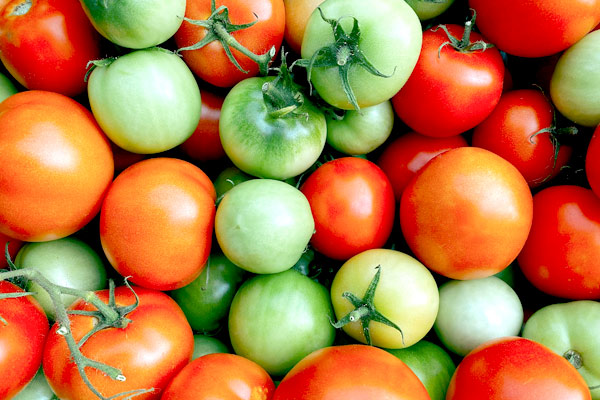
Tomato (Lycopersicon esculentum Mill.) is a vegetable crop consumed worldwide. It is typically used fresh or as an ingredient in many cooked dishes. Besides its economic value, it is beneficial for humans because it is a source of vitamins C, A, and K, potassium, and carotenoids like lycopene and carotene, which act as antioxidants.
Tomatoes have a very high water content, making them very difficult to store at ambient temperatures for long periods. For short-term storage (up to one week), fruits can be stored under ambient conditions if there is sufficient ventilation to reduce heat buildup from respiration. Longer-term storage is carried out at temperatures around 10–15°C and 85–95% relative humidity. At these temperatures, ripening and chilling injuries are reduced to minimal levels.
Proper handling of the harvest after picking is important for maintaining quality and ensuring the safety of the fruits until they are delivered to consumers, as well as for meeting buyer specifications and trade requirements.
Post-harvest losses, expressed in terms of quantity and quality, occur between harvesting and consumption. In tomatoes, losses arise due to immaturity, over-ripening, mechanical damage, and decay. These losses can be attributed to poor harvesting methods, rough handling, improper packaging, and poor transportation conditions. If these losses are not minimized, production profits and potential income cannot be realized. Post-harvest losses represent a waste of resources – land, labor, energy, water, fertilizer, etc., that have been invested in production. Therefore, every effort should be made to minimize these losses.
Consumers are increasingly paying attention to quality. They seek and are willing to pay a higher price for quality produce that is safe. Preserving nutritional value is closely related to preventing quality deterioration. With changing consumer tastes and lifestyles, the continuous expansion of the commercial network, and increasing demands from institutional buyers, enhanced attention to post-harvest tomato handling will meet the demand for better quality and safe products.
Post-harvest technology can only maintain, not improve, the quality of harvested fruits. Therefore, the primary goal of any post-harvest technology is to preserve the quality and safety of fruits as best as possible until they reach the end consumer.
Tomato fruits undergo post-harvest changes. One of them is the aging process. Changes occur within the fruit that affect its appearance, taste, texture, and nutritional value. While most changes are desirable, such as those occurring during ripening, there are also those that degrade fruit quality. These cannot be stopped but can be slowed down within certain limits. These include:
- Water loss. Conditions such as high temperature and low relative humidity lead to water loss, hence a loss of commercial weight. Water loss from fruits also leads to shriveling. Exposure of fruits to sun also leads to rapid water loss;
- Tomatoes are prone to injury. When the fruit is damaged, biological processes such as respiration and ethylene production occur at very fast rates, leading to rapid quality deterioration. Some packaging and transportation practices can also injure tomatoes. Damage may not be visible at the green stage but may appear later in retail;
- Tomatoes are susceptible to attacks by insects and decay-causing microorganisms, which ultimately lead to faster quality deterioration;
- Post-harvest technology can only maintain, not improve, the quality of harvested fruits. Therefore, the primary goal of any post-harvest technology is to preserve the quality and safety of fruits as best as possible until they reach the end consumer;
- Harvesting should occur at the appropriate stage of maturity. The way fruits are detached from the plant, as well as the timing of the harvest, is also not insignificant.
- Harvest maturity. The produce is harvested at a specific moment – when the tomatoes are mature but still green on the outside. Maturity is checked by cutting green fruit samples crosswise, and if the seeds slide without being cut – these fruits are mature. If immature fruits are harvested, they fail to develop full color and taste, and their quality deteriorates.
- Harvesting time. Tomatoes are picked during the cooler part of the day. It is recommended that this occurs by noon. Harvested fruits are stored in a shaded place. Leaving them in the sun will lead to accelerated ripening.
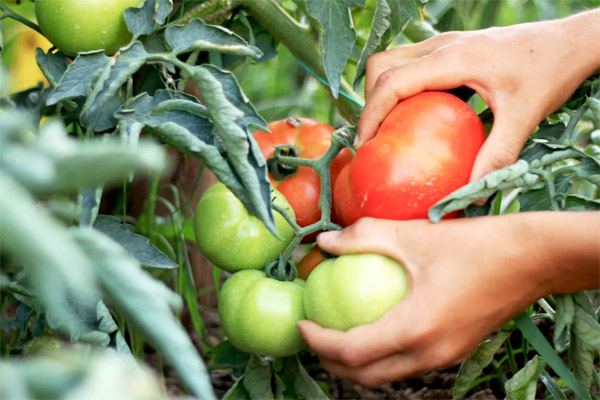
Harvesting methods. It is recommended that tomatoes intended for longer-term storage be harvested manually. Pickers should use clean gloves and maintain good personal hygiene during harvesting. The harvested produce is placed in clean containers (most often buckets) and then transferred to larger containers. All manipulations are done carefully to protect the produce from injury.
Post-harvest operations refer to activities carried out with fresh produce in preparation for market to meet its requirements. These operations can be performed on-site, in handling facilities, or in the packing house. The packing area should provide adequate protection from sun and rain and be kept clean at all times. Workers should maintain personal hygiene and, where appropriate, wear suitable protective clothing and head coverings.
When tomato fruits have soil particles or other contaminants adhering to them, they should be cleaned, as these may contain decay-causing microorganisms. This can be done by washing with a weak stream of water, or by gently wiping with a damp cloth. Disinfectants such as sodium hypochlorite (6-7 tablespoons per 10 liters of water) or a 2% solution of sodium bicarbonate are used. This reduces spoilage during storage. Fruits should be dried before packaging.
Quality tomatoes are generally preferred by buyers, which is why sorting is a necessary operation. After harvest, they are arbitrarily classified as "Class A" (excellent quality) or "Class B" (with minor defects). Quality and safe fruits are ripe, clean, well-formed, free from insect and disease damage, mechanical damage such as cuts, abrasions, and punctures, and free from microbial, chemical, and physical contamination. Tomato fruits with the following defects are removed:
- With insect and disease damage;
- With mechanical damage such as cuts, punctures, abrasions, compression;
- With pre-harvest defects such as deformation and cracks.
The most common pathogens causing damage during tomato storage can be potato late blight (Phytophthora infestans), phytophthora rot (Ph. parasitica) and alternaria rot (Alternaria solani), gray mold (Botrytis cinerea), anthracnose (Colletotrichum coccoides, C. gloeosporoides, C. dematium), phoma rot (Phoma destructive), and white mold (Sclerotium rolfsii). This occurs when diseased fruits are among the harvested ones and storage conditions are favorable for pathogen development. Very often, however, fruit decay is observed, caused not by known pathogens, but by saprophytic microorganisms. It is associated with mechanical damage (bruising, cutting, punctures, etc.) caused during harvesting and handling, which provides entry points for pathogens. Once lesions are initiated, spoilage pathogens can infect other healthy fruits. During the processes of invasion, infection, colonization, and reproduction, the pathogen typically produces structures that promote infection and decay of adjacent fruits. The causative agents of such diseases are most often: saprophytic bacteria (Erwinia carotovora subsp. carotovora (causative agent of bacterial soft rot), Lactobacillus sp., Leuconostoc spp.) and saprophytic fungi (Rhizopus stolonifer and Geotrichum candidum). Mature fruits are generally more susceptible to storage diseases compared to green ones.
Among the pests that attack tomatoes, the tomato leafminer (Tuta absoluta Meyrick) can be mentioned as a post-harvest pest. When damaged fruits are cut, tunnels are visible. Infested green fruits deform, and ripe ones rot due to the development of secondary pathogens. To limit product loss during storage and transport, it is necessary to select healthy fruits and periodically check tomatoes left for ripening and storage. Damage to fruits at an early stage after tomato harvest may go unnoticed, and caterpillar development may continue, with mines becoming visible after a few days. To limit fruit infestation, all measures from prevention to control must be observed during the growing season. Alternating plant protection products from different groups is essential to avoid the development of resistance in populations.
PEPPERS
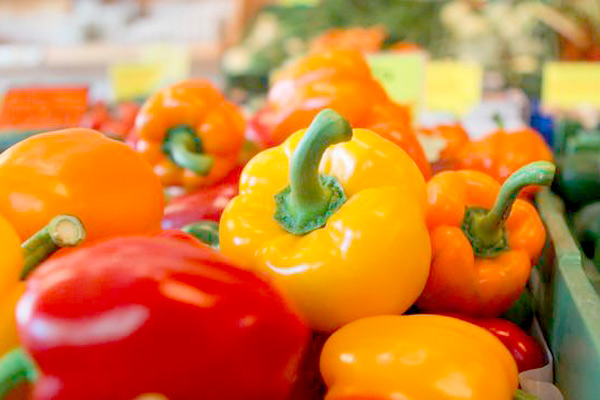
Pepper (Capsicum annuum) ranks fifth among vegetables globally in terms of production and area, and in our country – second after tomatoes. Its importance for humans is due to the valuable nutritional and taste qualities of its fruits, which are a source of vitamins, organic acids, sugars, the alkaloid capsaicin (which has a pungent taste), vegetable oils, and coloring substances. Pepper varieties are divided into two groups – sweet and hot. In terms of vitamin C content, sweet peppers surpass all vegetables and have more sugars and less capsaicin than hot ones.
Pepper is an indispensable part of the Bulgarian table, both fresh and processed, and finds application in medicine as an appetite stimulant, for improving digestion, for treating anemias, hypovitaminoses, etc., while its bactericidal action stops the development of microorganisms.
Identifying diseases in peppers is done by carefully examining the symptoms. Some are visible externally, while others can only be detected internally after cutting the fruits. It is important to detect quality problems as early as possible to correct their source and reduce losses. Common causes of pepper fruit quality deterioration include dehydration, bruising, mold, and decay.
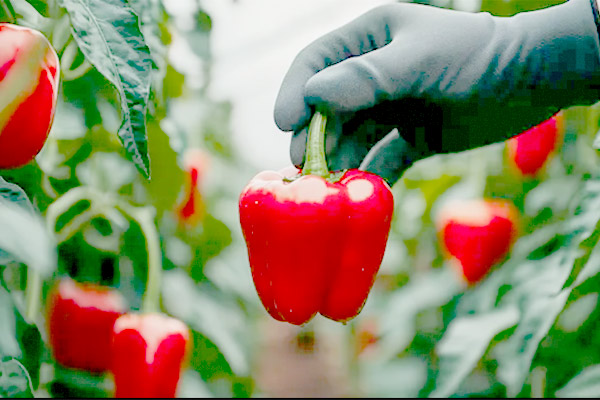
Rough handling of pepper fruits can lead to skin damage at all stages of the chain. If the harvest is collected in bags, bruising and injuries may appear at a later stage. Damage can also occur if the packaging is too tight, if the packaging material is broken, or if the crates are overfilled, thus exerting pressure on the peppers. Bruises are usually soft with discolored underlying flesh. These mechanical damages make the fruits unattractive, and secondary decay often develops on them. Symptoms caused by sunscald are a lighter, sometimes white color of the pepper skin.
Pepper fruits should not be stored below 7°C, as they are sensitive to low temperatures. Under such conditions, indentations or sunken spots appear on the surface, skin discoloration, pulp infiltration, unpleasant taste, shrinkage, and increased susceptibility to decay. Such signs are observed after several days of storage below the minimum temperature. Damage depends on duration and temperature. The longer the period at low temperature and the lower the temperature, the greater the damage. Symptoms appear especially after transfer to higher temperatures.
Peppers have a high water content. Some of this water is lost through transpiration during storage. However, if the skin is damaged for any reason, water loss can be significant. This leads to shrinking of the fruit. Drying can also result in a loss of shine. The risk of such symptoms appearing increases when combining low relative humidity and higher temperatures.
One of the most common storage diseases in peppers is gray mold, caused by Botrytis cinerea. The fungus can continue to develop at storage temperatures. Therefore, gray mold prevention can be achieved by avoiding mechanical injuries. Another widespread storage disease is anthracnose - Colletotrichum capsici. Long periods of high humidity and condensation formation can stimulate the growth of these pathogens. This can have serious consequences for the marketability of the produce.
Similar problems are also caused by the pathogens Alternaria, Erwinia, Pseudomonas, Bacillus, Xanthomonas, and Cytophaga. Alternaria rot manifests in areas with wounds and bruises. Bacterial rot is caused by Erwinia species, which infect through insect-induced wounds or other injuries. Rot is often also associated with senescence. Its development can be controlled post-harvest through rapid cooling and preventing bruising and injuries.
In addition to damage from pathogens, insect damage is also possible. A silvery skin, caused by previous thrips infection, may be observed on the fruits. Although fully edible, such fruits lack market appeal.
Overripe fruits can easily deteriorate in quality, which is a consequence of aging. Surface breakdown, softening, and unpleasant taste are part of this process. Aging is intensified by higher temperatures. Peppers with aging symptoms may have been stored at too high a temperature or simply stored or transported for too long.
The quality of pepper fruits is maintained during storage by employing various post-harvest methods, including chemical and non-chemical treatments. Synthetic compounds have traditionally been used to manage post-harvest infections and to maintain metabolic processes in fruits. In recent years, new post-harvest storage technologies have been successfully applied. These include modified atmosphere, hot water dipping, edible coatings, the use of essential oils, and other innovative and environmentally friendly techniques that protect pepper produce from spoilage. The use of these treatments is a successful technique for improving the quality of pepper fruits and preventing post-harvest losses during storage. The desire to create acceptable alternatives that can provide safe and high-quality products is driven by several factors, including consumer demand for high-quality and safe produce. As a result, the focus of post-harvest research has recently shifted towards environmentally friendly and non-chemical treatments.
Edible coatings and essential oils are developing as viable and environmentally acceptable solutions for pepper storage, as they provide a barrier against moisture and gases, while selectively preserving product freshness and quality. Edible coatings have the advantage of being natural, containing antioxidants, and in some cases, vitamins that are beneficial to consumers. The use of various edible coatings containing functional substances has been shown to minimize microbial populations and improve pepper storage quality. Non-chemical techniques such as hot water treatment, modified atmosphere, UV-C irradiation, ozone fumigation, and pulsed electric field are some of the current post-harvest technologies that show positive results in reducing physiological changes and microbiological deterioration of fruits.
EGGPLANT
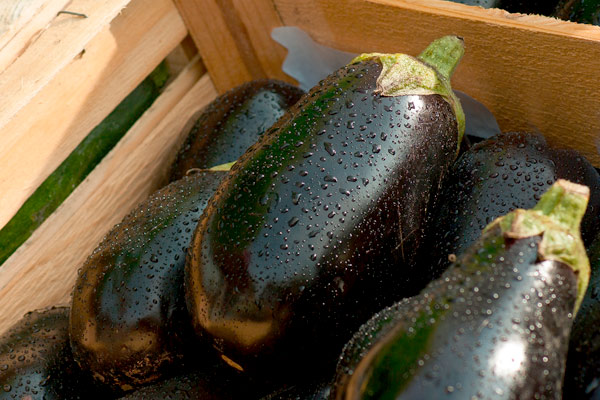
Eggplant (Solanum melongena) is a vegetable crop grown worldwide. In ancient Ayurvedic medicine, white eggplant was used to treat diabetes, and its roots to relieve asthma. It can provide significant nutritional benefits due to its abundance of vitamins, phenols, and antioxidants.
Eggplants are typically harvested immature, before the seeds significantly enlarge and harden. Firmness and external gloss are also indicators for harvesting. Eggplant fruits become bitter when they reach botanical maturity, and their flesh becomes spongy. The crop is characterized by a variety of fruit colors, shapes, and sizes. It can be grown outdoors or in cultivation facilities. Both variety and production method strongly influence storage characteristics. Eggplants have a smooth, shiny skin without stomata. This makes them relatively resistant to water loss. If the skin is damaged during harvesting, they spoil quickly. Even small amounts of water loss (up to 2-3%) cause noticeable softening of the fruits. Eggplants that have lost moisture can easily be crushed and deformed, especially if they are tightly packed in cartons.
After harvesting and placing the produce in the storage facility, the temperature should be lowered below 20°C as quickly as possible, and then to about 12°C within 24 hours to maintain freshness. A six-hour stay at 25°C leads to softening and quality deterioration.
Eggplants are sensitive to low temperatures. Sensitivity varies between varieties and depending on growing conditions. Chilling susceptibility can be reduced by delayed cooling or plastic film packaging. Symptoms of chilling injury include the appearance of light brown, scalded spots, or sunken pits on the fruit skin. These areas are susceptible to diseases. The internal part of the fruit darkens, and quality deteriorates. The storage life of eggplants is maximized between 10–14°C. Chilling deteriorates their quality within a few days if temperatures fall below 5°C. At higher storage temperatures, they soften and rot.
Chilling damage and water loss can be reduced by storing eggplant fruits in polyethylene bags or polymer film wraps. However, with these practices, there is a potential risk of increased decay caused by Botrytis.
Storage Diseases:
Gray mold ‒ Botrytis cinerea. Infection initially manifests as brown, spreading lesions on softened tissue. Subsequently, a gray sporulating growth develops on the fruit surface. Spores can cause infection of adjacent fruits.
Secondary infections are also possible from disease agents such as anthracnose (Colletotrichum coccodes), alternaria blight (Alternaria melongenae, A. alternata), or sclerotinia rot (Sclerotinia sclerotiorum).
Insect Damage.
Thrips. (Thrips tabaci, Frankliniella occidentalis). Thrips or other insect attacks during fruit development leave permanent scars on the eggplant skin. Typically, the underlying tissue is unaffected, and quality is not deteriorated, but the produce lacks market appearance and value.
To protect tomato, pepper, and eggplant fruits from pests, and pathogenic and saprophytic causes of storage damage, some basic requirements must be observed:
- Crops should be kept free of weeds and diseases;
- Harvesting and subsequent storage of produce should be carried out using disinfected equipment;
- Workers should wear latex gloves and clean work clothes;
- Only healthy fruits should be selected for storage;
- Do not harvest wet fruits for storage (from wet plants, immediately after rain, or after washing. If washing is necessary, it should be done with a gentle stream, followed by drying the washed fruits);
- Freshly picked fruits are cooled immediately. They are stored at the appropriate temperature and humidity. For tomatoes, this is a temperature of 20-25oC and a relative humidity of the room around 80-85%. Pepper fruits are stored at temperatures above 7-10oC, and eggplants – between 10 and 14oC.
- Remove insects from the produce. Some fruit flies spread pathogens;
- Fruit packing and storage facilities must be free of insects, rodents, and birds, which can be carriers of pathogens. It is good practice to disinfect them after each batch;
- During ripening, gassing of premises with chlorine dioxide (ClO2) is applied, which shows potential for disinfectant action. For tomato produce, disinfectants such as sodium hypochlorite (6-7 tablespoons per 10 liters of water) or a 2% solution of sodium bicarbonate are used. This reduces decay during storage. Fruits must be dried before packaging.;
- Hygiene – plastic crates should be thoroughly cleaned with soap/detergent after use. A disinfectant such as sodium hypochlorite reduces microbial load in them;
- Handling – work carefully during loading, stacking, and unloading;
- Storage – produce should be stored in a clean place that will prevent insect and rodent infestation;
- Produce should be stored separately from plant protection products (PPPs), fertilizers, and agricultural machinery to prevent contamination.
References
Bahvariev, D., B. Velev, S. Stefanov, E. Loginova, 1992. Diseases, Weeds and Pests of Vegetable Crops, Zemizdat.
Devappa, V., C. G. Sangeetha, M. R. Vinay, A. Snehalatharani, N. Jhansirani, P. Srinivas 2021. Postharvest Diseases of Tomato and Their Management, In Book Postharvest Handling and Diseases of Horticultural Produce.
Mahovic, M., J. Bratz, A. Berry, S. Sargent, 2006. Postharvest Treatment of Tomato Fruit with Chlorine Dioxide, Proc. Fla. State Hort. Soc. 119:340-342.
Tiamiyu O. Q, Adebayo, S. E., Ibrahim N., 2023. Recent advances on postharvest technologies of bell pepper, In Journal home page for Heliyon, V. 9, Is. 4.