

![MultipartFile resource [file_data]](/assets/img/articles/заглавна-съхранение-картофи.jpg)
Summary
To ensure a constant supply of quality tubers and root vegetables throughout the year, to meet industry and consumer demand, post-harvest storage of potatoes and carrots is as important as good crop management. Loss of quality during storage occurs due to various factors. It depends on storage temperature, mechanical damage during harvesting, storage conditions (humidity, ventilation, pests and diseases). Therefore, storage conditions are crucial for preserving the quality standards of the final product. Various factors affecting the quality of tubers and root crops from the pre-harvest stage to unloading after storage are discussed.
Diseases and Pests in Potato Storage
The range of potato varieties intended for various purposes is rich and diverse. Proper storage is an important aspect for their year-round use. Reasons for post-harvest losses of tubers can be parasitic, non-parasitic, or physical. Parasitic ones are of microbiological origin. Some begin as latent infections before harvest, while others appear at or after harvest, during storage. According to some researchers, losses can reach up to 30% per year, despite the use of modern storage facilities and techniques.
Pre-harvest factors that influence post-harvest pathology are:
- Susceptibility of cultivated varieties to pathogens and pests;
- Crop condition, depending on fertilization, irrigation, and applied plant protection measures;
- Degree of tuber maturity at harvest;
- Processing and method of product storage.
Conditions that influence storage pathology are:
1. Harvesting. For long-term storage, only healthy tubers with intact skin should be harvested;
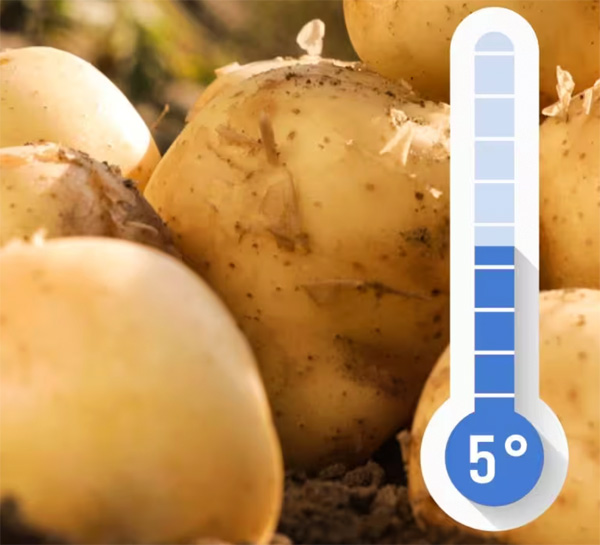
2. Temperature – Potatoes are best stored in a cool place (below 15°C). The best storage temperature for them is from 7°C to 10°C. During prolonged storage between 0 and 1°C, many sugars accumulate in them and their interior darkens, and at temperatures between 10°C and 15°C, internal necrosis can occur;
3. Humidity - Storage rooms must be dry. Tubers are covered with paper to preserve them longer, or directly placed in paper bags. This protects them from moisture evaporation and premature shrinkage. Air humidity is a very important factor in tuber storage. The optimal is around 85%. When stored in dry air conditions, potatoes wilt, their taste and seed qualities decrease, as does their disease resistance. High air humidity is also not desirable, because due to insufficient ventilation, condensation forms on the surface of stored potatoes. This creates conditions for disease and tuber rot;
4. Light – Storage in a dark place (special warehouses) will prevent tubers from greening and sprouting due to lack of light;
5. Potatoes should not be stored in polyethylene packaging or foil, as moisture will quickly form between them and the packaging, and they will rot as a result of mold development;
6. Tubers with damaged skins should be separated from healthy ones.
The reduction of dry matter and water in tubers during storage is inevitable. However, with proper storage, potatoes lose a relatively small part of their weight and do not get sick. Potato varieties demanding storage conditions do not tolerate manipulation during harvesting, which is why it is recommended that they be stored without sorting. Later, after the skin has strengthened, they are separated into fractions. Potato varieties susceptible to fungal diseases intended for seeds can be treated with appropriate fungicides during placement in storage facilities.
During storage, tubers go through periods of ripening, dormancy, and awakening. Immature and damaged tubers respire more intensely. During this period, the wounds on the tubers, inflicted during harvesting, heal and their skin strengthens. The successful storage of potatoes depends on the rapid progress of maturation.
Once deep dormancy sets in, tuber respiration weakens, and all biochemical processes slow down. Losses of dry matter and water are minimal. The dormancy period varies among different potato varieties. It is influenced by the maturity of the harvested tubers, the variety, the temperature and humidity in the storage facility, and other factors. Early potato varieties, early harvested, and immature tubers have a shorter dormancy period. The second period can also include forced dormancy, which differs from physiological dormancy in that tuber sprouts may emerge, but their growth is inhibited due to the lack of suitable conditions, primarily temperature.
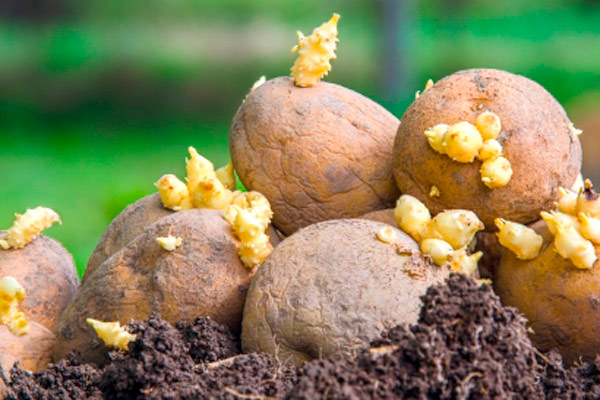
The awakening period is characterized by intensive sprouting of the tubers. It begins with increased respiration and loss of dry matter and water.
Produce intended for consumption should not be exposed to light to avoid increasing solanine content. For seed material, it is beneficial to harden it with light before storage.
Regardless of the potato variety composition, there is no difference in the complex of diseases and pests that harm both vegetative organs and tubers. Damaged tubers cannot be stored for long, do not have a good commercial appearance, and are difficult to market. Through wounds made by pests, pathogenic bacteria and fungi penetrate, causing diseases and tuber rot.
DISEASES
Dry Rot (Fusarium solani., f. roseum)
This is a typical disease that spreads mainly on stored tubers. It penetrates them through wounds caused by tillage, other pathogens, or pests.
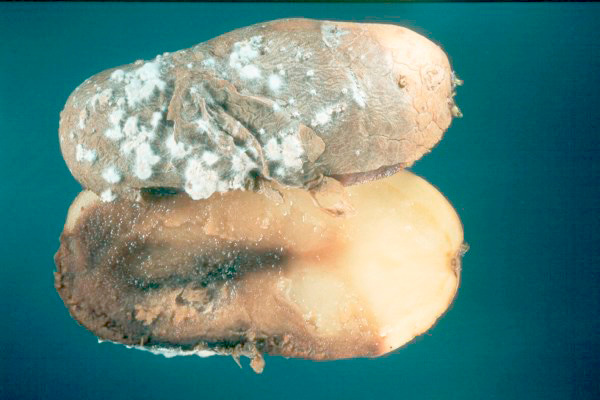
Damage to tubers caused by dry rot disease in potatoes (Fusarium solani., f. roseum)
Symptoms of damage include sunken rotten areas, of varying shape and size, darker in color. As a result of water loss, the skin gradually wrinkles. The disease starts from one end and gradually the entire tuber mummifies. It is caused by a fungus present in all cultivated areas. It persists in the soil and in tubers found in storage. Well-matured tubers are more resistant. Susceptibility to the disease increases during storage. To limit its spread, it is recommended that potatoes be dug and transported carefully to avoid damaging the tubers. Development is inhibited at temperatures around 40C, while at temperatures above 80C, the pathogen becomes active.
Gangrene (Phomopsis) (Phoma exiqua var. foveata). Observed during storage. Small, round, sunken spots appear on the tubers, which, after expanding, cover a large part of them. Cavities covered with a whitish-gray deposit are formed. Later, the tubers dry rot.
Bacterial Soft Rot of tubers (Erwinia carotovora). Occurs mainly during tuber storage. In wet years, it can also develop in the field. It is caused by a bacterium that penetrates tubers through wounds, lenticels, or insect damage. The affected tissue lightens and softens. Later, it darkens, and within 5-6 days, the entire tuber rots and smells unpleasant. From a diseased tuber, the disease can transfer to neighboring healthy ones and affect a large part of the stored produce. The causative bacterium develops in the temperature range of 15-29oC. Temperatures below 70C inhibit growth. Proper storage under optimal conditions limits the development of this pathogen.
Pink Rot and Leak (Phytophthora erythroseptica and Pythium spp.). Pink rot and leak are nearly identical tuber diseases caused by closely related soil-borne fungi. Pythium causes leak after entry through wounds or abrasions during harvesting at high temperatures. Phytophthora causes stem base rot and wilting of plants during vegetation, but pink rot primarily attacks the tubers. The causative fungi invade through wounds and directly through the lenticels of the tuber. The symptoms of both diseases are similar. Infected tubers liquefy, the tissue becomes flaccid and rubbery. There is a sharp distinction between healthy and diseased tissue. The affected tissue turns pink, then gradually turns black.
Ring Rot (Clavibacter michiganensis ssp. sepedonicus). Causes darkening of the vascular tissue just beneath the skin. It is not detectable unless the tuber is cut. Infected tubers can easily be attacked by secondary infections and cause them to rot in the soil or in potato storage. It spreads easily in stored produce. The pathogen is suppressed at temperatures below 4oC and above 29oC. The optimal temperature for its development is in the range of 18-24oC.
Potato Wart (Synchytrium endobioticum). The disease is widespread in all potato-growing regions. Its spread is limited due to strict control measures on its occurrence. The pathogen is an obligate parasite that does not form mycelium. It attacks all parts of the plant, with the exception of the roots.
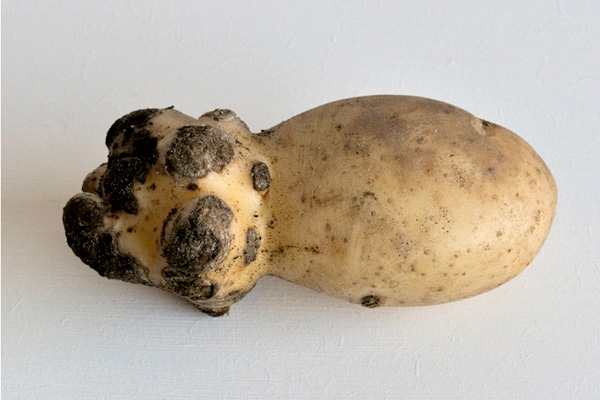
Potato Wart (Synchytrium endobioticum)
The tumors formed on the tubers and at the base of the stem resemble cauliflower heads. Galls that are in the soil change their color – from whitish to creamy, and by the end of vegetation, they turn brownish, blacken, and can remain in the soil when potatoes are harvested. Tumors can also develop during tuber storage in potato warehouses. Spores retain their viability in the soil for a long time – 40-50 years, and in the presence of a host, the disease develops again. The pathogen has over 20 strains, or pathotypes. Potatoes that are resistant to one pathotype may be susceptible to another. The disease spreads to new areas with infected seed material, contaminated soil, tools and machinery, and manure from animals fed infected potatoes.
PESTS
In potato storage facilities, attacks by mice (fam. Muridae) are often observed. These rodents can destroy a large part of the produce. They gnaw on tubers and contaminate storage areas with droppings.
Slugs (fam. Limacidae) cause damage when potatoes are stored in damp and warm rooms, especially in private farms. They make gnawed areas of various shapes and sizes, leaving slimy trails.
Mole cricket (Gryllotalpa Gryllotalpa L.) partially or completely destroys the surface part of the tubers. Often, the damage from it calcifies, but the potatoes lose their commercial appearance.
Cutworms, also called „gray worms” (Agrotis segetum Schiff., Agrotis ypsilon Rott, Agrotis exclamationis L., etc.) damage tubers in the field. They gnaw potatoes in the form of pits of various shapes and sizes, with uneven contours and remnants of the tuber skin. Subsequently, damaged potatoes rot and are perishable during storage.
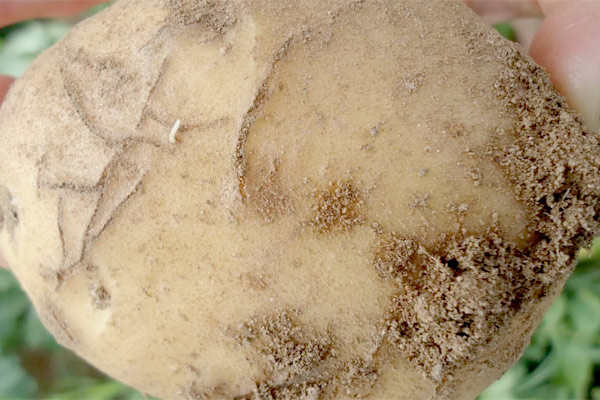
In recent years, damage to potato tubers caused by the larvae of polyphagous beetles from the family Scarabaeidae or Scarab beetles, known as „white grubs,” has often been observed. Photo: EPPO
This family includes beetles named after the months of the year: April, May, June, and July (variegated, marbled). The larva is arch-shaped, whitish to creamy in color, with a brown head. The posterior part of the body is expanded like a sac. The life cycle of these pests lasts three years. Young larvae initially feed on organic matter in the soil. Then they attack the underground parts of plants. They make irregular gnawings of various shapes and sizes on the tubers. They dig deep tunnels and superficial galleries. The danger from scarab beetles is greater in sub-mountainous areas because these insects emerge from neighboring oak forests. The danger also increases with an overdose of farmyard manure. Damaged tubers often rot during storage.
Wireworms (fam. Elateridae) are so named because their larval bodies are elongated and tough like a piece of wire, yellow or dark yellow in color. They live in the soil and cause damage by making narrow, straight tunnels with rounded openings 2-2.5 mm in diameter, contaminated with excrement and soil particles. When damaged tubers are stored in warehouses, putrefactive processes can be observed.
Potato Tuber Moth (Phthorimea operculella Zell.). The problem with the potato tuber moth does not only remain in the field; it can also be transferred to warehouses during potato storage. If storage conditions are not optimal and temperatures are above 10°C, the moth can continue to reproduce, and the caterpillars can penetrate the potatoes.
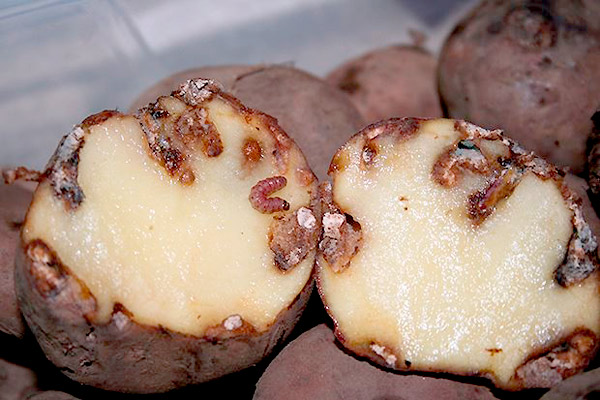
They burrow tunnels under the epidermis; the skin of the tuber above the damaged area dries, sinks, and tunnels filled with excrement and tiny particles of gnawed potatoes are formed. Adult moths can easily penetrate warehouses through various openings, doors, and windows, especially if the premises are not well protected with nets. Once inside, female individuals continue to lay their eggs on or around the potatoes, and the caterpillars continue to damage the tubers, causing significant harm. To prevent potato infestation by the potato tuber moth, both in the field and during storage, a series of preventive measures must be taken. One of the most important measures is deep hilling of potatoes during their cultivation. This protects the potatoes from direct contact with the pest, reducing the risk of caterpillar penetration. After harvesting, storage in warehouses should be at temperatures below 10°C, which limits moth development. Premises must be thoroughly cleaned and disinfected before harvest. Pheromone traps can be used for potato tuber moth control. This reduces the moth population. Other methods include the use of contact insecticides such as deltamethrin, which can be applied in empty storage facilities before introducing produce. These are effective against adult individuals. Biological products based on the bacterium Bacillus thuringiensis can also be used for caterpillar control. For successful protection of potatoes from the potato tuber moth, it is essential to combine preventive measures, proper storage, and regular monitoring. Through successful control in the field and in storage, the risk of tuber infection can be minimized, and the quality of the produce can be preserved.
Root-knot nematodes (Meloidogyne spp.) are non-insect pests. Damage from them in potatoes leads to the formation of swellings on the tubers, which resemble warts, and the skin has a rough appearance. Galls on harvested tubers for storage are transparent and difficult to spot, but after a few months, the egg sacs darken and appear as brown spots inside the tuber. This damage makes potato produce unsaleable. Nematodes cause direct damage but also contribute to secondary infection with fungal diseases.
Control against the listed pests is complex and includes agrotechnical and organizational practices from plot preparation to product harvest. Against the listed pests and diseases, targeted control measures during vegetation are crucial. Strict measures are also imposed against the potato tuber moth during product storage. The exemplary control system includes practices in the following production stages:
1. Before planting: selection of suitable areas; avoiding the use of neglected, uncultivated, and grassy terrains; inclusion of crops without common diseases and pests with potatoes in the crop rotation; deep plowing of the soil in autumn; ensuring spatial isolation; good pre-planting preparation of the areas; surveying the areas for the presence of gray, white, and wireworms; application of granular pesticides before planting in furrows, nests, or broadcast, based on the economic injury level (EIL); quality preparation of seed material.
2. Cleaning and disinfection of inventory – equipment, warehouses, and crates with a 15% formalin solution or a 1% sodium hypochlorite solution.
3. Measures during vegetation: quality soil cultivation; good hilling; ensuring optimal moisture and nutrient regimes; destruction of weeds and volunteer plants; regular monitoring for the appearance and spread of diseases and pests; based on the EIL, conducting treatments according to signals from forecasting services, observing the dosages and quarantine periods of plant protection products.
4. After harvesting: careful inspection and sorting of tubers; removal of damaged ones; particular attention should be paid to removing and destroying those attacked by the potato tuber moth; if bacterial canker is detected, regional services of the Bulgarian Food Safety Agency (BFSA) are informed; repair of premises to eliminate possibilities for pest entry; fumigation of potato storage facilities before introducing produce; observance of optimal air-humidity regime in the storage facilities.
5. Treatment with Plant Protection Products (PPP): A limited number of PPPs can currently be used for post-harvest treatment and control of a wide range of rot-causing microorganisms.
Diseases and Pests in Carrot Storage
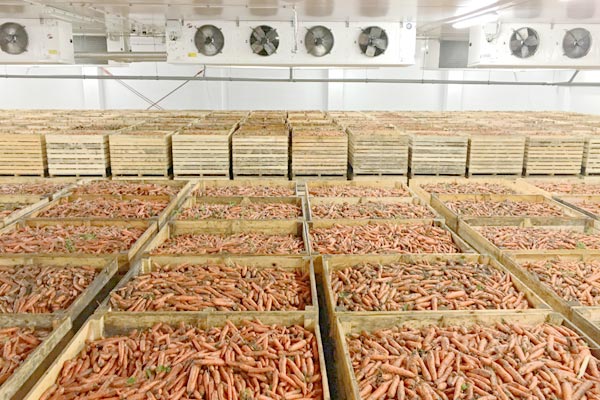
There are many visual and organoleptic properties that distinguish the diverse carrot varieties for the fresh market and minimal processing. In general, carrots should be: Firm; Straight with uniform taper; Bright orange; Without residual "hairiness" from lateral roots; Without "green shoulders" or "green core" from sunlight exposure during the growth phase; Low bitterness from terpenoid compounds; High moisture content and high reducing sugars are most desired for fresh consumption.
Physiological Disorders in Storage.
These include bitterness, whitening, or browning of carrots. Bitterness can be prevented by storing produce in ventilated rooms, away from other ethylene-producing fruits and vegetables, while whitening and browning can be controlled by applying heat treatment, ultraviolet (UV) irradiation, hydrogen sulfide (H2S), and some edible films.
Pathological Disorders
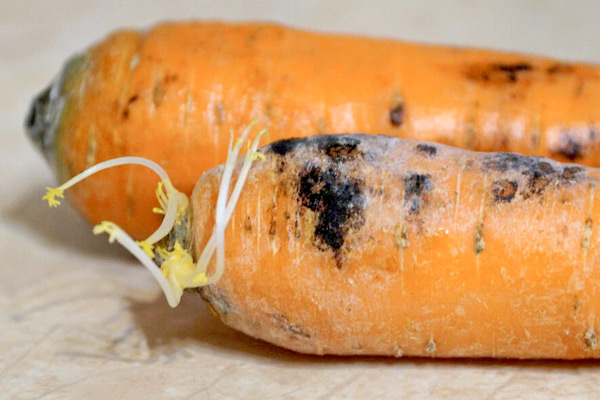
The most common post-harvest problems in carrots are caused by gray mold (Botrytis cinerea), black rot (Alternaria radicina, Alternaria dauci), white mold (Sclerotinia sclerotiorum), bacterial soft rot (Erwinia carotovora subsp. сarotovora), etc. Some nematodes (Meloidogyne spp.) also cause serious damage. These pathogens are responsible for carrot losses during short-term and long-term post-harvest storage. On a commercial scale, pathogens affecting carrot quality are controlled by synthetic pesticides. This concerns consumers because their residues are often associated with health problems. The proper selection of storage and transport conditions at low temperatures are the best methods to minimize losses. Fungal rot in carrots can be controlled by selecting healthy carrots and applying natural compounds such as ozone (O3), heat treatment, UV irradiation, inorganic salts, and/or biocontrol agents and their combinations.
Black Rot (Alternaria radicina, Alternaria dauci). Causes the appearance of black spots on the surface of carrots. Their size and shape vary greatly. Spots on leaves and leaf stems are irregular black lesions, along the edges of the oldest leaves. The consequences of the disease are mainly found on carrots for storage. Alternaria radicina develops at temperatures from –0.5 to +34°C. Therefore, infection can spread in storage rooms at low temperatures, provided that the air moisture content is at least 92%. Affected carrots can also infect all surrounding healthy ones. To limit the spread of the disease, all infected carrots and plant residues are removed before the root crops are stored.
Gray Mold (Botrytis cinerea). In the initial stages of storage, tubers have clearly defined, brownish-black lesions, without traces of mycelium. With prolonged storage, the infected tissue is quickly covered with a growth, in which sclerotia subsequently form. Under cool conditions, the mycelium remains white and resembles Sclerotinia. It is recognized by the gray spore mass. The disease can spread throughout the entire storage area as a result of sporulation and direct contact. It is recommended to harvest in dry weather, to avoid damage to the tubers during and after harvest. To minimize moisture loss, as well as the formation of condensation in the storage facility.
Phytophthora Rot (Phytophthora porri, P. megasperma, P. сactorum). Hard, dark brown, watery areas are observed on the root crops. The affected tissue is rubbery or soft. Signs are difficult to notice even at harvest. The disease continues to develop even when stored at low temperatures. Under moist conditions, a dense, white mold develops. Store produce at low temperature and relative humidity below 95%.
White Mold (Sclerotinia sclerotiorum). During storage, infected carrots are covered with abundant white cottony mycelium. Subsequently, large black sclerotia form within it, which germinate under cool and moist conditions. The pathogen has a large number of hosts. At harvest, root crops may not show signs of disease, but after a certain period of storage, damage appears on them. To minimize losses, carrots should be cooled rapidly after harvest. Maintain a constant storage temperature. Prevent condensation from forming in the storage room.
Bacterial Soft Rot (Erwinia carotovora subsp. сarotovora). In infected root crops, the tissue quickly turns into a soft, watery, and slimy mass. The epidermis initially remains intact. Diseased carrots smell bad, due to secondary growth of putrefactive bacteria. The infection becomes visible mainly during transportation and storage. The bacterium is a widespread secondary pathogen in the soil. It penetrates root crops through wounds caused during harvesting, freezing of produce, or insect damage. Storage conditions are crucial for the emergence of the problem.
Carrot Fly (Psila rosae F.). Damage to root crops from this pest begins already in the field. The carrot fly prefers shady and moist places, where it feeds on nectar from the flowers of wild and cultivated plants from the family Apiaceae. Around mid-May, the fly begins to lay its eggs in the soil near the carrots. In the second half of June, the hatching of larvae begins, which burrow into the root crops, making winding tunnels. Plants affected by the carrot fly acquire an unnatural color, becoming purplish-red with a bronze tint. In case of severe infestation, the leaves turn yellow and dry out.
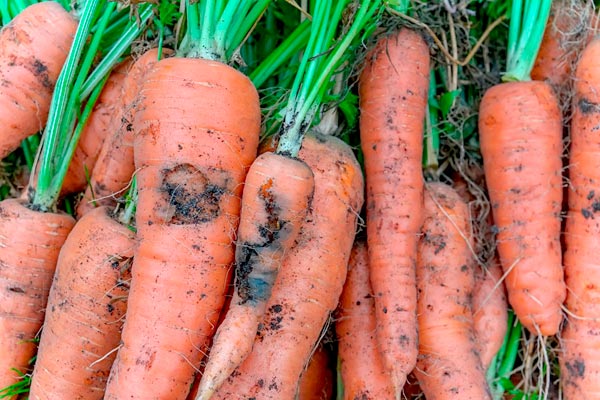
Damage from Carrot Fly (Psila rosae F.)
Damaged root crops are deformed, lose their taste, are lignified at the site of damage, and are unsuitable for storage, as secondary putrefactive processes often develop on the damaged areas. To limit carrot fly infestation, a complex of measures is necessary in the field: crop rotation; spatial isolation from other Apiaceae crops when choosing a sowing site; no application of farmyard manure; the site should be sunny and well-ventilated; earliest possible sowing; combined planting with onions or garlic (the aroma disorients the pest); optimal planting density; weed control; in case of severe pest infestation, treatment with some broad-spectrum insecticides, such as products with a.i. deltamethrin; before storing root crops, cleaning and removing those with visible damage.
More on the topic:
Problems with diseases in potatoes, onions and garlic during storage
Pests of root vegetable crops – carrots
Are root-knot nematodes dangerous for potatoes?
References
Pinhero R. G., R. Y. Yada, 2016. Advances in Potato Chemistry and Technology, Ch. 10, Postharvest Storage of Potatoes.
Benkeblia N., 2012. Postharvest diseases and disorders of potato tuber solanum tuberosum L.
Papoutsis, Κ., M. Edelenbos, 2021. Postharvest environmentally and human-friendly pre-treatments to minimize carrot waste in the supply chain caused by physiological disorders and fungi, Trends in Food Science & Technology 112, 88-98.
Higgins D. S., M. K. Hausbeck, 2023. Diseases of carrots, 1 – 54.