

![MultipartFile resource [file_data]](/assets/img/articles/заглавна-цветен-анализ.jpg)
Summary
Leaf and flower analysis are important tools for evaluating and managing mineral nutrition in fruit crops. Leaf analysis reflects the uptake of nutrient elements and the physiological state of plants, with the most suitable time for sampling being mid-summer. Flower analysis offers the opportunity for early diagnosis at the beginning of the growing season, allowing for the timely detection of deficiencies in key elements such as boron, calcium, and iron – critical for pollination and fruit set processes. The combined application of both methods, in combination with soil analysis and precise technologies, enables timely correction of nutritional imbalances, optimization of fertilization strategies, and sustainable fruit production.
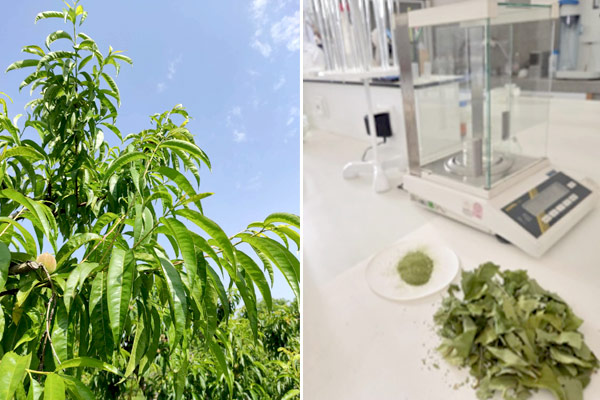
Leaf analysis is a modern and widely used method for monitoring mineral nutrition in fruit crops. It provides a quantitative assessment of the uptake of nutrient elements by plants and reflects both their availability in the soil and the effectiveness of physiological and biochemical processes in plants (Singh, S. & Singh, J., 2022). Scientific research shows that the content of macro- and microelements in leaf tissue correlates with growth, yield potential, and product quality (Wang D. et al., 2022; Mertoğlu & Kırca, 2025). Soil analysis alone does not give a complete picture of the nutritional status of trees, as it does not account for the complex mechanisms of element uptake and redistribution. In contrast, leaf analysis reflects the current physiological state of the plants. The mineral composition of leaves is influenced by a number of factors: the developmental stage, climatic conditions, soil availability of elements, root system activity, irrigation, and water status. As with any other diagnostic method, leaf diagnostics also have certain limitations. The variation in concentrations for most mineral nutrient elements is minimal after growth ceases, which is the time for sampling for leaf diagnostics (end of July - beginning of August). It is obvious that if a certain problem arises, related to disturbances in the physiological development of fruit plants, as well as the presence of visual symptoms of a certain deficiency of some elements, leaf diagnostics practically become inapplicable within the same growing season. Typically, data from leaf diagnostics are used to determine the fertilization regime for the next growing season. To overcome this limitation, an alternative approach for assessing the nutritional status of plants is sought. The application of flower diagnostics (flower analysis) allows for an early assessment of the mineral status of plants, even during the flowering phase, when physiological processes proceed with high intensity. Samples are taken during full bloom (>75% open flowers), selecting physiologically active, healthy, and undamaged flowers from different zones of the tree crown, dried at 65°C, and subjected to homogenization and laboratory determination of elemental content using ICP-OES, AAS, or spectrophotometric methods. Flower tissue is less prone to metabolic fluctuations, which ensures high accuracy of the analysis (Reuter & Robinson, 1997).
A number of studies show that boron content in apple flowers influences pollination ability and fruit set formation (Gao et al. 2018; Banday et al., 2020). The elements potassium, magnesium, and iron in flowers can be used as tools for predicting and early assessing the photosynthetic activity of peach trees (Staneva et al., 2024). Thus, flower diagnostics allow for early intervention through foliar feeding or correction of soil fertilization, before the appearance of visible deficiency symptoms.
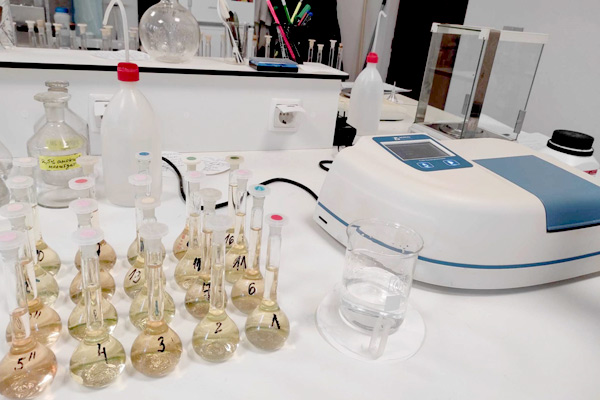
The combined use of leaf and flower analysis creates an opportunity to establish an annual diagnostic cycle – early spring diagnosis through flower analysis and subsequent summer diagnosis through leaf analysis. This achieves higher accuracy in assessing nutritional status and facilitates timely decision-making.
Modern principles of precision agriculture are increasingly applied in fruit growing through the implementation of advanced diagnostic approaches, as well as GIS-based systems for managing fertilizer rates. These technologies allow for optimizing fertilization in accordance with the spatial variability of plantations and the specific needs of plants. This leads to more efficient use of resources, minimization of losses, and improvement of the ecological sustainability of production systems (Zhang et al., 2021; FAO, 2023).
Conclusion
Leaf and flower analysis represent mutually complementary approaches for diagnosing mineral nutrition in fruit crops. Their combined application enables timely detection of deficiencies, refinement of fertilization regimes, and improvement of the physiological state of plants. In the context of precision agriculture, these methods contribute to sustainable resource management and increased efficiency in modern fruit growing.
Photos: Assoc. Prof. Dr. Irina Staneva, Assoc. Prof. Dr. Vanya Akova
References
- Banday, S. A., Bhat, J. A., Ahanger, F. A., Mir, M. M., Iqbal, U., Khalil, A., Nazir, N., Bhat, R., & Wani, M. A. (2020). Effect of Nutrient Supplement on Fruit Set, Yield and Quality of Apple cv. Red Delicious under Temperate Conditions of Kashmir Valley. Journal of Krishi Vigyan, 9(1), 88‑91.
- FAO. (2023). Global Assessment of Soil Pollution: Preventing and Minimizing Soil Pollution. Rome: Food and Agriculture Organization of the United Nations. https://www.fao.org
- Gao, Y., Zhu, H., Yang, X., et al. (2018). Boron deficiency alters cytosolic Ca²⁺ concentration and affects the cell wall components of pollen tubes in Malus domestica. Plant & Cell Physiology, 59(4), 725‑737.
- Mertoğlu, K., & Kırca, L. (2025). Nutrient dynamics in apple: Analyzing macro and micronutrient distribution in leaves and fruits. International Journal of Agriculture Environment and Food Sciences, 9(1), 123-131. https://doi.org/10.31015/2025.1.15
- Singh, S. & Singh, J. (2022). Soil‑leaf tissue analysis for nutrient management in fruit crops. Indian Farming, 72(10), 35‑37.
- Staneva, I., Akova, V., & Bakardzhieva, V. (2024). Relationships between the Mineral Composition of Flowers and the Content of Photosynthetic Pigments in Three Peach Cultivars. In Journal of Mountain Agriculture on the Balkans (Vol. 27, Issue 2, pp. 176–190)
- Wang D., Zhou Y., Guo L., Zhang M., Ji Q., Han Y., Sun Z., Ma W. 2022, Leaf NPK concentration requisite and chemical fertilizer inputs for high yield and quality of peach production in central Hebei Province. Journal of Plant Nutrition and Fertilizers, 28(2): 269-278.
- Zhang, Y., Wang, X., Li, W., Liu, X., & He, P. (2021). Precision nutrient management in perennial fruit orchards: current status and prospects. Agronomy, 11(7), 1300. https://doi.org/10.3390/agronomy11071300