

![MultipartFile resource [file_data]](/assets/img/articles/заглавна-овощни-октомври-2025.jpg)
October is expected to have temperatures around the climatic norm and rainfall close to average. The average monthly temperatures in October are expected to be higher than the usual norm, which for the lowlands is between 20 and 23 oC, for the high fields – between 13 and 17 oC, and for the mountains – between 3 and 8 oC. The highest temperature during the month will reach up to 28-30 oC, and the lowest will be around 3-5 oC and that towards the end of the month. There will also be conditions for snowfall, but in the mountains. The monthly amount of precipitation will be between 30 and 50 l./sq.m for most of the country, in the southeastern regions — between 50 and 60 l./sq.m, and in the mountains — from 60 to 70 l./sq.m.
During the first ten days of October, the agrometeorological conditions will be determined by unstable weather and average daily temperatures around and below the climatic norms. During this period, precipitation of economic significance is predicted, improving the condition of the upper soil layers and the conditions for conducting seasonal tillage. On most days of the second and third ten-day periods, the agrometeorological conditions will be determined by relatively dry weather and temperatures close to usual.
In October, for apple and pear plantations affected by scab, it is desirable to treat with a 5% urea solution at the beginning of leaf fall, after harvesting the fruits, to reduce the infection.
For stone fruit species, after mass leaf fall, spraying with a 2% Bordeaux mixture solution is recommended against the causative agents of shot hole disease, early brown rot, and peach leaf curl.
Agrotechnical activities
In fruit tree nurseries
Care is taken to preserve the germination capacity of stratified stone fruit seeds. Preparation begins for removing rootstocks from seedbeds and second-year trees from the nursery. Rootstocks from seedbeds and grafted trees are removed after they have completed their vegetation – in the second half of October and November.
Plants should not have leaves. If the leaves have not fallen, 0.1-0.2% calcium chloride is used for this purpose. Irrigation facilitates removal.
In fruit tree plantations
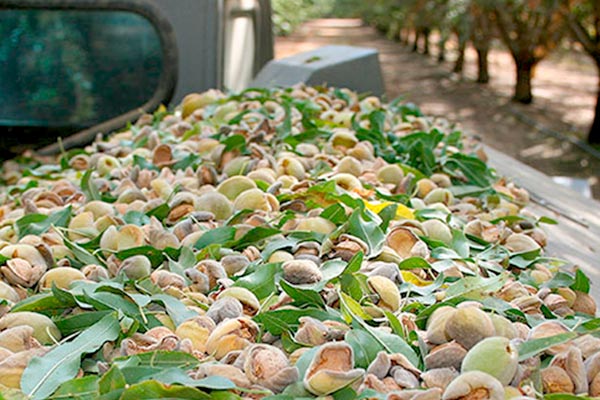
The harvest of almond and some plum fruits continues
The harvesting of autumn-winter apple and pear varieties should be completed by the middle of the month at the latest.
The soil in the inter-rows of one-year-old and young plantations is deeply tilled. If pre-planting fertilization with phosphorus and potassium fertilizers has not been carried out, 50-60 kg of superphosphate and 20-22 kg of potassium sulfate - or another phosphorus and potassium fertilizer in the same amount per decare - are applied. Phosphorus and potassium fertilizers are also applied deeply in fruiting plantations.
In strawberry plantations
The establishment of new strawberry plantations continues. Planting of seedlings should be completed no later than mid-month. The seedlings should be pricked out, with a small amount of soil around the roots. After planting, water with 0.5 – 1 dm3 of water per plant.
The last treatment of fruiting plantations is carried out – to a depth of 10-15 cm, with plants being lightly earthed up.
The digging and preparation for cold storage of seedlings for spring-summer planting continues.
In raspberry plantations
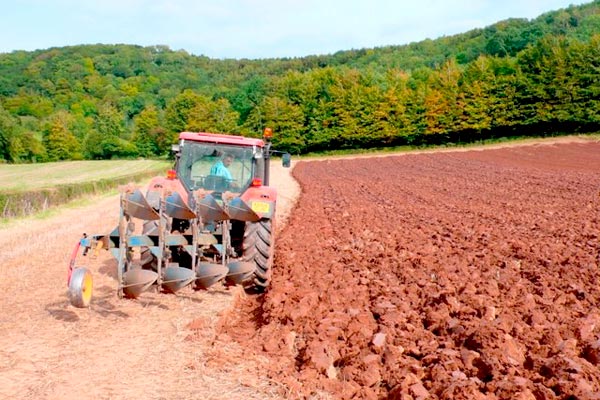
Areas for establishing new raspberry plantations are prepared. Fruiting plantations are fertilized with 2-3 tons of farmyard manure, 20-30 kg of superphosphate, and 10-15 kg of potassium sulfate - or another phosphorus and potassium fertilizer in the same amount per decare, after which the fertilizers are plowed deeply – 20-25 cm.
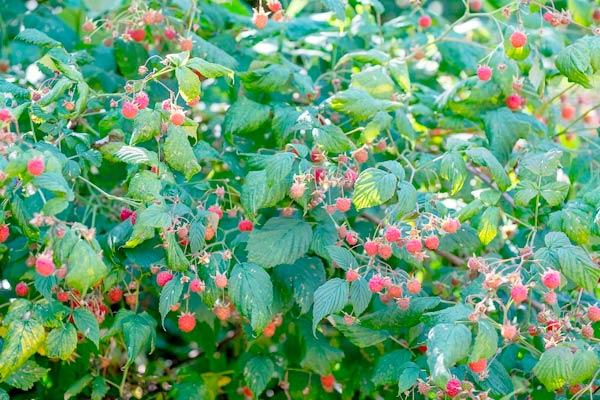
Autumn raspberry enters its peak
In blackcurrant plantations
In case of drought, fruiting and young plantations are irrigated. Autumn fertilization is carried out with 1-2 tons of farmyard manure, 20-40 kg of superphosphate, and 10-15 kg of potassium sulfate – or another phosphorus and potassium fertilizer in the same amount per decare. The soil in the inter-rows is tilled to a depth of 15-18 cm, and near the plants – to 5-6 cm.
In plantations with other crops
Autumn plowing is carried out to a depth of 18-20 cm, which helps to ensure good moisture retention in the soil from winter precipitation.
After the third year, the aerial part of laurel plantations is cut back to 20-25 cm from the root collar. The cut stems are moved to a dry, well-ventilated room for drying the leaves.
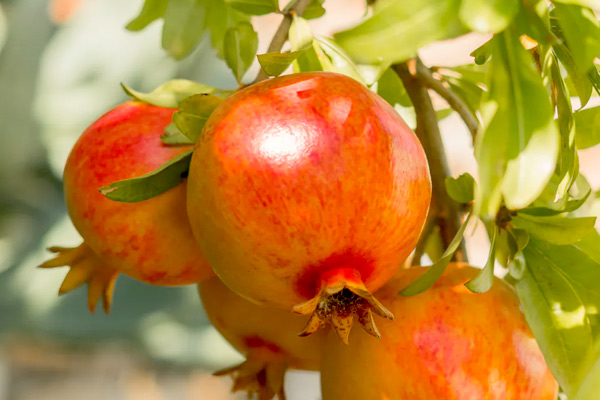
The harvesting of persimmon, pomegranate, actinidia (kiwi) fruits begins.
At the end of the month, if there is a risk of frost and in relatively dry weather, all laurel (bay leaf, laurel) plants are earthed up with a plow.
The harvesting of fig fruits continues.
Care continues for the green cuttings of actinidia, aronia, sea buckthorn, and others laid for rooting. The collection of hackberry seeds for the production of pistachio rootstocks begins.
Plant Protection Activities
In fruit tree plantations
Nests and feeders are placed in fruit trees to attract beneficial birds.
Corrugated cardboard trap bands with caterpillars of apple, plum, and walnut worms are collected and placed in hanging cages in the fruit plantations – woodpeckers and other birds destroy the caterpillars in the bands.
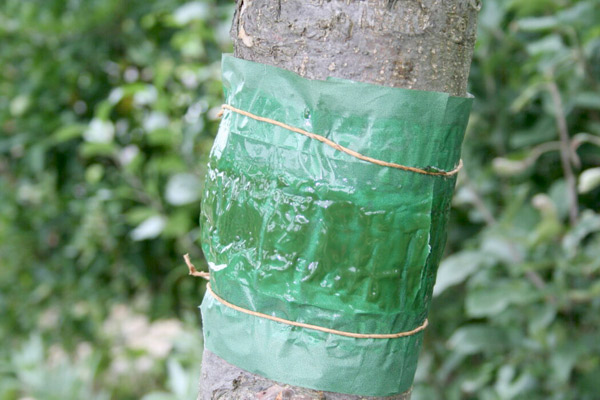
If the sticky band is placed directly under the crown, it also traps birds, mainly nuthatches, which can suffer. Therefore, place the sticky rings near the lower part of the trunk, but not too close to the ground.
On the trunk of each tree in plantations infested by geometrids, a sticky band is placed, at a height of 20-100 cm. The bands are made of paper, 20 cm wide, with the top and bottom edges tied. A slow-drying glue is used for coating. To prevent insects from hiding before reaching the band, the cracked bark from the band to the soil surface is scraped off beforehand.
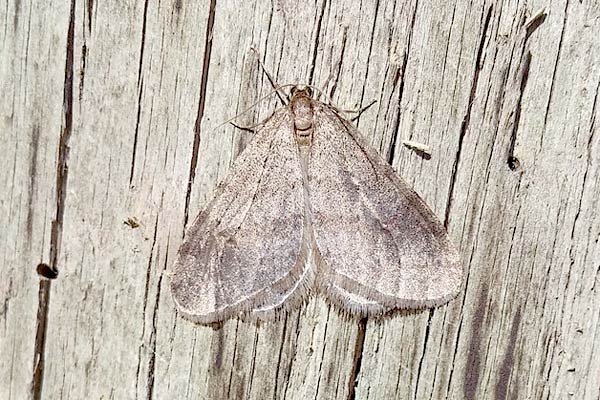
The hatching of the moths of the small winter moth (Operophtera brumata) occurs late in autumn
The small winter moth (Operophtera brumata) develops one generation per year. The hatching of caterpillars in spring begins when the buds swell. The hatching of moths is late in autumn. Male moths fly at dusk until the beginning of winter. Female moths cannot fly and crawl up the tree trunk, where male individuals find and fertilize them. They overwinter as eggs, which they lay individually or in small clusters in cracks, under the cracked bark of the trunk, at the base of branch forks, or on twigs, near the buds. The eggs are highly resistant to low temperatures.
Apple and pear fruits in handling points are checked for the presence of California and mulberry scale insects in uninfected areas.
The caterpillar nests of the Fall Webworm are counted to determine the insect's density.
The Fall Webworm (Hyphantria cunea) is a polyphagous species that attacks more than 200 plant species - fruit and broad-leaved trees, shrubs. The caterpillars of this pest most severely damage mulberry, cherry, walnut, apple, plum, pear, quince, sour cherry. Apricot is less frequently attacked. The insect develops two generations annually, with the second generation occurring in July-August. Pupae overwinter in the soil under the infested trees.
Shaking, started at the end of September, continues to determine the density of the pear bud weevil. If the density exceeds the damage threshold, before egg-laying, trees are sprayed with a contact insecticide from all groups - Decis 100 EC (12.25 ml/da) or another deltamethrin-based preparation, Sumi Alpha 5 EC (0.03%), Karate Zeon 5 CS (15 ml/da), Lamdex extra (100-120 g/da) and others.
Pear plantations are sprayed against the common pear psylla with one of the insecticides - Bermectin (40-120 ml/da) or another abamectin-based preparation, Voliam Targo 063 SC (75 ml/da), Imidan 50 WG (150 g/da), Delegate 250WG (30 g/da), Deka EC (50 ml/da) or another deltamethrin-based preparation, Movento 100SC (0.12-0.15%), Naturalis (100-200 ml/da), Sineis 480 SC (30-44 ml/da), Flipper (1-2 l/da).
The common pear psylla (Psylla pyri) has two forms - summer and winter. The winter form has a dark gray body and gray-brown head and thorax. The pest develops 4-5 generations a year, and sometimes 6. Adults, larvae, and nymphs cause damage by sucking sap from the buds, leaves, flowers, fruits, and shoots of the pear tree.
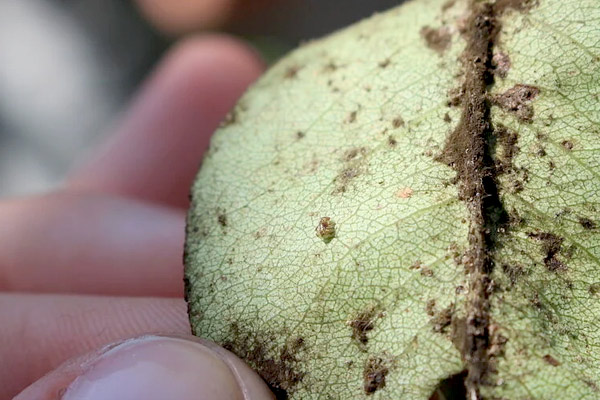
When feeding, psyllids excrete „honeydew”, which contaminates the attacked parts, as sooty mold fungi develop secondarily. It causes premature aging of shoots, twigs, and leaves by increasing their nitrogen content. In case of mass proliferation, it causes exhaustion and death of pear trees.
It overwinters as an adult insect under fallen leaves, in tree crevices, under old and cracked bark, and in other hiding places. Early in spring, the pest leaves its winter shelters.
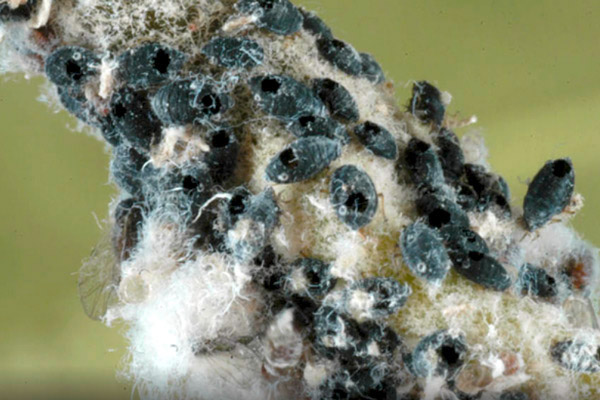
Twigs with woolly apple aphids (Eriosoma lanigerum Hausm.), parasitized by the parasitic wasp Aphelinus mali, are cut and kept in a cool, shady place under a shed. Woolly aphids with this wasp are black and have no opening. In autumn, the larvae and pupae of the parasitic wasp enter diapause and overwinter in the blackened mummified bodies of their hosts, and the following year in spring, they are used for biological control.