

![MultipartFile resource [file_data]](/assets/img/articles/смокини-заглавна.jpg)
With rising temperatures in our country, the fig is becoming a sought-after fruit species for cultivation in more regions of the country.
Our country is the northern border for the distribution and cultivation of the fig (Ficus carica L.). The cultivation of the species is most widespread in three main regions – the Southern Black Sea coast, Southeast Bulgaria, and the Petrich-Sandanski region. In recent decades, with the increase in temperature potential and dry periods during the summer, the fig has aroused interest and is a sought-after fruit species for cultivation, especially in private farms in various parts of Bulgaria. During the new climatic period (1991 – 2020), the average annual temperature in our country has increased by more than 1°C, and for the active vegetation period from April to October, this increase is even more significant. A warming of winters and a positive trend in their lowest values have been observed. Regarding precipitation, experts note an equalization across seasons, and in many areas of Southern and Southeastern Bulgaria – an increase in quantities outside the growing season. The milder character of winters significantly reduces the risks of winter damage, and a sunnier and longer summer favors the fruit ripening processes. The new conditions are increasingly favorable and suggest wider cultivation of the fig in the country. Although it does not have high transportability, it has universal use and valuable biological and economic qualities. The fruits are consumed fresh and after drying. Due to the limited number of diseases and pests, it can also be grown organically, without chemical means.
Origin, Botanical Characteristics, and Significance
The fig (Ficus carica L.) is a deciduous, subtropical plant cultivated in many regions of our country. It starts bearing fruit early, 3-4 years after planting, and its lifespan continues for around and over 50 years. In warmer and wetter subtropical climates, the fig becomes a large tree, while in more northern and cooler regions, including Bulgaria, it often forms as a shrub. The species possesses valuable economic qualities – the fruits are used for fresh consumption, drying, and processing, and the leaves – for preparing syrup and tea with medicinal properties. It was called the "fruit of longevity" by the ancient healer Avicenna. It contains ficin, enzymes that reduce blood clotting and lower strong heart palpitations.
There are data (1882) on the spread of the fig in the western part of Asia, from where it entered Greece and Rome through Phoenicia and Egypt. The fig is successfully cultivated in countries with a subtropical climate such as Turkey, Greece, Italy, Algeria, Morocco, Spain.
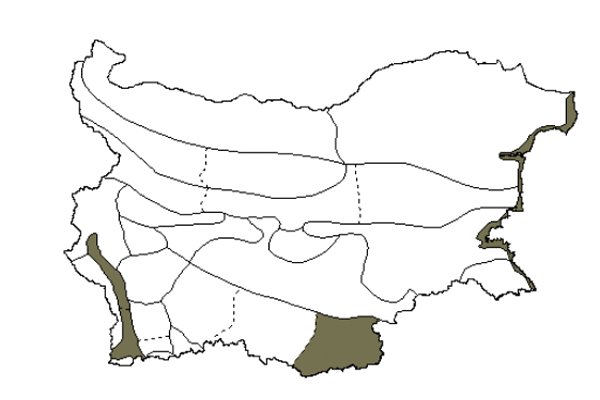
Figure 1. Distribution of the fig in Bulgaria. Source: https://bgflora.net/families/moraceae/ficus/ficus_carica/ficus_carica.html
In our country, it is found in the continental-Mediterranean climate region – along the Black Sea coast, in the Eastern Rhodopes, and in the Sandanski-Petrich Valley. At the foothills of the Rhodopes – in the Asenovgrad area, it also develops well. The species has also been identified in the foothill ridge of the Western Rhodopes, between the lower reaches of the Stara Reka and Maritsa rivers, in the territory of Pazardzhik and Plovdiv regions (Marinov, 1984).
It is a representative of the genus Ficus, family Moraceae, and includes over 1000 predominantly tropical species. Some of them possess good cold resistance, making them suitable for breeding purposes. The root system in the horizontal direction exceeds more than twice the projection of its crown. Studies in Bulgaria show that the main part of its roots is in the 80 cm zone, while individual ones reach up to 260 cm (Serafimova, 1966) in depth. The leaves are 3-7 lobed on long stalks, entire or deeply incised, and interestingly, different variations can be observed on the same tree. It is a dioecious plant, with female inflorescences and edible fruits called figs, and male inflorescences and inedible fruits called caprifigs – from the former, the sweet syncarps (figs) develop. The true flowers are formed with the help of tiny, silvery wasps called (Blastophaga psenes L.).
The species has high productivity (up to 160 kg), good taste qualities, and medicinal properties. Fruit sugar is about 25% in fresh and up to 75% in dried fruits (Tsolov and Stoyanov, 1991). Approximately 2% protein, pectin, organic acids, and mineral salts are found. They are rich in vitamin B1 (80 – 100 mg%), B2 (82 mg%), and a smaller amount of vitamin C – up to 2 mg%, which, with the exception of the latter, are preserved in dried fruits.
Soil and Climate Requirements
The most suitable soils for figs are light, rich, and moist soils with a neutral or slightly alkaline environment. They tolerate lower air humidity but, like any plant, respond well to irrigation.
The fig is among the most cold-resistant subtropical species (Arendt, 1972). It prefers locations with many hours of sunshine, dry summers, and milder, wetter winters. Regions with an annual precipitation sum of around 600 mm are suitable for its cultivation, with seasonal distribution being of primary importance. During the summer period, when the fruits are ripening, drier and warmer areas are increasingly favorable for growing the species. Humid weather during the ripening period causes a deterioration in fruit quality (cracking, fermentation) and leads to a reduction in their nutritional value. Therefore, summer droughts, extending into autumn, under irrigation conditions, are very suitable for optimal development and lead to earlier cessation of vegetation and better resistance during the winter season. As for the temperature factor,
fig trees prefer regions with moderate to hot summers and warm winters,
with an average of the absolute minimum temperatures > (-14°C). Damage to young wood is observed at values below (-15°C), and entire plants can die at temperatures from minus 18°C to minus 22°C, depending on the duration of the cold spell, the general condition of the plants, and the combination of additional meteorological factors. After frost damage in cold winters, pruning for recovery is successfully applied (Minkov, 1967). The species also develops well in semi-mountainous, warm, and sunny areas, protected from cold winds. Up to 50 kg of fruit can be obtained from one plant in our country.
Climatic Conditions during the Period 1991 – 2020
In recent years, due to natural and anthropogenic factors, the global temperature of the planet has been rising. In Bulgaria, a well-expressed increase in temperature is also observed (Fig. 2), with deviations from the norm being positive after 2000. The increase is in the range of around and above 1°C, with higher values during the growing season and in autumn. According to the latest World Bank report, the average annual temperature for the entire country is 10.7°C, with an average value of 21°C for July, August, and minus 1°C for January.
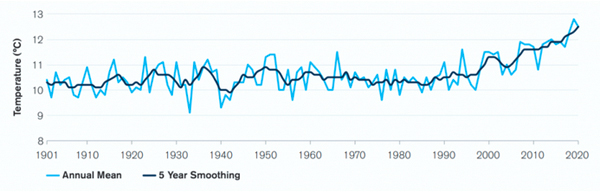
Figure 2. Average annual air temperature in Bulgaria for the period 1901 – 2020. Source: Climate Risk Profile: Bulgaria (2021): The World Bank Group.
According to NIMH data based on 355 different types of stations (synoptic, climatic, and rain gauge), the average temperature for areas suitable for agricultural activities is 11.8°C (bta.bg). The amount and distribution of precipitation in our country are formed under the influence of atmospheric circulation. The NIMH analysis states that a large part of Bulgaria is in a transitional zone with seasonally balanced precipitation sums. The amount in mm for the period 1991 – 2020 varies from about 500 mm in some parts of the Danubian Plain and the Upper Thracian Plain to over 1000 mm in mountainous regions. The distribution of parameters by month and by region is shown in Figure 3.
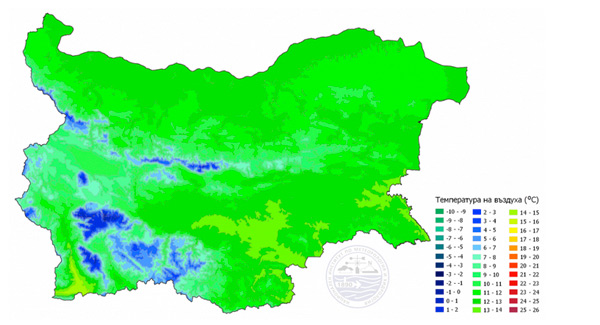
Figure 3: Average monthly air temperature and precipitation sum in Bulgaria for the period 1991 – 2020 according to NIMH data / Source: Climatic norms for Bulgaria for the new reference period 1991-2020 have been calculated – News – BULGARIAN NEWS AGENCY (bta.bg).
The Black Sea coast region covers a narrow strip (40 km) along the Black Sea, with the influence of the water body gradually weakening towards the interior, in a westward direction. One of the most important characteristics here is the reduced temperature amplitude, which is favorable for the development of fig trees. January's average temperature values are positive, reaching up to 3°C. Summers are moderate with an average temperature between 22°C and 23°C, which creates very good conditions for cultivating the species. Permanent snow cover and very low winter temperatures are not common for the region, and there are forecasts that the softening of winter will continue. The sum of precipitation is evenly distributed and with balanced seasonal quantities. Overall, higher relative humidity, favorable summer temperatures, and the milder nature of winter create the most favorable conditions for fig cultivation in our country.
The second region with very good hydrothermal resources is the area with a continental-Mediterranean climate – the valleys of the Struma and Mesta rivers, south of Kyustendil, and in the Eastern Rhodopes. This area is characterized by a very early onset of spring and milder winter conditions – with average temperatures for the coldest month between 0°C and 2°C, as well as hot summers with over 24°C and warm autumns. Predominant rainfall occurs during the cold half of the year. This allows for early development and cultivation of varieties that ripen as early as summer.
The area with a transitional-continental character includes the entire Upper Thracian Plain, the low sub-Balkan basins, the hilly areas north of the Tundzha River, as well as the Eastern Stara Planina. Although the average January temperature is negative – around and below minus 1.5°C, winters are considerably milder in the foothills of the Rhodopes and at higher altitudes, where conditions for overwintering are very suitable for the fig. The region has well-defined minimum and maximum precipitation, in winter and summer respectively. In June and July, average temperatures exceed 24°C, and maximums reach 40°C. Spring is one of the earliest in the country, and autumn is warm and prolonged, which favors the cultivation of varieties ripening both in summer and autumn.
The World Bank report (Fig. 4) states that warming in our country is likely to be between 1.1°C and 1.9°C by 2039, with values up to three times higher expected by 2099. Regarding humidity, a decrease of 4.5 mm and up to 17.6 mm by 2099 is projected, along with less favorable hydrothermal parameters. Under irrigation conditions, these temperature conditions will be very favorable for expanding the cultivation areas of different fig varieties.
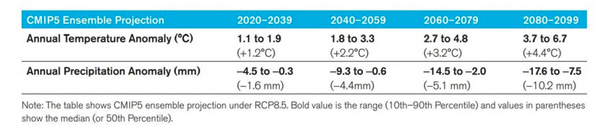
Figure 4. Model expectations for precipitation and temperature in the near and distant future. Source: Climate Risk Profile: Bulgaria (2021): The World Bank Group
Cultivation and Varieties
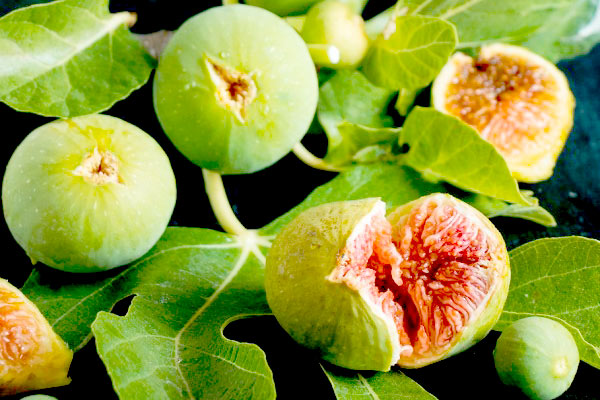
Under the climatic conditions of Bulgaria, three generations are formed:
- 1. spring, from overwintered buds on male plants;
- 2. summer – from inflorescences in the leaf axils, which bloom in July and ripen in August;
- 3. autumn-winter generation, which forms on shoots late in summer and during autumn.
In our country, the summer generation is of economic importance. They are diverse in shape (pear-shaped, bottle-shaped, ovoid) and in the color of the skin and pulp (creamy, yellow, yellowish-green, reddish, violet, dark blue to black). When establishing commercial plantations, a pollinator variety is also required. The most common planting schemes are 6x4m and 6x5m (Serafimov, 1983) or denser 4x4m; 5x4m. The creation of larger areas must be adapted to the climatic characteristics of the region and the production orientation. Fruits grown in lower and wetter places have rougher skin and lower sugar content. Semi-mountainous, dry, and sunny regions are more suitable for drying varieties. These varieties are formed with a high trunk of 100 cm – 120 cm. Varieties for processing and fresh consumption are grown as trees with a lower trunk (50 – 70 cm). For fresh consumption varieties, the requirements are to ripen early and yield two harvests annually. Recommended for our conditions are Dalmatinska, Italian White, Pomoriyska 6, 17, and 24. Among seeded fruits for fresh consumption, Adriatic White, Kadota, Moisson, and October Gift are best.
Our varieties Michurinska 10, Pomoriyska 17, Sozopolska 20, Ahtopolska 17, have good resistance. Varieties can have a short ripening period of 30 – 45 days in August and a long one – about 60 days or more towards the end of September and in October.
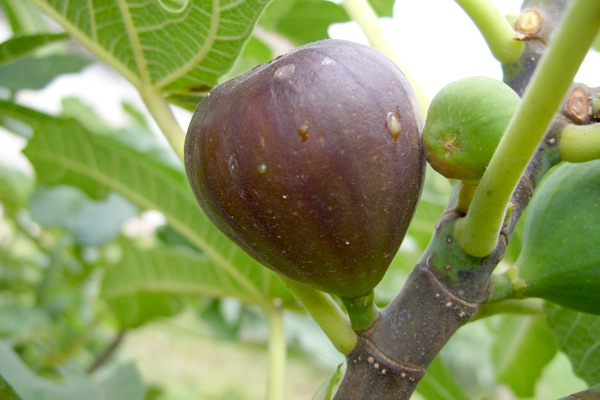
Michurinska 10. The name of this variety was given by Professor Radka Serafimova, and it is described in her book "Fig" (1980). The Michurinska 10 variety is among the most cold-resistant figs in the world. This is an old, local variety found only in Bulgaria and in individual regions of Macedonia, Serbia, and Romania. This variety is valued for bearing fruit on new branches, which is an advantage in case of winter frost damage. The Michurinska 10 variety is characterized by high fertility and regularly yields two harvests in summer, one in June and a main harvest in the second half of July or early August (for the plains in Southern Bulgaria). The fruits ripen until the end of September, and in suitable weather – until the end of October. In the coldest places in Northern and Western Bulgaria, ripening can be similar to that in Southern Bulgaria, but if the plant freezes to the ground every year, it will only yield a main harvest, which will ripen later. Cold damage begins at temperatures below minus 16.0°C to minus 19.0°C, and trees freeze to the ground at temperatures below minus 22.0°C.
Besides the traditional Bulgarian varieties, figs of various sizes, shapes, colors, and taste qualities can be found on the market.
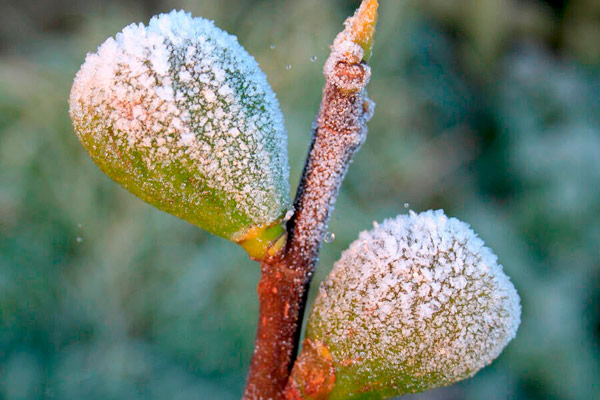
Most varieties tolerate cold down to about -18 degrees Celsius. Cold tolerance depends on many factors - variety, plant condition, location. Photo Flora Press/FLPA
Cold resistance is an important varietal characteristic that producers know well and can correctly advise those wishing to cultivate the species according to a given region.
Trends in the country indicate an increase in air temperature, higher frequency and duration of summer and autumn droughts, as well as a change in the annual distribution of precipitation by seasons and regions (Alexandrov, 2011; Climate Risk Profile: Bulgaria, 2021).
In our country, a trend towards decreasing extreme minimum temperatures has been established
(Alexandrov, 2010; Climate Risk Profile: Bulgaria, 2021). All these climate changes have local characteristics, which requires a detailed study of the course of the main meteorological elements by region. Optimal conditions remain along the Southern Black Sea coast, in Southeastern Bulgaria and the South Central region, as well as the Sandanski-Petrich Valley. At higher altitudes, the degree of favorability should also increase. In addition to warming trends, interest in the species in our country is also due to its valuable qualities such as: a combination of taste and nutritional value, universal use, including of the leaves; very rapid regenerative capacity after winter damage; easier cultivation due to the limited number of diseases and pests; good fertility and longevity; successful development in semi-mountainous regions (200-400 m); good tolerance to lower air humidity; requirements for drier weather during the summer. The fig has been cultivated and is cultivated in our country, and climate changes in recent decades suggest an increase in the degree of favorability and an expansion of the distribution areas of this valuable species in the country.
Source Climateka
Materials used in the publication are from:
- Alexandrov, (2010). Climate Changes, NIMH-BAS
- Alexandrov, (2011). Drought in Bulgaria, NIMH-BAS
- Assyov B, Petrova A, Dimitrov D, Vasilev R. 2012. Synopsis of the Higher Flora of Bulgaria. 4th revised and supplemented edition, Bulgarian Biodiversity Foundation, Sofia.
- Arendt, N.K. (1972). Species, varieties and best hybrid forms of subtropical and nut-bearing species growing in the State Nikitsky Botanical Garden. Yalta, 1960 (co-authored); * Primary study of pomegranate varieties: Method. guidelines. Yalta, 1972
- Minkov, S. (1967). Horticultural and Viticultural Science, 1967, no.6
- Climate Risk Profile: Bulgaria (2021): The World Bank Group
- Serafimova, R. (1980). Fig, Hristo G. Danov Publishing House Plovdiv, 144
- Serafimova, R. (1965). Study on some issues related to the biology of flowering and improvement work in figs, abstract of a dissertation
- Serafimov, S. (1983). Southern Fruit and Deciduous Crops, Hristo G. Danov Publishing House Plovdiv, 196
- Tsolov, Ts., Stoyanov, A. (1991). Fruit Growing in the Tropics and Subtropics, 238
- https://drive.google.com/file/d/1_R0YOCF165M6u7lcZW2UgzG16bvlrhNw/view
- https://hranene.framar.bg
- Calculated climatic norms for Bulgaria for the new reference period 1991-2020 – News – BULGARIAN NEWS AGENCY (bta.bg)