

![MultipartFile resource [file_data]](/assets/img/articles/зеле-ген-статия.jpg)
Chinese scientists have discovered a key gene associated with a disease in cruciferous plants, including cabbage, cauliflower, Brussels sprouts, radishes, broccoli and horseradish, BTA reports. The disease leads to tumor formations on the roots, which halt development and destroy the crop. The causative agent of the infection is the soil-borne pathogen Plasmodiophora brassicae, which primarily threatens cruciferous species.
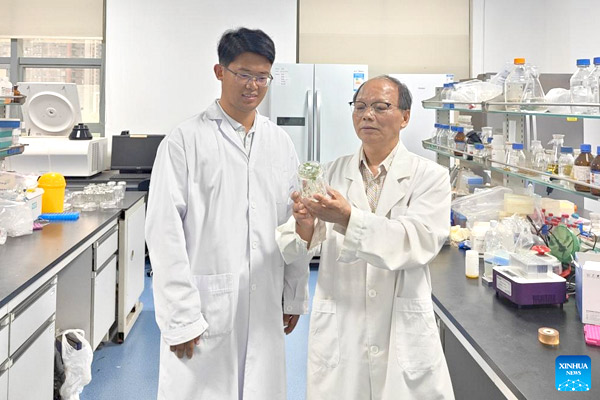
Liu Lijian (left), chief scientist of the research team working at the Oil Crops Research Institute of the Chinese Academy of Agricultural Sciences in Wuhan, Hubei Province in central China photo © Xinhua
The findings of the study, conducted by a team from the Oil Crops Research Institute of the Chinese Academy of Agricultural Sciences, have been published in Nature Genetics.
The production of crops from the family Brassicaceae is facing a growing threat from clubroot disease in cabbage, caused by the pathogen Plasmodiophora brassicae. The disease has been spreading rapidly in more than 80 countries in recent years and leads to yield losses of between 10 and 15 percent annually worldwide. In China alone, the disease affects approximately 1.3 million hectares of agricultural land every year.
Traditional methods for controlling the infection – interspecific or intraspecific hybridization – often encounter challenges and fail to resolve the problem of developing new varieties resistant to this pathogen.
According to Liu Lijian, lead scientist of the research team, it took almost a decade to identify the role of the GSL5 gene, which facilitates the spread of the disease. It can easily be attacked by the pathogen Plasmodiophora brassicae, the experts add.
The researchers managed to edit the genome and eliminate GSL5 in cruciferous plants. Following the scientists’ intervention, these crops exhibit high resistance to pathotypes of Plasmodiophora brassicae, and no adverse effects on plant growth or seed yield were observed in field trials.
The innovation provides a durable and effective strategy for controlling the disease and supports the breeding of highly resistant cruciferous crops such as rapeseed, Chinese cabbage and broccoli.