

![MultipartFile resource [file_data]](/assets/img/articles/каолинова-глина-заглавна.jpg)
White clay with golden applications – a natural ally of the farmer in dry years.
Highlights:
• Intense summer heat is capable of causing sunburn in plants as well, with tomatoes, peppers, grapes and apple trees being the most susceptible.
• Farmers are increasingly suffering and will continue to suffer serious economic losses as a result of this.
• Kaolin clay acts as a “high-factor sunscreen” for plants, reflecting UV rays and reducing the risk of burns on leaves and fruits. Just as white clothes protect people in the heat, kaolin lowers plant temperature and slows down moisture loss.
• In addition to protection against burns, kaolin protects from pests, slows the development of diseases and improves photosynthesis. Furthermore, treated plants produce larger, more colourful and healthier fruits, even under hot and dry conditions.
• In Bulgaria this practice is still almost unknown, although we have large reserves of kaolin – about 200 million tonnes.
• Used for centuries in Asia, this method is now being established as part of sustainable agriculture. Kaolin is a solution that is accessible, natural, easy to apply and cost-effective.
Just as human skin suffers from sunburn, plants can also suffer severe damage from intense summer heat. In the context of increasingly frequent heatwaves and droughts, farmers are seeking solutions to protect their crops. One of these solutions is old, natural and accessible – kaolin clay. It can be used as a natural sunscreen that protects plants from ultraviolet (UV) rays capable of harming growth and productivity.
Kaolin clay, also known as kaolin, is a fine, soft and naturally occurring mineral from the Earth’s crust. It is usually white in colour and is used in various industries due to its unique properties. It has become an indispensable tool in horticultural practices, with numerous benefits that improve the overall health and vitality of plants.
Heat, stress and salvation for the harvest
In recent years, summers around the world have been getting hotter, and unusual temperature records are no longer an exception but the rule. The ongoing climate changes in temperate latitudes are warming the climate in Bulgaria as well. We are increasingly hearing about yet another heat record.
These changes affect the environment in which we live. For millions of years, all living organisms on the planet have adapted to specific living conditions; under abrupt climate changes, many inhabitants of the flora and fauna experience enormous stress and, if they cannot adapt, their existence in certain regions is in question. But while humans, as rational beings, can take certain actions to save themselves from the heat, plants lack this opportunity, and here it is the task of farmers and gardeners to take measures to ensure that cultivated and ornamental plants do not burn under the relentless sun.
Climate change has a huge impact on the cultivation of agricultural crops. Producers increasingly use irrigation systems in order to achieve a guaranteed result.
Irrigation helps, but does not save
Irrigation increases the efficiency with which plants utilise solar energy. In standard farming, only about 3% of the energy reaching the soil surface is used for photosynthesis, whereas under optimal moistening of the root zone this indicator rises to 12–14%.
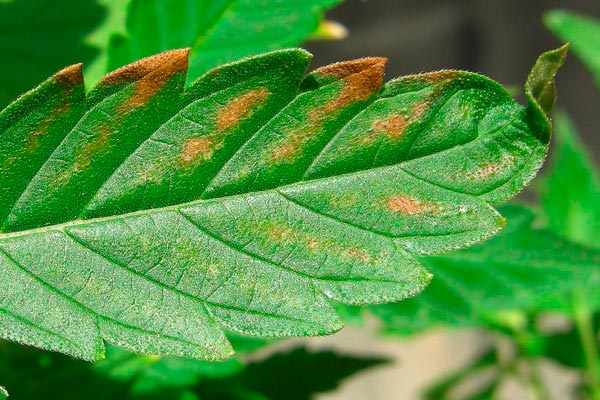
Photo 1: Leaf scorch on a plant. Source

Good soil moisture significantly contributes to higher-quality yields and easier cultivation. It also reduces soil compaction during ploughing. When the soil is moistened, it is better protected from wind erosion. Irrigation increases the solubility of phosphoric acid compounds and forms a colloidal humus solution that improves plant nutrition with phosphorus.
Plants consume large amounts of moisture during the growth period, of which only 0.15–0.2% goes into the creation of plant tissues, while the rest is taken up by the leaves and stems. In the absence of moisture, unfavourable physiological processes occur – growth is suppressed, the accumulation of plant biomass slows down and yield decreases sharply.
Even with regular irrigation, plants experience stress at very high summer temperatures. On a hot and windy day, they evaporate more water and, in order to protect themselves from moisture loss, are forced to close their stomata. This slows photosynthesis, stops growth and reduces yield. Sometimes these defence mechanisms are not sufficient and sunburn appears on the plant and fruits, organs dry out, including flowers, pollination is poor and other physiological disorders occur.
The risk of leaf sunscald
Most plants are not tolerant of bright sunlight. As a result, sunburn, known as sunscald, forms on fruits and vegetative parts. On leaves it can occur on all types of trees or shrubs as well as on herbaceous plants. This is a widespread non-infectious disease or disorder. It most often appears after prolonged periods of dry, windy weather or bright sunshine, when the roots are unable to supply water to the leaves as quickly as it is lost through evaporation from the leaves.
Unfavourable sites, such as sandy or gravelly soil, locations near obstacles or pavements that restrict root growth, or exposed windy slopes, usually promote it. Problems with insects and diseases, as well as other factors that affect the plant’s ability to take up water, can lead to leaf sunscald.
In its mild cases, the leaves remain attached to the twigs and the damage is minor. In more severe cases many of the leaves fall prematurely, although the plants do not die. When this happens every year, the recurring stress gradually weakens the plant and makes it more susceptible to insects and diseases.
Sunburn on plants manifests in different ways. For example, a brown spot may appear in the centre of a green leaf, which subsequently dries out. Due to sunburn, fruits lose their ornamental appeal. Tomatoes, peppers, grapes and apple trees are the most susceptible to ultraviolet radiation.
Sun protection with a recipe from Asia
As early as centuries ago in Central Asia, people discovered a simple but effective way to protect their plants from the scorching sun – with the help of white clay. There, during the period of the greatest heat, plants that need to be protected from direct sunlight are sprayed with an aqueous solution of white clay – kaolin.
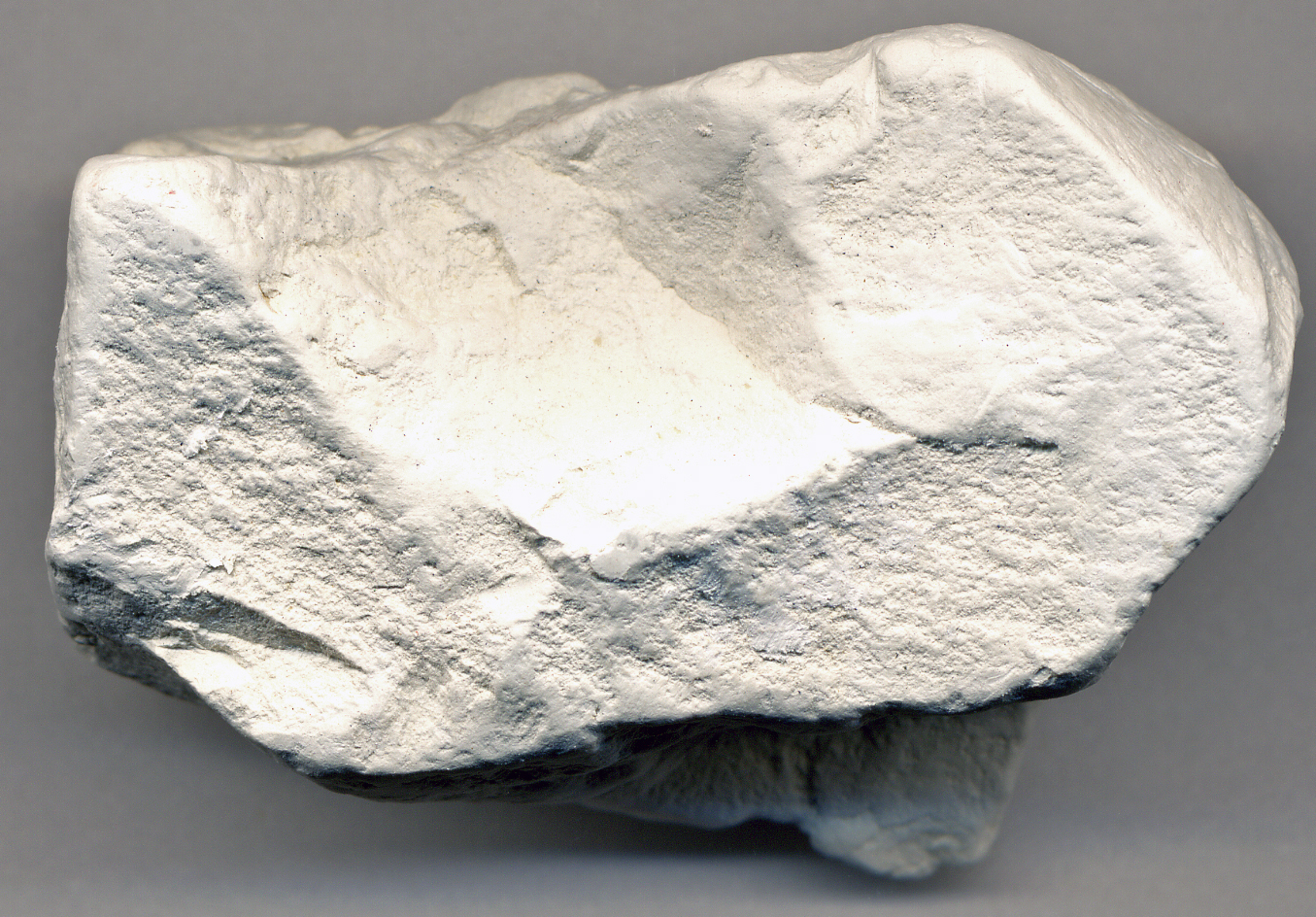
Kaolin is known as white or porcelain clay. It is obtained from a rock consisting of the mineral kaolinite. It received its name from the Chinese expression “high hill” and was first discovered in China. Kaolin has high heat resistance and good binding properties. Today kaolin is all around us – from the porcelain cup in the morning, through paper and paints, to cosmetic masks known as “white clay”.
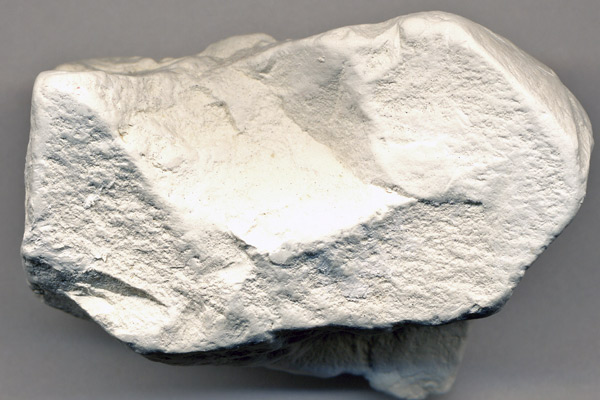
Photo 2: Kaolinite mineral – the main raw material for kaolin production. Source
Kaolin – the untapped wealth beneath our feet
In our country this practice is still almost unknown, although Bulgaria has enormous reserves of kaolin – about 200 million tonnes. This means that the solution is literally beneath our feet – accessible, natural, easy to apply and affordable. The price varies according to quality – from 100 to 300 dollars per tonne, which makes it a budget-friendly choice. Worldwide, kaolin is already part of good practices – from vineyards in California to apple orchards in Germany and vegetable fields in Spain. It is likely that the unusual heat and the damage it causes will soon prompt Bulgarian farmers to include it in their work as well.
What is the mechanism of action of kaolin clay?
One of the reasons kaolin clay has gained such popularity in horticulture is its protective nature. When applied to the surface of plants, it forms a thin white film that acts as an effective barrier against external environmental stress factors, such as reflecting sunlight and reducing heat stress, thus helping to prevent plant damage.
The kaolin solution is sprayed mainly on the southern side of the plants, which is exposed to the sun for the longest time. Under the sun’s rays, the water from the solution quickly evaporates and a white coating remains on the leaves of the plants, which reflects the sun’s rays well. At the same time, evaporation of moisture from the underside of the leaves continues normally.
Temperature regulation and water saving
Kaolin clay is a valuable ally in the fight against summer heat. When it covers leaves with a thin white layer, it acts like a natural mirror – reflecting the sun’s rays, reducing heating and keeping plants cooler and better hydrated. Thus, evaporation and water loss are limited, leaves remain healthy and yields are higher even on the hottest days. Under drought conditions this effect is invaluable – every drop of moisture is retained longer, and plants use water more efficiently.
Pest control without chemicals
Kaolin clay provides a natural solution against pests by creating an inhospitable environment for them. Its fine particles form an impenetrable barrier and thus make it difficult for insects to orient themselves on the plant, thereby reducing the need for chemical insecticides.
A shield against diseases and fungal infections
Fungal infections often cause serious damage in gardens. Kaolin clay creates a protective layer on plants that hinders the development and spread of pathogens. Thus, plants remain healthier and more resistant to diseases.
A key to higher-quality fruits
Kaolin has yet another major advantage – it improves yield. Studies show that treated plants produce fruits with better colour, larger size and higher quality. This makes it a valuable assistant for every grower striving for healthy and tasty produce.
Enhanced photosynthesis
Photosynthesis is the engine of growth. Kaolin clay supports this process by scattering light deeper into the leaves. The result is more chlorophyll and more efficient conversion of solar energy into growth and yield.
A natural film against heat
Environmental awareness is a key element in modern agriculture, and kaolin clay fits naturally into this vision. It is a biodegradable and completely environmentally friendly material that offers a sustainable alternative to chemical agents.
Climate change is already creating serious challenges in agriculture – especially in hot and dry regions, where heat stress, intense solar radiation and water scarcity put plants to the test. In this context, kaolin particle film (KPF) technology for covering leaf surfaces has proven to be an effective and environmentally sound solution.
Studies show that applying kaolin-based sun protection to fruit trees and other crops significantly lowers leaf temperature, preserves fruit quality and maintains productivity. Nevertheless, challenges remain – such as optimally determining doses and timing of application, as well as dealing with visible residues on fruits, which can be an issue for demanding markets.
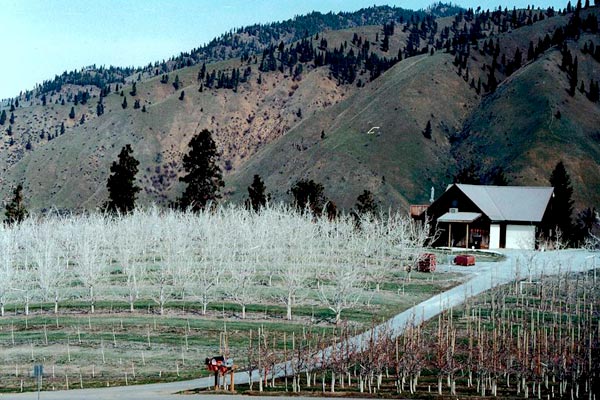
Photo 3: Orchard treated with kaolin spray. Source

The future lies in integrating kaolin practices with other technologies – precision irrigation, breeding of heat-tolerant varieties and new formulations with improved durability. No less important are training for producers and support through agricultural programmes that will facilitate the implementation of these methods in practice.
In the context of climate change, kaolin is more than just protection – it is a strategic advantage for Bulgarian producers that can ensure competitiveness and sustainability on the global market.
Kaolin clay is a proven, environmentally friendly and affordable method for plant protection. In the context of a changing climate and increasing risks to agriculture, this natural mineral can become a key ally for farmers in our country. It is time to make use of the available sustainable solutions to ensure not only today’s harvest, but also the future of agriculture in Bulgaria.
How to use kaolin clay?
• It is best to apply kaolin clay on a windless day, when the sun is not strong – early in the morning, in cloudy weather or in the evening. Avoid spraying when rain is expected, as the mixture will be washed away.
• The solution is applied with a backpack sprayer for larger areas or with a small hand sprayer for individual plants. For optimal results, use a sprayer with continuous dispersion and evenly cover all leaves and stems with a thin white layer. This gives the plants a dusty appearance but protects them from sunburn and pests.
• To prepare the mixture, use a ratio of 3 cups of kaolin to 4.5 litres of water. Adding a few drops of natural liquid soap facilitates distribution, and for mature plants a fish emulsion can be added for foliar feeding. First place the dry clay in a bucket, then gradually add water to avoid clumping. Stir well until a smooth mixture is obtained.
• When working, wear a mask and protective goggles – the dust is harmless, but may cause irritation if inhaled or if it gets into the eyes.
• Application twice a month is usually recommended. Spray close to the soil surface to limit wastage and reduce the risk of fungal infections.
Source Climateka
Materials used in this publication:
- V. Cantore et al. Kaolin-based particle film technology affects tomato physiology, yield and quality Environ. Exp. Bot. (2009)
- Hribar, J.; Vidrih, R. Impacts of climate change on fruit physiology and quality. In Proceedings of the 50th Croatian & 10th International Symposium on Agriculture, Opatija, Croatia, 16–20 February 2015; pp. 42–45
- Sharma, S.; Manjeet, M. Heat stress effects in fruit crops. Agric. Rev. 2020, 41, 73–78.
- Sadok, W.; Lopez, J.R.; Smith, K.P. Transpiration increases under high-temperature stress: Potential mechanisms, trade-offs and prospects for crop resilience in a warming world. Plant Cell Environ. 2021, 44, 2102–2116.
- Abou-Khaled, A.; Hagan, R.M.; Davenport, D.C. Effects of kaolinite as a reflective antitranspirant on leaf temperature, transpiration, photosynthesis, and water-use efficiency. Water Resour. Res. 1970, 6, 280–289.
- Glenn, D.M. The mechanisms of plant stress mitigation by kaolin-based particle films and applications in horticultural and agricultural crops. HortScience 2012, 47, 710–711