

![MultipartFile resource [file_data]](/assets/img/articles/заглавна-защита-юли-2025.jpg)
![MultipartFile resource [file_data]](/assets/img/articles/червен-овощен-акар-юли-2025.jpg)
In July, meteorological conditions will limit the development of a number of fungal diseases, with the exception of powdery mildews on fruit trees. In orchards not affected by spring frosts, treatments against the second generation of fruit moths must continue. Treatments against diseases and pests should be carried out during the cooler hours of the day.
In fruit nurseries
Apple and peach nurseries and clonal apple rootstocks in mother plantations are sprayed against powdery mildew every 8-10 days until growth stops. For spraying, the following are used: sulfur-based products - Sulfur WG 600 g/da, Solfo 80 WG – 750 g/da or one of the products – Systhane 20 EW – 0.03%, Luna Experience – 50-75 ml/da, Flint Max 75 WG – 0.02%.
Control against cylindrosporiosis continues. Cherry and sour cherry nurseries and seedbeds with mahaleb cherry seedlings are sprayed with Syllit 544 SC – 125 ml/da.
The flatheaded root-borer (Capnodis tenebrionis L.) – a key pest of stone fruit species
Trees attacked by the flatheaded root-borer and dried trees are uprooted and burned.
Discovered nests of the fall webworm are collected and burned.
Plum nurseries are sprayed with Signum – 45 g/da against plum rust.
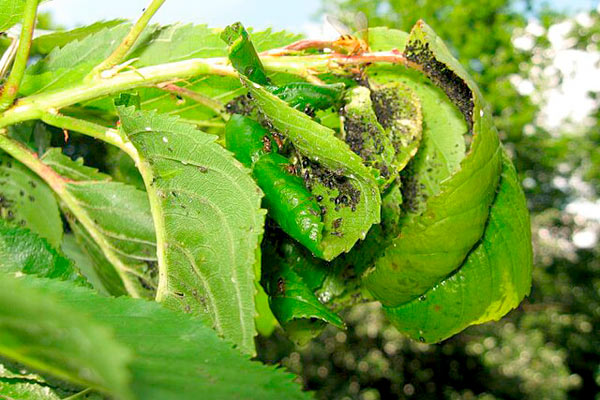
Black cherry aphid
Against aphids and leaf-feeding caterpillars, treatment is carried out with a pyrethroid insecticide – Decis 100 EC (7.5-12.5 ml/da), Sumicidin 5 EC (0.02%), Aficar 100 EC (15 ml/da), Efcimetrin 10 EC (15 ml/da).
In orchards
Non-toxic corrugated cardboard trapping bands are placed for collecting caterpillars of the codling moth and the plum fruit moth, necessary for monitoring their development during the following year. From each species, 500-1000 caterpillars are collected.
Frames – isolators (under 5 heavily infested trees) are placed to preserve the pupae of Csssss, necessary for monitoring its development during the following year.
Apple orchards are sprayed with one of the products – Carpovirusine (100 ml/da), Madex Top (10 ml/da), Dipel DF (50-150 g/da), Sineis 480 SC (20-37.5 ml/da), Delegate 250 WG (30 g/da), Avant 150 EC (33.3 ml/da), Deka EC (30 ml/da), Decline 2.5 EC (30 ml/da), Lamdex Extra (60-100 g/da) according to a signal from BFSA against codling moth (second generation), and with a sulfur-based product - Sulfur WG 600 g/da, Solfo 80 WG – 750 g/da or one of the products – Systhane 20 EW – 0.03%, Luna Experience – 50-75 ml/da, Flint Max 75 WG – 0.02% and one of the products – Valmec (60-96 ml/da), Apollo 50 SC (40 ml/da), Nissorun 5 EC (0.05%) respectively against powdery mildew and mites.
A second spraying against the second generation of the codling moth is carried out 12-14 days after the first with one of the products – Carpovirusine (100 ml/da), Madex Top (10 ml/da), Dipel DF (50-150 g/da), Sineis 480 SC (20-37.5 ml/da), Delegate 250 WG (30 g/da), Avant 150 EC (33.3 ml/da), Deka EC (30 ml/da), Decline 2.5 EC (30 ml/da), Lamdex Extra (60-100 g/da), with a sulfur-based product - Sulfur WG 600 g/da, Solfo 80 WG – 750 g/da or one of the products – Systhane 20 EW – 0.03%, Luna Experience – 50-75 ml/da, Flint Max 75 WG – 0.02% against powdery mildew and with a pyrethroid insecticide – Decis 100 EC (7.5-12.5 ml/da), Sumicidin 5 EC (0.02%), Aficar 100 EC (15 ml/da), Efcimetrin 10 EC (15 ml/da) against the serpentine leafminer moth.
Peach orchards are sprayed with a sulfur-based product – Sulfur WG 600 g/da, Solfo 80 WG – 750 g/da against powdery mildew.
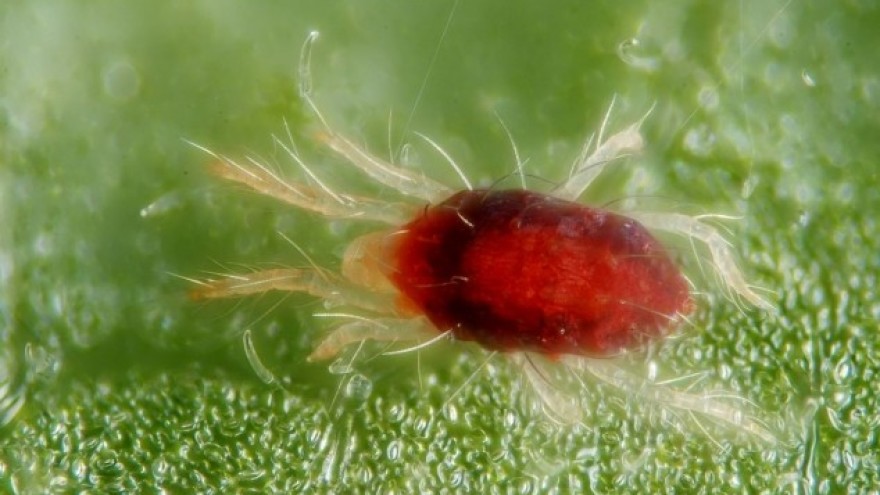
European red mite
Apple orchards are sprayed with one of the products – Carpovirusine (100 ml/da), Madex Top (10 ml/da), Dipel DF (50-150 g/da), Sineis 480 SC (20-37.5 ml/da), Delegate 250 WG (30 g/da), Avant 150 EC (33.3 ml/da), Deka EC (30 ml/da), Decline 2.5 EC (30 ml/da), Lamdex Extra (60-100 g/da); with a pyrethroid insecticide – Decis 100 EC (7.5-12.5 ml/da), Sumicidin 5 EC (0.02%), Aficar 100 EC (15 ml/da), Efcimetrin 10 EC (15 ml/da); with a sulfur-based product – Sulfur WG 600 g/da, Solfo 80 WG – 750 g/da or one of the products – Systhane 20 EW – 0.03%, Luna Experience – 50-75 ml/da, Flint Max 75 WG – 0.02%; one of the products – Apollo 50 SC (40 g/da), Valmec (60-96 ml/da) or another abamectin-based product, Voliam Targo 063 SC (75 ml/da), Naturalis (100-150 ml/da; Closer 120 SC (40 ml/da) or Meteor (60-90 ml/da); one of the products – Score 250 EC (0.015-0.02%), Eminent 125 ME (24 ml/da), Shardif 25 EC (20 ml/da), Chorus 50 WG (30-50 g/da); with copper-containing products – 1% Bordeaux mixture, Funguran OH 50 WP (150-250 g/da), Champion WP (0.3%), Copper Key (180-300 g/da), respectively against codling moth (third spraying against the second generation), serpentine leafminer moth, powdery mildew, mites, scale insects, scab, fire blight.
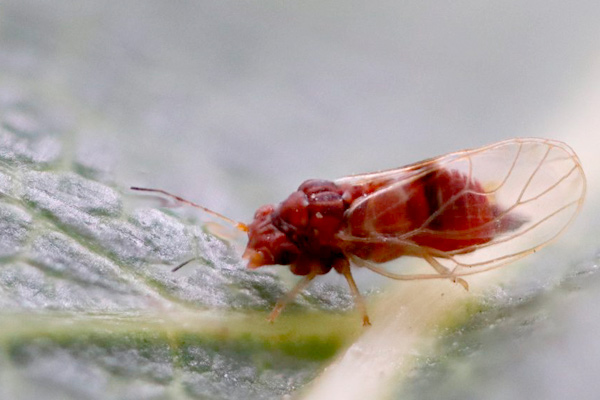
The common pear psylla (Psylla pyri) is the most widespread species in our country and attacks exclusively pear. Under our conditions, the common pear psylla develops 4-5 generations per year. In July, the third generation of the pest develops. The damage consists of intensive sap sucking by the large colonies of the psylla located on the leaves and young shoots of the pear. During feeding, both larvae and nymphs, as well as adult insects, excrete abundant undigested sugary substances that give a glossy and sooty appearance to the attacked parts – leaves, shoots and fruits. Sooty molds, which live saprophytically, settle on them, i.e. they do not damage the plant itself, but interfere with the normal physiological processes – photosynthesis, transpiration, respiration, etc. Very characteristic of the pear psylla is its tendency to rapidly develop resistance to applied chemical control agents.
Pear orchards are treated with a deltamethrin-based product – Decis 100 EC (12.5 ml/da), Meteor (90 ml/da), Deka EC (50 ml/da) against pear psylla (third generation), pear lace bug, pear fruit moth, scale insects; and with one of the products – Apollo 50 SC (40 g/da), Valmec (60-96 ml/da) or another abamectin-based product, Voliam Targo 063 SC (75 ml/da), Naturalis (100-150 ml/da) against mites.

Against the plum fruit moth (second spraying against the second generation), plum orchards are treated with one of the products – Harpun (100 ml/da) – against eggs, Delegate 250 WG (30 g/da), Sineis 480 SC (20-30 ml/da), Pyregard EC (75 ml/da), Decis 100 EC (7.5-17.5 ml/da), Coragen 20 SC (16-30 ml/da) – against caterpillars. For mating disruption, combined pheromone dispensers Isomate-OFM TT (40 pcs/da) may also be used.
Weeds in the interrows of orchards are sprayed with Typhoon SL or another glyphosate-based product – 400-1200 ml/da.
In strawberry plantations
Strawberry plantations are inspected to detect strawberry mite; spraying is carried out with one of the products – Valmec (60-96 ml/da), Apollo 50 SC (40 ml/da), Nissorun 5 EC (0.05%).
In blackcurrant plantations
After harvesting the fruit, plantations are sprayed with one of the products – Valmec (60-96 ml/da), Apollo 50 SC (40 ml/da), Nissorun 5 EC (0.05%) against mite species.
Weeds in the interrows are sprayed with Typhoon SL or another glyphosate-based product – 400-1200 ml/da. Weed mapping is carried out in all orchards, including blackcurrant plantations.