

![MultipartFile resource [file_data]](/assets/img/articles/заглавна-стевия.jpg)
Alternative agricultural crops – such as stevia – play an important role in addressing climate change.
• The sugar industry is a key source of carbon dioxide.
• Stevia is a good alternative to sugar – harmless and resilient to climate change. It is a natural sweetener with zero calories and no effect on blood sugar levels.
• It has significant economic potential, especially in the context of the global trend towards reducing sugar consumption and the demand for healthier alternatives.
• The main substances in stevia that make it popular and unique: steviosides and rebaudiosides are between 200 and 400 times sweeter than sucrose.
• It has great potential in Bulgaria. The country has more than three decades of experience – at the Agricultural Institute in Shumen stevia is successfully cultivated. There is already a registered Bulgarian variety which can be successfully grown in all regions of the country.
• Stevia thrives in a warm climate and is relatively drought-tolerant.
From the era of “sugar addiction” to the “green revolution”
The sugar industry is a key source of carbon dioxide (CO2) in the atmosphere and directly affects climate change (241 kg of carbon dioxide equivalent are released into the atmosphere per ton of sugar produced; 2406 kg – per hectare of sown area and 26.5 kg – per ton of processed sugarcane). The larger share of total emissions (44%) results from waste burning, about 20% – from the use of synthetic fertilizers and about 18% – from the burning of fossil fuels.
At the same time, Europeans’ addiction to sugar is a key moment in the globalization process, dating back to the time when thousands of African slaves were transported to the New Continent to work on sugarcane plantations. After the Napoleonic Wars, with the emergence of sugar beet, sugar ceased to be a colonial commodity and conquered the world.
This continued until the beginning of the last century, when Moisés Santiago Bertoni (director of the College of Agronomy in the Paraguayan capital Asunción) became deeply intrigued by an unusual and unique plant with a sweet taste – a new representative of the genus Stevia, which includes about 280 species – Stevia rebaudiana Bertoni (hereinafter referred to simply as stevia). This is how its discoverer named it – after chemist Dr. Ovid Rebaudi, who assisted in preparing the extract.
The substances that make stevia popular and unique are present only in this plant: steviosides and rebaudiosides – diterpenoid glycosides. They are 200–400 times sweeter than sucrose. Numerous experiments have proven that they reduce the likelihood of diseases such as adenoma or breast cancer, as well as the rate of development of skin cancer.
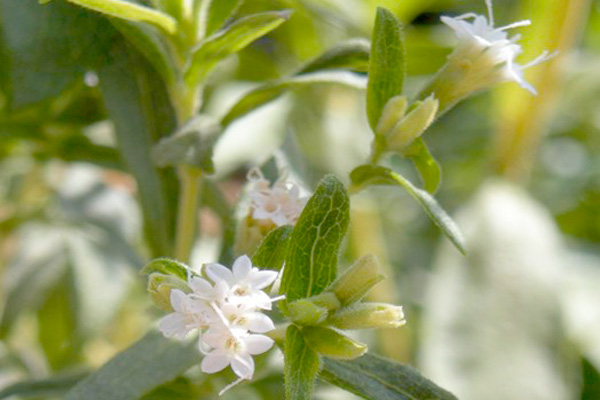
Flowering stevia (Stevia reabudiana). Source
Where stevia grows
Stevia is an evergreen shrub. Away from the tropics, it is grown as an annual crop and seedlings are prepared every year. As a perennial, it can be grown on a windowsill. The natural range of this sweet herb is small – mainly the valley of a high-mountain tributary of the Paraná River on the border of Paraguay and Brazil; initially it was even considered to be as rare as ginseng.
The plant is easily adaptable and quickly began to be cultivated in a number of countries. It can be grown almost up to the Arctic Circle. In Japan, cyclamate and sucralose (author’s note: artificial sweeteners) were the first to be banned for use, as they are hazardous to health. Therefore, in the 1960s stevia started to be imported and used there, and very soon after that it became known as the “green revolution”. Neighbouring countries also joined this revolution. As early as 1982, 1000 tonnes of stevia were used for food purposes in Japan, of which 300 tonnes were domestically produced and 450 tonnes were imported from mainland China, 150 tonnes from Taiwan, 100 tonnes from Thailand and 50 tonnes from South Korea, Brazil and Malaysia. Stevia is now present in almost half of Japanese food products. In South America this plant is also widely cultivated. Today stevia is grown industrially in Europe as well, with Greece and Spain being the leaders in this respect. Nowadays, more and more leading food and beverage companies add stevia to their products, and access to it is increasing both in stores and online.
Economic potential
Stevia is used mainly as a natural sweetener and has significant economic potential, especially in the context of the global trend towards reducing sugar consumption and the demand for healthier alternatives. Nowadays, natural sweeteners are increasingly used to replace sugar in food products and beverages. According to the study “New Nutrition 2020”, two-thirds of European consumers are trying to reduce their sugar intake and at the same time are increasingly looking for products without added sugars. Here are some aspects of this potential:
1. Growing demand for healthy sweeteners
With increasing attention to health and the rise in cases of diabetes and obesity, many consumers are looking for sugar substitutes that do not raise blood sugar levels. Stevia is a natural sweetener with zero calories and no effect on blood sugar, which makes it acceptable for people with diabetes and for those who wish to reduce their caloric intake. Its popularity is growing in the food industry, where it is used not only in beverages and desserts, but also in various other products.
2. Natural products and organic foods
Stevia can be grown organically, which makes it an attractive choice for farmers and producers in the field of organic agriculture and natural products. Compared to synthetic sweeteners, it has fewer known side effects, thereby attracting more consumers.
3. Advantages in production
Stevia is resilient to climatic conditions and does not require many resources for cultivation, which makes it suitable for various regions of the world and economically viable for farmers. It can be grown in regions with tropical as well as temperate climates, such as we have in Bulgaria. This also proves its potential for our country.
4. Low production costs and high profitability
After planting, stevia can be harvested several times a year. This leads to high productivity and relatively low cultivation costs. Due to the high concentration of sweeteners in stevia leaves, the profitability of production also increases.
5. Market and potential
Stevia is widely available in both developing and developed markets. There are significant commercial opportunities for export to various parts of the world, including Asia, Europe and the United States. Products with added steviol sweetener are becoming increasingly widespread.
6. Health and environmental benefits
Stevia can help reduce global sugar consumption, which has serious consequences for health and the environment. Its production is more environmentally friendly compared to sugar, which requires larger areas for cultivation and the use of chemicals.
Stevia: with potential in Bulgaria
With the growing demand for natural sweeteners and attention to a healthy lifestyle in Bulgaria as well, stevia has great potential in the country. Bulgaria has more than three decades of experience – at the Agricultural Institute in Shumen stevia is successfully grown, and there is already a registered Bulgarian variety “Stela”. It is propagated vegetatively, which ensures the stability of its varietal characteristics. It demonstrates good ecological plasticity and can be successfully cultivated in all regions of the country. It is characterized by relatively good resistance to fungal diseases and, under appropriate agronomic conditions, provides a yield of dry leaves of over 250 kg per decare. In the future, further breeding work and efforts to popularize the crop may create opportunities for alternative employment and diversification of farm activities in the depressed regions of Bulgaria, in line with our climate objectives.
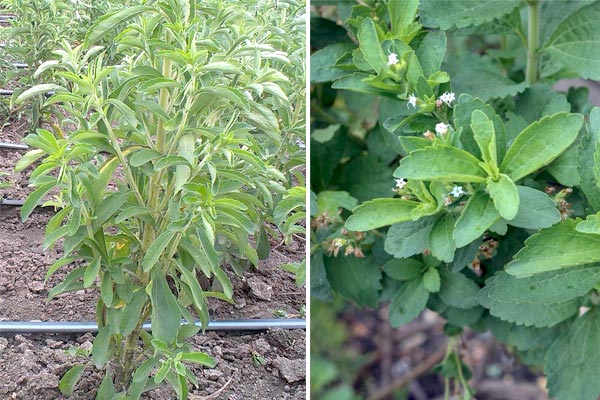
Stevia variety “Stela” at the Agricultural Institute – Shumen. Source
At the latest agricultural exhibition Agra 2025, herbal teas containing stevia grown in Bulgaria won the award for most innovative product.
Cultivating stevia in Bulgaria requires careful planning and appropriate growing conditions. Climatic conditions in most parts of the country are not ideal for this plant, but with greenhouses, modern cultivation methods and proper agronomic practices, stevia can be cultivated very successfully.
Stevia under climate change conditions
Stevia thrives in a warm climate and is relatively drought-tolerant, but certain aspects of climate change may affect its growth and productivity. Here are some important points related to the impact of climate change on stevia:
1. Stevia prefers warm conditions and in some colder regions rising temperatures may create better conditions for its cultivation. This potentially leads to an expansion of the areas where stevia can be grown, for example in the northern parts of Europe.
2. Drought tolerance: Stevia withstands drought better than some other plants, but when climate change leads to longer and more intense periods of drought, this can affect the yield of this crop as well. It requires regular, moderate irrigation, so sustainable water management will be key to successful stevia cultivation.
3. Spring and autumn cold spells: In regions where winters are not so harsh but temperatures during spring and autumn vary significantly, these fluctuations may slow down the growth of stevia. If early seedlings are planted and unexpected frosts occur afterwards, this may damage the young plants.
4. Extension of the growing season: In some regions, climate change may lead to an extended growing season, which is beneficial for stevia, as it then has more time for growth and for the accumulation of its sweet leaves.
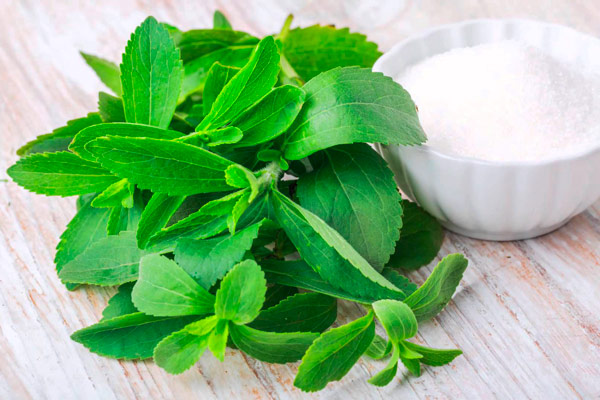
Alternative methods for addressing climate change
Alternative agricultural methods reduce greenhouse gas emissions and the effects of climate change through specific sustainable practices: limiting the use of synthetic fertilizers and pesticides; reduced tillage; restoring carbon in soils; selecting climate-resilient crops and applying new farming methods. In this way, farmers can adapt to new climatic conditions such as higher temperatures, droughts or frequent floods. These methods provide greater stability and security of food resources under conditions of climate instability.
These practices reduce the environmental footprint of agriculture and make farmers more resilient and secure in the context of climate change. Their application is key to ensuring food security and reducing climate risks.
Climate change presents both opportunities and challenges for stevia cultivation. Higher temperatures in some regions may extend the growing season and provide new areas for production. However, intense droughts, extreme temperature fluctuations and climate instability could negatively affect the productivity and quality of stevia. To cope with these risks, farmers will need to use adaptive cultivation methods, invest in sustainable technologies and adjust their production practices to climate change.
The high sweetness of stevia, combined with low resource consumption, minimal environmental impact and compatibility with sustainable agricultural practices, makes it one of the most ecological and sustainable sweeteners on the modern market.
Annex: Technology for stevia cultivation
Stevia is propagated by seeds, rooting of cuttings and division of the shrub. Seedlings are prepared, after which two‑month‑old plants are planted in open field or greenhouse. During the first year of life, plants grow slowly and form one main stem with lateral branches. From July to September, growth intensifies with a maximum increase in vegetative mass. In the second year, a strong root system is formed and the number of stems correlates positively with the number of buds on the rhizome. Under conditions in Bulgaria, usually up to 10–15 stems are formed. In perennial cultivation, the number of stems reaches 80 or more.
1. The seeds are sown on the surface without being buried in a well-moistened substrate. Then they are sprayed with water.
2. The containers with seeds are covered with glass or film and placed in a warm place (not below +25 ℃).
3. Under such conditions, stevia seeds germinate within 5–7 days.4. When the seeds sprout, the film is removed and the seedlings are moved to the lightest and warmest part of the room.
4. During this period, it is necessary to monitor the air and soil temperature so that it does not fall below +15°C.
5. At the stage of a pair of true leaves (seedling height 5–7 cm), the seedlings are carefully transplanted together with a soil clod into individual pots, deepening them up to the first leaves.
The seedling period for stevia usually takes about two months.
Planting seedlings in open field or greenhouse is carried out when the risk of spring frosts has passed and the daytime temperature rises to 15–20°C. Planting pattern 60–70×30–20 cm.
Optimal conditions for growing stevia are a sunny site protected from wind and drafts, and an ambient temperature of 22–28°C. Stevia can grow in different soils, but the most suitable are light sandy or sandy‑loam substrates fertilized with humus or compost with a slightly acidic reaction (pH 5.5–6). Heavy clay soils are not suitable. The soil should be light and friable. Stevia does not develop well in peat mixtures. Liming of the soil is also undesirable. Fertilization is carried out when necessary (2–3 times during the growing season) with complex mineral fertilizers – 25–30 g per 1 sq.m.
Harvesting
As a rule, leaf harvesting begins during the budding period (the period of flower bud formation) and flowering. Stevia leaves are numerous, and one plant can form from 350 to 1200 leaves, with the number largely depending on growing conditions. The flowering season is from July to September. Harvesting is easy as a process: the stem is cut at a height of 5–10 cm above the ground and dried in a light, well-ventilated room.
Materials used in this publication:
1. Possibilities for Growth of Stevia in European Temperate Zones 2008, Ralf Pude 2nd Stevia Symposium KU Leuven BE
2. Stevia a bio sweetener scope in the European Union as a commercial product, 2020, Tariq Ismail, AMERICAN-EURASIAN JOURNAL OF SUSTAINABLE AGRICULTURE
3. Assessment of stevia (Stevia rebaudiana) – natural sweetener: A review, Virendra V. Panpatil, 2008
4. Agricultural Academy – Sofia
5. The European market potential for stevia