

![MultipartFile resource [file_data]](/assets/img/articles/заглавна-превенция.jpg)
Summary
Achieving an ecologically sustainable increase in vegetable crop production and access to healthy food is a global challenge. Agricultural production systems still rely on intensive treatments with chemical plant protection products.
A review of the main preventive measures to limit the harmful effects of pathogens and pests on this production has been made. These are: Selection of suitable areas, healthy soil, seeds and seedlings; Monitoring; Crop rotation and spatial isolation; Position and orientation of areas; Agrotechnical measures; Mechanical techniques; Application of ecological principles; Precision agriculture (PA) and artificial intelligence (AI); Plant protection products (PPPs).
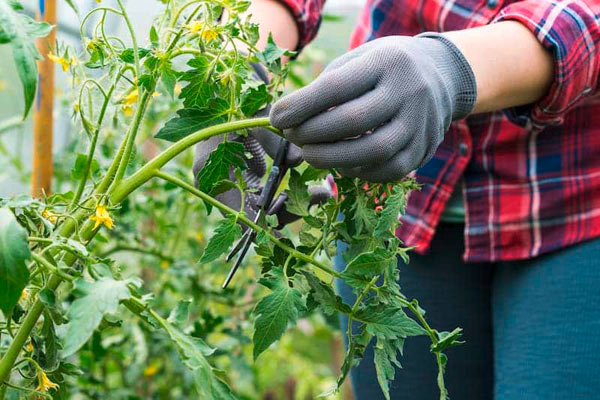
Crop protection methodologies are constantly evolving as a result of social pressure and the continuously changing needs of farmers. Connecting innovations in agriculture, driven by industry-led initiatives and intensive scientific research, offers many opportunities to improve crop protection techniques. Prevention, the preliminary actions to prevent attacks by diseases and pests in the cultivation of vegetable crops, are of extreme importance in reducing the risk of losses. Often these measures are neglected, which leads to severe consequences and sometimes to a strong infestation by pests.
For effective prevention in the cultivation of vegetable crops, several main steps are important: First, selection of suitable areas, healthy soil, seeds, and seedlings to protect crops from diseases and pests early in the growing season; Second, monitoring – regular inspection of crops and observation of plants for signs of diseases and pest damage. If necessary, immediate action is taken; Third, maintaining clean areas throughout the growing season by removing weeds and dry leaves, as well as damaged parts of plants or entire plants; Fourth, appropriate crop rotation to prevent the accumulation of pests and diseases. Fifth, introducing biocontrol into control systems; Sixth, agrotechnical measures; Seventh: mechanical techniques; Eighth: applying ecological principles in diverse systems; Ninth, precision agriculture (PA) and artificial intelligence (AI); Tenth, plant protection products (PPPs).
1. Selection of suitable areas, healthy soil, seeds, and seedlings
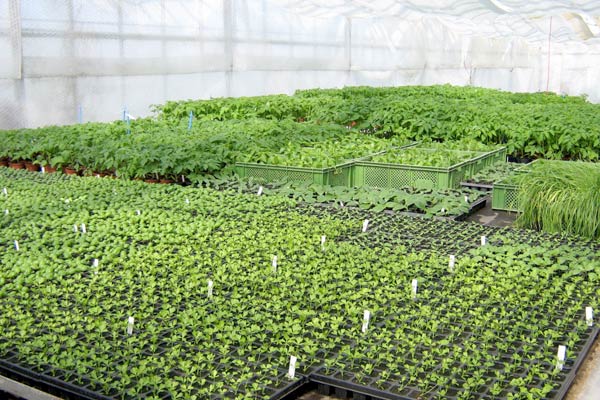
1.1. The appropriate selection of areas provides a good start for the cultivated crops. During the previous growing season, it is necessary to inspect them to identify infestation by soil pathogens, root-knot nematodes, wireworms, etc.
1.2. Healthy planting material. The use of healthy, disinfected planting material, as well as healthy, well-grown seedlings, is essential for a good start for crops and their protection from diseases and pests.
1.3. Resistant varieties. Vegetable crop breeding focuses on the genetic improvement of varieties, promoting inherent resistance to pests and diseases. Through selective breeding, crops with enhanced natural defenses are developed. To limit the use of pesticides and obtain healthier vegetable produce as an element of human food, increasing attention is being paid in breeding programs to creating varieties with complex resistance to economically important diseases and pests. This applies to both airborne pathogens and soil-borne harmful fungi, bacteria, and nematodes, and is an element of integrated production. Therefore, the appropriate selection of varieties is one of the keys to developing a successful disease management strategy.
Pathogens are highly variable, and although there are resistant varieties, with the emergence of new races, they may prove sensitive. For example, most greenhouse tomato varieties are resistant to Verticillium dahliae race 1. Race 2 has also been identified at the University of California, Davis, and is now being worked with.
Resistance breeding in tomatoes, cucumbers, and peppers has a complex focus – both towards soil-borne and airborne phytopathogens and root-knot nematodes.
In recent years, particular attention has been paid to induced resistance: It is achieved through biostimulants or elixirs that activate the plant's innate defense mechanisms. This method improves the crop's ability to repel pathogenic invaders.
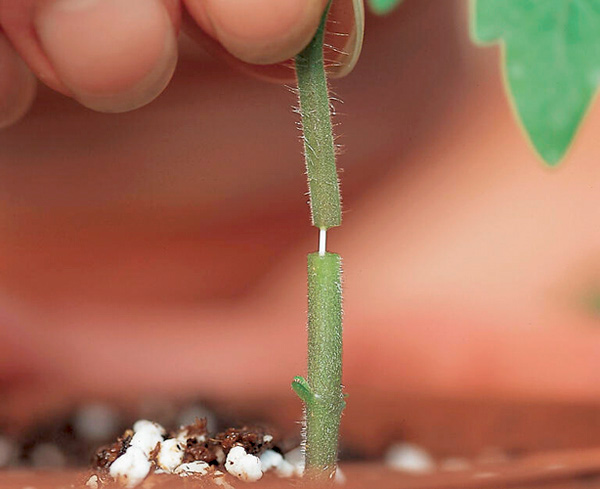
1.4. Grafting. Vegetable production has recently rediscovered this method. In many countries around the world, greenhouse production uses tomato, cucumber, and pepper plants grafted onto resistant rootstocks. This technological solution is effective in combating root-knot nematodes and soil-borne pathogens. Technologies and techniques for manual, semi-automatic, and automatic execution of this practice have been developed. However, it is still labor-intensive and expensive. The advantages of the method include reduced incidence of soil-borne pathogens, increased tolerance to low temperatures and soil salinity, and an extended harvest period. Vegetable grafting is often used to support plant growth and development, control diseases and root-knot nematodes, increase tolerance to temperature or physiological stress, and enhance the absorption of nutrients and minerals.
2. Monitoring. Regular inspection of vegetable crops and early detection of disease and pest infestation is a prerequisite for timely organization of pest control. Based on Economic Thresholds (ET), a strategy for organizing plant protection is developed to minimize losses.
3. Crop rotation and spatial isolation are among the first steps for crop prevention. Cereal and leguminous crops are very good precursors for vegetables. If crops that share common pests are grown in adjacent areas, there is a risk of transfer from one to the other. This is particularly important for vectors of viral and other diseases, such as thrips, aphids, leafhoppers, etc. Cutworm caterpillars and armyworms, after destroying plants, move to the adjacent crop. Cabbage should be planted further away from areas where there was an infestation of cabbage maggot or gall-forming weevil in the previous year. For peas, spatial isolation must be maintained to limit infestation by the pea midge. Potatoes should not be adjacent to eggplant, tomatoes, and other crops from the Solanaceae family to avoid the spread of late blight and the Colorado potato beetle.
When designing crop rotation, one should know: The exact pathogen to be controlled; Whether it has specialized strains that can limit the host range; The rotation period required to clear a given field of a particular pathogen is not always clear, as many factors are involved; Crops belonging to the same botanical family are likely susceptible to the same disease agents. For example, cucumbers, melons, and watermelons are susceptible to the agent causing Fusarium wilt. Therefore, their inclusion in rotation is not advisable; Fungi Pythium spp. and Rhizoctonia solani cause root tip rot in carrots, even plant death. Studies show that when carrots are grown after alfalfa, Pythium and Rhizoctonia populations are larger and yields are lower. The same is observed after barley. Such deviations are not observed with onion as a preceding crop and the introduction of a fallow period. Another reason alfalfa is not a suitable precursor is that it is a host for the fungus causing cavities in carrots (Pythium violae). Clubroot in brassicas is effectively controlled by mint, savory, and thyme. Rotation that includes a fallow period can be key to controlling some pathogens that have a wide range of hosts. Spatial isolation between susceptible crops is also of great importance. If crops with common pests are grown in adjacent areas, there is a risk of them transferring from one crop to another (thrips, aphids, leafhoppers, etc.).
4. The position and orientation of vegetable growing plots can play an important role in limiting certain diseases. Fields where rows are oriented in the direction of prevailing winds are drier, and the relative humidity in the root collar area of plants decreases faster than in those perpendicular to them. This can lead to a reduction in favorable climatic conditions for the development of some diseases. Uneven plots with low-lying flood-prone areas can cause problems with certain diseases, so they should be avoided.
5. Agrotechnical measures impact pests through direct destruction during cultivation, increasing plant resistance to damage, and improving conditions for the development of natural enemies. Of significance are:
5.1. Sowing and planting dates. Early planted crops such as tomatoes, peppers, and eggplants provide higher yields even with severe stolbur development.
5.2. The optimal water regime of plants indirectly affects the reduction of damage. During drought, infestation by thrips and spider mites is more severe.
5.3. Fertilization with organic and mineral fertilizers has a direct and indirect impact on the infestation of vegetable crops and yield. One-sided nitrogen fertilization causes prolonged vegetation and softening of plants, making them more susceptible to attack by aphids, greenhouse whiteflies, etc. When fertilizing with phosphorus and potassium fertilizers, fruit ripening is accelerated, tissues become rougher, which is unfavorable for pests.
5.4. Weed control. During the growing season, crops and the protective strip around them are kept free of weeds and self-sown plants. These practices are of great importance not only because of their direct harm but also as a means of controlling harmful insects and mites that feed and reproduce on them until the cultivated plants develop. Many of them are hosts for pathogens and pests and can easily become sources of infection. Dry leaves, as well as damaged parts of plants or entire plants, are also removed. It is recommended to collect them in plastic bags, remove them, and destroy them outside the crops.
6. Mechanical techniques: Mechanical methods involve physical manipulation of crops to mitigate pest and disease pressure. These techniques include the use of barriers, traps, and machinery to deter and manage crop threats.
6.1. Physical barriers can be effective tools for limiting certain diseases and pests. They prevent direct contact of the plant with the plant pathogen. Polyethylene mulch is of greatest value as a mechanism for isolating soil-borne pathogens. It has been found that such mulching can reduce fruit rot in melons by up to 30% compared to those grown directly on the soil. Some studies show that reflective mulches can disorient certain insect vectors and prevent them from attacking plants, as well as preventing the dispersal of spores onto plants.
6.2. Use of appropriate and well-maintained equipment for implementing plant protection practices. The application of some products through drip irrigation systems makes it possible to limit workers' access to plant protection products, and this method is also gentle on beneficial species. In this way, products like Velum Prime, Minecto Alpha, etc. can be applied.
7. Biocontrol: Biocontrol strategies utilize the potential of beneficial organisms to regulate pest populations. Predators, parasites, and microorganisms are used to maintain ecological balance in agricultural systems.
8. Application of ecological principles in diverse systems: The integration of ecological principles into agricultural systems involves the creation of diverse agroecosystems. These systems promote natural pest control and reduce reliance on PPP treatments.
9. Precision Agriculture (PA) and Artificial Intelligence (AI): Precision agriculture utilizes advanced technologies, including remote sensing and data analysis, to optimize resource allocation, enhance crop health, and minimize environmental impact.
10. Plant Protection Products (PPPs): PPPs encompass a range of substances, including agrochemicals, organic compounds, and their combinations. These substances can include soaps, fungicides, repellents, and botanical compounds.
Greenhouses are a specific environment. The intensive cultivation of vegetable crops in them requires additional preventive measures. These include: installing insect nets on doors and vents; using sticky boards and tapes (blue and yellow), as well as pheromone traps, not only for monitoring but also for reducing pest population numbers; using separate greenhouse cells for seedling production, etc.
Interactions between different practices for protecting vegetable plants from diseases and pests can manifest in various ways, including synergistic enhancements, neutral coexistence, or mutual exclusion. Their common goal, however, is to protect crops through natural means. While selection and induced resistance represent preventive measures, precision agriculture and artificial intelligence include both preventive and control measures. These are practices with expected future positive impacts in many aspects: significantly increased yields and crop competitiveness.
Although PPPs can be used for prevention, their primary and still most common use is for combating pests, diseases, and weeds.
Biocontrol, induced resistance, and ecological principles strengthen biodiversity and crop yield. However, they may have neutral consequences for farmers' income.
Improved mechanical techniques are beneficial for weed control, but they can have an adverse effect on climate change due to increased greenhouse gas emissions from soil disturbance and increased fuel consumption. This suggests the need for alternative and more sustainable solutions.
Precision agriculture, combined with improved treatment technology, implies optimizing the effectiveness of pesticide application and reducing their overall use. The integration of these practices can reduce future dependence on PPPs.
Precision agriculture, artificial intelligence, and ecological principles demonstrate significant potential for impact across all categories regarding pest, disease, and insect control.
Prevention is the guarantee for a successful start and a good end to the growing season, with quality and high yields of vegetable crops. The range of vegetables grown in the country is wide. This creates additional conditions for a large number of hosts for pests and diseases. Therefore, maximum adherence to preventive measures is required.
More on the topic:
References:
Baharyev D., B. Velev, S. Stefanov, E. Loginova, 1992. Diseases, Weeds and Pests of Vegetable Crops. Zemizdat-Sofia, 338.
Buckwell, A., De Wachter, E., Nadeu, E., Williams, A. 2020. Crop Protection & the EU Food System. Where are they going? RISE Foundation, Brussels.
Buzzotta, L., 7 Modern and efficient ways to protect crops from pests and diseases, Αdvocate of sustainable agriculture - CEO of Naturnova, Riemens, Marleen. "The future of crop protection in Europe.", 2021.
https://www.fao.org/plant-production-protection/about/en.