

![MultipartFile resource [file_data]](/assets/img/articles/заглавна-португалия.jpg)
“The world as we have created it is a process of our thinking. It cannot be changed without changing our thinking” – Albert Einstein
The scientific conference “VI EUCARPIA CONFERENCE on breeding to meet environmental & societal challenges” was held from 26 to 28 May at the Instituto Politecnico de Coimbra – ESAC, in Coimbra, Portugal. The aim of the conference was to promote discussions on innovative breeding strategies to address pressing environmental and societal challenges in the context of organic and agroecological agriculture.
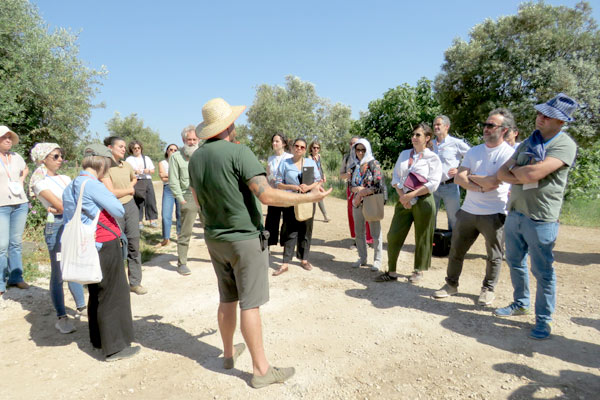
The event was attended by scientists, breeders, coordinators and students from Germany, Austria, Italy, France, Serbia, Spain, Portugal, Poland, Canada, Brazil, about 130 participants, who presented 100 posters and over 20 papers. Bulgaria had one representative, Assoc. Prof. Dr. Tsvetanka Dincheva from the Maritsa Vegetable Crops Research Institute, Plovdiv.
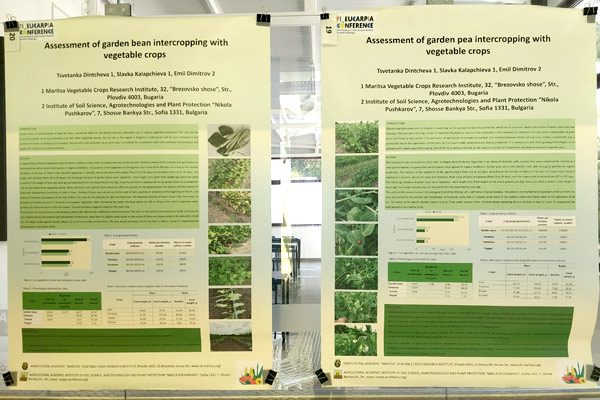
Bulgaria had one representative, Assoc. Prof. Dr. Tsvetanka Dincheva from the Maritsa Vegetable Crops Research Institute, Plovdiv.
One of the main aspects of the conference concerned organic seed material – strategies, guidelines, statistics, development and obtained results. A significant problem remains the difficulty in obtaining organic seed and planting material and in increasing the diversity of varieties worldwide, which necessitated the extension of the derogation for the use of organic reproductive material until 2036.
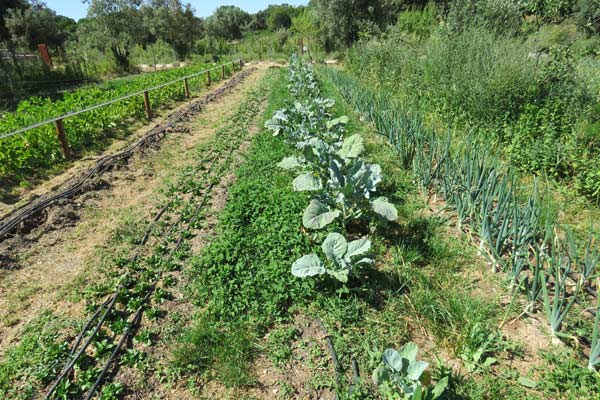
Another important topic of the event concerned increasing biodiversity on farms through the application of mixed cropping of species, the so-called intercropping. The diversity of cultivation technologies and combinations of crops, with trials of crop rotations, showed a good alternative for farm organisation compared to monoculture cultivation. In-depth studies on the mutual influence of two or more crops, covering the condition of the root system, microbiota and plant productivity, demonstrated a beneficial mutual effect. Adverse effects were also reported, which can be eliminated when designing the cropping schemes on the farm.
Spice crops in intercropping systems in vegetable production
The topic of diseases and pests in organically grown crops, alternative means and methods of control and their results also remains relevant. The challenges of climate change and the impact of drought on crops grown in accordance with the principles of this type of agriculture were also addressed.
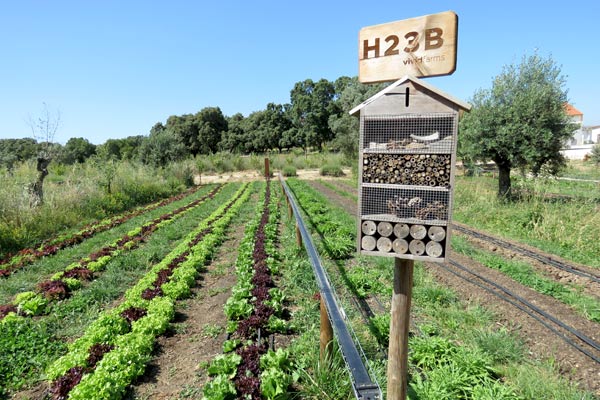
During the event, visits to two organic farms were organised. The first, Vivid Farm, is oriented towards biodynamic and regenerative agriculture. It operates a closed production cycle of diverse vegetable crops and seedling production for the farm, combined with cattle, horse and poultry rearing, compost, vermicompost and biochar production. The main objective is to promote regenerative agriculture, advocating the view that farmers play a crucial role in human health, because soil vitality is directly linked to the well-being of future generations. With a holistic approach, livestock management, science, design, medicine, gastronomy and art are integrated, encouraging consumers to reconnect with the origin of their food. The mission of the farm is to regenerate soils and promote sustainable practices for a healthier future.
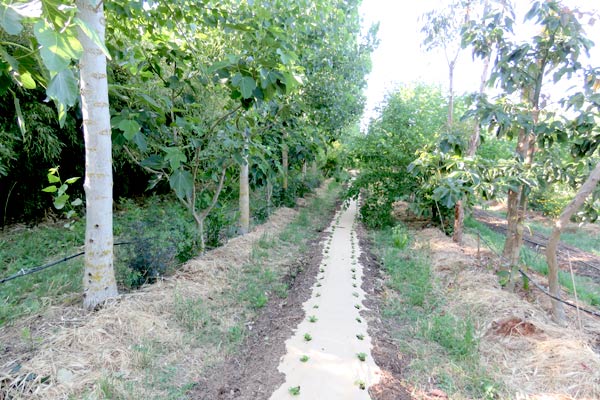
The second farm, Casa Mendes Gonçalves, is based on agroforestry technology, which combines the joint cultivation of tree, shrub, vegetable, spice and ornamental crops in symbiosis. It is an extremely interesting philosophy for crop cultivation. The farmer enthusiastically shared his experience, mistakes, results in this endeavour, as well as future ideas and vision for change.