

![MultipartFile resource [file_data]](/assets/img/articles/заглавна-реколта.jpg)
Long-term measures for adaptation and risk management in agriculture are necessary, with an active role for both farmers and the state.
Highlights:
- The sudden cold spells and weather changes in recent months have caused serious damage to some fruit trees, which will lead to higher fruit prices.
- Roman Rachkov: “In all likelihood, Bulgarian farmers who grow cherries, peaches and apricots will not have a harvest this year, or it will be in minimal quantities, and in any case they will also suffer serious financial losses.”
- Extreme climatic conditions require a rethinking of agricultural practices. According to agronomist Nadezhda Shopova, farmers need to adapt their choice of crops, the timing of sowing and planting, as well as use forecasting tools for risk management.
- Insurance of plantations can help in risk management.
- The state should encourage the creation of guarantee funds and adapt legislation to the new climatic realities.
- Consumers will also feel the effect of climatic anomalies through limited supply of local products and higher prices of imported fruit.
- Climate change is no longer an abstract risk – it directly affects the economy, the incomes of agricultural producers and prices for consumers.
We are witnessing increasingly frequent and abrupt changes in climatic conditions and winters of a new character, with frequent temperature swings between warmth and cold. An example of this is the current year – after an unusually warm winter, in March and April temperatures in the country dropped to significantly negative values. The result is severe frost damage to various crops, including apricots, cherries, plums and rapeseed.
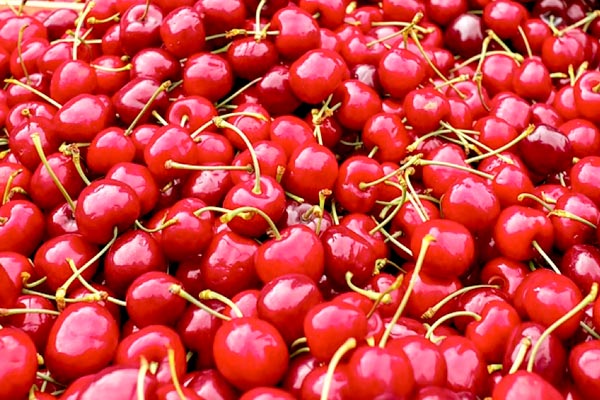
The abrupt weather changes caused serious damage to fruit trees such as cherries and apricots. Source
The damage to agriculture – one of the important sectors of the Bulgarian economy – is serious and will ultimately affect all of us. With reduced domestic production and higher prices, the effects of climatic extremes will be directly felt by consumers as well.
Producers suffer direct losses of yield and income, while consumers will face limited supply of local fruits and higher prices. Imports will cover part of the deficit, but at a significantly higher price, which means that for some households certain fruits may become unaffordable.
These events clearly show that climate change is no longer an abstract risk, but a reality with a direct impact on the economy and people’s well-being. Therefore, coordinated efforts are needed from all stakeholders in the sector – farmers, state institutions, insurers and other interested parties and organizations.
What has happened with the weather in recent months?
After the unusually warm weather in January, we recorded the coldest February since 2013, with winter conditions established over the entire country after mid-month. According to data from NIMH, in the period 16–24 February the maximum air temperatures fell below 0 °C, a phenomenon known as ice days. In many areas of Northeastern Bulgaria, a cold wave was recorded with at least 5 consecutive days with minimum air temperature below -10 °C. In the village of Glavinitsa, Silistra region, on 22 and 23 February the minimum temperature dropped below -20 °C. In the period 20–24 February, critical minimum temperatures were also recorded for fruit trees that had already come out of enforced dormancy, with values of about -19 °C in Kneja and Dragoman, and -21.6 °C in Dobrich.
For apricot in the Silistra agrometeorological station, frost damage had already been identified at that time. With the subsequent frosts below -3 °C on 20 March and 8 April in many areas, the damage increased.
There are still no comprehensive assessments of the damage; only partial data are available for private businesses and regions, but these extreme climatic conditions will certainly have a serious impact on agricultural production in the affected areas.
Nadezhda Shopova, agricultural engineer and assistant in the “Climate” section at the Institute for Research on Climate, Atmosphere and Water at the Bulgarian Academy of Sciences, and author at Climateka, comments on the topic.
„In principle, the coldest month is January, but this year this role fell to February. The negative temperatures caused damage, which was most severe in Northeastern Bulgaria, where apricot plantations are concentrated. Subsequently, frost occurred and on the eve of the first day of spring – 20 March, in some places the minimum temperatures were below -3 °C. This caused further damage already during flowering, and on 8 April the frosts again dropped to critical levels. It remains to be determined what percentage of flowers and fruit set have been damaged, as aid is paid in cases of 100% established frost damage. There was a wave of critical temperatures at different stages of development and under different conditions, the combination of which will determine the final percentage of damage.”
Crops such as rapeseed are particularly vulnerable to sudden cold spells if they are in a sensitive development stage during this period. Temperatures dropping to -6 °C are extremely low for April and can cause serious damage. Quite often, radiation-minimum values near the soil surface are even more drastic. In addition to early-developed rapeseed, risks also exist for already emerged sunflower, which may also be affected by sharp temperature drops, Shopova further comments.
Why do these cold spells and abrupt temperature changes have a devastating effect on fruit trees and other crops?
At the end of winter, plant metabolism begins to recover when the ambient temperature reaches a certain developmental threshold. The higher the temperature, the more intensive the development. Plants need a certain amount of heat to start their genetic development process, which is measured by the sum of effective temperatures – the difference between the ambient temperature and the plant’s developmental threshold temperature.
This indicator, related to phenology, characterizes the developmental stages of plants and is an indicator of their biological clock. Plants need heat in order to grow and develop, and in certain phases successive phenological events occur: leaf formation, flowering, fruit ripening, wilting. Plants, like insects, cannot maintain their own temperature and develop in line with seasonal temperature changes.
When winters are shorter and warmer, the heat required for the onset of flowering accumulates earlier, which increases the vulnerability and risk of damage from subsequent extreme cold spells, such as those observed this year.
How does this affect farmers?
Roman Rachkov, expert in agronomy and agriculture, Chairman of the Bulgarian Association for Biological Plant Protection and author at Climateka, comments on the topic:
“In all likelihood, Bulgarian farmers who grow cherries, peaches and apricots will not have a harvest this year, or it will be in minimal quantities, and in any case they will suffer serious financial losses.”
In such a situation, it is completely expected that agricultural producers will demand compensation from the state – as they are already doing.
“But what does this mean in practice? In order for such compensation to be paid, the funds will have to come from elsewhere – from the budget for education, culture, defence, pensions, roads or other public needs. And here lies the key question: should society bear the losses of private entities? In my opinion – no. Every farmer should assess the risks in the field in which they operate and take adequate measures. Among these, the insurance of permanent crops against realistically foreseeable natural risks must be mandatory. Farmers who take out loans, for example, are required to insure, but insurance is still not common practice in our country,” Rachkov further comments.

Insuring permanent crops against realistically foreseeable natural risks is advisable for farm managers. Source
According to Rachkov, if the state provides compensation in all such situations, we risk creating a practice where everyone starts seeking compensation, and certain groups – especially those of political importance to current or future governments – will actually receive it. This, however, distorts the principles of the free market, which we, as a society and state, claim to adhere to. If we follow this path, we will in practice shift the losses onto society, while leaving the benefits in private hands. Ultimately, anyone running a business should seek to anticipate and reduce potential risks to their activities.
Some insurers today still adhere to outdated, calendar-based methods regarding phenology and the period from which they begin to offer insurance. For example, starting the insurance campaign for permanent crops after 20 April, which, against the backdrop of the changing climate, is no longer appropriate today.
Here, the role of the state is to intervene legislatively in regulating the process, taking into account the real and current meteorological conditions, which are clearly changing under the influence of climate change.
An alternative or additional approach would be for the state to encourage agricultural producers to self-organize and create their own guarantee fund to cover possible future losses from similar events. This fund could include a minimal state contribution, as well as participation from insurers. But whatever model is chosen, it is clear that we cannot continue as before, Rachkov comments.
According to Nadezhda Shopova, when damage has already occurred, the possibilities for response are limited. For future risks, farmers can also use forecasting tools for frost and temperature fluctuations, for example, which are based on digital models and artificial intelligence (Tsenova et al., 2024). An advance 3-day forecast increases the time available for reaction and protection of the crop.
On the other hand, some agrochemical products can slow down growth, but at an advanced development stage they are no longer effective. Burning organic waste is possible for warming the plantations, but this method requires prior preparation. A similar case, but for protecting vineyards from frost, was reported not long ago in France as well.
It is also important for farmers to take into account the agroclimatic characteristics of the region, since in the case of excessively advanced seedlings and fruit trees, the measures may be insufficient. Rethinking the choice of crops and varieties, the timing of sowing and planting in the open, as well as early insurance, are key strategies for reducing risks in the future, Shopova comments.
On the other side of the equation stands the consumer.
According to Rachkov, there is no such thing as an empty spot on the market – demand will be met through imports. The problem is that imported fruit will reach consumers at a significantly higher price compared to domestic production. So high that for some Bulgarian households they may become entirely unaffordable.
The market principle is clear – „for example, in the case of cherries, when the price falls below 2 BGN, market demand rises significantly, because more people can afford them,“ comments Nadezhda Shopova.
In the future we will increasingly witness variable and unpredictable climatic conditions, and this is precisely why measures must be taken by various stakeholders. Farmers should take active measures for risk management – among them, insurance of plantations plays a key role. On the other hand, the role of insurers is also very important, as they can offer better insurance packages and products. The state can support this process through incentives and legislative initiatives, as well as by encouraging the creation of guarantee funds. At a broader level, a national strategy for adaptation to climate change in agriculture is also needed.
Source: Climateka
Sources used:
- https://bulletins.cfd.meteo.bg/bull/Buletin_NIMH_202502.pdf
- Agrometeorology Section
- https://bntnews.bg/news/predpazvat-lozyata-ot-izmrazvane-s-fakli-vav-franciya-1103365news.html
- https://horticulturejournal.usamv.ro/index.php/scientific-papers/issues?id=1492
- TSENOVA, B., GEORGIEVA V., DINEV, M. (2024). FROST EVENTS FORECAST USING MACHINE LEARNING IN BULGARIA. Scientific Papers. Series B, Horticulture. Vol. LXVIII, No. 1, 2024
- Latinov, L. (2001). The whims of the weather in Bulgaria during the 20th century, ISBN 954-550-005-0