

![MultipartFile resource [file_data]](/assets/img/articles/заглавна-овощни-април.jpg)
Frequent rainfall in April will create conditions for an increase in the infection background of a number of fungal diseases in fruit trees – blossom blight (early brown rot), scab, shot hole and others. Many of the pests on fruit plants – aphids, scale insects and others – have 2–3 or more generations, and infections by some diseases – apple and pear scab, powdery mildew, shot hole in stone fruits, brown rot, etc., depending on the rainfall, are repeated many times during the vegetation season.
To prevent strong development of diseases and pests, it is necessary to reduce to the possible minimum the populations of the first generation of the pests and to limit the primary infections of the diseases. This can be achieved through timely and well-organized control in April, when their development begins.
The protection of fruit plants during the season depends to the greatest extent on the effectiveness of plant protection activities carried out in April. For pests – plum sawfly and others, which develop one generation per year, and for diseases – red leaf spot and others without a secondary development cycle, plant protection measures in April completely resolve the issue of protecting fruit plants from them.
In April, more suitable conditions for carrying out plant protection spraying will occur at the beginning and end of the second ten-day period and during the second half of the third ten-day period.
During the first half of the third ten-day period, an increased probability of hail is forecast. Fruit trees affected by hail must be treated at the first opportunity with copper-containing fungicides to reduce the risk of secondary infections by pathogens.
In fruit nurseries
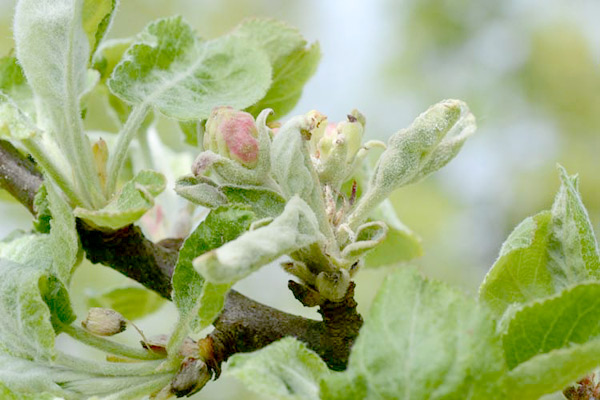
Powdery mildew on apple (Podosphaera leucotricha): powdery white fungal coating on young leaves and shoot tips
Removal of plants with unaccepted buds and budded plants affected by powdery mildew during the period of bud break in apple.
If it has not yet been done, apple, pear and quince rootstocks in mother plantations and apple and pear budded plants in nurseries are sprayed with a copper-containing product – 1% Bordeaux mixture, Funguran OH 50 WP – 150–250 g/da, Champion WP – 0.3%, Copper Key – 180–300 g/da against scab, grey leaf spot, brown leaf spot, fire blight, etc.
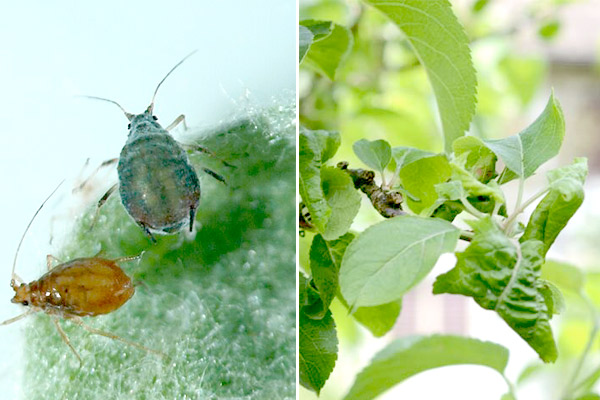
The rosy apple aphid (Dysaphis plantaginea), which in recent years has multiplied massively and is the main aphid on apples, causes curled, deformed leaves. In summer the aphids leave the apple tree. However, the symptoms remain visible for a long time.
Upon appearance of leaf-feeding caterpillars, aphids, woolly apple aphid, pear psylla, weevils, apple blossom weevil, an insecticide with active substance deltamethrin – Deka EC – 30–50 ml/da, Decis 100 EC – 7.5–12.5 ml/da, Delmur – 50 ml/da, Meteor – 0.06–0.09% is added to the fungicide.
Upon appearance of powdery mildew on apple and peach budded plants in nurseries, spraying is carried out with a product based on sulphur – Sulphur WG 600 g/da, Solfo 80 WG – 750 g/da or one of the products – Systane 20 EW – 0.03%, Luna Experience – 50–75 ml/da, Flint Max 75 WG – 0.02%.
At the first signs of blumeriella leaf spot (cylindrosporiosis) on the leaves of sour cherry and sweet cherry budded plants in nurseries and on sweet cherry and mahaleb rootstocks in seedbeds, spraying is carried out with Syllit 544 SC – 125 ml/da or Karamat 2.5 EW – 300 ml/da. When pest density exceeds the economic injury level (EIL), an insecticide with active substance deltamethrin – Deka EC – 30–50 ml/da, Decis 100 EC – 7.5–12.5 ml/da, Delmur – 50 ml/da, Meteor – 0.06–0.09% is added to the solution against leaf-feeding insects, aphids, stone fruit sawfly, weevils.
In fruit orchards
Shoots infected with powdery mildew that were missed during the winter pruning of apple trees are cut out. Buds infected late in the previous year, which outwardly almost do not differ from healthy ones and remain unnoticed during winter pruning, are also detected.
Apple trees marked in the previous year whose fruits suffer from cork spot are fertilized with borax (soil application – 2–3 kg/da or foliar – 0.25–0.5%) or another fertilizer rich in boron.
For control of the hairy and the stink beetle during flowering, blue sticky pheromone traps, blue plastic cans with the top cut off filled with water and vinegar and placed on the branches, and blue basins with water and vinegar in the inter-rows are set. If there is still a risk of crop failure, you may spray in the evening with a broad-spectrum contact insecticide – Sumicidin 5 EC (0.02%), Aficar 100 EC (15 ml/da), Efcymerin 10 EC (15 ml/da) or others.
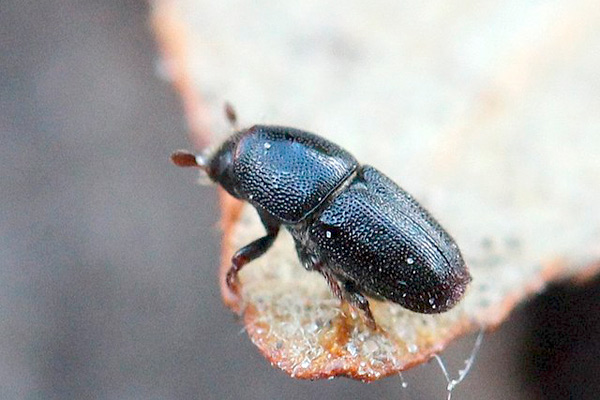
Small striped ambrosia beetle
Bark beetles have a relatively limited distribution as pests of fruit trees and are most often found in old, abandoned or physiologically weakened orchards, although they can also appear as primary pests even in nurseries.
For the control of bark beetles, the trunks and thick branches of fruit plants are treated with a contact broad-spectrum insecticide with longer residual effect – Decis 100 EC (7.5–12.5 ml/da), Karate Zeon 5 CS (15 ml/da), Sumi Alpha 5 EC (0.02%) or others. Chemical control can be carried out only against the adult females that leave the trunks. Two treatments are applied against each generation. Usually the second generation coincides with harvest time; therefore, measures are mainly focused on the first generation – especially in the case of the small ambrosia beetle.
Around the second ten-day period of the month, species-specific pheromone traps are placed, at a distance of 120–160 m from each other, to determine the beginning, peak and end of the flight of codling moth, plum fruit moth and oriental fruit moth.
If flowering of apricot orchards has not finished, they are treated against blossom blight (early brown rot) with one of the products – Score 250 EC (0.02–0.03%), Systane 20 EW (0.025–0.03%), Difcor 250 EC (20 ml/da), Chorus 50 WG (45–50 ml/da).
The first post-bloom spraying of apricots is carried out immediately after petal fall with a fungicide based on captan – Captan 80 WG (150–180 g/da), Merpan 80 WG (225 g/da), Scab 80 WG (180–210 g/da) against shot hole, brown rot, and with an insecticide with active substance deltamethrin – Deka EC – 30–50 ml/da, Decis 100 EC – 7.5–12.5 ml/da, Delmur – 50 ml/da, Meteor – 0.06–0.09% against weevils, peach twig borer, leaf-feeding caterpillars, flatheaded borer.
The second post-bloom spraying of apricots is carried out 10–12 days after the first with the same chemical agents against the same diseases and pests.
The third post-bloom spraying of apricot trees is carried out 10–12 days after the second with a captan-based fungicide – Captan 80 WG (150–180 g/da), Merpan 80 WG (225 g/da), Scab 80 WG (180–210 g/da) against shot hole, brown rot, gnomonia and with an insecticide with active substance deltamethrin – Deka EC – 30–50 ml/da, Decis 100 EC – 7.5–12.5 ml/da, Delmur – 50 ml/da, Meteor – 0.06–0.09% against Anarsia and oriental fruit moth and other insects.
Immediately after petal fall, peaches are sprayed with Captan 80 WG (150–180 g/da) or Merpan 80 WG (225 g/da) against shot hole and brown rot, and upon appearance of powdery mildew with one of the products – Sulphur WG (600 g/da), Solfo 80 WG (750 g/da), Difcor 250 SC (20 ml/da) and with an insecticide with active substance deltamethrin – Deka EC – 30–50 ml/da, Decis 100 EC – 7.5–12.5 ml/da, Delmur – 50 ml/da, Meteor – 0.06–0.09% against peach twig borer (Anarsia), aphids, leaf-feeding caterpillars, stone fruit sawfly.
The second post-bloom spraying of peaches is carried out 10–12 days after the first with the same chemical agents, against the same diseases and pests, as well as against oriental fruit moth. Spraying is also done against peach scab. There are no registered products, but Syllit 544 SC (165 ml/da) may be used. In areas where peach orchards are damaged by European red mite, one of the following products is added – Valmec (60–96 ml/da), Apache EW (100 ml/da), Naturalis (100–150 ml/da), Danitron 5 SC (100–200 ml/da).
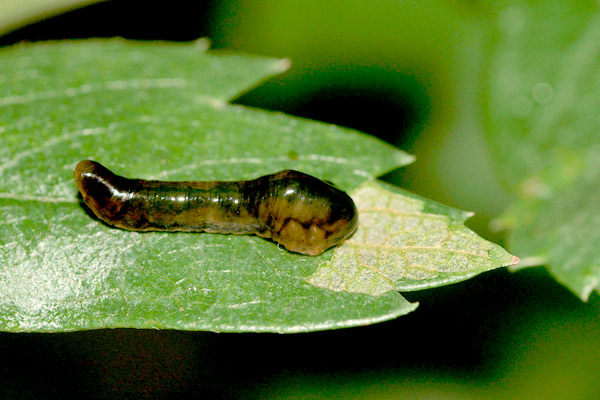
Cherry leaf sawfly
Immediately after petal fall, almond orchards are sprayed with a copper-containing fungicide – 1% Bordeaux mixture, Funguran OH 50 WP – 150–250 g/da, Champion WP – 0.3%, Copper Key – 180–300 g/da against shot hole, scab, cercospora leaf spot, orange leaf spot and with an insecticide with active substance deltamethrin – Deka EC – 30–50 ml/da, Decis 100 EC – 7.5–12.5 ml/da, Delmur – 50 ml/da, Meteor – 0.06–0.09% against almond leaf sawfly, leaf-feeding caterpillars, cherry leaf sawfly, stone fruit leaf sawfly, aphids and scale insects.
The second post-bloom spraying of almond orchards is carried out 10–12 days after the first with the same chemical agents against the same diseases and pests, as well as against scab.
Blossom spraying of plum trees against red leaf spot, brown rot and shot hole. There are no registered products against red leaf spot. Against shot hole and brown rot you may use Captan 80 WG (150–180 g/da), Merpan 80 WG (225 g/da) or Scab 80 WG (180–210 g/da), and against brown rot only – Score 250 EC (0.02–0.03%), Systane 20 EW (0.025–0.03%) or Difcor 250 EC (20 ml/da).
An inspection of 500 flowers (50 from each of 10 plum trees) is carried out to determine the level of damage by larvae of plum sawflies. When damage exceeds 5%, spraying is done with an insecticide with active substance deltamethrin – Deka EC – 30–50 ml/da, Decis 100 EC – 7.5–12.5 ml/da, Delmur – 50 ml/da, Meteor – 0.06–0.09%. In the presence of red leaf spot, Dithane M 45 (0.2%) is added to the solution.
The second post-bloom spraying of plum trees is carried out with Captan 80 WG (150–180 g/da), Merpan 80 WG (225 g/da) or Scab 80 WG (180–210 g/da) against red leaf spot, shot hole, brown rot and with an insecticide with active substance deltamethrin – Deka EC – 30–50 ml/da, Decis 100 EC – 7.5–12.5 ml/da, Delmur – 50 ml/da, Meteor – 0.06–0.09% against aphids, leaf-feeding caterpillars, caterpillars of plum fruit moth.
The third post-bloom spraying of plum orchards is carried out 8–15 days after the second with Sumi Alpha 5 EC (0.02%), Decis 100 EC (7.5–12.5 ml/da) or another product against plum fruit moth.
During flowering, seed fruit trees (pome fruits) are treated against fire blight with one of the following products – Scab 80 WG (188 g/da) or another captan-based product, Luna Care (300 g/da), Regalis Plus (125 g/da), Serenade ASO SC (400–800 ml/da).
Blossom spraying of apple and pear orchards is carried out when flowering is prolonged and the weather is favourable for development of scab. Apple cultivars highly susceptible to powdery mildew are obligatorily sprayed during flowering, since powdery mildew development is not influenced by meteorological conditions. You may treat with one of the following products – Chorus 50 WG – 30–50 g/da (against scab), Score 250 EC – 0.015–0.02% (scab and powdery mildew), Sulphur WG – 600 g/da (powdery mildew). Usually, during apple flowering, the majority of the overwintered eggs of European red mite hatch, therefore Naturalis (100–150 ml/da) is added to the solution.
At the beginning of flowering and during full bloom, quince trees are sprayed against fruitlet drop. There are no registered products, but Score 250 EC (0.03%) may be used. Spraying during full bloom also targets brown rot and brown leaf spot. It is carried out with captan-based fungicides – Captan 80 WG (150–180 g/da), Merpan 80 WG (225 g/da), Scab 80 WG (180–210 g/da).
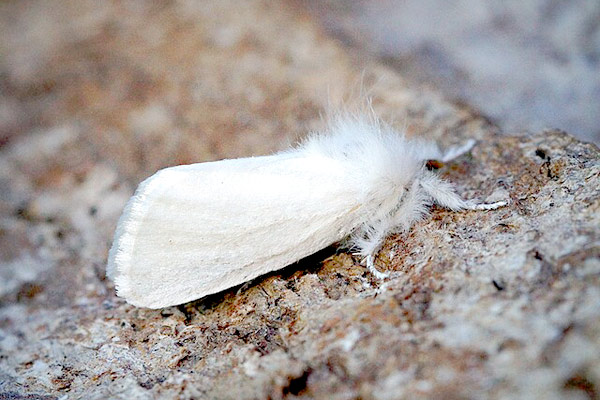
The brown-tail moth (Euproctis chrysorrhoea L.) is widespread throughout the country and its caterpillars damage almost all fruit trees and many forest species, but it prefers apple and pear. The butterflies appear at the end of June and fly until the end of July. The brown-tail moth has one generation per year. Its appearance is most often sudden, after many years of almost complete absence. In addition to chemical products, control can also be implemented with all approved bioproducts based on Bacillus thuringiensis.
The first post-bloom spraying of pear orchards is carried out immediately after petal fall with captan-based fungicides – Captan 80 WG (150–180 g/da), Merpan 80 WG (225 g/da), Scab 80 WG (180–210 g/da) for the control of scab, brown rot, grey and brown leaf spots and with an insecticide with active substance deltamethrin – Deka EC – 30–50 ml/da, Decis 100 EC – 7.5–12.5 ml/da, Delmur – 50 ml/da, Meteor – 0.06–0.09% against leaf-feeding caterpillars, pear fruit sawfly, pear psylla, aphids, scale insects.
Immediately after petal fall (first post-bloom), apple trees are treated with a fungicide based on captan – Captan 80 WG (150–180 g/da), Merpan 80 WG (225 g/da), Scab 80 WG (180–210 g/da) against scab and brown rot, with Sulphur WG (600 g/da) against powdery mildew and with a broad-spectrum pyrethroid insecticide such as Decis 100 EC (7.5–12.5 ml/da) against apple sawfly, aphids, leaf-feeding caterpillars, leaf-mining moths, codling moth, woolly apple aphid.
The second post-bloom spraying is carried out with the same products, upon recommendation of the Forecasting and Warning Service of the BFSA, 8–15 days after the beginning of the flight of the first generation codling moth butterflies has been established. Besides codling moth, it is also directed against leaf-feeding caterpillars, leaf-mining moths, San Jose scale, scab and brown rot.
The second post-bloom spraying of pear trees is carried out 10–12 days after the first with a fungicide based on captan – Captan 80 WG (150–180 g/da), Merpan 80 WG (225 g/da), Scab 80 WG (180–210 g/da) or Chorus 50 WG (0.05%) against scab, brown rot, white leaf spot, rust and with a broad-spectrum pyrethroid insecticide such as Decis 100 EC (7.5–12 ml/da) or Sumi Alpha 5 EC (0.02%) against pear fruit sawfly and others.
Towards the end of flowering, quince orchards are sprayed with Score 250 EC (0.03%) against fruitlet drop and with a captan-based fungicide – Captan 80 WG (150–180 g/da), Merpan 80 WG (225 g/da), Scab 80 WG (180–210 g/da) against brown leaf spot and other diseases.
The development of codling moth and plum fruit moth is monitored on material collected during the preceding year and kept in hanging cages in the orchards. Observations are also made on the development of cherry fruit fly on material left to overwinter in the soil under isolator frames.
In the crowns of trees in cherry orchards, yellow cards are hung to determine the beginning of the flight of cherry fruit fly and Mediterranean fruit fly, and homemade traps – a plastic bottle with an opening 4–6 mm in diameter made in its upper part and a bait poured at the bottom – apple vinegar and red wine in a ratio of 2:3 and 1–2 spoons of sugar or molasses. The cards and bottles are hung at different heights on the eastern, southern and western sides of the trees.
Post-bloom spraying of cherry and sour cherry orchards is carried out immediately after petal fall with Syllit 544 SC (125 ml/da) or Karamat 2.5 EW (300 ml/da) against blumeriella leaf spot (cylindrosporiosis), Captan 80 WG (150–180 g/da), Merpan 80 WG (225 g/da) or Scab 80 WG (180–210 g/da) against shot hole and brown rot, and with an insecticide with active substance deltamethrin – Deka EC – 30–50 ml/da, Decis 100 EC – 7.5–12.5 ml/da, Delmur – 50 ml/da, Meteor – 0.06–0.09% against weevils, aphids and scale insects, leafrollers, geometrid moths, cherry leaf sawfly, stone fruit leaf sawfly. The risk of blumeriella leaf spot arises with the appearance of the first leaves and continues almost throughout the entire vegetation period. Therefore, the protection of cherries from this disease depends to the greatest extent on the first 2–3 treatments.
The flight of almond seed wasp is monitored initially every other day and, after the first wasps emerge, every day. Observations are made in the morning. At the same time, observations are made for apple sawfly and plum sawflies.
The third post-bloom spraying of almond orchards is carried out 12–14 days after the second with a copper-containing fungicide – 1% Bordeaux mixture, Funguran OH 50 WP – 150–250 g/da, Champion WP – 0.3%, Copper Key – 180–300 g/da against shot hole, scab, cercospora leaf spot and with an insecticide with active substance deltamethrin – Deka EC – 30–50 ml/da, Decis 100 EC – 7.5–12.5 ml/da, Delmur – 50 ml/da, Meteor – 0.06–0.09% against almond leaf sawfly, almond seed wasp. The spraying coincides with the beginning of hatching of almond seed wasp.
Hazelnut orchards are sprayed immediately after flowering with products based on sulphur – Sulphur WG (500 g/da), Thiovit Jet 80 WG (500 g/da) for the control of powdery mildew.
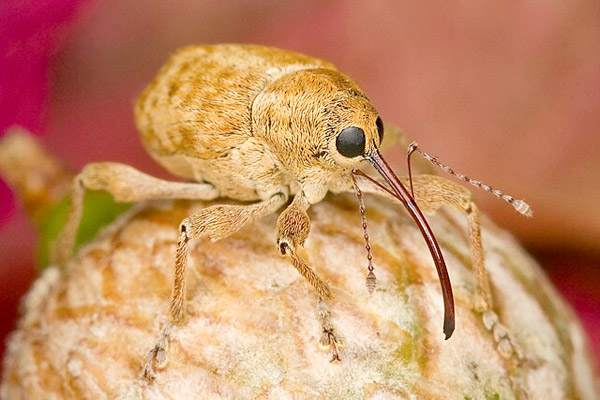
Hazelnut weevil
The second post-bloom spraying of hazelnut is carried out with a sulphur-based product – Sulphur WG (500 g/da), Thiovit Jet 80 WG (500 g/da) against powdery mildew and with Coragen 20 SC (18–30 ml/da) against hazelnut weevil.
The first post-bloom spraying of walnut trees is carried out upon appearance of aphids and spots of anthracnose or bacteriosis with a copper product against the diseases and with Closer 120 EC (20 ml/da) against aphids.
The first weed mapping in the orchards is carried out.
When soil herbicides have not been applied by the end of March or, despite their application, weeds are present, foliar herbicides are applied – when weeds reach a height of 20–30 cm. Sprayers with protective devices are used for spraying.
In strawberry plantations
Strawberry plantations are inspected for strawberry mite. Before flowering, strawberry plants are sprayed against it with Valmec (60–96 ml/da).
At the beginning of growth, strawberry plants are treated with 1% Bordeaux mixture against white and purple-brown leaf spots, with Sulphur WG (500 g/da) or Thiovit Jet 80 WG (500 g/da) against powdery mildew and with Meteor (0.06–0.09%) against strawberry stem weevil and strawberry blossom weevil, Decis 100 EC (7.5–12.5 ml/da) against aphids, Bermectin (15–100 ml/da) against mites.
At the beginning of flowering, strawberry plants are sprayed with Signum (75 g/da) against grey mould, white and purple-brown leaf spots, powdery mildew and with Bermectin (15–100 ml/da) against strawberry mite.
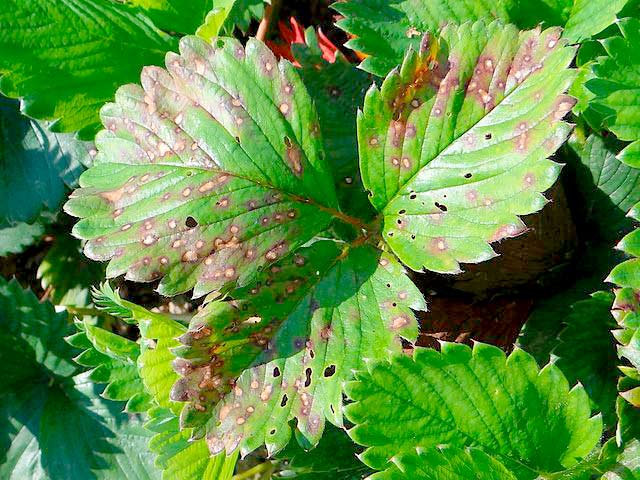
White leaf spots on strawberry
During flowering, strawberry plantations are sprayed with Signum (75 g/da) against grey mould, white leaf spot, red leaf spot and with Sulphur WG (500 g/da) or Thiovit Jet 80 WG (500 g/da) against powdery mildew and with one of the products – Sumicidin 5 EC (0.02%), Aficar 100 EC (15 ml/da), Efcymerin 10 EC (15 ml/da) against hairy beetle.
Strawberry plantations are covered with straw or polyethylene sheeting to protect against late spring frosts, which cause the disease “black eye”.
In raspberry plantations
Five to ten cages are placed on raspberry canes for monitoring the development of raspberry gall midge.
When the shoots reach a height of 30–40 cm, raspberries are treated with Signum (100 g/da) for the control of didymella, coniothyrium, rust, anthracnose, leaf spots and with Decis 100 EC (7.5–12.5 ml/da) against raspberry moth, aphids, leaf-feeding caterpillars and with Bermectin (15–100 ml/da) against raspberry mite and two-spotted spider mite.
The flight of raspberry cane midge is monitored.
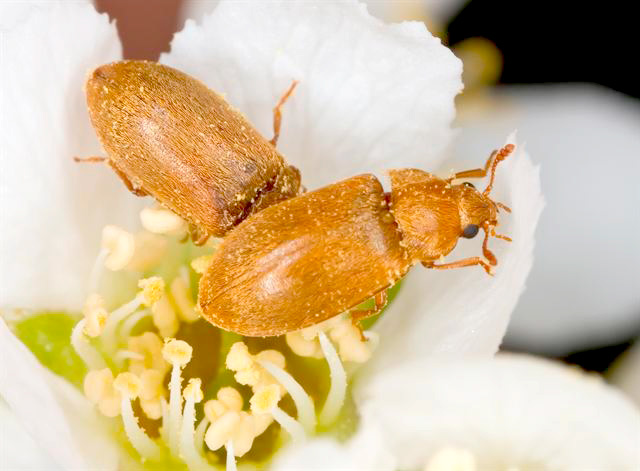
Immediately before flowering, raspberry and blackberry plantations are sprayed with Signum (100 g/da) against rust, coniothyrium, didymella, anthracnose, leaf spots and with Decis 100 EC (7.5–12.5 ml/da) against raspberry cane midge, raspberry beetle and others.
Raspberry semi-shrubs heavily infested with leaf spots are sprayed at flowering with Signum (100 g/da).
In blackcurrant plantations
Blackcurrant plantations are treated before bud burst of fruit buds with a copper product – 1% Bordeaux mixture, Funguran OH 50 WP (150–250 g/da), Champion WP (0.3%), Copper Key (180–300 g/da) or Syllit 544 SC (125 ml/da) for the control of anthracnose and leaf spots, with Topaz 100 EC (0.05%) against American powdery mildew and with Mospilan 20 SG (25 g/da) against aphids, Bermectin (15–100 ml/da) against mites.
The first post-bloom spraying of blackcurrant bushes is carried out immediately after petal fall with Sulphur WG (500 g/da) against powdery mildew, with Syllit 544 SC (125 ml/da) against anthracnose and leaf spots and with one of the products – Decis 100 EC (7.5–12.5 ml/da), Karate Zeon 5 CS (15 ml/da), Sumi Alpha 5 EC (0.02%), Aficar 100 EC (15 ml/da), Efcymerin 10 EC (15 ml/da) against currant clearwing moth and gooseberry sawfly. Spraying must coincide with the emergence of the first clearwing moth butterflies.