

![MultipartFile resource [file_data]](/assets/img/articles/заглавна-хининово-дърво.jpg)
The International Plant Appreciation Day, held every year on 13 April, is a day dedicated to acknowledging the incredible diversity, beauty and importance of plants. As the foundation of life on Earth, plants provide oxygen, nutrients and various other essential resources. They not only help sustain our ecosystems, but also bring joy and inspiration into our lives through their beautiful colours and forms.
The International Day is an initiative of botanists, gardeners and environmental enthusiasts, whose aim is to raise awareness of the importance of plants in our lives. It is a day dedicated to the relationship between nature and the world’s flora.
Over the years, the popularity of this day has grown, with millions of people around the world now participating in various plant-related events and activities.
Wardian cases that forever changed the world of plants
Since the emergence of ancient civilizations, people have been fascinated by plants. Numerous archaeological sites show evidence of plant species grown in pots, and drawings in Egyptian tombs from the 16th century contain some of the earliest evidence of ornamental gardening and landscape design.
Colonization in the 17th century contributed to the development of horticulture in Europe. Travelling explorers returned to the Old Continent with green treasures. Thus, along with cultivated plants coming from foreign lands, tropical plants from North America, Asia, Australia and Africa were introduced into countries such as the United Kingdom. Exotic plants gained such popularity that people from various fields began inventing interesting gardening devices. This is how the “Wardian case”, the first miniature greenhouse, ideal for growing and transporting plants, was invented by the London physician Nathaniel Bagshaw Ward in the 1830s and had an enormous impact at the time. Ward’s invention enabled the British to easily transport plants and forever changed the way they are cultivated around the world.
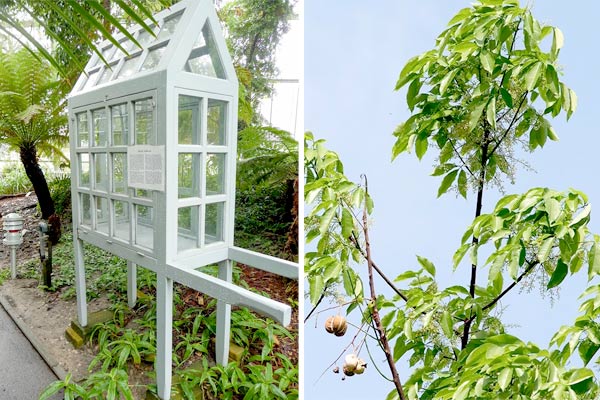
Wardian case – Hortus Botanicus – Amsterdam and rubber tree
Interestingly, Ward’s miniature greenhouses, besides introducing the successful transportation of plants from one continent to another, actually changed the original habitus of plant species and were at the core of important agricultural, economic and political processes.
In the 1840s, Robert Fortune used the British doctor’s device to send 20,000 tea plants to British India, smuggling them out of Shanghai, China, to lay the foundations of the tea plantations in Assam. In 1860, Clements Markham used Wardian cases and again illegally exported seeds of the cinchona tree from South America. The invention completely destroyed the Brazilian rubber industry when it was successfully transported to the new British territories in Malaya, marking the beginning of rubber plantations in Sri Lanka.