

![MultipartFile resource [file_data]](/assets/img/articles/заглавна-аграрен.jpg)
On 16 January 1896, Tsar Ferdinand issued a decree promulgating the Law on Combating Phylloxera in Vines. This event marked the beginning of state-organized plant protection in our country.
Under the motto “Protect plants – preserve life” a scientific conference was held as part of the celebration dedicated to the professional holiday of plant protection agronomists in Bulgaria, hosted by the Agricultural University, which is marking its 80th anniversary this year.
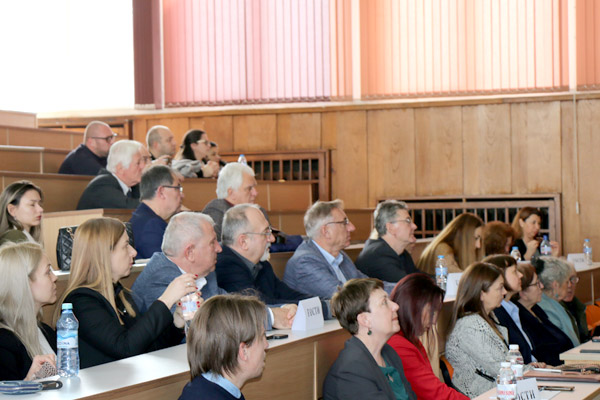
Photo © Agricultural University – Plovdiv
The emblematic Hall No. 7 of the Faculty of Plant Protection and Agroecology in Plovdiv brought together a diverse audience. Distinguished scientists, lecturers, administrators, agronomists, business representatives and students were present. The celebration was also honoured by two former Ministers of Agriculture and Forests – Prof. Hristo Bozukov and Prof. Dimitar Grekov.
An address to the distinguished audience in the hall was delivered by Assoc. Prof. Boriana Ivanova, PhD, Rector of the Agricultural University in Plovdiv.
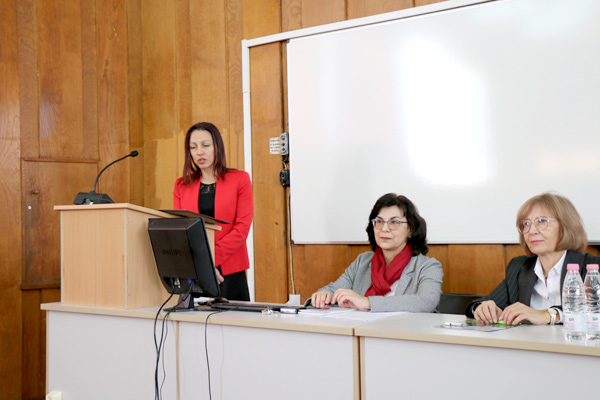
Assoc. Prof. Boriana Ivanova, PhD, Rector of the Agricultural University in Plovdiv, Neli Yordanova – Director General of ARIB (Plant Protection Industry Association – Bulgaria) and Assoc. Prof. Yordanka Kartalska, PhD, Dean of the Faculty of Plant Protection and Agroecology, photo © Agricultural University – Plovdiv
Today, stated Assoc. Prof. Ivanova, global agriculture determines the fate of humanity. In conditions of an uncertain and changing climatic and phytosanitary environment, when the planet’s population is approaching 9 billion and arable land is decreasing, agriculture is faced with an unavoidable dilemma – it must produce sustainably and reliably high-quality produce at reasonable prices. In this global mission, plant protection agronomists have a key role in maintaining the health status of plants within the complex mechanism of the food chain.
Bulgarian agricultural science, Bulgarian agricultural education and Bulgarian agronomists, graduates of the Faculty of Plant Protection and Agroecology, are actively participating in the third “green revolution” that is underway on the Old Continent. This large-scale transformation includes radical changes in the philosophy of plant protection. New ideas, technological breakthroughs and strategies for compliance with high environmental and health standards are being generated.
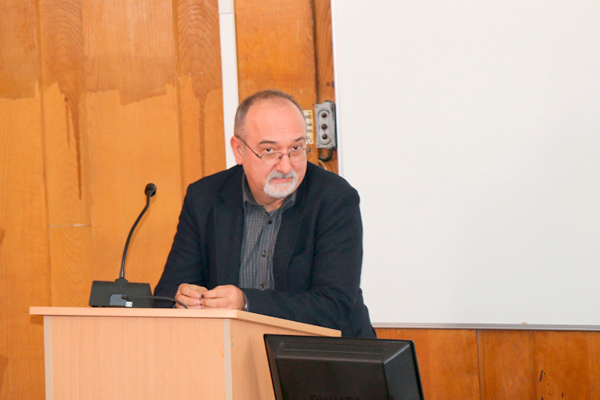
Prof. Rumen Tomov, PhD, Dean of the Faculty of Agronomy at the University of Forestry, Sofia, photo © Agricultural University – Plovdiv
Greetings on the occasion of the holiday were also extended by some of the official guests of the event, among them Prof. Rumen Tomov, PhD, Dean of the Faculty of Agronomy at the University of Forestry, Sofia, Assoc. Prof. Petar Nikolov from the Bulgarian Association for Plant Protection, Bozhidar Petkov from the Association for Biological Plant Protection and Organic Fertilization, and Neli Yordanova, Director of the Plant Protection Industry Association Bulgaria.
In the information format that follows, we publish brief excerpts from the thematic reports presented at the scientific conference. Their authors have agreed to provide our readers with details on the respective topics related to the new EU regulations in plant protection.
Assoc. Prof. Yordanka Kartalska, PhD, Dean of the Faculty of Plant Protection and Agroecology
Topic: “Application of beneficial microorganisms in plant protection”
The EU “Green Deal” envisages that by 2030 chemical products in plant protection in the Community will be reduced by 50%. The alternative? Biopesticides based on microorganisms – bacteria, viruses, yeasts, biochemical products (e.g. potassium carbonate), SMC – synthetic microbial communities. In this regard, a new EU Regulation – 1438/22 – is in force. The difference between chemical products and biopesticides has been defined. One of the key objectives of the new Regulation is for biopesticides to reach markets more quickly and for the risks associated with their use to be minimized.
Prof. Rumen Tomov, PhD, Dean of the Faculty of Agronomy at the University of Forestry in Sofia.
Topic: Invasive invertebrate species threatening agriculture between two EU Regulations: Regulation (EU) No 1143/2014 on invasive alien species and Regulation (EU) No 2031/2016 on quarantine pests
Agriculture is a major factor in the movement of agricultural and ornamental plants, pests, beneficial organisms and microbial bioagents. A clear definition of movement: release (escape from a controlled environment), transport of contaminated goods, transport of accidentally introduced organisms. Motorways are a major source of the spread of invasive pests (seeds, pathogens, pests).
It is important to be aware of future threats and their early detection:
New Zealand flatworm. A predator that feeds on other worms – primarily the earthworm, which is particularly important for agriculture!
How is it spread? Through soil, bulbs, seedlings.
Invasive ants:
Red imported fire ant – aggressive. It also attacks humans upon contact. It has been recorded in Italy – Sicily. It damages vegetable crops and ornamental plants. According to entomologists, this pest will prove to be both invasive and quarantine-relevant at the same time.
Tropical fire ant – “detected” in the Netherlands. In other words: we can expect it in Bulgaria!
Black imported fire ant
Little fire ant – one of the 100 most dangerous invasive species in the world. It has been observed in southern France.
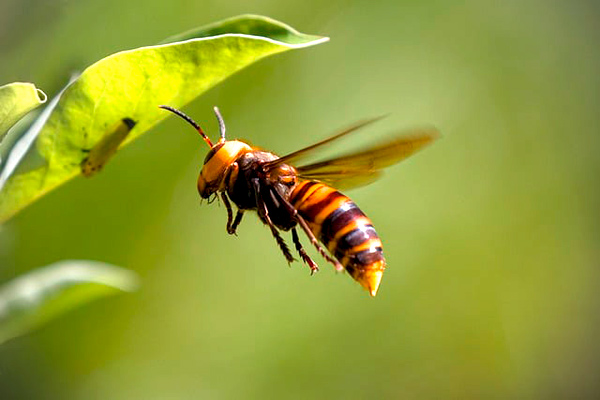
Asian hornet – kills bees! In 2024 it was found in the Czech Republic. Forecast: it may be introduced with goods that are not subject to phytosanitary control.
Invasive species, whose activity and unpredictability increase with global climate change, are the subject of study in the so-called citizen science.
Francesca Idrau, Director General of ARIG (Plant Protection Industry Association – Greece) and Neli Yordanova – Director General of ARIB (Plant Protection Industry Association – Bulgaria)
Topic: An innovative digital tool in support of the new EU legislation and modern agriculture.
A new Regulation on the labelling of plant protection products (PPPs) is to be introduced, which will replace Regulation (EU) No 547/2011. The draft of the new Regulation has already been prepared and will be discussed on 3 February 2025. Its introduction is planned for 1 January 2026.
CropLife Europe (the European Crop Protection Association) is concerned that analogue labels do not provide sufficient clarity, that the colour scheme of the labels is difficult to understand, and that the pictogram for bee hazard/safety is also problematic.
At the beginning of April 2024, the European Crop Protection Association (CropLife Europe) announced the launch of AgriGuide, an innovative digital tool designed to optimize data collection for conventional and biopesticides. Sponsored by CropLife Europe, the tool aims to simplify the complex regulations faced by farmers, reduce the administrative burden and improve the safety and environmental sustainability of agricultural production.
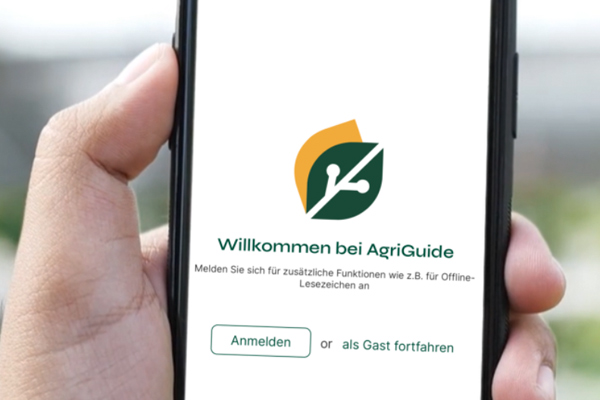
The pilot platform is being introduced first in Germany, Italy and Romania. The goal is for AgriGuide to be implemented in all EU countries. To this end, the 27 Member States are grouped into clusters formed on the basis of the intensity level of agricultural production, its profile, mentality and other factors. Bulgaria is in a group with Greece, Cyprus, Slovenia and Croatia. Each country forms a working group and appoints a national coordinator. ARIB is the Bulgarian coordinator.
The new plant protection application “AgriGuide” includes a smartphone app and a web application. Thus, AgriGuide brings together all the information that farmers need to know for the correct and sustainable use of plant protection products.
Digitalization in plant protection will be part of a pan-European database that will enable farmers to apply plant protection products safely and in compliance with legal requirements, without having to search for documents and regulations in the field.
Here is how AgriGuide works: In the first phase, farmers will receive all the necessary information on the application of plant protection by scanning the product label. AgriGuide will then provide them with application instructions specific to the crop they are growing. The user receives information on the conditions under which the selected plant protection product may be applied to their specific field. In addition, AgriGuide will in future maintain data on the use of plant protection products, thereby supporting the “electronic recording” of the use of plant protection products required by the European Commission. For this purpose, interoperability with farm management information systems (FMIS) and machinery must be ensured via an interface. All collected data, however, remain the property of the farmer. AgriGuide is free to use and will be available to anyone interested from next year. From 2025, the AgriGuide app and web tool will be available to all farmers in Germany.