

![MultipartFile resource [file_data]](/assets/img/articles/заглавна-календар-януари-1.jpg)
In January, agrometeorological conditions will be determined by dynamic weather, with alternating periods of above-normal, near-normal and below-normal temperatures. During the month, the expected precipitation, around and above the climatic norms, will increase the moisture reserves in the two-metre soil layer as well. The precipitation in December, which in many parts of the country exceeded the monthly norm by two times, sharply increased the soil moisture reserves.
In January, more favourable conditions for carrying out pruning in fruit orchards will occur at the beginning of the month, at the end of the second and during the first half of the third ten-day period.
Agrotechnical activities
In fruit orchards
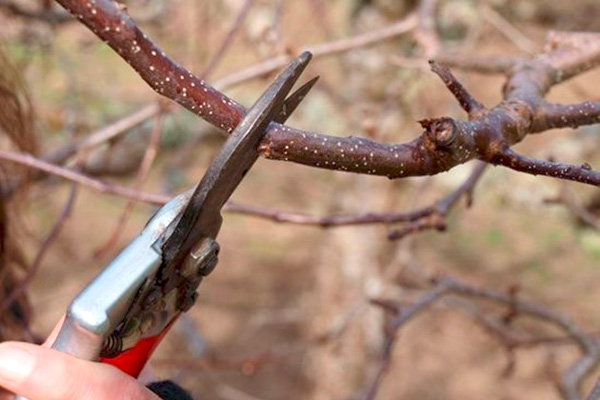
Work on mechanized contour and manual pruning in apple and pear orchards continues.
In fruit storage facilities, compliance with the storage regime is monitored. Work on the repair of old and construction of new supporting structures continues and the transport and spreading of farmyard manure in the orchards begins, if weather conditions allow.
Scion wood for spring grafting is collected.
Care is taken to protect the seeds set for stratification, and the area for planting new fruit orchards is determined.
In strawberry plantations
The soil around the strawberry plants planted in autumn, which have become elongated due to sharp temperature fluctuations and lack of snow, is compacted.
Greenhouses for forced production of strawberry fruits begin to be heated.
Plastic tunnels for early strawberry production are constructed.
In raspberry plantations
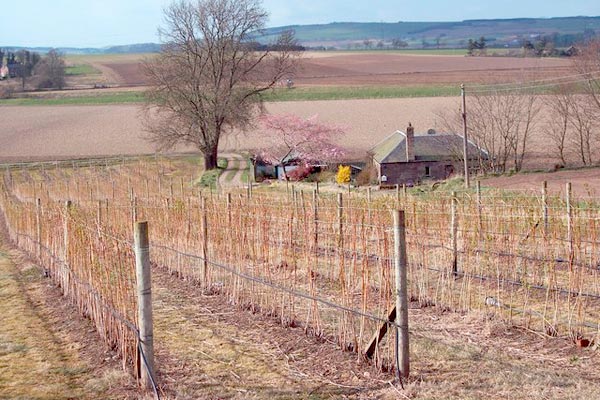
New supporting structures are built and the old ones are repaired.
To protect young plants from being heaved out of the soil, the soil around them is compacted, and, where possible, they are earthed up to about 10 cm above the root collar.
In blackcurrant plantations
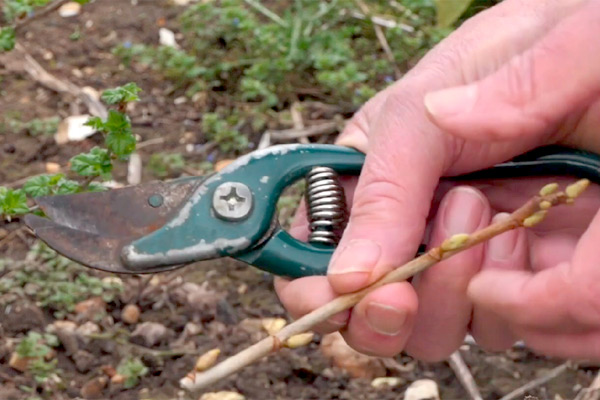
Pruning for fruiting and collection of cuttings continues. Care is taken to preserve rooted plants intended for spring planting. The rooting beds are inspected and, in case of risk of heaving and winterkill, the soil around the plants is compacted. Particular attention is paid to preventing fruits in storage facilities from overheating. The needs for mineral fertilizers are determined and, where possible, the necessary quantities for spring fertilization are provided.
In plantations with other crops
Collection of cuttings from actinidia, chokeberry, pomegranate, sea buckthorn and fig continues. Collection of seeds from actinidia continues, and they are placed for stratification. Seeds of Caucasian persimmon subjected to stratification are regularly moistened; they will be used as rootstock for Japanese persimmon. Chokeberry seeds are cleaned from the fleshy part, thoroughly washed and placed for stratification in cellar premises with clean river sand. Construction of the wire trellis in actinidia plantations continues.
Plant protection measures
Winter spraying of woody species and small fruits may be carried out. The results of winter spraying are good when the solutions are applied in the form of large droplets and all parts of the woody and small fruit species are covered with solution. For woody species, this is achieved by applying 100–150 dm3 of solution per decare with powerful sprayers in calm weather.
For woody species:
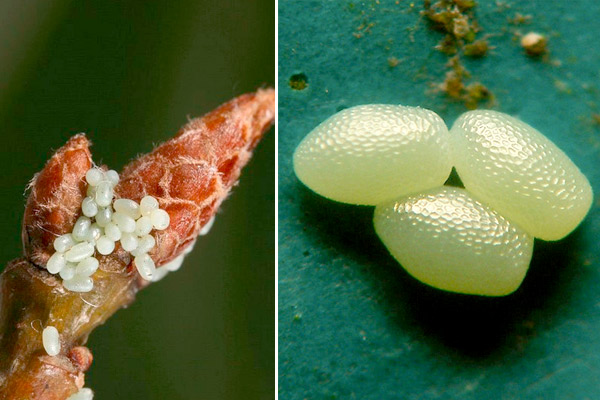
Eggs of the small winter moth. The small winter moth (Operophtera brumata) is widespread in our country and is one of the frequently multiplying defoliating pests. When no control is carried out against it, it causes serious damage to fruit trees. In addition to all fruit species, it also attacks many forest and annual plants.
Spraying is carried out with a 3% solution of Para Zomer or Acarzin against scale insects and aphids, psyllids, woolly apple aphid, eggs of winter moths, mites, pupae of the leaf-mining moth, etc., which overwinter on the trunks and in the crowns of trees. Spraying is carried out only when the population density of some of the pests is above the economic threshold of harmfulness.
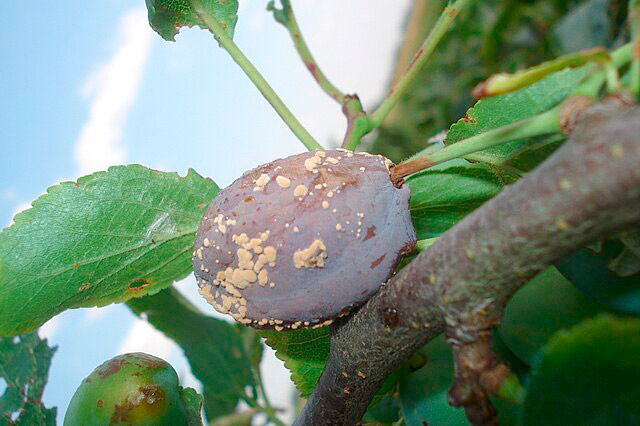
Brown rot
Spraying is carried out with a 2% Bordeaux mixture or other copper-based products against plum pockets on plum trees, fire blight on pome fruit species, peach leaf curl, shot-hole disease on stone fruits, brown rot, bacterial canker, fallen leaves to destroy overwintering inoculum of apple and pear scab, red leaf spot on plum, anthracnose on walnut, Cercospora leaf spot and scab on almond.
For small fruits:
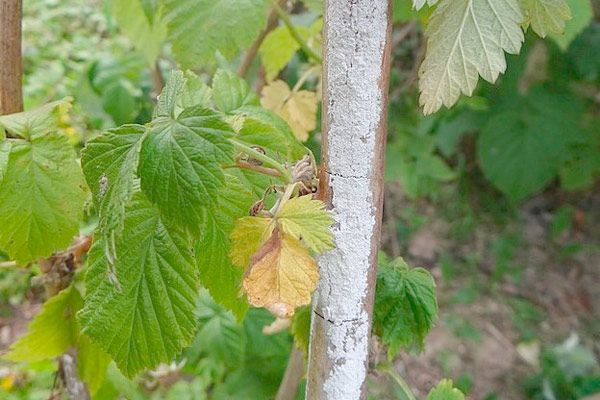
Didymella on raspberry
Against Didymella, Coniothyrium, anthracnose, grey mould, white leaf spots and red leaf spots on strawberry (if not carried out after harvest), and leaf spots on raspberry, treatment is carried out with a 1% Bordeaux mixture or other copper-based products, and the fallen leaves are also sprayed.
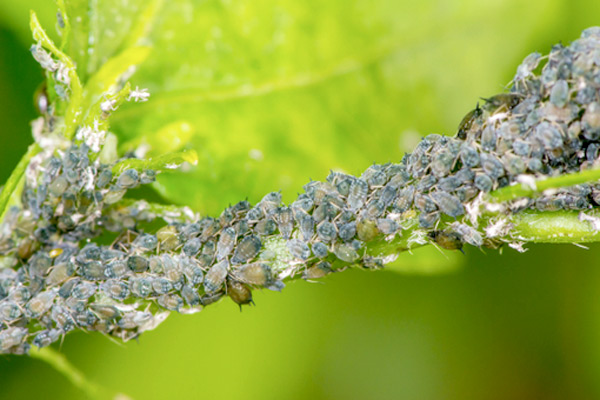
The California red scale (Quadraspidiotus perniciosus) is a quarantine pest and is distributed only in some regions of Bulgaria.
Against California red scale on small fruits, treatment is carried out with a 3% solution of Para Zomer or Acarzin.
Repair of orchard machinery, irrigation equipment, sprayers and dusters, etc. continues. Care is taken to protect plant protection products from moisture; the necessary quantities are purchased and arranged in warehouses. Entomological cages, frames, isolators and light traps are made. Yellow sticky cards and other materials necessary for forecasting plant protection measures against economically important pests of fruit crops are supplied.
New poisoned baits against mice are placed in trenches for fruit planting material.
Varieties for planting new orchards are selected.
More on the topic: