

![MultipartFile resource [file_data]](/assets/img/articles/заглавна-нешев-пшеница.jpg)
Summary
Weeds suppress the growth and development of wheat to a varying degree depending on how long they are in competition with the crop, species composition, density, etc. It has been established that uncontrolled broadleaf weeds (wild mustard and corn chamomile) suppress the growth and development of wheat to a greater extent compared to uncontrolled grass weeds (wild oat and ryegrass). An even more serious negative impact is exerted by the mixed weed association of the four weed species in the wheat stand.
Weed species infesting wheat crops:
Weeds, also called “the green enemy of man”, cause major damage to agricultural production every year. According to FAO data, of the total global losses caused by pests on cultivated plants, weeds account for 35% of losses in wheat, compared to 28% in vegetables and 29% in fruit crops and vineyards (Spasov et al., 1999).
The diversity of weeds in wheat crops is great and the number of species infesting them is very large. Some of them belong to the group of winter-annual weeds, and others – to early spring weeds and ephemerals. In recent years, the predominant species in weed associations in wheat have been winter-annual weeds, which emerge and develop under sufficient moisture during the autumn-winter period. When the weather warms up in winter, the emergence of early spring weeds occurs significantly earlier. Problematic and dangerous for wheat are some annual weeds such as: corn chamomile, wild mustard, wild poppy, Delphinium spp., cleavers (Galium aparine), mayweed, Chenopodium spp., tall oatgrass, field fescue, wild oat, ryegrass, etc. At high density of these species, which mainly emerge in the autumn, wheat plants slow down their growth and development and stands do not achieve optimal tillering (Tonev et al., 2008).
Trial to determine the effect of uncontrolled grass or broadleaf weeds, as well as a mixed weed association, on certain growth and reproductive traits of wheat, cv. “Enola”, conducted at the Agricultural University during 2021/2022 and 2022/2023
The experiment was carried out at the experimental field of the Department of "Agriculture and Herbology" at the Agricultural University – Plovdiv during two wheat growing seasons – 2021/2022 and 2022/2023. To determine the effect of uncontrolled grass or broadleaf weeds, as well as a mixed weed association, on certain growth and reproductive traits of wheat, cv. “Enola”, the following variants were tested:
1. Untreated control
2. Axial (50 g/l pinoxaden) – 90 ml/da;
3. Derby Super (150 g/kg florasulam + 300 g/kg aminopyralid) – 3,3 g/da;
4. Axial One (45 g/l pinoxaden + 5 g/l florasulam) – 100 ml/da.
The herbicides were applied at the end of tillering (BBCH 29-30). The efficacy of the tested products was assessed against the following weed species present at different and high densities:
- wild oat (Avena fatua L.) – 32 plants/m2 in 2022 and 37 plants/m2 in 2023;
- ryegrass (Lolium rigidum Gaud.) – 35 plants/m2 in 2022 and 30 plants/m2 in 2023.
- wild mustard (Sinapis arvensis L.) – 41 plants/m2 in 2022 and 36 plants/m2 in 2023;
- corn chamomile (Anthemis arvensis L.) – 55 plants/m2 in 2022 and 46 plants/m2 in 2023;
Herbicide efficacy was assessed in percent using the 10-grade EWRS scale on the 14th, 28th and 56th day after treatment according to Zhelyazkov et al. 2017.
The following wheat parameters were recorded:
- plant height at the end of the growing season (cm).
- wheat spike length (cm).
- wheat grain yield (kg/da) – by harvesting the entire experimental plot with a plot combine harvester by Wintersteiger®.
- thousand kernel weight (Tonev et al., 2018).
- test weight of the seed (Tonev et al., 2018).
The preceding crop for wheat was winter oilseed rape (Brassica napus L., hybrid INV 1266), grown using Clearfield® technology.
Soil tillage prior to wheat sowing consisted of deep ploughing followed by discing and harrowing. Before sowing, fertilization with 30 kg/da NPK 15:15:15 was carried out, and in spring an additional fertilization with 30 kg/da NH4NO3 was applied.
Results:
Efficacy of herbicide products against weeds
The results for the efficacy of the herbicide products are presented in 4 tables. Efficacy against all weeds is lower on the first assessment date and increases by the third assessment date. Table 1 presents the efficacy of the herbicide products against wild mustard, averaged over the two years of the trial.
On the 14th day after treatment, high efficacy was established for Derby Super – 3.3 g/da and Axial One – 100 ml/da. On the next assessment date, efficacy increased. On the 56th day after treatment, efficacy against wild mustard reached 100% with Derby Super and Axial One.
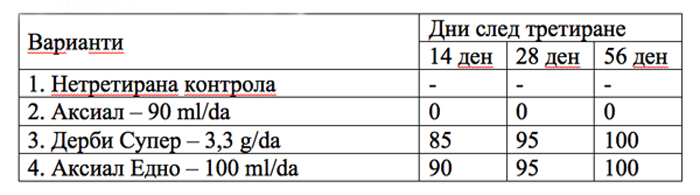
Table 1. Efficacy of the tested herbicides against wild mustard, % (Average for the two trial years)
Average data for the period on the efficacy of the tested herbicides against corn chamomile are presented in Table 2. On the 14th day after treatment, efficacy is higher with Derby Super – 3.3 g/da and slightly lower with Axial One – 100 ml/da. On the 56th day after treatment, efficacy against corn chamomile reaches 100% with both herbicides.
For the weeds wild mustard and corn chamomile, the efficacy of Axial is 0%, since the active substance of the product controls only grass weed species.
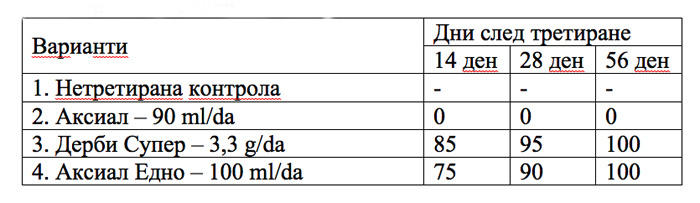
Table 2. Efficacy of the tested herbicides against corn chamomile, % (Average for the two trial years)
The efficacy of the herbicides against wild oat is presented in Table 3. On the 14th day after treatment, 70% efficacy was established with Axial – 90 ml/da and 65% efficacy with Axial One – 100 ml/da. On the 56th day after treatment, averaged over the trial conditions, efficacy against wild oat reached 100% with Axial and Axial One.
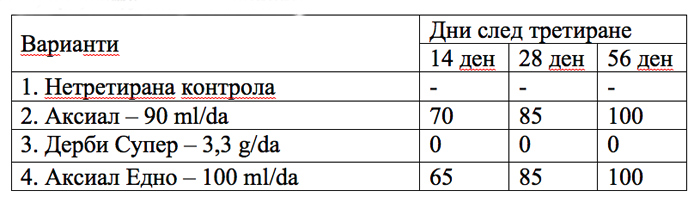
Table 3. Efficacy of the tested herbicides against wild oat, %
(Average for the two trial years)
The average efficacy of the herbicides against ryegrass is presented in Table 4. On the 56th day after treatment, efficacy against ryegrass reached 100% with Axial and Axial One.
The efficacy of the herbicide Derby Super – 3.3 g/da against ryegrass and wild oat is 0%, since the active substances of the product control only broadleaf weed species.

Table 4. Efficacy of the tested herbicides against ryegrass, %
(Average for the two trial years)
Biometric indicators in wheat
Table 5 shows the results relating to plant height at the end of the growing season. All variants in which herbicide treatment against weeds was carried out have higher values for plant height. The tallest plants were measured in variant 4 (Axial One – 100 ml/da). The shortest plants were recorded in the control, followed by those in variant 2 (Axial – 90 ml/da), where only grass weeds were controlled.
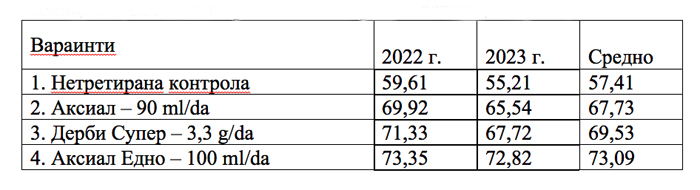
Table 5. Plant height at the end of the growing season, cm
The results established for the length of a wheat spike at the end of the growing season are presented in Table 6. All variants in which herbicide treatment against weeds was carried out have longer spikes. The longest spikes were measured in plants from variant 4 (Axial One – 100 ml/da), and the shortest in the control – 9,10 cm on average under the trial conditions.
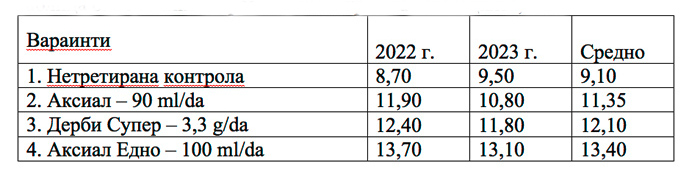
Table 6. Plant height at the end of the growing season, cm
Plant productivity
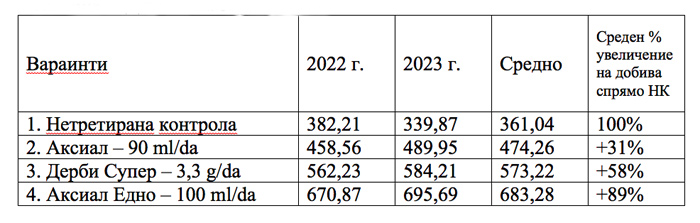
Table 7. Grain yields, kg/da
Table 7 presents the results for wheat grain yields in kilograms per decare.
As with all the above-mentioned indicators, all variants in which herbicide treatment against weeds was carried out show higher results. The highest average yields were obtained in variant 4 (Axial One – 100 ml/da). In this variant, an 89% increase in yield was achieved compared to the untreated control, where yields were the lowest. In variant 2 (Axial – 90 ml/da), where only grass weeds were controlled, the yield increase compared to the control was 31%, and in variant 3 (Derby Super – 3.3 g/da), where only broadleaf weeds were controlled, the percentage increase in yield compared to the control was relatively higher – 58%.
Table 8 presents the results relating to thousand kernel weight. All variants in which chemical weed control was carried out have higher values for thousand kernel weight. On average, the highest thousand kernel weight was recorded in variant 4 (Axial One – 100 ml/da). The control stands out with the lowest average values for this indicator.
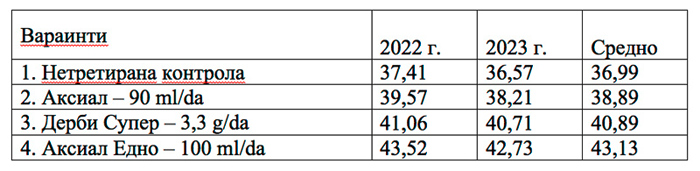
Table 8. Thousand kernel weight, g
Table 9 presents the results established for test weight of the seed. All variants in which herbicide application was carried out have higher values for test weight. The highest average values for this indicator were recorded in variant 4 (Axial One – 100 ml/da). The control stands out with the lowest values for this indicator.
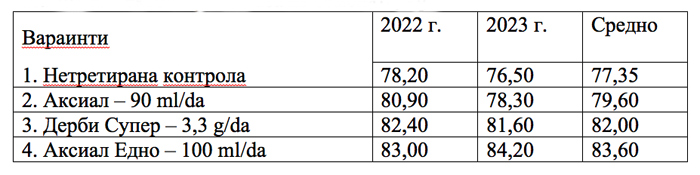
Table 9. Test weight of the seed, kg
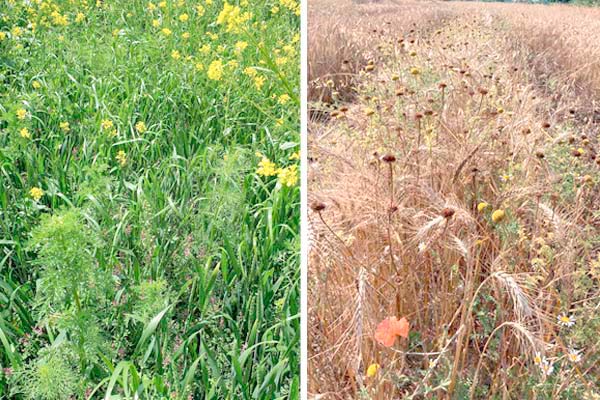
The lowest results for all studied indicators were recorded in the untreated control
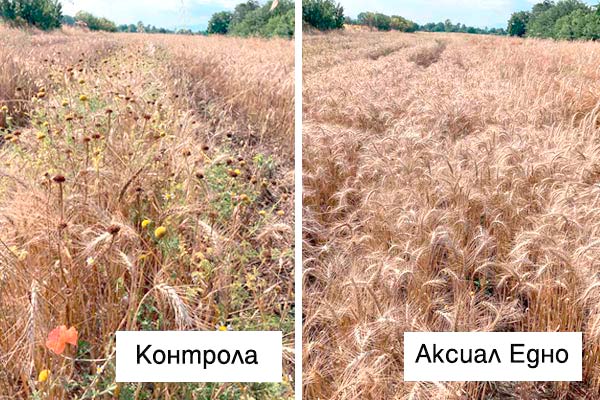
The highest results for plant height at the end of the growing season, spike length, thousand kernel weight and test weight of the seed, as well as the highest yields, were established in variant 4 (Axial One)
Conclusions
Based on the results obtained from the conducted experiment, the following conclusions can be drawn:
1. High herbicidal efficacy against corn chamomile and wild mustard was established when using Derby Super and Axial One.
2. High herbicidal efficacy against wild oat and ryegrass was established when using Axial and Axial One.
3. No visual symptoms of phytotoxicity to the crop were observed with any of the tested herbicides.
4. The highest results for plant height at the end of the growing season, spike length, thousand kernel weight and test weight of the seed, as well as the highest yields, were established in variant 4 (Axial One).
5. Uncontrolled broadleaf weeds in variant 2 (Axial) suppress wheat to a greater extent than uncontrolled grass weeds in variant 3 (Derby Super), where higher results for the studied indicators were recorded.
6. The lowest results for all studied indicators were recorded in the untreated control.
Photos© Assoc. Prof. Dr. Nesho Neshev
References:
1. Spasov, V., I. Zhalnov, T. Tonev, M. Dimitrova, Sht. Kalinova (1999). Preface to the Instructions for the Application of Herbicides. Plovdiv: HAI - Plovdiv.
2. Tonev, T., H. Krasteva, N. Bakardzhieva, S. Milanova, B. Zarkov, G. Tsankova, O. Dekov, I. Iliev, L. Chavdarov, P. Grigorova (2008). Guide for Integrated Pest Management in Cereal Crops. Sofia: National Plant Protection Service.
3. Zhelyazkov, Il., A. Mitkov, D. Stoychev (2017). Manual for Exercises in Herbology. Academic Publishing House of AU - Plovdiv. 188 p.
4. Tonev, T., M. Tityanov, A. Mitkov, M. Yanev, N. Neshev (2018). A Guidebook for Exercises on General Agriculture and Herbology. Publisher: “Biblioteka Zemedelsko Obrazovanie”. Pages: 71-72. (A Guidebook in English).