

![MultipartFile resource [file_data]](/assets/img/articles/заглавна-генбанка-бари.jpg)
Within the framework of the FAO/IBP Technical Conference held in Rome (Italy) in 1967, a decision was taken to establish the first three gene banks in Europe: in Lund (Sweden) for Northern Europe, in Braunschweig-Volkenrode (Germany) for Central Europe and in Bari (Italy) for the Mediterranean region. The Mediterranean Germplasm Database (MGD) is the reference for seed collections of agri-food plants conserved at the Institute of Biosciences and Bioresources (IBBR). It includes more than 59,000 accessions from all over the world. Over 13,000 samples, mainly originating from Africa and Southern Europe, were directly collected by research teams during the period 1971–2024. The remaining accessions were obtained through non-monetary exchange with other institutions. The family Grasses (bot. Poaceae) is represented by the largest number of forms and ranks first among food crops and second among forage crops. The family Legumes (bot. Fabaceae) ranks second among food crops and first among forage crops represented in the seed bank for the Apulia and Mediterranean region. To date, some of the species collected in the collections have disappeared from their original habitats and are currently conserved only in the gene bank in Bari (MGG).
The Institute of Biosciences was founded in 2013 as part of the Department of Biological, Agricultural and Food Sciences of the National Research Council of Italy (CNR). The CNR also includes the Institute of BioEconomy (IBE), responsible mainly for the conservation of woody species, including 1,200 olive genotypes, and the Institute for Sustainable Plant Protection (IPSP), where the collection of rare grapevine species with more than 700 accessions and 450 different varieties is held. The headquarters of IBBR is located in the city of Bari (Apulia), and the five research divisions are located in different regions of Italy – Florence, Naples, Palermo, Perugia and Portici. The germplasm laboratory has existed since 1970 thanks to the collaboration with the Faculty of Agriculture of the “Aldo Moro” University and, following the reorganization of the research centres for genetics, biophysics and biochemistry, is now part of the structure of IBBR. Due to Italy’s predominant economic interest in durum wheat, the laboratory has carried out molecular characterization of hundreds of accessions of Triticum durum, used for the production of bread and pasta products.
IBBR is a centre of excellence for the global scientific community and works in synergistic cooperation with experimental institutes (MiPAF, ENEA) and international organizations (FAO, IPGRI, IITA, ICARDA, IPK) in the field of conservation, characterization and valorisation of plant resources. IBBR includes staff with many years of experience in the collection and management of germplasm, as well as in the study and evaluation of the genetic variability of species. Since its establishment, the institute has made a significant contribution to the conservation of plant biodiversity, which is a fundamental prerequisite for the cultivation of all species. In recent years, greater attention has been paid to the species most widespread in the region – durum wheat, grapevine, olive and brassica crops. The main activities carried out at the institute are exploration, collection, multiplication, evaluation, characterization and documentation of genetic resources, as well as studies of genetic diversity, evolution of the gene pool, investigation of new allelic variants and of the physiological parameters underlying seed viability.
The scientific research is in several directions: Study of the biology of model species through a multidisciplinary approach to improve productivity; investigation of the impact of climate change and pollution; Conservation and development of bioresources for the elaboration of optimal management strategies with adaptive significance and adequate methods for certification, traceability, evaluation and sustainable use; Use of all available methodologies to create new forms, select better genotypes and expand the participation of farmers, industry and consumers in the process; Practical applications of the results of molecular research for green chemistry and sustainable development (biofuels, plants as cell factories, weed control); Preparation of new functional foods and use of nanotechnologies for management of laboratory quality.
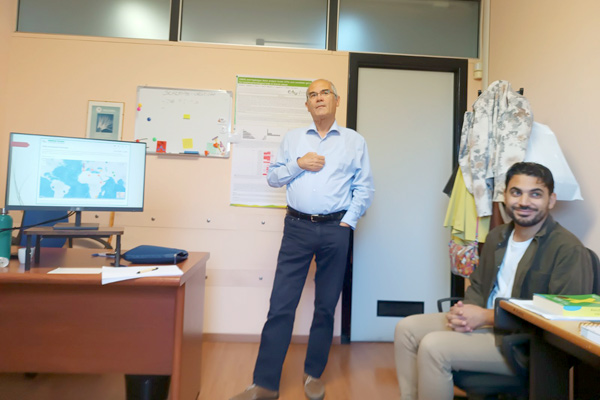
The curator of the gene bank, Dr. Gaetano Laghetti (in the middle), has contributed as a collector in more than 50 expeditions, in the characterization of several collections, and in taxonomic and ecogeographical studies to identify centres of origin of wild ancestors of cultivated plants.
The research work of the team is aimed at improving basic knowledge in biology. Its main scientific commitment is to investigate the molecular and genetic basis of agri-food production, focusing on the sustainable management of bioresources in the biomedical, biochemical and environmental fields. These topics are central to the European agricultural policy and the EU framework programmes for research and development. The mission of IBBR is to pursue two interrelated objectives: on the one hand, to increase fundamental knowledge in biology with a focus on the mechanisms of functioning, adaptation, reproduction, evolution and environmental interactions of biological systems; and on the other – to increase practical knowledge in the fields of agriculture, the food industry and the environment for the purposes of human health, in particular through the development of applications aimed at improving and assessing agricultural food production, the environment, as well as the prevention of human diseases.
In MGD (the Mediterranean gene bank at IBBR) there are several types of collections of plant and non-plant species – in vivo (living collections of perennial and vegetatively propagated herbaceous plants), ex situ (orthodox seeds in cold chambers), on farm (living collections maintained by farmers) and in situ (conservation of wild species in their natural habitats).
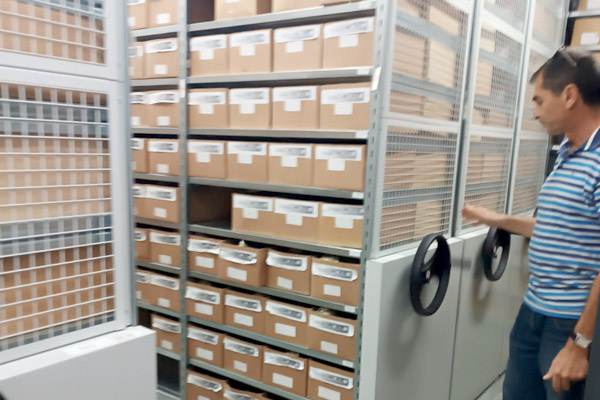
In order to increase capacity and facilitate access to seed samples, the cold chambers (a total of 14 rooms) are being reorganized into new sliding shelving cabinets.
The materials are conserved in boxes and managed through advanced software facilities. More than 28,000 accessions are already fully available upon request. The seeds are periodically reproduced in the experimental fields in Gaudiano, Metaponto, Policoro and Valenzano. The cultivation of plants and the preparation of samples for storage (cleaning, drying, germination tests) are carried out according to standard FAO protocols. The orthodox seeds belong to 39 botanical families, 203 genera and 870 species. Particular attention is paid to specific segments of plant genetic resources, such as local varieties and “typical products”; agro-ecotypes threatened with extinction; wild relatives of crops; plants potentially useful for the extraction of bioactive or technological compounds.
Germplasm is characterized using molecular approaches – genomics (DNA) and transcriptomics (RNA), and biochemical approaches (proteomics, metabolomics). For this purpose, the laboratories of IBBR are equipped with state-of-the-art instruments for molecular biology and biochemistry. The genomics laboratory has the most advanced facilities for performing DNA and RNA sequencing, genotyping and gene expression analysis (Ion Torrent™ PGM, Ion OneTouch2, Ion OneTouch ES, Ion Chef System and Applied Biosystems 3500 capillary sequencer). The Ion PGM™ system performs high-quality next-generation sequencing (NGS) and can carry out various targeted applications for gene sequencing. NGS can provide a global genetic analysis or be limited to specific regions of the genome or transcriptome.
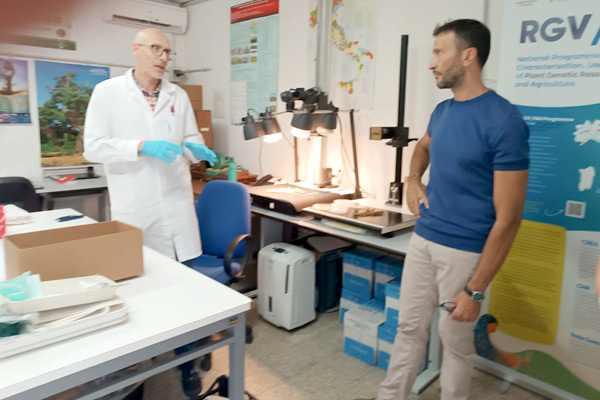
Specific changes in DNA are identified through rapid and simultaneous sequencing of hundreds of genes at the same time in multiple samples using ultra-high-multiplex PCR.
IBBR works jointly with CREA (the Research Centre for Cereal and Industrial Crops) on the application of a multidisciplinary approach and “omics” sciences in the development of new varieties of durum wheat and brassica crops. The key role of the institute lies in carrying out the preliminary genetic studies. The breeding process starts with genome analysis using QTL analysis, which provides information on quality, morphophysiology and disease resistance.
The research centre is located in the province of Foggia, where ancient Roman artefacts related to the life of farmers, of great historical value, have also been preserved.
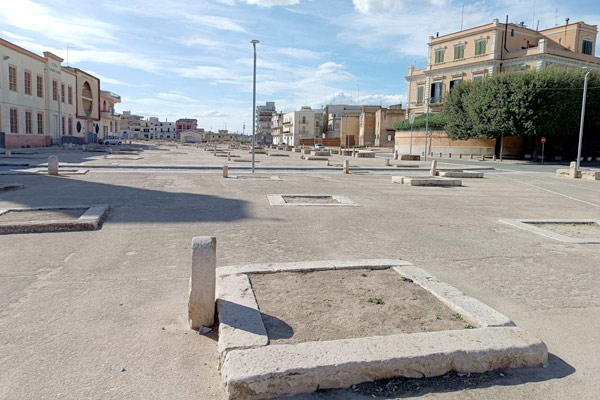
The bell-shaped bunkers or “grain pits” are of valuable historical significance.

The bell-shaped bunkers (the so-called “grain pits”), constructed in underground karst formations, were used even until the beginning of the 21st century as a method for storing grain of wheat, almonds, beans and flax.
The bell-shaped bunkers are subject to a Protection Order for the artistic, archaeological and historical heritage of Apulia under the supervision of the Ministry of Culture of Italy.
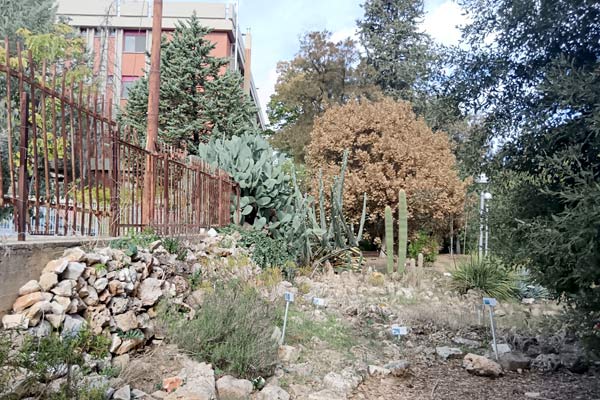
The scientists from MGG work in close cooperation with their colleagues from BG-MOBB-UNIBA (Botanical Garden-Museum and gene bank of the “Aldo Moro” University).
The joint projects and volunteer work are aimed at the reintroduction of wild endemic populations threatened with extinction. After their collection and conservation, the plants are multiplied and, following a complete ecological and geographical study, are returned to suitable natural habitats, where their monitoring continues.
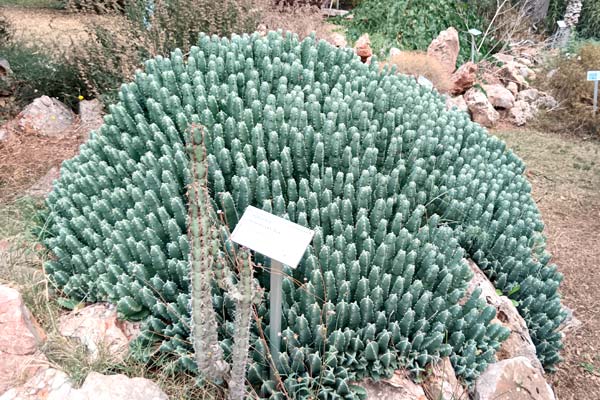
Botanical Garden-Museum
The collections of IBBR are part of the biological research network “BioMemory” (CNR/DiSBA) and are indexed in the European research infrastructure “DiSSCo” (Distributed System of Scientific Collections). The database of seed accessions is available on a user-friendly online platform – www.ibbr.cnr.it//mgd//. The integrated information systems used to ensure open access to scientific research are GBIF (for systematized information) and DiSSCo (for raw data).
cover photo: Mediterranean gene bank in Bari