

![MultipartFile resource [file_data]](/assets/img/articles/растителна-защита-заглавна-2024.jpg)
Winter is already setting in and the deciduous plant species are preparing for winter dormancy. After the leaves of the fruit trees have fallen, it is time for important, preventive plant protection measures. In this way, the increase of phytopathogenic infection and insect populations during the following year will be prevented.
In November, conditions for carrying out autumn plant protection spraying in orchards will occur at the beginning of the month, in the middle of the second ten-day period and during most days of the third ten-day period.
The second half of November is a suitable period for planting fruit trees.
Now is also the time to draw up a plan for the control of diseases and pests during the following year. It is advisable to prepare a calculation for the plant protection products and materials necessary for conducting the control of diseases and pests during the next year.
Since for some diseases the mycelium is preserved in the leaves, fruits and soil, and as insects can overwinter in the soil, overwinter on infected fruits and wood and form caterpillar nests on shoots and leaves, the following measures are required:
For pome fruits, stone fruits and nut crops
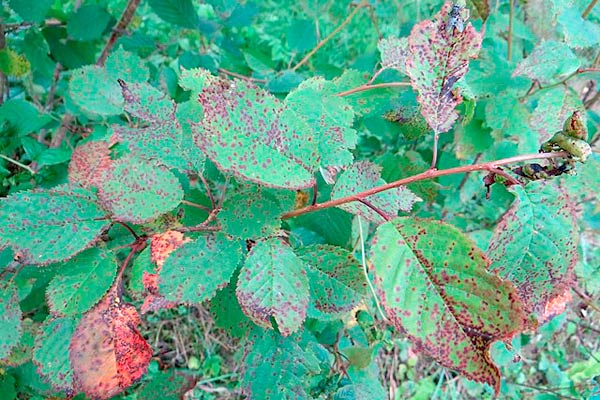
Cylindrosporiosis is an economically important disease in cherry and sour cherry growing regions, but it is most harmful for fruit nurseries and young orchards. Control of the disease must start already in autumn by ploughing under the fallen leaves in order to reduce the primary infection
In severely attacked, prior to leaf fall, apple and pear trees by scab and cherry trees by cylindrosporiosis, their fallen leaves are collected and sprayed with 5% urea.
For control of brown rot and black rot, quince fruitlet blight, the almond seed wasp, the peach twig borer, the brown-tail moth and the white fruit-tree tortrix, the mummified fruits and caterpillar nests are collected and destroyed.
Shoots infected by powdery mildew on apple and peach, shoots infected by scab, black rot and brown leaf spots on pear, shoots attacked by shot-hole disease on stone fruits and almond, shoots infected by brown rot on pome and stone fruit species, almond shoots attacked by cercospora leaf spot, orange leaf spots and scab, walnut shoots attacked by anthracnose and bacterial blight, hazelnut shoots attacked by the big hazel beetle, egg rings of the lackey moth and egg shields of the codling moth are cut out and burned.
To destroy the overwintering caterpillars of the apple, plum and walnut fruit moths, the pear bud weevil, the serpentine leaf miner, the bark moth, the apple clearwing moth, pear psyllids, the hawthorn mite and the egg clusters of the gypsy moth, the old bark of the fruit trees is scraped off, collected and burned. Scraping is carried out with a blunt knife, without affecting the phloem part of the bark, and the waste is collected on a sheet and burned.
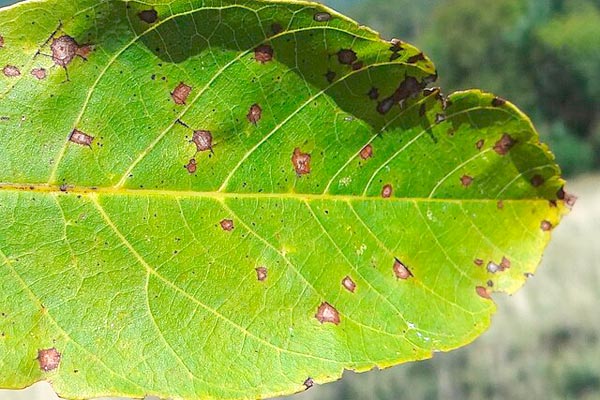
Walnut anthracnose is the most widespread and most serious disease of walnuts. It is caused by a fungus and attacks all walnut species.
Fallen leaves in walnut orchards are collected and burned in order to destroy the overwintering infection of anthracnose and bacterial blight in them.
The soil in orchards is deeply ploughed in order to destroy the apple sawfly, the serpentine leaf miner, May beetle larvae, the apple blossom weevil, the pear bug, the cherry leaf sawfly, the cherry fruit fly, the stone fruit leaf sawfly, the plum fruit sawfly, the almond seed wasp, the almond leaf sawfly, the walnut fruit moth, the hazelnut and chestnut weevils.
By deep ploughing under of the leaves, scab on apple and pear, white leaf spots on pear, brown leaf spots on quince and pear, black rot on pome fruit species, quince fruitlet blight, red leaf spots on plum, cercospora leaf spot, orange leaf spots and scab on almond, anthracnose and bacterial blight on walnut are also destroyed. Thus the leaves rot and together with them the disease agents perish.
Peach, apricot, cherry, sour cherry and almond orchards are sprayed with 2% Bordeaux mixture (2 kg copper sulphate and 1.5 kg quicklime per 100 l water) for control of shot-hole disease and infectious apoplexy.
The trunks and main branches of the fruit trees are coated with 20% lime wash and a little clay to protect them from winter frosts, to destroy lichens and mosses and to repel the poplar borer and the goat moth.
For strawberries
The soil is ploughed to destroy adults of the strawberry stem weevil, strawberry weevils, and to control white and red leaf spots.
For raspberries
Canes infected by anthracnose, didymella and attacked by the raspberry gall midge or agrilus are cut and destroyed.
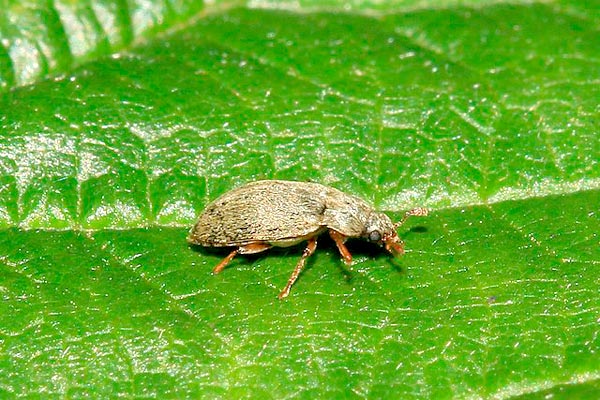
In recent years, the common raspberry beetle has become the economically most important pest of raspberries. Its control is carried out by soil cultivation around the raspberry bushes and in the inter-rows in autumn and by two sprays of raspberry plantations with one of the authorised insecticides, before flowering and then against the larvae, at the beginning of their hatching, at the end of or after raspberry flowering.
The soil in the inter-rows of the plantations is ploughed in order to destroy adults of the raspberry beetle and larvae of the raspberry gall midge, as well as the causal agents of rust, anthracnose and leaf spots.
For blackcurrant
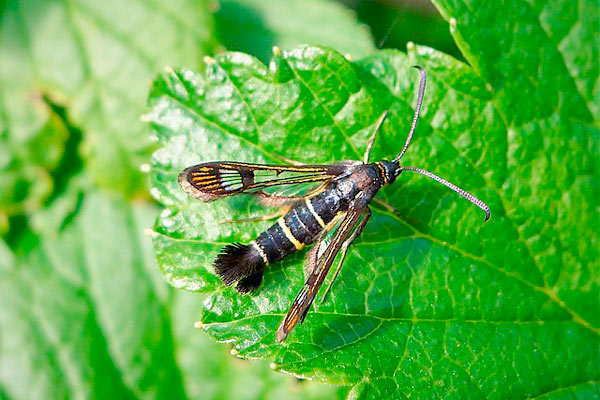
Shoots attacked by American powdery mildew and clearwing moth are cut out and burned.
The soil is ploughed to destroy the blackcurrant gall midge, which overwinters as a larva in a cocoon on the soil surface.