

![MultipartFile resource [file_data]](/assets/img/articles/заглавна-тикви-1.jpg)
Summary
Pumpkins find favourable conditions for growth and development in our country, with white and muscat pumpkins being more widely distributed, while the common pumpkin is grown to a limited extent in private farms. The fruits are used for fodder, in culinary practice as baked and boiled, or in the processing industry for the preparation of marmalades, preserves and others. Pumpkin is a nutritious food, it can fit into many dietary patterns, being relatively low in calories, while at the same time very low in fat, and has a higher nutrient rating than other powerful foods such as Brussels sprouts, cauliflower, cabbage and carrots. Pumpkins contain antioxidants such as alpha-carotene, beta-carotene and beta-cryptoxanthin. Peeled and roasted, pumpkin seeds contain essential amino acids important for the body, and are rich in proteins, vitamins and minerals such as iron, zinc, copper and phosphorus.
A key point in the production technology is the choice of a suitable variety. Variety structure: Plovdivska 48/4; Raketa 38/1; Australian Butter (Cucurbita maxima); Bilinka (Cucurbita maxima); Blue Kuri (Cucurbita maxima); Angelic (Cucurbita moschata); Muscat Pumpkin 51-17; Long-necked (Cucurbita moschata) – origin USA; Bush Butternut (Cucurbita moschata), etc.
To ensure high and stable yields, the production technology must be followed: selection of fields and soil preparation; sowing patterns; crop management during the vegetation period; plant protection practices and storage.
Origin, distribution and economic importance
Pumpkins are annual herbaceous plants of the family Cucurbitaceae. The origin of pumpkins is not fully clarified. It is considered that the white pumpkin (Cucurbita maxima) and the muscat pumpkin (Cucurbita moschata) originate from America, while the common pumpkin originates from Central Asia and Africa. About 30 pumpkin varieties are known.
In our country pumpkins find favourable conditions for growth and development. When and from where pumpkins were introduced into Bulgaria is not known, but most references to their use date after the 16th century. White and muscat pumpkins are more widely distributed, while the common pumpkin is grown to a limited extent in private farms. This versatile bright orange vegetable fruit is not limited to dessert only. The fruits are used for fodder, in culinary practice as baked and boiled, or in the processing industry for the preparation of marmalades, preserves and others. They can also be used for the preparation of smoothies, baked goods, soups, salads, etc. The rich nutritional stores of pumpkin make it a healthy food for year-round consumption. Pumpkin is a nutritious food that can provide certain health benefits and can fit into many dietary patterns.
Pumpkin fruits have high nutritional and biological value and good organoleptic qualities. Their chemical composition varies depending on the variety and the cultivation method.
Pumpkins contain antioxidants such as alpha-carotene, beta-carotene and beta-cryptoxanthin. The high content of beta-carotene, which in the body is converted into vitamin A, can strengthen the immune system and is important for maintaining vision, especially with age. The fruits contain large amounts of vitamin C, mineral salts and vitamins, potassium and phosphorus, vitamin E, riboflavin, copper and manganese.
Pumpkins are also one of the best sources of lutein and zeaxanthin, two compounds associated with lower risks of age-related macular degeneration and cataracts.
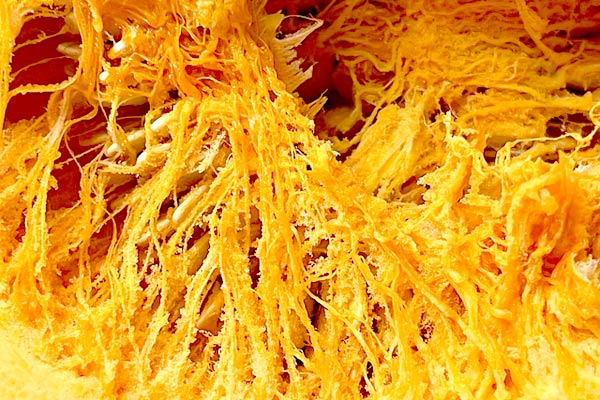
Overall, it can be stated that pumpkins are relatively low in calories, while at the same time being very low in fat, and they have a higher nutrient rating than other winter vegetables. Pumpkins show a higher nutritional density score than other powerful foods such as Brussels sprouts, cauliflower, cabbage and carrots.
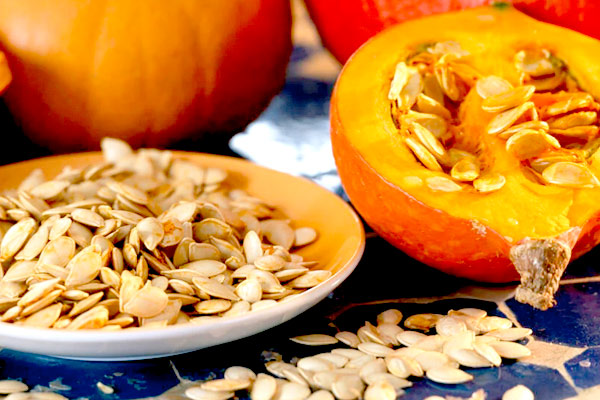
Peeled and roasted, pumpkin seeds are also very useful and tasty. They contain essential amino acids important for the body. They alleviate the main symptoms of adenoma or inflammation of the prostate, such as frequent urination, pain, etc. In addition, the seeds are rich in proteins, vitamins and minerals such as iron, zinc, copper and phosphorus.
Varietal structure and characteristics of the varieties
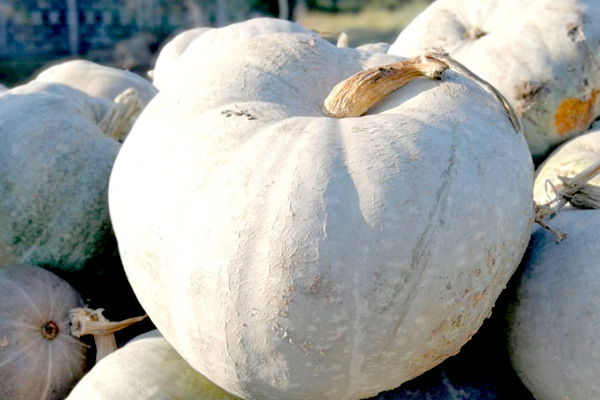
Plovdivska 48/4 – Open-pollinated Bulgarian white pumpkin variety. The plant is vigorous. The stem is trailing, 4–5 m long. The fruits are very large, with an average weight of 10 kg, round or flat-round. Their surface is smooth, grey-white. The flesh is 4–5 cm thick, yellow-orange. The consistency is oily and the taste qualities are very good. The variety is high-yielding, relatively late. The vegetation period is 130–135 days. The fruits have very good transportability.
Raketa 38/1 – Bulgarian variety. The plant is vigorous. The stem reaches 4–6 m. The fruits are medium large, 6–7 kg, with a cylindrical shape. The rind is grey-white. The flesh is orange, about 4 cm thick.
Muscat Pumpkin 51-17 – Open-pollinated variety. The stem reaches a length of 3–4 m and is strongly branched. The fruits are elongated pear-shaped, 40–50 cm long. The average weight is 8 kg. Their surface is smooth and slightly segmented. The rind is thin and soft, orange-ochre, with a well-expressed waxy coating. The flesh is dense, orange, tender and oily when consumed. The variety is high-yielding, with a vegetation period of 130 days.
Long-necked (Cucurbita moschata) – A variety of the “violin” type pumpkins grown in our country. The plant is very vigorous and nourishes on average 2–4 fruits with a weight of 3 to 6 kg. Their colour is beige. When baked (without sugar) the consistency is tender, slightly grainy, and the taste is weakly pronounced. Storability is very good. The variety originates from the USA.
Zhemchuzhina (Cucurbita moschata) – Russian muscat pumpkin variety. Medium-early. Average weight – 6–8 kg. The fruit flesh is thick, entirely composed of thick fibres, which however are not coarse. The taste is good to very good, with a characteristic aroma.
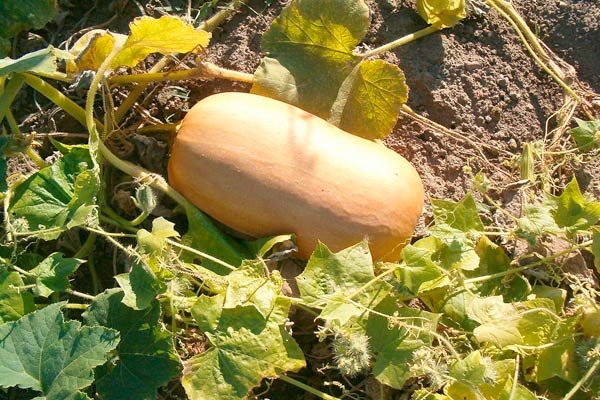
Bush Butternut (Cucurbita moschata) – one of the few muscat pumpkin varieties with short stems. They rarely exceed 1 m in length, reaching 2 m only in very good years. This allows for a much denser stand – 1 x 1 m or even denser planting. With this characteristic they are an ideal choice for people who like muscat pumpkins but whose garden is not large enough for the “standard” varieties. This variety is one of the earliest maturing within the species muscat pumpkin (C. moschata). The pumpkins weigh between 700 g and 1.5 kg. On one plant an average of 3–5 fruits are formed. Their storability is up to 12 months. The consistency is tender, moist, without fibres. The taste is very good.
Danka Polka - Squash – The first Polish pumpkin variety grown for seeds. Medium-sized fruits, round, green, later orange-green, with a thin core, filled with many tasty seeds. Seed yield reaches 1500 kg per ha. The pumpkins are suitable for culinary use for the preparation of soups, dishes and desserts.
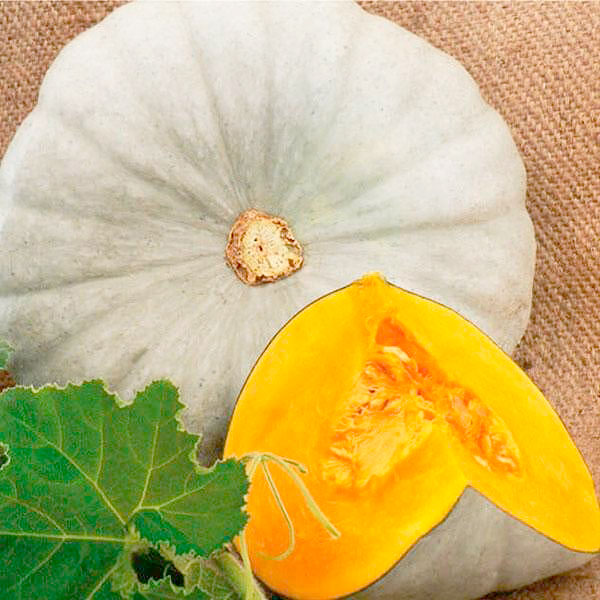
Sampson F1 – The variety is named so because of its strength. A very vigorous, leafy plant with a trailing (climbing) stem. The wide range of resistances facilitates plant protection and allows setting a higher number of fruits.
Recommended density up to 500 plants/da. The fruits are flat-round, slightly ribbed, uniform, 5–7 kg. Shiny grey colour on the outside and deep orange inside, with excellent taste qualities and a very small seed cavity.
On average 2–3 fruits per plant.
Very good transportability and storability – more than five months.
Resistances: HR: ZYMV, WMV, PRSV
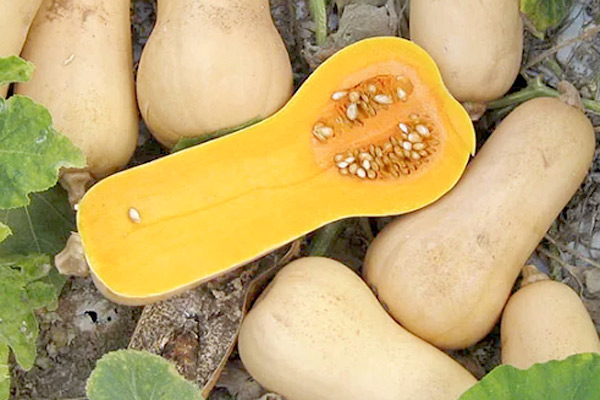
Havana F1 – This variety is significantly earlier than standard violin-type pumpkins. Recommended density up to 900 plants/da. The fruits are light brown on the outside and yellow-orange on the inside with a nutty nuance. The seed cavity is very small, the weight is 1.2 kg. These fruits are used by many retail chains due to their convenient size – one pumpkin = one portion. On average more than 4–5 fruits per plant. Excellent storability – until the next season. Resistances: HR: Px, ZYMV.
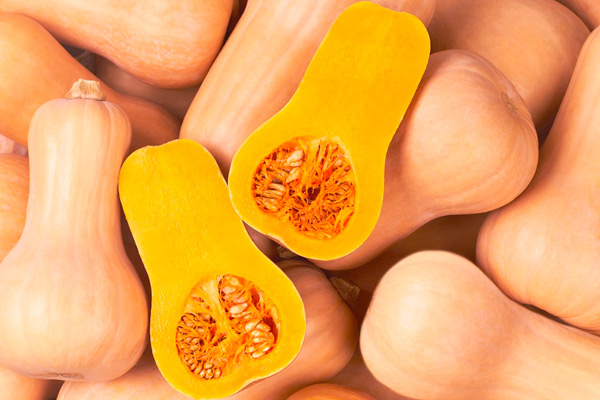
Matilda F1 – hybrid pumpkin variety by Enza Zaden. Excellent balance between strong growth and good fruit setting. Very balanced growth suitable for different conditions.
Recommended density up to 700 plants/da. For single harvest, a density of up to 1200 plants is possible. Extremely uniform fruits: 3.6–4.2 kg. Orange rind and deep orange flesh with a very sweet taste. Small seed cavity. On average 3–4 fruits per plant. Excellent storability – until the next season.
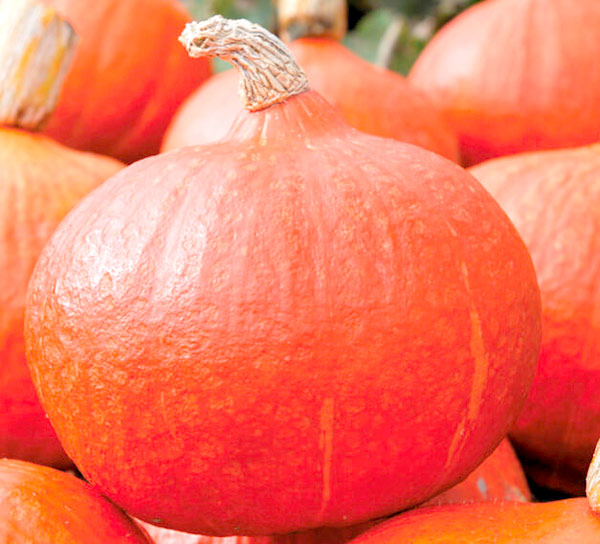
Orange Summer F1 – Hybrid pumpkin variety by Enza Zaden, which matures very early. Suitable also for earlier sowings. The plant is semi-bushy. Recommended density up to 1200 plants/da. The fruits are uniform, red on the outside and bright orange on the inside, with an exceptionally pleasant taste and aroma. Suitable for stuffing. The seed cavity is very small, the weight is 1.2 kg. These fruits are preferred by many organic producers in Europe due to their valuable nutritional qualities and convenient size. On average 1.5–2 fruits per plant, up to 4 fruits in long-season production. Storability up to 4–5 months.
Technology for pumpkin cultivation
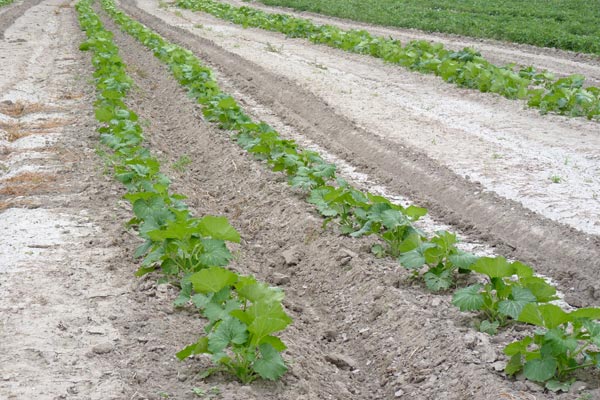
Under industrial conditions, the common pumpkin, white pumpkin and muscat pumpkin are grown by direct sowing as a medium-early field crop.
Selection of fields and soil preparation
For pumpkin cultivation, sites that are well exposed to sunlight and protected from winds are selected. Most suitable are deep, well-structured, moisture-retentive soils, well supplied with nutrients – alluvial, chernozem and sandy-loam soils. The plants respond best to a slightly acidic to neutral soil solution reaction (pH = 6.5–7.0). Good preceding crops for pumpkins are those that leave the soil rich in nutrients, loose and with preserved structure, such as cereals, legumes, alliums, spinach, etc. High yields are also obtained when they are grown after alfalfa, rapeseed, vetch and others. Pumpkins should not be grown on the same site earlier than every 4–5 years, in order to avoid the spread of pests to subsequent crops. Where possible, varieties resistant or less susceptible to diseases should be used.
Soil preparation depends on the preceding crop. After cereals or other crops that vacate the field early, deep ploughing at 30–35 cm is carried out. Ploughing is preceded by disking or a shallow tillage to destroy weed vegetation. During this operation 3–4 t/da farmyard manure or compost are applied (when growing pumpkins for seed, after seed extraction the remaining part of the fruit can be composted), as well as phosphorus (25–30 kg P2O5) and potassium (8–10 kg K2O) fertilisers per decare. In some cases these fertilisers are applied during the first spring soil cultivation. Pumpkins respond very well to subsoiling at a depth of 40–50 cm. This enables better soil moisture accumulation, development of a more powerful and more active root system and an increase in yields by 20–30%.
The fertiliser rate is determined on the basis of agrochemical analysis of soil nutrient status and depends on the soil and climatic characteristics of the region, the biological requirements of the individual varieties, the production purpose and the adopted technology.
When the plants will be irrigated by surface (gravity) irrigation and grown on ridge-furrow beds with high flat ridges, after deep ploughing the rough shaping of the ridges is carried out. On lighter soils and with later sowing dates, the rough shaping of the ridges, as an exception, can also be carried out early in spring.
In spring, soil cultivation should create a good thermal and air-gas regime in the soil, which corresponds to the requirements of this heat-loving vegetable crop. Depending on the soil type and structure, the areas are harrowed or cultivated 1–2 times at a depth of 12–14 cm without inverting the soil layer, applying 25–30 kg ammonium nitrate per decare. On more structured and more heavily weed-infested soils, a second cultivation is recommended a few days before sowing.
When pumpkins are to be grown on ridge-furrow beds, the final shaping of the high flat ridge is carried out, with the soil needing to be very well tilled. Recently, where drip irrigation systems are available, direct sowing is carried out on a flat surface in order to save tillage costs. For later sowing dates the soil is cultivated 1–2 times with a cultivator to destroy emerging weeds and preserve soil moisture.
Sowing
The seeds must meet the standard certification requirements. The use of treated (disinfected) seeds is a necessary measure for protection against the development of diseases and pests. Sowing is carried out when the soil temperature at a depth of 10 cm reaches 10–12°C. The possibility of late spring frosts is also taken into account, so that the plants emerge after the danger has passed. Such conditions occur in the second half of April, and for cooler regions – at the beginning of May. In areas with strong winds, tall plants are sown as windbreak strips.
On small areas, sowing is done in hills (stations) of 40–50 cm in size, with 5–6 seeds placed in a circle at a depth of 3–4 cm. At the bottom of each hill 1–2 shovels (2–3 kg) of well-rotted farmyard manure are applied. This is very necessary, as in this way the manure retains moisture and above all keeps the surface always loose. To ensure faster and more uniform emergence of pumpkins, pre-germination (chitting) of the seeds is practised. The growing pattern is 200 x 200 or 300 x 100 cm. About 300 plants are planted per decare.
On large areas, sowing is in rows and is carried out with a precision seeder using the same pattern. For one decare, 300–500 g of seeds are required.
Seeds are a tasty food for field mice, therefore it is necessary to place baits of maize or wheat grains.
Crop management during the vegetation period
During the vegetation period, weed, disease and pest control, irrigation and fertilisation are carried out.
Thinning: Thinning of the plants is performed at the 2–3 leaf stage, leaving one plant per hill. Thinning is combined with the first hoeing and nitrogen top-dressing.
Hoeing: Cultivations during the vegetation period improve the conditions for plant development and at the same time control weeds. When rains fall after sowing and a soil crust forms, the surface is harrowed to accelerate emergence.
Inter-row cultivations start after plant emergence. The first hoeing of pumpkins is carried out after the formation of the first true leaf, with earthing up of the plants, and continues until the soil surface is covered. With the second hoeing the bed profile is shaped.
Depending on weed infestation, 2–3 mechanised inter-row cultivations and 2 hand hoeings in the row are carried out. Hoeing is done after the dew has dried, as it is necessary to keep the stems clean and avoid injuries.
Irrigation regime: After sowing, if the weather remains dry, in order to accelerate seed germination it is desirable to irrigate. This is one of the decisive conditions for uniform emergence, optimal plant stand and development of a more powerful root system.
Under non-irrigated conditions, high pumpkin yields are obtained when grown on moisture-retentive soils, due to their well-developed root system and its ability to use moisture from deeper soil layers. When grown on lighter soils and under prolonged drought, pumpkins are irrigated at least 2–3 times, with an irrigation rate of 40–50 m3 of water per decare. The first irrigation is carried out after emergence, and the second and third – at the beginning of intensive growth and formation of the first fruits. The last irrigation of pumpkins is done up to the beginning of fruit set formation with a diameter of 10–12 cm. Fluctuations in soil moisture during fruit ripening must not be allowed, as massive cracking occurs. Irrigation during mass harvesting deteriorates the taste qualities and consistency of pumpkin fruits.
Pumpkins are mainly irrigated by surface (gravity) irrigation or drip irrigation. They respond biologically very well to sprinkler irrigation, but this method is avoided because it causes rapid spread of some fungal and bacterial diseases. Irrigations should be avoided during the hottest hours of the day. The water used must be free of pathogens and weed seeds.
Top-dressing. Stabilised ammonium nitrate is applied as top-dressing twice: with the first hoeing and when the stems begin to trail – at a rate of 20 kg/da each time. Depending on the planned yield, two foliar fertilisations can also be carried out during the vegetation period: at the phenophase of mass flowering and at the beginning of fruit set formation, with Kristalon Special, aiming to complement the positive effect of soil fertilisation.
Pollination: It is advisable to place beehives in or near the field. Bees improve pollination and increase fruit yield.
Agronomic measures for disease and pest control
It is necessary to observe a suitable crop rotation and use resistant varieties. Regular monitoring of plants is a daily care. The success of disease and pest control depends on the timely detection of initial infection and the immediate removal of damaged plants. The basis of disease and pest control lies in preventive measures: use of high-quality seeds, resistant varieties and high-quality spraying with appropriate plant protection products.
Harvesting
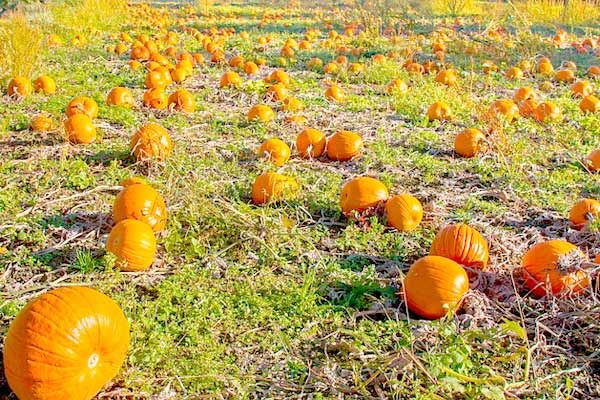
Fruits are ready for harvesting in September–October, when a large part of the leaf mass has dried. Ripe fruits attain the size and colour typical of the species and variety. A very useful practice is to leave the harvested fruits for a prolonged period in the sun or under a shelter, which reduces the water content and improves their taste qualities and storability. Harvesting should be completed after the first frost. The fruits are stored (cured) for 20–25 days.
Storage
Whole fresh pumpkins can usually be stored for 30 to 90 days in a cool and dry place.
Many people store their pumpkins on a dry board or a piece of cardboard to slow down rotting (if your pumpkin develops a soft spot, it has started to rot). Do not place pumpkins on carpet or concrete, as they may rot and stain these surfaces.
References
1. Rankov, V., H. Boteva. 2007. Biological export of nutrients with yield as an indicator for optimising fertilisation of white and muscat pumpkins. Second International Symposium “Ecological Approaches in the Production of Safe Foods 2007”, 18–19 October, Plovdiv, 167–172.
2. Cholakov, D. 2009. Vegetable Production. Academic Publishing House of the Agricultural University, Plovdiv.
3. Cholakov, T., Y. Todorov, E. Nacheva, G. Antonova, V. Todorova, H. Boteva, D. Ganeva, S. Kalapchieva, B. Arnaudov. 2009. Agricultural Calendar, Publishing House of BNSTS.
4. Bogatzevska et al. 2008. Guide for Integrated Pest Management in Vegetable Crops. NSRZ. Ministry of Agriculture and Forests. Sofia. 238.
5. Ganeva, D., V. Todorova, N. Velkov, G. Antova, V. Petkova, S. Kalapchieva, E. Nacheva, S. Sofkova, S. Genova, H. Boteva, S. Masheva, V. Yankova, D. Kostova, M. Mihov, T. Cholakov, O. Georgieva, Ts. Dincheva, B. Arnaudov, D. Markova and G. Pasev. 2014. “Technologies for the Production of Vegetable Crops and Potatoes”. Printing House “Blakom” – Plovdiv, ISBN: 978-619-7010-22-0, p. 245.