

![MultipartFile resource [file_data]](/assets/img/articles/заглавна-пшеница-прогноза.jpg)
During the next seven-day period, agrometeorological conditions will be determined by relatively dry weather and temperatures close to the usual values for the end of October. During the period, the drought in most parts of the country will deepen and will hinder the sowing of winter cereal crops and the normal progress of the initial stages of vegetation of the sown autumn crops. In some of the northwestern and southern regions there is no productive moisture in the 50 cm soil layer, and in the 100 cm layer the level of soil moisture reserves is very low – below 50% of field capacity (agrometeorological stations: Knezha, Băzovec, Kyustendil, Sandanski, Plovdiv, Pazardzhik, Chirpan).
Relatively good soil moisture reserves, above 75% of field capacity, are reported in the 50 and 100 cm layers in some places in Eastern Bulgaria (Silistra, Dobrich, Dolni Chiflik, Yambol), where precipitation of agronomic significance was recorded during the first half of autumn.
By the end of October, in most of the field areas, the limiting factor for the development of autumn crops will remain the deficit of soil moisture. During the period, in the crops with winter cereals sown in the first half of October, the stages of emergence and initial leaf formation will be observed. In the southernmost regions (agrometeorological station Lyubimets), the drought will put into question the survival of part of the germinated crops.
It is a well-known fact that Bulgarian agriculture is developing under specific agrometeorological conditions. The climate of the country is characterized by a deficit of atmospheric and soil moisture during the active vegetation of crops and yield formation.
In recent years, there has been a trend of lack of agronomically effective rainfall in September and October, especially in Southern Bulgaria, which is a leading factor for the development of autumn crops.
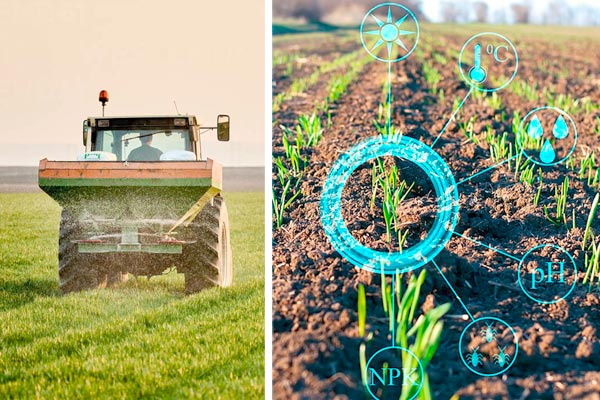
A team of scientists from the National Institute of Meteorology and Hydrology, the Agricultural Academy and the Agricultural University, working under the National Scientific Programme “Healthy Foods for a Strong Bioeconomy and Quality of Life”, are developing farm management programmes based on scientific results.
In order to overcome the changes in hydrothermal conditions, it is necessary to implement appropriate changes in technology, in the zoning of crops and in the development of varieties and hybrids with high plasticity for maximum utilization of the natural agroclimatic resources in each region of the country.
How can we cope with the persistent climate changes in the cultivation of cereal crops in the country?
This is possible through:
• Shifting sowing dates in order to adapt crops to rising temperatures;
• Growing autumn-sown varieties with an appropriate development period, which will allow them to make maximum use of the accumulated soil water and temperatures above 5 °C during the months of December, January and February;
• Using varieties and hybrids with a shorter vegetation period, as spring crops in regions with summer drought, and those with a longer vegetation period in regions with winter drought;
• Focusing on early and medium-early varieties during the vegetation period from April to October under conditions of drought and drought with a tendency towards rising temperatures, which will allow crops to complete their development earlier and eliminate yield loss due to extreme agrometeorological conditions;
• Seeking advice and expertise from specialists for the implementation of precision agriculture in the context of dynamically changing agroclimatic conditions, which will minimize costs and increase the competitiveness of production.
Therefore, Assoc. Prof. Zlatina Ur from the Institute of Plant Genetic Resources “K. Malkov” – Sadovo recommends that the sowing of common wheat in Southern Bulgaria be shifted to the first week of November, in order to allow the crop to develop during a period with temperatures closer to the most favourable ones. In this way, the growing period will also be optimized, especially during the grain-filling stage in cereal crops.