

![MultipartFile resource [file_data]](/assets/img/articles/заглавна-сорго-1.jpg)
Due to its high drought tolerance and low requirements for nutrients and soils, sorghum can be an alternative to maize under critical climatic conditions.
For far too long, politicians, scientists and supply chains have focused on crops that require large quantities of water and exhaust soils, leaving farmers vulnerable to climate crises and chronic undernourishment. However, alternatives do exist. Sorghum and other ancient, resilient cereals can not only meet global demand for food and nutrients in a cost-effective way, but also improve farmers’ livelihoods while at the same time protecting the vital ecosystems of our planet. Among all cereal crops, sorghum is the most thermophilic and drought-tolerant plant. It is capable of surviving under extreme conditions, such as temperatures above 30°C and prolonged droughts, adapting its growth in response to adverse environments. Even without irrigation, sorghum provides satisfactory yields in semi-arid regions, which makes it a key resource for agriculture under changing climate conditions.
Imagine the future in 2050 – the world’s population has grown to 10 billion people, more than 2 billion of whom are undernourished. Climate change has intensified: scorching heatwaves and devastating floods hit breadbaskets such as the US Midwest, the North China Plain, but also Bulgaria’s own Dobrudzha, year after year, destroying crops such as maize and wheat. Meanwhile, freshwater resources in agricultural areas have been critically depleted at aquifer level. In this dystopian future, food and water crises trigger conflicts and migration on an unprecedented scale.
Sorghum (Sorghum) is a typical southern crop that requires sufficient heat to grow. Equatorial Africa is considered the place of origin of sorghum. The crop has been known since 3000 BC in India and China and 2500 BC in Central Asia. Today sorghum is widely cultivated in many countries around the world. In India the sown area is 16 million hectares, in the USA – 5.7 million hectares, in Africa – 15.4 million hectares. Large areas are also sown in the countries of the Middle East, China, Romania, Hungary, Italy, Australia, South America and Japan. In total, in 2020 the global sorghum area was 47.7 million hectares, or 7% of the cereal area, with an average yield of 1.4 t/ha. The gross grain harvest was 75 million tonnes, or 4% of total grain production. Sorghum is a crop that is also grown in Bulgaria, but interest in it is still at an initial stage.
There is potential for expanding the geographical range of sorghum cultivation due to global warming.
Under current conditions, all agricultural enterprises seek to optimise costs, with many of them switching to more cost-effective crops. Sorghum is one of the most profitable crops in this respect, as it does not require special expenditure for fertilisers and pesticides.
With increasing summer droughts, maize yields decrease by up to 45%, whereas sorghum, originating from Africa, exhibits exceptional heat tolerance. This plant has the ability to “self-activate” – at temperatures above 35°C sorghum enters dormancy for 35–50 days, and with the first rainfall it starts to grow at a rate of 5 cm per day.
These unique characteristics make sorghum an excellent alternative to maize under intensifying climate change. It is the most adaptive crop, capable of withstanding critically high temperatures and prolonged drought.
Experts emphasise that replacing maize with sorghum in crop rotation is economically justified when maize yields are below 5–6 t/ha. In addition, the transition to sorghum cultivation does not require special technical re-equipment of farms, which facilitates its introduction. Taking all these factors into account, sorghum can be considered a good alternative to maize for grain under conditions in which this crop has shown low yields in Bulgaria over the years.
Where is sorghum used?
There are several types of sorghum: grain, forage, silage, sweet, and fibre sorghum. Grain sorghum is used both directly, as feed grain, and in the form of green forage mass, hay, haylage and grass meal. The stalks of sweet sorghum contain up to 18% sugar and are used for the production of syrup, molasses and confectionery. It can also be used in the field of bioenergy for the production of bioethanol, biogas and solid fuel.
Fibre sorghum is very suitable for paper production. Hybrids of this type are also used for biogas production. Multi-cut forage sorghum is fed fresh to animals and used as green manure.
Sorghum is one of the most valuable forage crops.
It has been proven that sorghum grain is equivalent to barley grain in nutritional value for farm animals, but in yield per hectare it significantly exceeds spring barley.
The entire above-ground vegetative part of the plant is edible and can be used to prepare various types of feed. Freshly mown and finely chopped sweet sorghum is used as livestock feed, and the green mass is used for silage. The juice from the stalks and leaves of sorghum contains a lot of sugars, up to 20%, which facilitates the fermentation of components that are difficult to ensile and dry components.
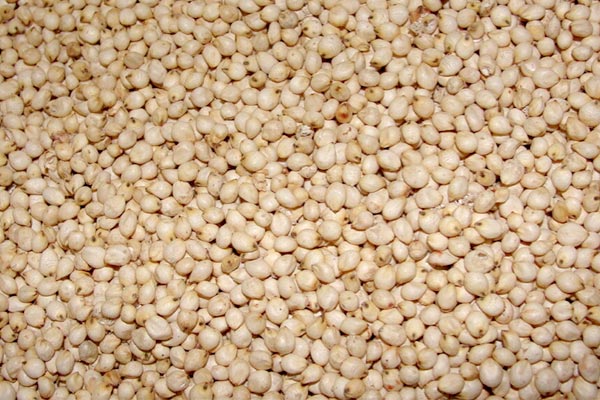
Photo 1: Sorghum grain. Source

Sorghum has many beneficial properties and health benefits.
Sorghum grain contains 60–80% starch; 8–17% protein; 1.7–6.5% fat. Sorghum seeds contain many important nutrients, including proteins, fibre, B vitamins, iron, calcium and phosphorus. Thanks to its nutritional composition, sorghum can be a valuable source of food. In addition, sorghum is rich in antioxidants such as flavonoids and phenolic compounds. Antioxidants help protect the body from free radicals, reduce inflammation and may help prevent diseases such as heart disease, cancer and certain chronic illnesses. Sorghum seeds also contain high amounts of fibre, which helps normalise the digestive process. Fibre helps improve intestinal motility, prevents constipation and promotes the development of beneficial gut microbiota. Sorghum also has a low glycaemic index, which means that it does not cause a spike in blood sugar levels after consumption. Thus, sorghum may be useful for controlling blood sugar levels in people with diabetes or problems with glucose regulation.
Sorghum also contains phytosterols, which may help lower blood cholesterol and protect the cardiovascular system. The high levels of dietary fibre in sorghum may also help reduce the risk of heart disease. Due to its antioxidant content, sorghum may have anti-inflammatory properties. Sorghum seeds are also rich in flavonoids, which have antioxidant and anti-inflammatory effects on the skin. This may help reduce inflammation, prevent premature ageing and improve overall skin health.
What are the culinary applications of sorghum?
Interest in sorghum as food for humans is increasing thanks to its impressive nutritional profile. Its grains can be prepared in various ways – for example like quinoa or rice, they can be milled into flour or even popped like popcorn. For people who avoid gluten, sorghum is an excellent and healthy choice. It is a great alternative to wheat flour and can be used in various baked goods such as bread, biscuits or desserts.
Sorghum has numerous culinary applications and is easily incorporated into a variety of recipes. When milled into flour, sorghum has a neutral taste and contains no gluten, which makes it an excellent substitute for traditional gluten-containing flours in most recipes.
In addition, sorghum flakes, also known as “sorghum kernels”, are excellent for inclusion in breakfast cereals and baked products such as cookies. Sorghum syrup also has its place in the kitchen, being used as a natural sweetener for various dishes and beverages.
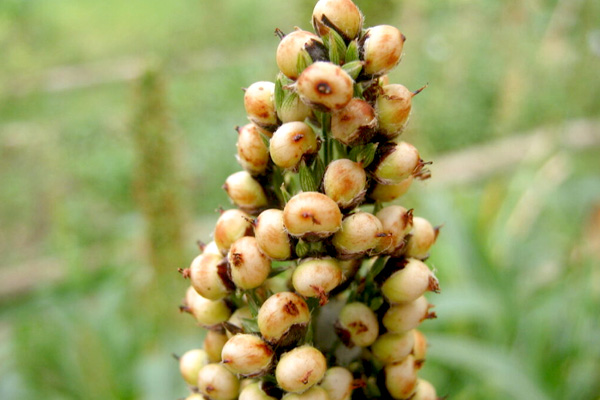
Photo 2: Sorghum. Source

What are the conditions for growing sorghum?
Of all cereal crops, sorghum is the most thermophilic plant; even small and short-lasting frosts down to -1 to -3 °C are destructive to the seeds. The optimum temperature is 27–35 °C, and the plant tolerates heat up to 40 °C. Seeds germinate at a temperature of 8–13 °C, optimally at 18–20 °C. The minimum mean daily temperature for the onset of flowering is 14–15 °C, for ripening – 10–12 °C. The sum of active temperatures during the growing season is 2250–2500 °C.
Sorghum is considered the most drought-resistant field crop.
It tolerates heat well and continues to assimilate with its leaves even when maize loses turgor and begins to curl. Sorghum successfully copes with both soil and atmospheric drought. During the first 30–40 days after germination, its growth is slow; under drought conditions the plants may “freeze” – the leaves curl, secondary roots are not formed and development stops.
This is also its unique property – the ability to survive under extreme conditions, such as temperatures above 30°C and prolonged drought, by temporarily stopping growth. It can remain in a latent state for up to 40 days and immediately resume growth once conditions improve. Few crops can withstand such stress.
Sorghum can be grown almost everywhere maize is grown, but it delivers the best economic results under extremely dry conditions, where crops such as wheat and barley show poor yields.
Sorghum provides acceptable yields without irrigation at the edge of semi-desert areas. The plants utilise rainfall during the second half of summer and early autumn.
The plant is light-loving, absolutely undemanding and easily adapts to soil and climatic conditions. Sorghum gives high yields under drought conditions, efficiently using soil moisture and being able to grow on fertile clay soils, light sandy and well-aerated loamy soils.
Sorghum is undemanding to soil fertility, can be grown without the use of mineral fertilisers, ameliorates saline soils and improves their overall condition. In crop rotation, the crop reduces disease development, decreases pest populations and is a good predecessor for cereal crops. For its cultivation it is sufficient to apply only 100–150 kg/ha of nitrogen and 60 kg/ha of phosphorus and potassium. After harvest, up to 40% of nitrogen, up to 80% of potassium and up to 30% of phosphorus are returned to the soil.
Profitability of sorghum
The final costs for growing sorghum are significantly lower than those for growing maize or spring barley. Another advantage is the price of seed for sowing 1 hectare – it is half the price of maize seed and 20% lower than the cost of barley seed.
The main factors for the profitability of sorghum are:
• low seed price,
• high yield (up to 10 t/ha),
• lower seeding rate,
• low costs for plant protection products and fertilisers,
• high resistance to drought and heat, undemanding to soil quality,
• high feed, technical and nutritional potential for utilisation of the crop.
The traditional sorghum market is oriented towards Asia. Analysts forecast a stable increase in sorghum grain demand in China, but there is also a rise in demand for grain and processed plant products on the internal market of the European Union.
Due to its high drought tolerance and low requirements for nutrients and soils, sorghum can be an alternative to maize in years with critical climatic conditions.
The competitive advantages of sorghum over maize are:
• high yield,
• lower seeding rate (2–3 times) and lower seed purchase costs,
• high ecological plasticity,
• possibility for later sowing and harvesting dates,
• versatility of use.
What is the technology for growing sorghum?
The sowing time plays an important role in the growth and productivity of sorghum. Early crops (late April – early May) grow and develop more poorly and significantly reduce yields – by 30–40%.
Mineral fertilisers significantly increase the yield of all sorghum hybrids and their use leads to an increase in crop productivity by 15–30% or more. Specialists recommend the application of 30 kg/da before or during sowing. During the growing season, fertilisation is not recommended, as this provokes the development of diseases and lodging.
Soil preparation and weed control are important. It is necessary to provoke weed germination in order to control them mechanically. Uniform emergence can be achieved at a soil temperature of 12–14 °C.
Sowing depth should be 4–6 cm, depending on the soil. Seeder discs should have holes with a diameter of 2–2.5 mm. The lower the moisture, the lower the seeding rate. For example, for the southern part of Russia, the recommended rate is 100–120 thousand seeds per hectare. In areas with good moisture supply, up to 200 thousand seeds per hectare can be sown.
Currently, there are few herbicides registered for sorghum, including 2,4-D and aclonifen-based products that can be used in sorghum crops. But if there is a weed such as foxtail in the field, it is better not to grow sorghum in these areas, as control of this weed in sorghum crops is not possible.
It is necessary to control the development of aphids, as they are the most dangerous pest for sorghum. Aphids can migrate from cereal fields. When applying chemical plant protection products, it is necessary to comply with the rules of use, in particular to observe the quarantine periods so that there are no pesticide residues in the grain.
It is very important to harvest on time. This crop should be given the highest priority during harvest.
Climate change affects the stability of food production and this leads to threats to food security. Rising temperatures and changing rainfall patterns are altering crops’ water requirements, reducing production while increasing irrigation costs across the agricultural landscape. Under these conditions, switching to substitute crops with lower water requirements, tolerance to abiotic stress, higher yield or biomass per unit of water is crucial for long-term agriculture. With its applications – as a staple food for humans, but also as a major forage crop for feeding animals, sorghum can adapt to a variety of agronomic and environmental conditions, mainly under low rainfall, insufficient water availability for irrigation and salinity. It has been established that sorghum is less vulnerable to climate variables, which allows it to maintain high productivity while serving as a source of food for humans and animals, as well as for obtaining fresh biomass for industrial production and for ensuring food security. In-depth research is needed to provide even more precise conclusions regarding the potential of sorghum in modelling sustainable crops for ensuring food security.
Source: Climateka
________________________________________
Source of cover photo: Adobe Stock Images (free licence)
________________________________________
The article uses materials from:
1. Sorghum: Properties, Synthesis and Application, Sorghum: Properties, Synthesis and Application 2019, Agriculture, Agriculture Issues and Policies, Crops, Nova
2. Handbook of Sorghum, Dr Dr J V & Mishra J S Patil, Daya Pub. House (January 1, 2014)
3. The History and Distribution of Sorghum, Carleton Roy Ball, January 31, 2024
4. Sorghum: A prospective crop for climatic vulnerability, food and nutritional security, Md. Saddam Hossain a, Md. Nahidul Islam b, Md. Mamunur Rahman c, Mohammad Golam Mostofa d, Md. Arifur Rahman Khan, Journal of Agriculture and Food Research, June 2023