

![MultipartFile resource [file_data]](/assets/img/articles/зелеви-култури-заглавна.jpg)
Abstract
Cabbage is one of the main vegetable crops. In ancient times, besides being used as food, it was also used as a medicine. In terms of harvested area, it ranks fourth after tomatoes, peppers and watermelons. It has a high content of vitamins, especially vitamin C, amino acids, sugars, nitrogen compounds and mineral salts. Its low caloric value and excellent taste qualities make it a preferred food. The article examines the benefits of its consumption and its biological requirements during cultivation. The diseases and pests of greatest economic importance, as well as the favourable conditions for their development, are described. The methods and means of control and the registered plant protection products (PPPs) for treatment are indicated.
Cabbage is one of the main vegetable crops. It belongs to the family Cruciferae, genus Brassica, which includes about 50 species. The best-known ones are: head cabbage, napa cabbage, Chinese cabbage, etc. Varieties of head cabbage are Brussels sprouts, cauliflower, broccoli, kale and others. The place of origin of cabbage is Europe. It originates from wild leaf cabbage, distributed in the Mediterranean region and in Western Europe. In Ancient Greece it was used as food and for the treatment of skin diseases and wounds. The ancient Romans attributed a divine origin to it and consumed it abundantly as both food and medicine. The Celts were the first to start growing it in 1000 BC in Central and Western Europe. According to other sources, the ancient Iberians, who inhabited present-day Spain, were the first to cultivate cabbage. Later it was introduced into Greece, Egypt and Rome. On the Balkan Peninsula it became known in the first years of the new era. Ancient people believed that cabbage possessed healing properties and considered it divine food.
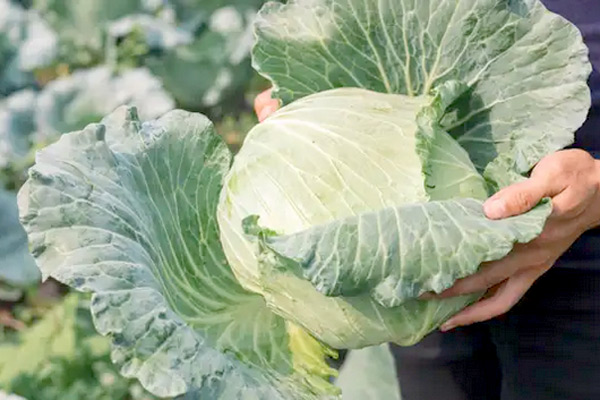
According to the ancient Greek mathematician Pythagoras, "cabbage is a vegetable that maintains constant alertness and a cheerful disposition of the mind". Because of its high vitamin C content it is called the "northern lemon". The amount of this vitamin in white head cabbage is as high as in citrus fruits, and in broccoli, cauliflower and Brussels sprouts it is nearly twice as much. Its low caloric value and excellent taste qualities make it a preferred diet food. It is used all year round because it is easy to store. It is rich in amino acids, sugars, nitrogen compounds, mineral salts and vitamins. It contains on average 92% water, 2.6 to 8% sugars, 1.4% proteins, 0.6% mineral salts (potassium, calcium, phosphorus, sulphur, sodium, chlorine, magnesium, iron, traces of iodine, manganese) as well as other microelements. The highest content of proteins, sugars and vitamins is found in the inner leaves and the core of the cabbage. The cellulose content is about 0.8%. Cabbage also contains various enzymes and vitamins. Vitamin C is on average 40 mg%. Vitamins B1 and B2 are found in significant quantities. It is a good source of vitamin B6 and folic acid. Carotene is found mainly in the outer leaves with a greenish hue. The phytoncides of cabbage have bactericidal medicinal properties. White cabbage is the only one that contains vitamin U. Besides white, there are red and purple varieties. In the Mediterranean region naturally growing cabbage can still be found along the coastline. Under the conditions in Bulgaria, early, medium-early and late cabbage are grown. In terms of harvested area, it ranks fourth after tomatoes, peppers and watermelons.
DISEASES
They are caused by viruses, mycoplasmas, bacteria and fungi. Of economic importance are the causal agents of mosaic, bacteriosis, damping-off in seedlings, clubroot, downy mildew, black leaf spot and sclerotinia (white) rot in cabbage.

Mosaic in crucifers (Cauliflower mosaic virus (Brassica virus 3)
In our country it is of greater importance for cauliflower and head cabbage. The virus is inactivated at 78°C for 10 minutes. It is transmitted by aphids. The first symptoms are fading of the leaf veins; the tissue immediately around them remains dark green, while the rest fades. In case of early infection, the plants are stunted and deformed. The virus is preserved in plant residues and on overwintering cruciferous weeds. It is not transmitted by seeds. In the field, mass infection is carried out by the aphids Myzus persicae and Brevicoryne brassicae.
Control
Observance of spatial isolation between seed production fields and other crops; systematic control of aphids in nurseries and fields; removal of the first diseased plants.
Black rot (bacteriosis) (Xanthomonas campestris pv. campestris (Pam) Douson)
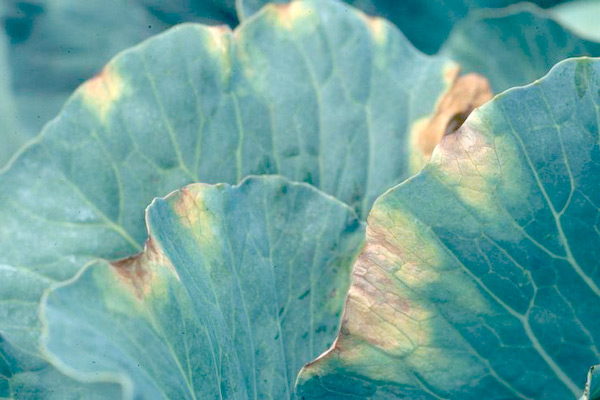
It spreads through raindrops or insects. When infected seeds are sown, they either do not germinate or the young sprouts rot. In plants that have emerged from such seeds, lightening of the cotyledons is observed and the vegetative tip dies. Secondary infection occurs in the field through the hydathodes of the leaves. The first symptoms are expressed in blackening of the veins from the tip to the base of the leaf. The tissue between them fades and dies. A characteristic symptom is the presence of V-shaped spots. In cross-section of the leaf or stem, the vascular bundles are seen to be black. The plants are stunted, do not form heads and sometimes die. On cauliflower heads black spots of rotting tissue are formed. The disease develops at a temperature of 5o – 39oC and humidity above 50%. Until the next season the pathogen is preserved in the seeds, plant residues and soil. It is of greater importance for cauliflower and late head cabbage.
Control
Introduction of a 3-year crop rotation; sowing of certified, treated seeds; optimal density of seedlings and crops; removal of the first diseased plants; spraying of plants and soil with copper-containing PPPs.
Damping-off in seedlings
It is caused by the fungi Pythium spp., Fusarium spp. and Rhizoctonia solani. They are preserved in the soil or in plant residues for an indefinite period. If the seedlings are affected before emergence, the plants die immediately after they appear above the soil surface. If rotting occurs after emergence, the plants also die, but somewhat later. At the base of the stem, slightly below and above the root collar, dark sunken spots are observed. They may enlarge, encompass the entire plant and cause its death. Cool and cloudy weather, high air and soil humidity, compacted soils and high plant density favour its development.
Control
Seed disinfection; at planting, only healthy plants are selected; removal of the first diseased plants; burning of infection foci with a 2% solution of CuSO4 or ammonium nitrate (3-4 l/m2); watering of neighbouring healthy plants or spraying of the entire crop with Infinito 0.15%.
Clubroot in cabbage (Plasmodiophora brassicae Woronin).
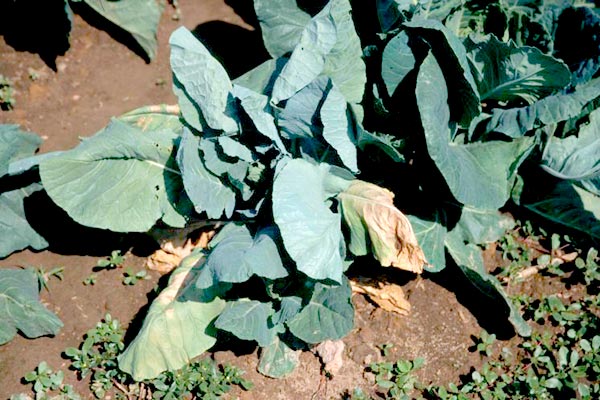
This is one of the most dangerous diseases of cruciferous crops. It most often occurs on heavy and acidic soils. Symptoms of the disease are observed in all stages of plant development. Seedlings infected in the nursery stage have a chlorotic appearance. They wilt during the warm hours of the day and restore their turgor at night. Later they die. Plants infected in the field are stunted, the heads remain small and undernourished. Tumour-like formations of various sizes and shapes appear on the roots, which are initially pale yellow but later darken, fall off and rot. They hinder the transport of water and nutrients to the above-ground parts. Above the damaged area, secondary roots are formed, but they cannot ensure normal plant development. The pathogen forms spores that overwinter in plant residues or in the soil. In spring, after a series of transformations, it penetrates through the root hairs and causes hypertrophy and hyperplasia. As a result, the tumour-like formations are formed. Mass infections occur at high soil moisture – 75-90% of field capacity and a temperature of 18-24°C. For germination, the spores need an acidic environment. Under favourable conditions for the development of the pathogen, losses can reach 70-80%.
Control
Introduction of an 8-year crop rotation with legumes on soils with established infection; liming of the soil with 1-2 t/ha saturated lime or with 0.5-1 t/ha lime powder; removal of plant residues at the end of the vegetation period.
Downy mildew (Peronospora parasitica (Fr) Tul.)
The disease is widespread in regions with a cooler climate. In Bulgaria it is more harmful on seedlings for early production and in autumn on late cabbage. The first symptoms appear on nursery plants as sunken spots that are covered on the underside with a loose whitish coating of fungal spores. Later, the coating disappears and the spots scorch. In case of severe infection, young plants may die. In adult plants, the outer leaves of the heads are attacked first. Numerous ashy-grey spots appear on them, merging with each other. Sometimes deeper leaves can also be attacked, leading to rapid rotting of the entire heads. In seed production crops, the pathogen attacks the flower stalks, fruit pedicels and pods, and from there the seeds. The fungus survives until the next vegetation as oospores in plant residues. It also overwinters in the heads from seed production crops. These are probably the primary sources of infection. It is also preserved in nursery beds. Mass infection occurs at a temperature of 160C, and at 20 - 24°C the pathogen develops in the tissues of the host plant.
Control
Sowing of certified, treated seeds; optimal density of seedlings and crops; treatment with PPPs under favourable conditions and after the appearance of the disease: Infinito SC; 500 g/ha 160 ml/ha; Ridomil Gold R WG 500 g/ha.
Black leaf spot (alternariosis) (Alternaria brassicae (Berk) Sacс.)
It attacks almost all species of the family Cruciferae. It infects plants in all stages of their development. Under the conditions of our country, it is of greater importance in seed production crops. The first symptoms on seedlings are the appearance of small black spots on the stems of the plants, which may soon die. Those that survive and are transplanted to the field lag severely in their development and the yield from them is greatly reduced. Small spots appear on all parts of large plants, which quickly enlarge and reach a diameter of 1 cm. They are grey-black with a concentric structure. In wet weather they are covered with a black coating of the fungal sporulation. On flower stalks and pods the spots have different shapes, most often elongated. In case of severe infection, the pods deform, the pathogen passes through the walls, reaches the seeds and infects them. The optimum temperature for infection is 25 - 30°C. Under favourable conditions, the incubation period is very short – 2-3 days, so that within a short time the disease can destroy a large part of the seed crop. Until the next vegetation period it is preserved in the seeds and as mycelium and spores in plant residues.
Control. Seed disinfection; removal of the first diseased plants; treatment with PPPs under favourable conditions and after the appearance of the disease: Dagonis 100 ml/ha; Difcor 250 SC 50 ml/ha; Ortiva Top SC 100 ml/ha; Score 250 EC 0.05%; Tazer 250 SC 100 ml/ha.
Sclerotinia rot in crucifers (white mould) (Sclerotinia sclerotiorum)
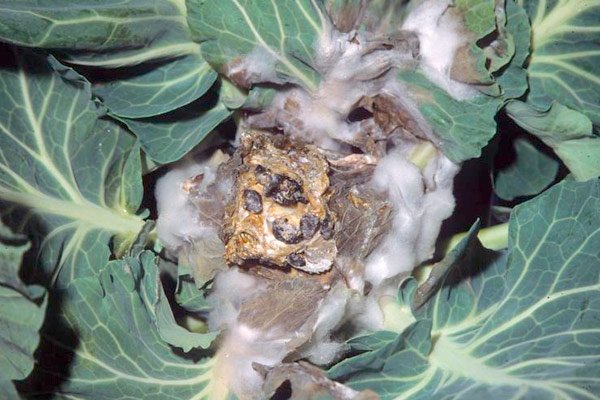
The disease attacks cruciferous species and varieties intended for fresh consumption, storage and processing. It can cause significant losses during storage, transport and keeping of the produce. It prefers cool and humid areas. Plants are infected in all stages of their development, but the first symptoms appear in the middle of the vegetation. On the stem, at the border with the soil surface and at the base of the leaves, round watery spots initially appear, which soon become covered with a fluffy white coating. Gradually, the fungus colonises the entire head, which rots and is covered with white mycelium. Later, large black sclerotia are formed in it, with which the pathogen overwinters in the soil and in plant residues. Under dry conditions they retain their viability for more than 10 years. Cold, humid conditions favour the development of the disease, although the fungus develops over a wide temperature range. Its development and spread are favoured by monoculture cultivation of cruciferous crops and non-observance of crop rotations. In Bulgaria the disease was first described in 1961, after which it almost disappeared. In 2010, in the Maritsa Vegetable Crops Research Institute, Plovdiv, infection was established on head cabbage and broccoli, and since then it has appeared almost annually.
Control. Agrotechnical measures are of great importance: introduction of a 4-year crop rotation; deep tillage of the areas to bury the sclerotia; production of healthy seedlings; planting in well-ventilated, well-drained sites; orienting the rows in the direction of prevailing winds; in fields with established infection, cultivation of non-susceptible hosts (cereals); destruction of the first diseased plants; injuries to the heads during harvesting can be a cause of infection during storage in commercial warehouses, where healthy heads in contact with diseased ones become infected; Registered PPPs: Contans WG 200-600 g/ha; Fungisei 300 ml/ha.
PESTS
Ornate cabbage bug (Eurydema ornata L.)
It develops one and partially a second generation. It overwinters as an adult insect under plant residues. It appears as early as the end of March. The adults and nymphs feed by sucking sap from the young tender parts of cruciferous plants and the tissues at the feeding sites die. Yellowish-white spots appear on the leaves, which later darken and dry out. Damaged plants lag in development, form small heads, which are very often tasteless.
Control. At the appearance of the pest and detection of more than 2 adults per plant, treatment can be carried out with the following products: Deca EC/Desha EC/Dena EC/Poleci/Decis/ Deltin 50 ml/ha; Meteor 80-90 ml/100 l water.
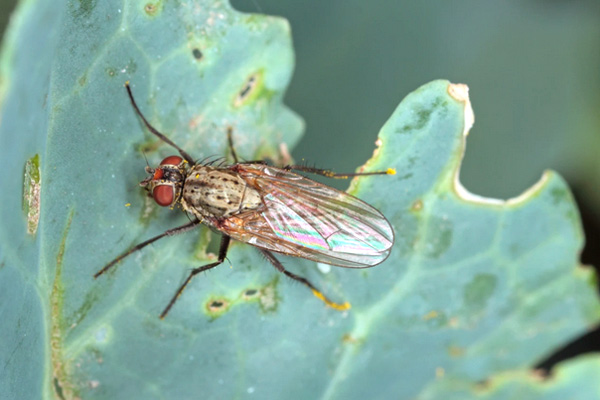
Cabbage fly (Delia brassicae Bouche)
The fly has three generations per year. It overwinters as a pupa in the soil. Flight begins in April. It lays its eggs on the soil surface or around the root collar of cruciferous plants. The larvae superficially gnaw the roots, make spiral tunnels and bore into the root itself. The outer leaves fade, acquire a bluish-violet tint and droop downwards. The plants wilt, lag in development and die.
Control. At the beginning of flight and egg laying of the adults, when 6-8 eggs/plant are detected, treatment can be carried out with the products: Deca EC/Desha EC/Dena EC/Poleci/Decis/Deltin 50 ml/ha. Before or during transplanting, Force 1.5 WG 300-500 g/ha can be applied.
Cabbage aphid (Brevicoryne brassicae L.)
It develops 18-20 generations per year. It overwinters as eggs on cabbage for seed production, on plant residues and wild cruciferous plants. The larvae hatch at the end of March – beginning of April at an average daily temperature of 12-14oC. Mass multiplication on early cabbage occurs around mid-July. Infection of late cabbage begins in August, with a maximum from the end of August to the beginning of September. Severely infested plants do not form heads or, if they do, the heads remain small and contaminated, unfit for consumption.
Control. When 5% infested plants are detected in medium-early cabbage production and 2% infested plants in late production, treatment is carried out with one of the following products: Decis 100 EC 7.5-12.5 ml/ha; Deca EC/Desha EC/Dena EC/Poleci/Decis/Deltin 50 ml/ha; Closer 120 SC 20 ml/ha.
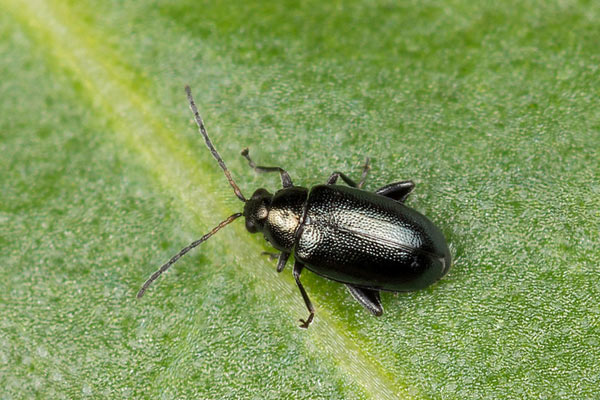
Cabbage flea beetles (Phyllotreta sp.)
They develop one generation per year. They overwinter as adult insects under plant residues, in the topsoil and other protected places. They prefer younger plants. They gnaw the upper epidermis and parenchyma. As the tissues grow, the leaf becomes perforated and torn. Damaged leaves dry and fall off. Plants lag in development, give low yields and die. The larvae of most species feed on the main root, making a longitudinal channel along the bark or a channel around the root collar.
Control. Chemical control is carried out when 10 beetles/m2 or 10% destroyed leaf mass are established during vegetation. Treatment can be carried out with Meteor 60-70 ml/100 l water.
Above-ground cutworms
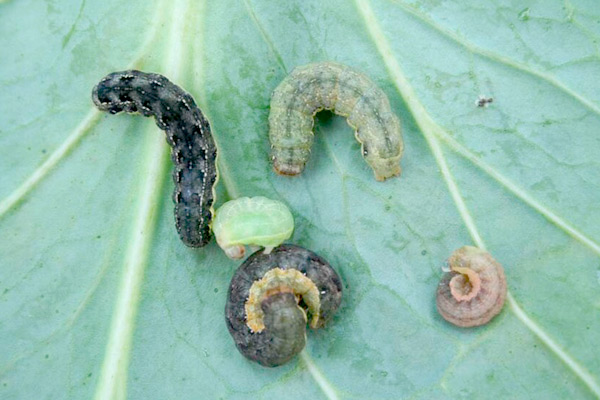
Caterpillars from different generations of cabbage moth (Mamestra brassicae [L.]) (photo: S. Trdan)
Cabbage moth (Mamestra brassicae L.)
It develops two to three generations per year. It overwinters as a pupa in the soil. Moths of the first generation fly from the end of April to the beginning of May. Moths of the second generation fly from the second half of June to the end of July, and of the third – from the second half of August to the first half of September. The caterpillars make feeding damage on the leaves and heads. After hatching, they live on the underside of the leaves, later gnawing the leaves without the thick veins and penetrating into the head. Damaged heads have an unpleasant odour.
Garden moth (Mamestra oleraceae L.)
It develops two generations per year. It overwinters as a pupa in the soil. The flight of moths of the first generation begins at the end of April – beginning of May. Moths of the second generation fly in July-August. The caterpillars cause the damage. At first they window the leaves, later they eat the leaf blade entirely without affecting the thick veins. Unlike the cabbage moth, the caterpillars of the garden moth do not penetrate into the head.
Control. Treatments are carried out at the appearance and detection of damage by caterpillars at 12-15 caterpillars/100 plants in medium-early cabbage and 15-18 caterpillars/100 plants in late cabbage. The following insecticides can be used: Altacor 35 WG 8-10 g/ha; Deca EC/Dena EC/Desha EC/Poleci/Decis/Deltin 30-50 ml/ha; Meteor 80-90 ml/100 l water; Decis 100 EC 7.5-12.5 ml/ha; Dipel 2X 100 g/ha; Dipel DF 75-100 g/ha; Deciside 25 g/ha; Exalt 200 ml/ha; Karate Zeon 5 CS 15 ml/ha; Sumi Alpha 5 EC/Sumicidin 5 EC/Oasis 5 EC 25 ml/ha.
Soil cutworms (Grey worms).
These include winter (Agrotis segetum Schiff.) and ipsilon cutworms (Agrotis ypsilon Rott). The winter cutworm has two generations per year and overwinters as an adult caterpillar in the soil. The ipsilon cutworm has three full generations per year and partially a fourth; it overwinters as a pupa and adult caterpillar in the soil. Young caterpillars feed by gnawing the leaves from below without affecting the upper epidermis. Older caterpillars hide during the day under the soil surface, under clods of earth, and at night feed on the leaves, gnawing holes and later the entire leaf except for the thickest veins. Adult caterpillars almost do not come out of the soil, gnawing the stems below the surface. The caterpillars are earth-grey to black, smooth, shiny, with an oily sheen and can often be found near plants coiled into a “ring”.
Control. Economic injury level after transplanting is 1 caterpillar/m2, after head formation 2 caterpillars/m2. Spraying with Deca EC/Dena EC/Desha EC/Poleci/Decis/Deltin 30-50 ml/ha; Exalt 200 ml/ha is recommended.
White cabbage butterflies
Large white cabbage butterfly (Pieris brassicae L.)
It develops three to four generations per year. Butterflies appear at the end of April – beginning of May. They are active during the day in warm and sunny weather. Young caterpillars live together up to the second instar. They gnaw the leaves without affecting the upper epidermis. Adult caterpillars eat the leaves completely, together with the thin veins, skeletonising them and leaving only the thick veins.
Small white butterfly (Pieris rapae L.)
It develops two to three generations per year. Butterflies fly from the end of April to the beginning of May. Young caterpillars gnaw the leaves without affecting the upper epidermis, then make round holes, and later eat the entire leaf except for the thick veins. Damaged tissues rot and smell unpleasant.
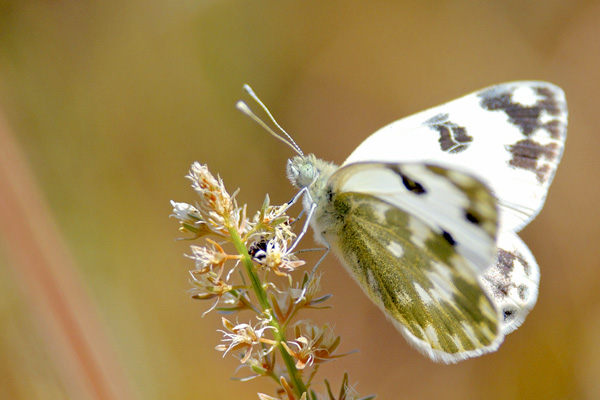
Bath white (Pieris daplidicae L.)
It develops two to three generations. It overwinters as a pupa. Butterflies fly in April-May. The forewings of the adult insect are white, mottled with black spots and stripes. The caterpillars feed by gnawing the leaves, buds and pods in seed production crops.
Control. After transplanting the crop, when more than 1% severely infested plants or 2-3 caterpillars/plant are detected, treatments can be carried out with Altacor 35 WG 8-10 g/ha; Decis 100 EC 7.5-12.5 ml/ha; Dipel 2X 100 g/ha; Dipel DF 75-100 g/ha; Deciside 25 g/ha; Exalt 200 ml/ha; Meteor 80-90 ml/100 l water; Citrin Max/Cyperkill 500 EC/Cypert 500 EC/Poli 500 EC 5 ml/ha.
Diamondback moth (Plutella maculipennis Curt.)
It develops four to six generations per year. Butterflies of the first generation fly around the end of April – beginning of May. The moth has grey-brown forewings. With wings spread it reaches 14-17 mm, and with wings folded three diamonds are formed. Under our conditions, the second generation is the most harmful. Damage is caused by the caterpillars already in the seedling stage. They bore under the epidermis and mine the leaves. In cabbage seedlings they gnaw the vegetative tip. Adult caterpillars damage the outer and inner leaves of the head and consequently the heads remain small and misshapen.
Control. For diamondback moth caterpillars the economic injury level is 10% damaged leaf mass after head formation. Treatments can be carried out with one of the following insecticides: Altacor 35 WG 8-10 g/ha; Decis 100 EC 7.5-12.5 ml/ha; Dipel DF 75-100 g/ha; Exalt 200 ml/ha; Sumi Alpha 5 EC/Sumicidin 5 EC/Oasis 5 EC 25 ml/ha.
Slugs (Limacidae)
Slugs are polyphagous pests. They occur at higher densities in years with a warm and humid spring. They develop several generations per year. They are moisture-loving, nocturnal, non-insect pests. They make irregular feeding damage on the leaves. They enter the formed heads, make holes in the form of various longitudinal strips, leave slime trails along their path and contaminate the produce. The strongest infestation by slugs is observed in late production of head cabbage.
Control. It can be carried out by applying the products Karakol 5 GB 0.7 kg product/ha; Limatak 500 g/ha.
In field-grown cabbage, damage can also be observed from mole crickets immediately after transplanting, especially in early production, from the cabbage stem weevil and from thrips.
The pest control system in cruciferous crops includes the following measures:
- Crop rotation and spatial isolation;
- High-level agronomic practices in crop cultivation, ensuring uniform development and good stand density;
- Collection and destruction of plant residues after harvest in autumn;
- Deep ploughing, mechanically destroying overwintering caterpillars, pupae and other stages;
- Use of healthy and hardened seedlings;
- Regular soil cultivation during the vegetation period;
- Optimal irrigation regime;
- Control of weed vegetation during the vegetation period;
- Regular field inspections to determine species composition and density of pests;
- Carrying out chemical treatments according to economic injury thresholds.
Agrotechnical and organisational practices in seedling production
- Growing seedlings far from seed production and other cruciferous crops;
- Growing in pathogen-free substrate;
- Disinfected pots, trays, etc.;
- Optimal soil moisture;
- Optimal seedling density;
- Removal of the first diseased plants and their destruction far from the nursery beds;
- Treatment with PPPs when necessary;
Agrotechnical and organisational practices after transplanting
- Transplanting healthy seedlings and ensuring optimal plant density;
- Weed control;
- Strict phytosanitary regime;
- Optimal soil moisture regime and optimal agrotechnical practices;
- Monitoring for occurrence and spread of diseases;
- Introduction of crop rotations;
- Mechanical collection of severely infested plant parts with disease spots and their destruction;
- Treatment with PPPs. Alternation of PPPs with different functional groups to prevent resistance;
- Application of PPPs with a short pre-harvest interval during the harvesting period.
When preparing spray solutions, it is necessary to add an adjuvant.
References
1. Bahariev D., B. Velev, S. Stefanov, E. Loginova, 1992. Diseases, weeds and pests of vegetable crops. Zemizdat, Sofia, 339.
2. Bogatzevska N., Y. Stancheva, Hr. Boteva, St. Masheva, E. Loginova, V. Kharizanova, H. Samaliev, D. Hristova, D. Karadzhova, V. Nikolova, V. Aleksandrov, T. Toshkova, D. Grozdanova, 2008. Guide for integrated pest management in vegetable crops. National Plant Protection Service. Ministry of Agriculture and Forests. Sofia. 238.
3. Ganeva D., V. Todorova, N. Velkov, G. Antonova, V. Petkova, S. Kalapchieva, E. Nacheva, S. Sofkova-Bobcheva, S. Genova, Hr. Boteva, St. Masheva, V. Yankova, D. Kostova, M. Mihov, T. Cholakov, O. Georgieva, Tsv. Dincheva, B. Arnaudov, D. Markova, G. Pasev, 2014. Technologies for the production of vegetable crops and potatoes. „Blakom” Printing House - Plovdiv, 245.
4. Sharma, A., J. P. Rathore, A. Ali, I.Qadri, S. Mazahir, H. T. Angmo, 2018. Major diseases and pathogen ecology of cabbage, The Pharma Innovation Journal, 7(7): 574-578.
5. Hoidal, N., 2022. Black rot of Brassica crops, University of Minnesota Extension.