

![MultipartFile resource [file_data]](/assets/img/articles/заглавна-овощни-юли-2024.jpg)
More suitable conditions for carrying out plant protection sprays (against the second generation of fruit moths in orchards, mites) will occur during the second half of the first, on most days of the second ten-day period, and at the end of the month. Treatments must be carried out during the cooler hours of the day. The likelihood of local intensive weather events and hail, and the resulting damage to agricultural crops, remains. After hail, treatment with a copper-based product is applied.
In fruit nurseries
Apple and peach nurseries and clonal apple rootstocks in mother plantations are sprayed against powdery mildew every 8–10 days until growth stops. For spraying, a sulphur-based product - Sulphur WG 600 g/da, Solfo 80 WG – 750 g/da or one of the products – Systhane 20 EW – 0.03%, Luna Experience – 50–75 ml/da, Flint Max 75 WG – 0.02% is used.
Control of cylindrosporium leaf spot continues. Cherry and sour cherry nurseries and seedbeds with mahaleb cherry seedlings are sprayed with Syllit 544 SC – 125 ml/da.
Trees attacked by the flatheaded apple tree borer and dried trees are uprooted and burned.
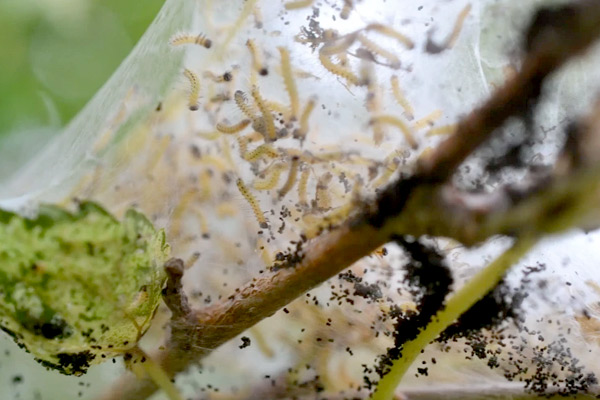
Caterpillars of the fall webworm
Detected nests of fall webworm are collected and burned.
Plum nurseries are sprayed with Signum – 45 g/da against plum rust.
Against aphids and leaf-feeding caterpillars, treatment is carried out with a pyrethroid insecticide – Decis 100 EC (7.5–12.5 ml/da), Sumicidin 5 EC (0.02%), Aphicar 100 EC (15 ml/da), Efcimetrin 10 EC (15 ml/da).
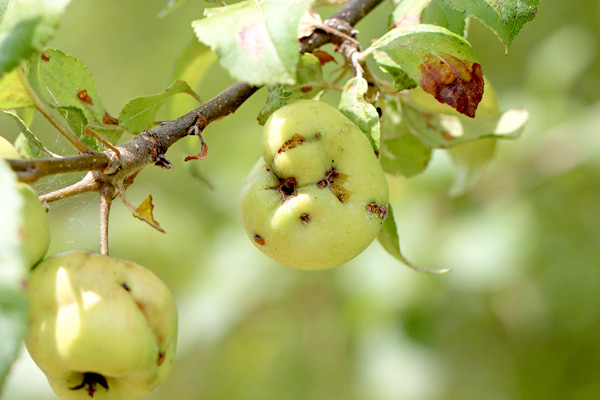
In July, in apple orchards where scab infection has not been allowed, spraying against this disease is discontinued. In the presence of infection on leaves and fruits and with frequent showers, the risk of late infections and an increase in the degree of fruit infestation persists, which in this case requires treatment also during this period.
In fruit plantations
Apple plantations are sprayed with one of the products – Carpovirusine (100 ml/da), Madex Top (10 ml/da), Dipel DF (50–150 g/da), Sineis 480 SC (20–37.5 ml/da), Delegate 250 WG (30 g/da), Avant 150 EC (33.3 ml/da), Deca EC (30 ml/da), Decline 2.5 EC (30 ml/da), Lamdex Extra (60–100 g/da) upon a signal from the BFSA against codling moth (second generation) and with a sulphur-based product – Sulphur WG 600 g/da, Solfo 80 WG – 750 g/da or one of the products – Systhane 20 EW – 0.03%, Luna Experience – 50–75 ml/da, Flint Max 75 WG – 0.02% and one of the products – Valmec (60–96 ml/da), Apollo 50 SC (40 ml/da), Nissorun 5 EC (0.05%) respectively against powdery mildew and mites.

Codling moth
A second spraying against the second generation of the codling moth is carried out 12–14 days after the first with one of the products – Carpovirusine (100 ml/da), Madex Top (10 ml/da), Dipel DF (50–150 g/da), Sineis 480 SC (20–37.5 ml/da), Delegate 250 WG (30 g/da), Avant 150 EC (33.3 ml/da), Deca EC (30 ml/da), Decline 2.5 EC (30 ml/da), Lamdex Extra (60–100 g/da), with a sulphur-based product – Sulphur WG 600 g/da, Solfo 80 WG – 750 g/da or one of the products – Systhane 20 EW – 0.03%, Luna Experience – 50–75 ml/da, Flint Max 75 WG – 0.02% against powdery mildew and with a pyrethroid insecticide – Decis 100 EC (7.5–12.5 ml/da), Sumicidin 5 EC (0.02%), Aphicar 100 EC (15 ml/da), Efcimetrin 10 EC (15 ml/da) against the serpentine leaf miner moth.
Peach plantations are sprayed with a sulphur-based product – Sulphur WG 600 g/da, Solfo 80 WG – 750 g/da against powdery mildew.
Weeds in the inter-rows of fruit plantations are sprayed with Typhoon SL or another glyphosate-based product – 400–1200 ml/da.
Non-poisonous corrugated cardboard trapping belts are placed for collecting caterpillars of the codling moth and the plum fruit moth, necessary for monitoring their development during the following year. From each species, 500–1000 caterpillars are collected.
Frames – isolators (under 5 heavily infested trees) are placed to preserve the pupae of the serpentine leaf miner moth, necessary for monitoring its development during the following year.
Apple plantations are sprayed with one of the products – Carpovirusine (100 ml/da), Madex Top (10 ml/da), Dipel DF (50–150 g/da), Sineis 480 SC (20–37.5 ml/da), Delegate 250 WG (30 g/da), Avant 150 EC (33.3 ml/da), Deca EC (30 ml/da), Decline 2.5 EC (30 ml/da), Lamdex Extra (60–100 g/da), with a pyrethroid insecticide – Decis 100 EC (7.5–12.5 ml/da), Sumicidin 5 EC (0.02%), Aphicar 100 EC (15 ml/da), Efcimetrin 10 EC (15 ml/da) and with a sulphur-based product – Sulphur WG 600 g/da, Solfo 80 WG – 750 g/da or one of the products – Systhane 20 EW – 0.03%, Luna Experience – 50–75 ml/da, Flint Max 75 WG – 0.02% respectively against codling moth (third spraying against the second generation), serpentine leaf miner moth, powdery mildew.
Pear plantations are treated with a pyrethroid insecticide – Decis 100 EC (7.5–12.5 ml/da), Sumicidin 5 EC (0.02%), Aphicar 100 EC (15 ml/da), Efcimetrin 10 EC (15 ml/da) against pear psylla (third generation), pear lace bug, pear fruit moth, etc.
Plum plantations are treated with one of the products – Carpovirusine (100 ml/da), Madex Top (10 ml/da), Dipel DF (50–150 g/da), Sineis 480 SC (20–37.5 ml/da), Delegate 250 WG (30 g/da), Avant 150 EC (33.3 ml/da), Deca EC (30 ml/da), Decline 2.5 EC (30 ml/da), Lamdex Extra (60–100 g/da) against the plum fruit moth (second spraying against the second generation).
In strawberry plantations
Strawberry plantations are surveyed to detect the strawberry mite; spraying is carried out with one of the products – Valmec (60–96 ml/da), Apollo 50 SC (40 ml/da), Nissorun 5 EC (0.05%).
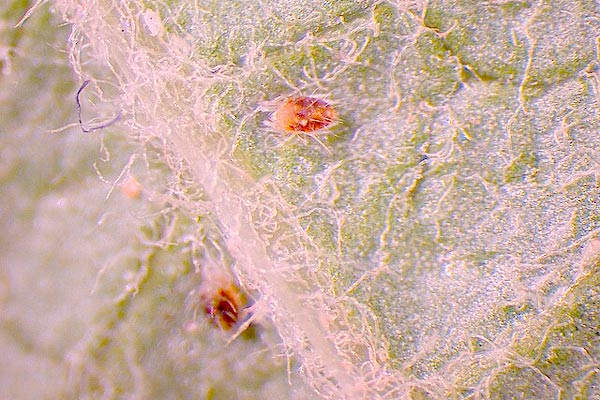
European red mite
In blackcurrant plantations
After harvesting the fruits, the plantations are sprayed with one of the products – Valmec (60–96 ml/da), Apollo 50 SC (40 ml/da), Nissorun 5 EC (0.05%) against mite species.
Weeds in the inter-rows are sprayed with Typhoon SL or another glyphosate-based product – 400–1200 ml/da.
Weed mapping is carried out in all fruit plantations, including blackcurrant plantations.