

![MultipartFile resource [file_data]](/assets/img/articles/заглавна-зърно-1.jpg)
Summary:
Grain grading is an important stage of the post-harvest process, during storage and marketing. Harvesting of wheat is recommended to start 3–4 days before full maturity and to continue for no more than 12 to 14 days. When assessing the quality of wheat varieties, the quality indicators of the grain that are of the greatest importance for the respective production process come to the fore. According to the standard, the quality indicators analysed are: moisture, test weight, total vitreousness, quantity and quality of gluten, baking strength number, impurities – cereal or foreign, and the presence of defective kernels (Fusarium-damaged, mouldy, smutted or damaged by sunn pest). During storage, quality deterioration may be caused by spoilage of the grain through physico-chemical processes (high moisture, heating) and/or by biological processes that may occur (storage pests, grain diseases introduced from the field). According to the quality concerning the final product, the different groups of wheat differ significantly from one another, therefore it is difficult to formulate a general definition. The quality of each group of wheat is determined by its suitability for the production of a specific final product. The National Grain Service annually carries out representative grading of common winter wheat in order to prepare information on grain quality to support grain producers, grain processors and traders in making management decisions for their business activities. The prepared analysis makes it possible to assess the condition and level of grain production with regard to the quality characteristics of the grain.

Standard BDS 602-87 specifies the indicators and their values on the basis of which the consumer and commercial value of wheat grain is determined. According to the standard, the quality indicators analysed are: moisture, test weight, total vitreousness, quantity and quality of gluten, baking strength number, impurities – cereal or foreign, and the presence of defective kernels (Fusarium-damaged, mouldy, smutted or damaged by sunn pest). On the basis of Art. 34, para. 2, para. 3 and para. 4 of Ordinance No. 23 on the conditions and procedures for monitoring the grain market (SG No. 8 /29.01.2016), in order to obtain a comprehensive assessment of the harvested wheat, analyses have been carried out to determine crude protein content; alveograph tests have been performed to determine flour strength; Hagberg falling number (amylase activity) and Zeleny sedimentation value have been determined.
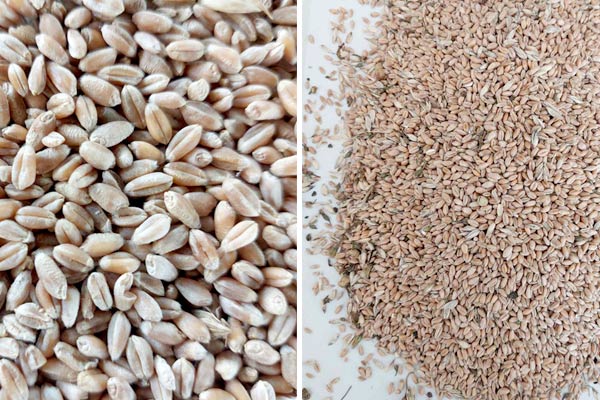
Determining moisture content during the harvest campaign is of paramount importance. The values must not exceed the maximum permissible levels for grain storage (13%). High moisture levels at harvest may damage the grain and impair its quality (grain heating, increased amylase activity). Low moisture during the campaign may damage the crop through cracking and breaking of the grain.
The content of weed seeds in the grain mass increases 2 to 5 times if harvesting is delayed. The greater the delay in harvesting, the higher the content of weed seeds. Grain yields decrease on the 5th day by 2–3%, on the 30th – by 9–10%. The time of harvesting is a factor that has a great influence on grain moisture. The highest average moisture of the grain mass and the maximum moisture of individual kernels are observed early in the morning, when the air temperature during the 24-hour period is the lowest and its relative humidity is the highest. Under normal meteorological conditions early in the morning (from 6 to 7 a.m.) 47% of the wheat grain harvested by combine is dry (with moisture up to 13%), and the remaining 53% is distributed as follows: 31% – medium dry (over 13–16% moisture inclusive), 11% – moist (over 17% inclusive), 7% – very moist (over 19% inclusive) and 4% – very wet (over 19.5%). Around noon and in the afternoon, 99% of the harvested grain is dry and only 1% medium dry. This information on the moisture of the harvested grain is necessary for the farmer to prevent possible deterioration of grain quality during post-harvest handling. Harvesting of grain in our country is single-phase.
The next stage is determining the content of impurities and cleaning. The permissible values for impurities in common winter wheat grain (according to IASAS) are a maximum of 12%, which are distributed in different categories – broken kernels, cereal impurities other than the crop, diseased kernels, sprouted kernels, foreign impurities – small stones, sand, straw particles, other contaminants, etc.
Grain storage
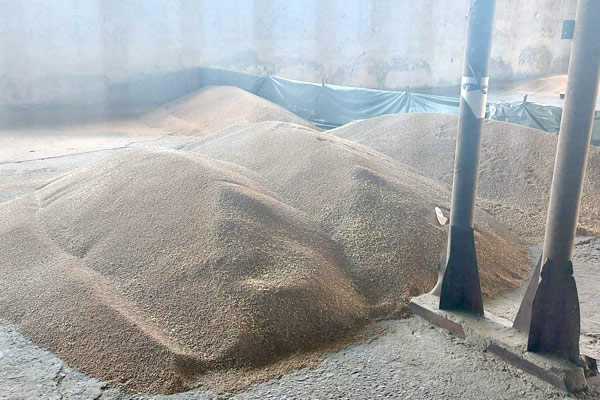
Grain is stored in grain silos or in covered storage areas. During storage, quality deterioration may be caused by spoilage of the grain through physico-chemical processes (high moisture, heating) and/or by biological processes that may occur (storage pests, grain diseases introduced from the field).
The concept of good wheat held by grain producers may radically differ from the opinion of bread producers who use flour, as well as from that of the various users of wheat.
The characteristics that affect wheat quality are grouped as follows:
- Hereditary;
- affected by changes in the specific factors of the area and climatic changes.
- production factors – during the different phases of the production process.
Wheat is classified according to:
1. purpose:
– bread-making (high-quality);
– feed (low-quality).
2. botanical characteristics
- (type I) – common winter – kernels are shorter, rounded, reddish in colour with a groove at the tip. Its endosperm is vitreous, semi-vitreous or mealy.
- (type II) – durum – kernels are more elongated, angular and have a barely noticeable groove; their colour is yellowish-amber and the endosperm is predominantly vitreous.
3. depending on the stage from production to consumption, it is:
- wheat for purchase
- distributable – it has undergone handling in storage facilities and, as a rule, has been stored there for a certain period of time
4. according to quality – determined by vitreousness, test weight and thousand kernel weight, damage by pests
The official variety list of Bulgaria includes four groups of wheat varieties according to the grain quality they form. These are:
Group A – “strong wheats”. The highest-quality varieties, which are classified as flour improvers and have the best baking performance.
Group B – “medium wheats with increased strength”. Varieties with very good indicators, which also have high yield potential. They are the most widespread in practice.
Group V – “medium-strength wheats”. High-yielding varieties suitable for stand-alone bread-making.
Group G – “productive wheats”. Varieties with the highest yield potential and the lowest baking quality.
According to the quality concerning the final product, the different groups of wheat differ significantly from one another, therefore it is difficult to formulate a general definition. The quality of each group of wheat is determined by its suitability for the production of a specific final product. Common winter wheat is a raw material for bread and bakery products, while durum wheat is used for pasta and pasta products.
The reported values for the individual quality indicators suggest a high proportion of wheat with high grain quality. The results obtained from the individual analyses, considered in a complex way – in relation to one another, do not form a homogeneous lot characterized by high milling and baking quality. The reason for this is complex – a combination of the unfavourable interaction of meteorological factors (soil and atmospheric moisture and temperature) during the different phenophases of crop development, combined with the applied agronomic practices, anomalies – large temperature amplitudes, unusually warm winter months with multiple temperature records, a cool spring with prolonged rainfall, often accompanied by storms and hail. Regardless of the climatic conditions, we report low moisture of the harvested grain, which is a guarantee and an opportunity for its long-term storage under appropriate conditions and exercised control throughout the storage period. The rainfall during grain harvesting affects vitreousness and test weight. The quantity and quality of gluten in wheat grain are both a varietal characteristic and directly influenced by the nutritional regime applied in crop cultivation. Quality grain is produced under balanced fertilization, which is a combination of macronutrients – nitrogen (N), phosphorus (P) and potassium (K) with micronutrients – sulphur (S), magnesium (Mg), manganese (Mn), zinc (Zn), etc. The fertilizer rate needs to be determined on the basis of a soil analysis of the nutrient reserves in the soil.
The most important characteristics determining wheat quality include the determination of the physical properties of the grain:
- test weight, which, depending on the quality group, ranges from 76 kg/hl for group A to 71 for group G.
- thousand kernel weight – ranging from 35 g for group A to 30 g for group G.
- total vitreousness of the grain – to exceed 50%
- grain hardness – to be over 50 arbitrary units.
The physical indicators of grain are important primarily for the milling quality of wheat and for the potential flour yield. Its chemical composition and especially the gluten complex are decisive for the baking properties of the varieties.
The main indicators determining the milling and baking quality of wheat are the quantity and quality of gluten (the so-called “wet gluten yield” and “gluten deformation”), the crude protein content, as well as the indirect quality indicators – baking strength number (BSN), falling number and the flour strength index – W and the elasticity and extensibility of the dough – P/L. Wheats rich in protein and gluten, from which flours with high water absorption are obtained, are considered “strong”: during mixing a very elastic dough with great tolerance in processing is formed, and the bread has a large volume and a fine, small-pored crumb. Flour from “weak” wheats is characterized by low water absorption, forms an unstable dough during mixing and produces bread with a small volume and coarse crumb.
- the crude protein content in the grain for high-quality “strong” wheats must exceed 13%.
- wet gluten yield in the grain ensures the protein content and nutritional value and guarantees a corresponding amount of gluten in the flour, which is so necessary for making good quality bread. For first group high-quality wheat (group A) the standard is 28% wet gluten content in the grain. Its high content determines the level of its blending value.
Therefore, it is extremely important to ensure wheat quality, which should include all planned and systematic activities necessary to provide justified consumer confidence so that the final product (grain) meets specified quality requirements. This is closely related to standards and methods for quality control.
The wheat quality assurance system covers breeding, cultivation, cleaning of grain prior to storage, storage, transport and, to a greater extent, processing and transportation of the products.
The National Grain Service annually carries out representative grading of common winter wheat in order to prepare information on grain quality to support grain producers, grain processors and traders in making management decisions for their business activities. The prepared analysis makes it possible to assess the condition and level of grain production with regard to the quality characteristics of the grain.
Grading is carried out according to the main indicators of the BDS, EN and BDS ISO standards, which determine the consumer and commercial value of wheat. The basic requirements are specified in Ordinance No. 26 of 24 June 2003 – on the quality requirements and the procedure for quality control of grain in intervention purchasing.
The choice of quality seed for sowing guarantees the production of quality wheat grain, from which tasty and high-quality bread will be made.
References
- https://bds-bg.org/bg/project/show/bds:proj:24886
- https://blog.apis.bg/2016/01/da-rzhaven-vestnik-br-8-ot-29-01-2016-g/
- https://www.ciela.net/svobodna-zona-normativi/view/2135468726/naredba-%E2%84%96-26-ot-24-yuni-2003-g-za-iziskvaniyata-za-kachestvo-i-reda-za-kontrol-na-kachestvoto-na-zarnoto-pri-interventsionno-izkupuvane
- https://lex.bg/laws/ldoc/2135468726
- https://lex.bg/laws/ldoc/2134424582
- chromeextension://efaidnbmnnnibpcajpcglclefindmkaj/https://www.mzh.government.bg/media/filer_public/2023/09/14/psh_doklad_2023.pdf
- Uhr, Zlatina et al. (2022), “Assessment of the milling qualities of common winter wheat and their stability for the region of Sadovo.” (2022): 119-132.
- Angelova, T., Dimitrov, E., & Uhr, Z. (2020). Estimation of yield and physicochemical parameters of advanced lines of common winter wheat in the region of central southern Bulgaria. New knowledge Journal of science , 9 (3), 121-134.
- Uhr, Z., Dimitrov, E. and Angelova, T. (2020). Study of genetic distance on grain yield and physicochemical indicators of advanced lines of common winter wheat. New knowledge Journal of science, 9 (3), 113-120.
- Dimitrov, E., Uhr, Z., Dragov, R., Chipilsky, R., & Angelova, T. (2023). Study of the elements of the productivity of old common winter wheat varieties under changing environmental conditions. Scientific Papers. Series A. Agronomy, 66(1).
- Dimitrov, Evg. et al. (2022), “Assessment of yield and stability of common winter wheat for the region of Sadovo.”: 105-118.
- https://eur-lex.europa.eu/legal-content/BG/ALL/?uri=celex:32011R1169
- https://eur-lex.europa.eu/legal-content/BG/ALL/?uri=CELEX:32013R0691
- https://iasas.government.bg/att/OSL%201%20-%202025%20Jan%203.pdf
- https://www.old.itg.bg/images/pdf/02_Quick_work_of_the_public_grain_storage.pdf
- https://stokoznanie.wordpress.com/wp-content/uploads/2013/04/d0b7d18ad180d0bdd0b5d0bdd0be-d0b1d180d0b0d188d0bdd0b5d0bdd0b8-d181d182d0bed0bad0b8.doc