

![MultipartFile resource [file_data]](/assets/img/articles/заглавна-растение-трипс.jpg)
Abstract
Climate change and global warming are creating serious problems in crop production and in particular in vegetable growing. This article presents an overview of the possible changes in the distribution of diseases and pests as a consequence of these changes. The main factors resulting from these changes are examined – changes in solar radiation, including ultraviolet, temperature, air, precipitation, soil nutrients, carbon dioxide, ozone, greenhouse gas emissions and other factors that affect the interaction between the host plant and pathogens and pests. The changing climate can cause imbalances in ecosystems and contribute to the development of known and new diseases and pests in different crops. The distribution range of some disease agents and pests is changing.
Climate change is an important contemporary issue with serious consequences for both humans and the environment. Agriculture is one of the most affected sectors, and it is a key sector for the global economy and food security. However, climate change exposes this sector to risk due to rising temperatures, altered precipitation patterns and increased frequency and intensity of extreme weather events. Vegetable crops, which play a crucial role in the global food system, can be severely affected by the ongoing changes in climate. They are of great importance for human nutrition, as they provide essential nutrients and are a major component of the daily diet. These crops are extremely sensitive to climate change, especially to rising temperatures, which can directly affect their yield. Climate change has a significant impact on the global vegetable sector and Europe is no exception. The changing climate can cause imbalances in ecosystems and contribute to the development of known and new diseases and pests in different crops. Changes in solar radiation, including ultraviolet, temperature, air, precipitation, soil nutrients, carbon dioxide, ozone, greenhouse gas emissions and other factors affect the interaction between the host plant and pathogens (fungi, bacteria, viruses, nematodes, viroids, phytoplasmas and spiroplasmas). Conditions are created for the emergence of new diseases and pests that are atypical for a given region. Newly emerging diseases can cause epidemics under favourable conditions if the changing climatic parameters provide a suitable environment for the spread and establishment of new pathogens in new areas. Given the dynamic changes in climate, there is an emphasized need for integrated assessments and analysis of cropping systems, taking into account adaptation under different conditions, as a basis for evaluating the impact of climate change on agriculture.
Rising temperatures are likely to limit the quantity of desired crops and at the same time may lead to an increase in weeds and pests. Changes in rainfall cycles will increase the likelihood of short-term crop losses and long-term yield damage. To cope with the challenges of climate change, it is crucial to develop vegetable crop varieties that are heat- and drought-tolerant. Changes in precipitation and temperature can affect the life cycle of pests and diseases, which may further influence the yield and quality of vegetable crops.
Modern scientific research is focused on climate change and related phenomena – rising global temperatures and concentrations of carbon dioxide in the atmosphere, heat waves, floods, severe storms, droughts and other extreme climatic events. Therefore, in agricultural science more attention is paid to abiotic factors, as the trend of yield reduction and loss due to such conditions is increasing. With regard to crop production, changes in precipitation patterns may potentially be of greater importance than rising temperatures, especially in regions where dry seasons represent a limiting factor for agricultural production.
One of the main biotic factors are pests, which are also affected by climate change and weather disturbances. Rising temperatures directly affect reproduction, survival, dispersal and population dynamics of pests, as well as the relationships between pests, the environment and natural enemies. Therefore, it is very important to monitor the occurrence and population density of pests, as the conditions of their occurrence and harmful activity may change at high speed.
Climate change also increases the risks of disease epidemics by altering the evolution of pathogens and host–pathogen interactions and facilitating the emergence of new pathogenic strains. The range of pathogens may shift, increasing the spread of plant diseases into new areas. All this makes it necessary to seek potential solutions to the current climate-related problems in vegetable production, mainly in the form of modified integrated pest management (IPM) strategies for the production of healthy food in an environmentally sound manner, as well as monitoring techniques and modelling-based forecasting tools. It is necessary to ensure effective monitoring and management of plant diseases under future climate scenarios in order to guarantee long-term food production security and the resilience of natural ecosystems.
Insects are poikilothermic and are among the organisms most likely to respond to climate change, especially to increased temperatures. The expansion of their ranges into new areas, further north and to higher altitudes, is already well documented, as are their physiological and phenological responses. Damage to crops caused by pests is expected to increase as a result of climate change, mainly due to rising temperatures.
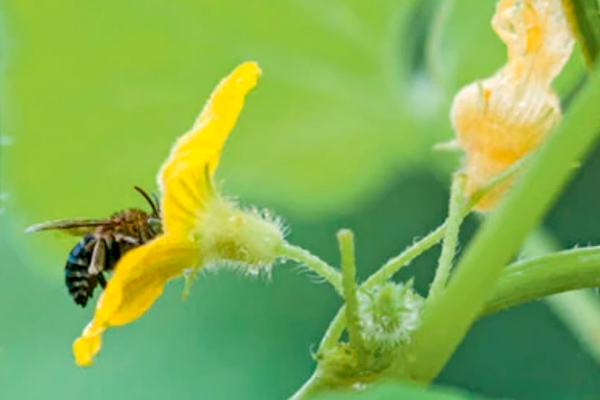
Global warming and extreme weather events are already threatening some insects with extinction – and this will worsen if current trends continue, scientists say. Some insects will be forced to move to areas with cooler climates in order to survive, while others will face impacts on their fertility, life cycle and interactions with other species. Insects play a central role in the food chain. In addition, a large part of the world’s food supply depends on pollinators such as bees and other insects, and healthy ecosystems help control the numbers of pests and disease-carrying insects. These are only a small part of the ecosystem services that may be compromised by climate change.
Climate change can affect insect pests in several ways. It can lead to an expansion of their geographical distribution, increased overwintering survival, increased number of generations, altered synchrony between plants and pests, altered interspecific interactions, increased risk of invasion by migratory species, increased frequency of plant diseases transmitted by insects and reduced effectiveness of biological control, especially of natural enemies (predators and parasitoids). Rising temperatures directly affect reproduction, survival and population dynamics of pests. As a result, there is a serious risk of economic crop losses. Therefore, it is very important to monitor the occurrence and abundance of pests; monitoring is essential.
Climate change is also expected to increase plant diseases. Globalization and international trade have intensified the movement of crop pathogens between continents over the past few decades, increasing the risk of disease transmission to disease-free regions. Climatic and environmental changes and modern land management practices dominated by monocultures and high-density crops have likely facilitated the emergence and adaptation of plant pathogens capable of spreading beyond their normal geographic ranges. An example in this respect is the spread of the pathogen causing corky root of greenhouse tomatoes. The fungus now develops successfully and causes damage in open-field conditions and is spreading further north. Climate warming can significantly affect pathogen populations, such as overwintering and survival, growth rates, etc.
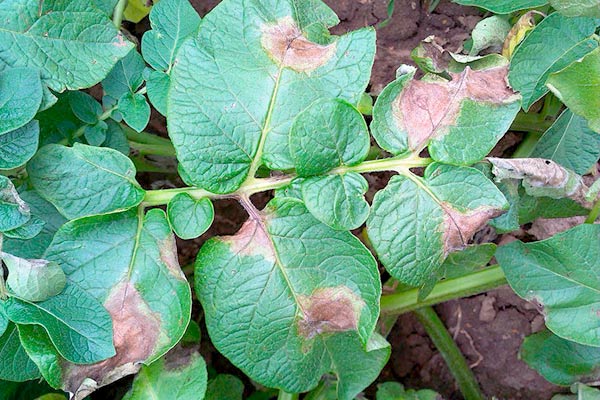
Late blight of potato (Phytophthora infestans)
For example, higher temperatures together with high humidity can lead to increased infection pressure of late blight of potato (Phytophthora infestans). At elevated CO2 levels, the severity of powdery mildew on cucurbits caused by Sphaerotheca fuliginea increases, resistance to the necrotrophic foliar pathogen Botrytis cinerea rises, but resistance to Pseudomonas syringae pv. tomato decreases.
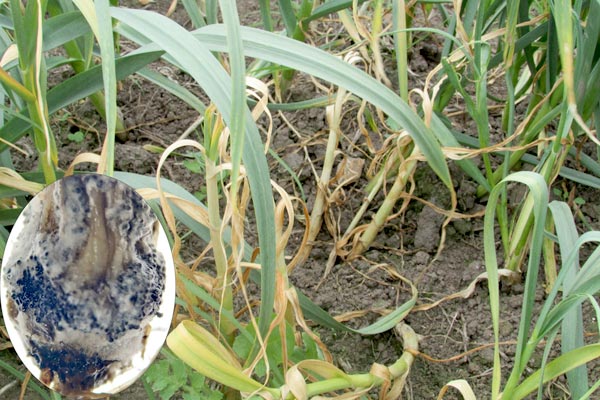
White rot of onion (Sclerotium cepivorum)
Increased relative humidity is the reason for a higher incidence of diseases caused by fungal pathogens. The impact of drought on the degree of pathogen infection varies considerably. Diseases such as root rot of pea (caused by Aphanomyces euteiches), white rot of onion (Sclerotium cepivorum), blackleg of cabbage (Leptosphaeria maculans) increase in severity with the increasing duration and frequency of drought. Drought-induced reduction in plant immune responses can lead to an increase in certain viral diseases of potato. These changes further modify host–virus–vector (aphid) interactions, resulting in enhanced horizontal virus transmission.
In recent years in our country, changes have been observed in the species composition, population size and dynamics of pests in vegetable crops. Some dominant species are giving way to others that previously occurred at lower population densities. New invasive species are entering and expanding their ranges. Winters are mild, without snowfall, and periods with sub-zero temperatures are short. All this significantly affects the successful overwintering of pests and their early occurrence during the warm spring months.
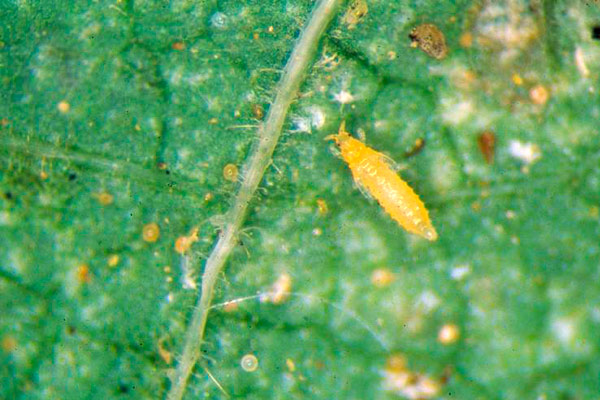
Western flower thrips
An increase in the population size and year-round presence of thrips is observed, both in the field and in heated and unheated greenhouses. Lettuce, onion, garlic and other leafy vegetable crops grown in winter serve as a kind of reservoir of thrips for subsequent vegetable crops. Their harmful activity is recorded immediately after transplanting early and mid-early vegetable crops. They are present in seedling production, which significantly increases the risk of the viral disease tomato spotted wilt. It is necessary to place blue sticky traps in seedling compartments not only for monitoring but also for control. When infestation is detected, appropriate plant protection treatments must be carried out.
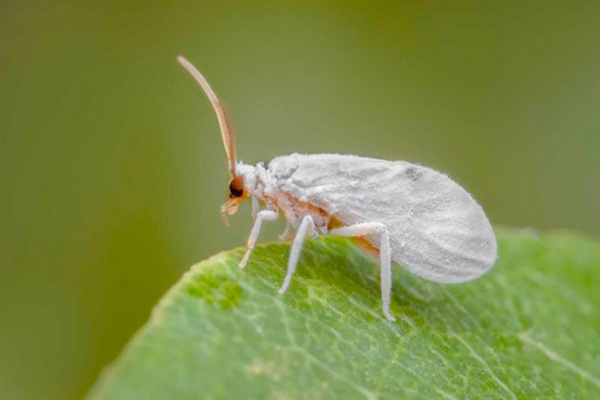
Whitefly
Whiteflies also develop year-round and pose risks not only through direct damage but also through the transmission of viral diseases. The use of yellow sticky traps provides the opportunity for monitoring and control. Timely detection is a prerequisite for successfully implemented control measures. Aphids are observed throughout the year both outdoors and in greenhouses. Weed vegetation, which now develops year-round due to climate warming, serves as a refuge for these pests and a potential reservoir of viral infections.
The tuta absoluta problem is still relevant
The tomato leafminer, one of the main pests in tomato cultivation, also overwinters successfully. It can be observed even during the winter months, and damage in tomato crops can be recorded as early as May. The risk of high population density at the beginning of the crop vegetation is high, which is why the occurrence and population density in the crop must be strictly monitored. Black sticky traps and pheromone traps provide an opportunity for early detection and serve as a signal for timely treatments. The cotton bollworm and other noctuid moth species overwinter successfully and damage from them can be observed early in spring. Early occurrence of onion and leek flies is observed in the field. The harmful activity of spider mites, which can be observed already on seedlings, is also not to be underestimated; during the hot summer months their population density increases significantly and can lead to plant desiccation and considerable losses. High temperatures, low air humidity and lack of precipitation create extremely favourable conditions for their development.
Further increases in infection pressure from diseases and pests as a result of climate change may have devastating consequences for many plant species, for production and food security, for ecosystem resilience and for social conflicts.
Climate change has a significant impact, especially on vegetable crops, which play a crucial role in global nutrition. In this context, intensive scientific research is being conducted on the impact of climate change on diseases and pests of vegetable crops. Some of these studies are carried out in phytotrons, where simulated scenarios are created related to the combined effects of increased temperature and carbon dioxide on pests and foliar and soil-borne diseases of vegetables. An important aspect is also the study of the influence of climate change on the production of mycotoxins and the associated product safety.
References:
- Ahanger, R. A., Bhat, H. A., Bhat, T. A., Ganie, S. A., Lone, A. A., Wani, I. A., Ganai, S. A., Haq, S., Khan, O. A., Junaid, J. M. and Bhat, T. A. 2013. Impact of Climate Change on Plant Diseases. International Journal of Modern Plant & Animal Sciences, 1(3): 105-115
- Burdon1, J., J. Zhan, M. Thomas 2020. Climate change and disease in plant communities, Academic Editor.
- Das, T., M. Hajong, D. Majumdar, R. K. Tombisana Devi and T. Rajesh,
- 2016. Climate Change impacts on Plant Diseases, SAARC J. Agri., 14(2): 200-209.
- Andrew Jeffers, 2019. Integrated Pest Management (I.P.M.) for Aphids, Clemson Cooperative Extension