

![MultipartFile resource [file_data]](/assets/img/articles/заглавна-подправки-интеркпоринг.jpg)
Summary
The establishment of mixed crops is a land management approach that benefits both the farm and nature. The combined cultivation of different types of vegetable and spice crops is more productive when using the same site for a longer period of time. The different colours, shapes, textures and aromas confuse pests, and diseases spread more difficultly from one plant to another. The dense use of the area suppresses weed vegetation and, as a result of the greater soil cover, evaporation is reduced. The establishment of mixed crops of different species is preferable to monoculture cultivation: environmental resources are better utilised due to differences in ecological niches (different plant height, different leaf arrangement, root depth, mineral nutrition, etc.); manifestation of allelopathy – the mutual influence of organisms on each other through the release of waste products; reduction of disease and pest development, reduced use of bio‑pesticides; stabilisation of productivity.
The intercropping system is a successful production option in which living organisms interact effectively, and the environment that is formed is relatively stable and dynamically balanced in time and space. Farmers have grown several crops simultaneously in the same field for centuries, and the use of polycultures continues as an important form of agriculture. One of the advantages of mutual cultivation is the reduction of pest populations, which is explained by the larger number of natural enemies of insects in the intercrops and/or reduced colonisation by pests and the duration of their stay in these crops.
Biodiversity on the farm can lead to agro-ecosystems capable of maintaining their own soil fertility, regulating natural pest control and sustaining the productivity of the main vegetable crops.
Mixed crops, or the so-called intercropping, have long been used in hobby gardening and in plantations on relatively small areas as a system for increasing biodiversity, changing cultivation technologies and applying alternative methods for plant protection against diseases and pests in vegetable production. The use of spice crops is gaining increasing importance as a means of pest control, based on their property to repel pests of the main crops through the release of specific substances and aromas and to act as repellents in the crops. Spice crops have their place in agriculture, but as companion crops in mixed sowings they give a new appearance to technologies in vegetable production. This in turn changes the approach to cultivation and maintenance of the soil surface in order to preserve soil structure and moisture and to remove weed vegetation. The cultivation of the main and spice crop requires the use of new planting layouts and dates; for these reasons, their application on small areas and in gardens is recommended for easier crop management.
To achieve a greater effect of the spice crop on the vegetable crop, it is advisable to ensure a longer joint vegetation period of the two types of vegetation.
Basil, summer savory, dill and garlic are the easiest to cultivate. Their cultivation in mixed crops with vegetable species is applicable on raised beds and on flat surfaces. Planting is in parallel rows along the length of the bed or area. Forming a raised bed makes it possible to grow two or more parallel rows of the two crops. On a flat surface, they are grown in parallel along the length of the area.
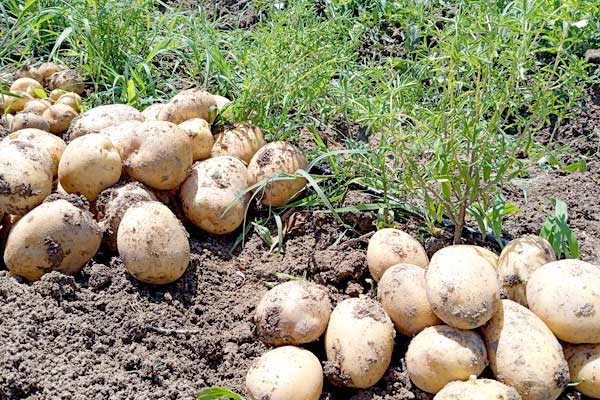
This cultivation method is applicable to potatoes – early production; tomatoes and pepper – late production with direct sowing.
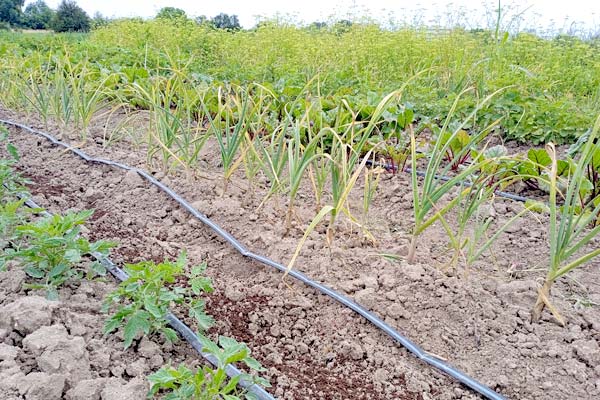
Garlic as a companion crop – planting time, intercropping layout and impact on pests
In mixed crops it is best to grow summer garlic with a planting period from the second half of February to the first ten days of March. Planting is at a distance of 40 cm from the main crop, 20 cm between the rows of garlic and 10 cm between the cloves within the row. The main crop – potatoes, tomatoes and pepper – is grown in single rows. Planting of the garlic coincides with the technological planting time of potatoes, which ensures a long joint vegetation period of the two crops of over 90 days. The vegetation period of garlic with tomatoes and pepper is significantly shorter, about 30 days, due to the later sowing of the seeds from mid‑ to late May and harvesting of the garlic in the second half of June.
Garlic exhibits a repellent effect on adults and larvae of Colorado potato beetle on potatoes. It reduces the degree of infestation by whitefly on tomatoes and pepper. It repels slugs.
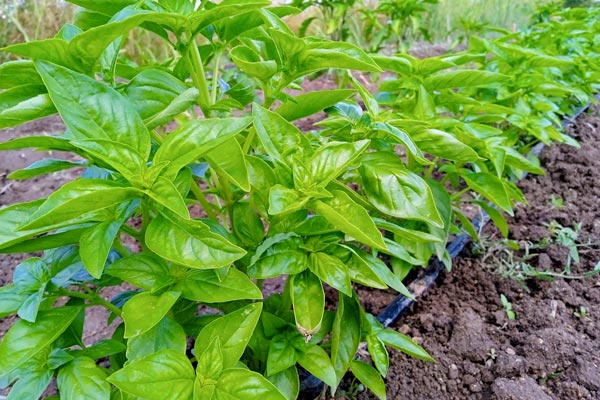
Basil as a companion crop – planting time, intercropping layout and impact on pests
In mixed crops, densely grown seedlings are used, raised outdoors for 20–25 days. Seed sowing is carried out in the second half of April to the beginning of May. Transplanting of the seedlings is from the second half to the end of May, in single rows, at a distance of 60 cm from the main crop and 30 cm between plants in the row. The joint vegetation with potatoes is about 60 days, and with tomatoes and pepper about 160 days. Periodic harvesting of the leaf‑stem mass of basil ensures a long period of joint cultivation with tomatoes and pepper.
Basil exhibits a repellent effect on caterpillars on tomatoes and a weaker effect on whitefly on tomatoes and pepper compared to garlic. It attracts bees.
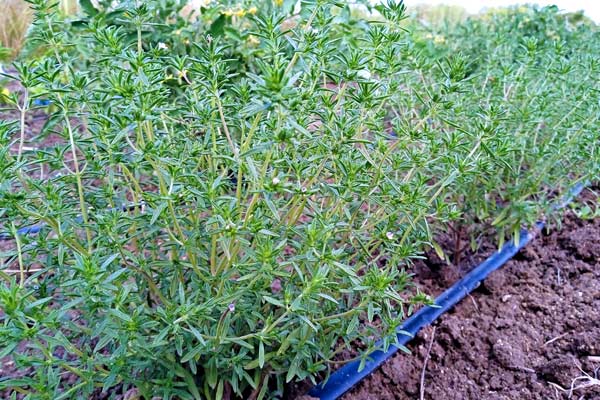
Summer savory as a companion crop – planting time, intercropping layout and impact on pests
In mixed crops, summer savory is used as seedlings previously raised outdoors for 20–25 days, similarly to basil. Transplanting of the seedlings is from the second half to the end of May, in single rows, at a distance of 60 cm from the main crop and 30 cm between plants in the row. The spice crop is harvested during the flowering period by taking whole plants. This provides joint vegetation with potatoes for about 45 days, and with tomatoes and pepper – about 80 days. The long vegetation of the main crops – tomatoes and pepper – makes it possible to plant a second batch of summer savory seedlings.
Summer savory repels aphids on tomatoes and pepper. It attracts bees.
Dill as a companion crop – planting time, intercropping layout and impact on pests
Dill is grown by direct sowing of seeds from the end of April to mid‑May, in single rows, at a distance of 60 cm from the main crop. The plants are harvested after 25–30 days, which allows for a second sowing in order to ensure a longer joint vegetation period. With potatoes they are grown together for about 30 days, and with tomatoes and pepper for 30–90 days with 2–3 sowings of the companion crop.
Dill acts as a repellent against whitefly and thrips on tomatoes; adults and larvae of Colorado potato beetle on potatoes. It attracts natural enemies – ladybirds. Many representatives of the family Apiaceae are excellent plants for beneficial species. The flowers of dill are particularly attractive to parasitoid wasps.
The main and spice crops in mixed sowings are grown under the same basic agrotechnical practices – soil tillage (mechanised and manual), weed control and irrigation.
The proposed technological solutions are recommended for use in organic vegetable production; in cases of heavy pest infestation, it is mandatory to perform plant protection using certified organic products authorised for use.
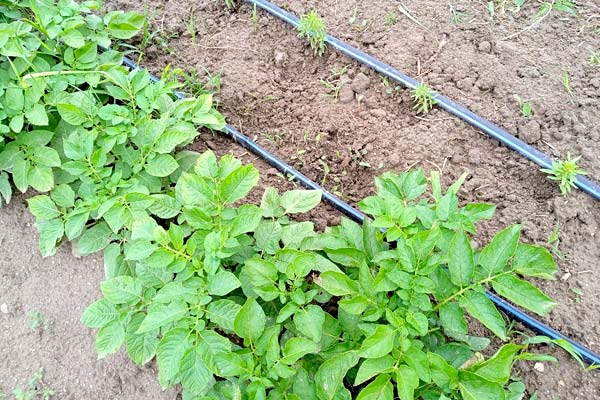
Diversity in vegetable ecosystems can benefit the condition of crops by reducing the degree of pest infestation and increasing the activity of their natural enemies.
Producers and professionals in the green industry are seeking alternative pest management tactics to meet consumer needs and the desire for sustainability and operational flexibility. Ecological engineering is an alternative practical solution that combats insect pests on crops by increasing biodiversity of natural enemies and plant species. Potential cultural practices for pest management, such as combined and mixed cultivation, diversify crops within a given agro-ecosystem and reduce the population of harmful insect species and the extent of damage to plants and fruits. Several mechanisms may be responsible for pest control, such as physical obstruction, visual camouflage, masking of host plant odours and repellent substances.
Photos: Assoc. Prof. Tsvetanka Dincheva, PhD
References
1. Nandhini, D. U., E., Somasundaram. 2020. Intercropping – A Substantial Component in Sustainable Organic Agriculture. Ind. J. Pure App. Biosci, 8(2), 133-143.
2. Popov V. V, 2018. Intercropping as an example of sustainable organic agricultural systems. New knowledge Journal of science, v. 7 (3). 91-106.
3. Risch S. J., 1983. Intercropping as cultural pest control: Prospects and limitations. Environmental Management, v. 7, 9–14.